Published: 12 February 2026. The English Chronicle Desk. The English Chronicle Online.
The Australian war graves issue has emerged after several graves were bulldozed in Gaza, sparking serious diplomatic concern. Australian Prime Minister Anthony Albanese has raised this matter directly with Israeli President Isaac Herzog, highlighting the importance of restoring the graves without delay. Satellite images confirmed extensive damage at the southern corner of the Gaza Commonwealth War Cemetery, where sections A and B predominantly contain the remains of Australian soldiers who died in Palestine during the Second World War. The bulldozing destroyed headstones and displaced soil, leaving families devastated.

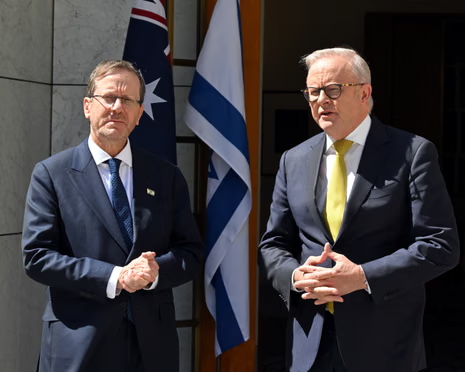
Albanese emphasized the urgency of repairs during a meeting with Herzog in Canberra, ensuring that restoration work will proceed when safe conditions are established. The Australian embassy in Tel Aviv had previously engaged both Israel’s foreign affairs and defence ministries after initial reports surfaced, reflecting a coordinated effort to protect the sanctity of the graves. Officials confirmed that all Australian nationals’ graves will be repaired, highlighting the graves’ national significance.
Senator Penny Wong reiterated the graves’ importance, stressing that every Australian interred overseas deserves respect and protection. She noted that the government has communicated with Israel regarding the damage, underscoring the moral responsibility to preserve these historical sites. For families like Wilma Spence, whose father Albert Kemp, a decorated Anzac, rests in the cemetery, the bulldozing has caused profound grief. Spence described her ongoing frustration at the lack of direct communication about her father’s grave and questioned why more decisive measures were not immediately taken.
Independent ACT Senator David Pocock condemned the desecration, describing it as unacceptable and questioning the government’s approach to holding Israel accountable. Satellite imagery and local witness accounts point to systematic bulldozing, raising concerns about the full extent of disturbance to Australian graves. Pocock stressed that the Commonwealth War Graves Commission should not bear sole responsibility for restoration costs, advocating for full accountability from those responsible.
Former Gaza cemetery caretaker Essam Jarada confirmed two separate bulldozing operations in April and May 2025, targeting approximately 1,000 square metres within the cemetery walls. The work included the creation of sand mounds for military purposes and removal of seating areas near memorial monuments. Jarada witnessed these events after Israeli forces withdrew, confirming that graves of Australian soldiers suffered direct impact. He also highlighted the emotional toll on visitors who had frequented the site, describing the scene as deeply distressing.
Families, veterans, and advocacy groups continue to call for transparent updates on restoration plans, insisting that international standards for war graves must be upheld. The destruction has reignited discussions on diplomatic responsibility and the protection of cultural heritage in conflict zones. Experts argue that the Australian government’s role in securing reparations and repairs is crucial, not only for the families affected but for the integrity of national remembrance.
Albanese’s intervention demonstrates Canberra’s commitment to defending Australian heritage abroad, reflecting a broader principle that the graves of servicemen and women should remain untouchable. The government confirmed that once conditions allow, all graves will be restored, signaling a clear intention to maintain historical respect. Advocacy groups emphasize that international law and wartime conventions support the protection of war graves, reinforcing the need for Israel to undertake immediate and comprehensive restoration efforts.
The debate also touches on public accountability. Critics argue that press coverage and governmental statements must be more forthcoming to maintain trust with the Australian public. Transparency, they assert, ensures that the significance of these sites is acknowledged and that families do not experience prolonged uncertainty regarding the final resting places of their loved ones.
Observers note that the issue intersects with broader diplomatic relations, raising questions about the responsibilities of states in ensuring the sanctity of foreign graves within their territory. Experts suggest that while ongoing conflicts complicate enforcement, communication between governments and timely restoration are vital measures to uphold international norms. In this context, Albanese’s direct engagement with Herzog is seen as a critical step in achieving both diplomatic clarity and concrete reparative action.
The incident has also sparked debate among Australian veterans, historians, and political analysts. Many stress that the destruction undermines the historical record of Australian military contributions overseas. As more details emerge from satellite imagery and eyewitness reports, pressure grows for Israel to acknowledge the damage and commit to reconstruction efforts funded independently, relieving the Commonwealth War Graves Commission of financial burden.

In the coming weeks, families of the deceased soldiers expect updates on restoration timelines and assurances that no further graves will be compromised. The Albanese government remains engaged with Israeli officials, prioritising both safety and respect in the restoration process. Experts believe that this approach balances diplomatic sensitivity with moral obligation, highlighting Canberra’s dedication to protecting national heritage even amid complex international contexts.
The bulldozing of Australian war graves in Gaza underscores the ongoing challenges of preserving historical sites in conflict zones. It also highlights the responsibility of governments to act swiftly and decisively to protect the dignity of the fallen. While restoration efforts are expected to commence once conditions allow, the incident continues to resonate with families, veterans, and policymakers, reminding all parties of the profound human and historical stakes involved.
Related News:
 British skier killed in La Plagne avalanche tragedy
 Mandelson apologises over Epstein ties after public scrutiny
 Friedman Uninvited From 2024 Adelaide Writers’ Week
 Starmer Challenges US Over Controversial Greenland Deal
 Spoof “Make America Go Away” Caps Rally Denmark Over Greenland
 Silence and Unity Mark Bondi Terror Attack Memorial
 India-EU Free Trade Deal Marks Historic Economic Shift
 Ukraine, Russia Meet in Geneva Ahead of War Anniversary
 UK, US Medics Barred from Gaza Amid Rising Aid Concerns
 Anthony Albanese Must Uphold Rights for All Australians
 UK suspends study visas for four nations to curb asylum
 Jordanian Arrested in Philippines Over Bondi Beach Terror Links
 Ukraine war briefing: Zelenskyy offers help to Saudi Crown prince on combatting Iranian drones
 Abramovich Chelsea Sale Cash Faces Jersey Probe
 Starmer Praised for Stance on Trump and Iran Conflict
 UK Ministers Signal Strategic Independence From Trump Demands
 African World Cup Fans Face $15,000 Entry Bond Fee
 Police Seek Immunity in Indigenous Custody Death Case
 Farage Shuns Truss as US Right-Wing Roadshow Hits London
 Trump Slams Europe as Transatlantic Tensions Boil Over
 Spain Faces Backlash Over Xenophobic Chants in Egypt Draw
 Trump Facing Backlash Over Firing of Cabinet Women
 The Price of Hubris: Trump, Netanyahu, and the ‘Easy’ War
 Trump and Tehran Find Common Ground in Landmark Ceasefire
 Own an Entire Australian Town for the Price of a UK Flat
 Melania Trump Denies Ties to Epstein and Ghislaine Maxwell
 Reeves Slams Trump Over Iran War Lack Of Exit Plan
 Kyiv and Odesa Mourn After Deadly Wave of Russian Strikes
 Norway’s Telenor Faces Lawsuit Over Myanmar Data Breach
 Strait of Hormuz Status Uncertain Despite Iran’s Claims
 Trump’s Presidency: A House of Cards Collapsing?
 US Forces Seize Iranian Ship Near Hormuz Blockade
 Trump Starts $166bn Tariff Refund Process
 Israeli Soldiers Jailed Over Vandalism of Lebanese Statue
 Investigation: Offshore Loans and Sanctions
 Prominent Voices Challenge Palestine Action Ban
 Cross-Border Crisis Shatters Fragile Afghan Peace
 Tragedy Near Jakarta: Train Collision Leaves 14 Dead
 NSW Police Urged Victim to Abandon Antisemitic Case
 The Burning Lens: An Iranian Artist’s Visual Resistance
 FIFA Confirms Global Ban for Benfica Star Prestianni
 The Global Battle for Control Over the Women’s Game
 Tensions Surge in the Gulf as Ceasefire Wobbles
 One Nation Candidate’s Surprising Ties to Independents
 New South Wales Wetland Rescue Legislation Passes
 US and Mexico Face Heatwave as Floods Batter South Africa
 French Patient Told Hantavirus Was Just Anxiety
 Putin Signals War End as Russian Momentum Stalls
 Romania’s Judicial Crisis: A System Under Siege
 Scepticism and tight security as Beijing braces for Trump
 Philippine Senator Flees After Days Under Senate Siege
 Alberta Separatist Bid Blocked by Canadian Court
 Big Tobacco Under Fire Over Controversial New Ad Campaign
 Court Upholds Landmark Win for Transgender Rights
 Fragile Truce Shattered as Violence Escapes Diplomatic Control
 Secrecy Down Under: Albanese Faces FoI Scandal
 Taliban Codifies Strict New Marriage and Divorce Legislation
 Tony Abbott Returns as New Liberal Party President
 Discontent grows around Putin amid war strain
 Trump Diplomacy Faces Hurdles from Tehran to Tbilisi
 Teaching Machines Right From Wrong in the Digital Age
 Oman Defies US Pressure Over Strategic Strait of Hormuz
 Ex-CIA Agent Accused of $40m Gold Theft and Fake Spy Unit
 Aukus Deal Facing Fierce Backing and Historic Criticism
 Thai Princess Bajrakitiyabha Passes Away at 47
 Tragic Loss of Australian Sprinter Jemma Stapleton
 Firearm Fine for Missing Boy’s Grandmother
 Trump Urged to Condemn UFC Fighter Over Obama Slurs
 US Democratic Crisis Deepens as Trump Limits Mail Voting
 Russian Tanker Captain Remanded in UK Court After Channel Seizure
 US Military Pacific Boat Strike Kills Three People
 US Battles Auction of Titanic Artifacts
 Scouts Introduce Badges For AI And Digital Skills
 France Dominate Sweden as Deschamps’ New Era Takes Shape
 Trump’s Mount Rushmore Speech: A Divisive Anniversary
 Trump Swaps Planes Amid Iran Tensions
 Rotterdam Museum Honours Artist With Peanut Butter Floor
 Bangkok Nightclub Blaze Claims 30 Lives Amid Negligence Probe
 Yemen Accuses Iran of Violating National Sovereignty
 Houthis Strike Saudi Arabia as Middle East Tensions Rise