Published: 20 January 2026. The English Chronicle Desk. The English Chronicle Online.
Madison Keys began her Australian Open defence under unexpected pressure as Rod Laver Arena buzzed with surprise. The opening match of her title defence was supposed to be routine, yet it quickly transformed into something memorable. Within the first 100 words, it was clear that this Australian Open defence would not follow an easy script. Oleksandra Oliynykova, a Ukrainian playing her first grand slam main draw, produced tennis that challenged convention. Her looping shots repeatedly climbed into the air, drawing gasps from spectators seated high above the court. For many fans, this Australian Open defence suddenly became an absorbing spectacle rather than a formality.
The vast arena is known for its distance between players and audience, yet the ball often rose to meet spectators. Oliynykova’s heavy moonballs, feathered drop shots, and skidding slices forced Keys to rethink patterns. The American struggled early, unable to impose her powerful baseline game. This Australian Open defence opened with Keys scrambling rather than commanding. Oliynykova raced to a four-love lead, exploiting rhythm disruption with remarkable confidence. Her unusual tactics slowed the tempo, turning the match into a mental examination for the defending champion.

Keys, however, has built a career on resilience under pressure. Facing two set points in the opening tie-break, she steadied herself. Her response was emphatic and sudden. Four consecutive winners ripped through the court, each strike louder than the last. The American snatched the set 7-6, a turning point that reshaped her Australian Open defence. With momentum restored, Keys settled into her patterns. The second set unfolded quickly, ending 6-1 as experience asserted itself.
Despite the scoreline, much of the spotlight remained on Oliynykova. In many ways, she stole the show, leaving fans eager to see more. The 25-year-old’s rise has been extraordinary. Less than a year earlier, she was ranked outside the top 250. Through relentless competition on the ITF and WTA 125 circuits, she amassed 57 wins and seven titles. Her ranking surge to number 92 reflects persistence rather than sudden fortune. Against a defending champion, she demonstrated why her progress has attracted attention.
Keys later reflected on the unfamiliar challenge she faced. She compared the style to junior tennis, stressing respect rather than dismissal. The height and depth of Oliynykova’s shots limited aggressive options. Swing volleys became risky, while taking balls early proved difficult. Such disruption explains why this Australian Open defence felt uncomfortable during the opening exchanges. It was a reminder that variety, not just power, remains effective at the highest level.
Beyond tactics, the moment carried emotional weight for Oliynykova. Her grand slam debut came with personal symbolism. She entered the court adorned with temporary blue flower tattoos, matching her outfit and complementing her permanent ink. The visual statement reflected pride and identity, elements deeply tied to her background. Her story away from tennis adds depth to her performance. In 2011, her family fled Ukraine to Croatia, escaping political instability linked to opposition against Viktor Yanukovych.
Although she now lives in Kyiv, the shadow of conflict remains present. Since 2014, her father has volunteered with the Ukrainian army. Oliynykova channels her platform toward support, even through social media. Her Instagram handle directs followers to a fundraising initiative for military drones. That dedication resonated during her Australian Open debut. Each point carried meaning beyond the scoreboard, infusing the match with perspective.
After the contest, Oliynykova spoke with composure despite the scale of the moment. Alone at the tournament, she described her father as her greatest support. She explained how his service strengthened her motivation. Since he joined the military, her ranking improved dramatically, reflecting renewed purpose. Playing on such a stage fulfilled a dream she knew he shared. This emotional context enriched the narrative surrounding Keys’ Australian Open defence, turning it into a shared human story.
Her press conference revealed further realities. Tournament staff guided her to the interview room, highlighting her unfamiliarity with such attention. She wore a shirt expressing willingness to discuss the war outside the tournament environment. Oliynykova described preparing for the Australian Open amid air raid alerts. Explosions echoed near her home before her departure, one strike landing across the road. Her apartment shook as she packed for Melbourne. These experiences framed her performance as an act of resilience rather than routine sport.

For Keys, the match underscored the demands of defending a major title. Every opponent arrives without fear, eager to test the champion. This Australian Open defence reminded her of that truth. While she advanced confidently after the opening set, the initial struggle provided a timely warning. Champions must adapt quickly, respecting every challenge regardless of rankings. Keys acknowledged that adaptability will remain vital as the tournament progresses.
The crowd left Rod Laver Arena satisfied, having witnessed contrasting journeys intersect. One player defended her crown with grit, the other announced herself on the biggest stage. This Australian Open defence may be remembered not for dominance, but for resistance and discovery. It captured why tennis captivates global audiences, blending competition with personal narratives.
As the tournament unfolds, Keys moves forward carrying lessons from a testing start. Oliynykova departs with recognition earned through courage and creativity. Both players contributed to a match that transcended expectations. For spectators and readers alike, this Australian Open defence offered drama, humanity, and inspiration, confirming that sport’s power often lies beyond the final score.
Related News:
 Tottenham shine at Everton but Frank wary of title push
 Sarr Double Sinks Young Liverpool in Carabao Cup
 Nwaneri and Saka Secure Arsenal Win Over Brighton
 Woltemade Hot Streak Fires Newcastle Past Spurs
 Kieffer Moore Hat-Trick Ends Coventry’s Unbeaten Run
 Salah & Gravenberch Lead Liverpool to Win Against Villa
 Dyche Criticises Corner Decision as Forest Draw with United
 Caicedo Shines as Chelsea Edge Spurs in Chaotic Derby
 Granit Xhaka Rescue Earns Everton Draw at Sunderland
 Liverpool Edge Real Madrid 1-0 in Champions League Thriller
 Burn and Joelinton Head Newcastle to Victory Over Bilbao
 Foden shines as Man City dismantle Dortmund in dominant display
 Garnacho Spares Chelsea From Shock Champions League Loss in Baku
 Tension and Turmoil at Aston Villa v Maccabi Match
 Bellingham has ‘the edge’ among England No 10s
 Man City Masterclass on Guardiola’s Milestone Day Exposes Liverpool Woes
 Lando Norris Dominates Brazil GP to Strengthen F1 Title Bid
 England cannot afford to be in awe of the All Blacks, warns Jamie George
 VAR Must Rein Its Neck In to Save Football’s Spirit
 Trescothick Hints Pope Will Keep Number Three Spot
 Ronaldo Confirms Final World Cup and Plans Retirement
 Mary Earps’s Manchester United Return Faces Mixed Reception
 Sam Kerr Stars in Chelsea Return with Champions League Double
 This kid is something else: Alex Scott’s rise to England call-up
 UK and Ireland Announce Venues for Euro 2028 Tournament
 England Maintain Perfect World Cup Qualifying Record with Win Over Serbia
 Saka Solidifies Role as Tuchel’s Key England Lieutenant
 Former Lion Heskey Warns of Shortage of England Strikers
 Australia Mourns Paralympic Champion Paige Greco
 Irish Hero Parrott Says Goal Brought First Tears in Years
 Scotland Fans Reflect on France ’98 as World Cup Looms
 Nigeria Misses World Cup Again After Play-Off Loss
 From heartbreak to glory: Scotland’s dramatic return to the World Cup
 Tiny Curacao Makes History as Smallest Nation to Reach World Cup
 Haiti Qualifies for World Cup Despite Coach Never Visiting Country
 Scotland Fans Celebrate Historic World Cup Qualification
 Major League Baseball Scores New Broadcast Deals Through 2028
 Barcelona Returns to Camp Nou vs Athletic Bilbao
 Moyes Defends Gueye After Dramatic Everton Bust-Up
 Kids Football Coach Removed Over Suspected ‘Drugs Menu’
 Mbappe Scores 4 as Real Madrid Edge Olympiakos
 Man City Lose, Champions League Risk
 Gerrard warns Liverpool’s terrible run could worsen
 Jac Morgan to Miss Six Nations Start After Surgery
 Alexander Isak ends drought as Liverpool stop rot with win at West Ham
 Mbappe rescues Real Madrid with a penalty at Girona
 Barcelona, Atletico set for decisive La Liga showdown
 Maxwell withdraws from IPL 2026 after 13 seasons
 Mbappe stars as Real Madrid thrash Athletic, close on Barca
 Trump to attend 2026 FIFA World Cup draw in Washington
 Australia Face Big Changes as Cummins and Lyon Ruled Out of Ashes
 Van de Ven Tackle Leaves Isak with Fractured Leg
 City Set to Land Semenyo After Chelsea Exit from Transfer Race
 Arrizabalaga Sends Arsenal Through in Dramatic Shootout
 Ashes Shock: Boland Admits Struggle Bowling With Keeper Up
 Alex Sarama: How a 30-Year-Old Englishman Became WNBA Coach
 ECB powerless to halt England’s recurring Ashes failures
 Stokes urges empathy for England players amid Ashes struggles
 Damien Martyn in Induced Coma After Meningitis Diagnosis
 Spin Bowling Struggles as Pace Dominates 2025 Ashes Series
 Anthony Joshua Released After Nigeria Car Crash
 Chelsea Sack Looms: Enzo Maresca Relationship Collapses
 Africa’s Superpowers Shine in Cup of Nations Quarter-Finals
 Amorim’s United Future Uncertain Amid Wilcox Tension
 Raducanu Battles Injury as Britain Exit United Cup
 Australia Dominates England: Smith, Head Crush Bowlers in Sydney
 Australian Open Prize Money Hits Record $111.5m
 Nick Kyrgios Faces Singles Struggles at Brisbane Tennis Return
 Nottingham Forest Deny West Ham in Dramatic Late Win
 Manchester United Fan Group Targets Jim Ratcliffe Over Club Chaos
 Morocco sail into Afcon semis after Díaz inspires win
 Wrexham stun Nottingham Forest with Okonkwo FA Cup heroics
 Salah Shines as Egypt Knock Out Ivory Coast at Afcon
 Ashes Calamity Shakes McCullum’s Credibility in England Camp
 Israeli fans ban questioned after Dutch police dispute evidence
 Xabi Alonso leaves Real Madrid, Arbeloa Takes Over
 Semenyo Shines for City – Winners and Losers of Transfer
 Geopolitical football: Iran, Trump and the World Cup clash
 Regragui condemns Afcon final chaos after dramatic defeat
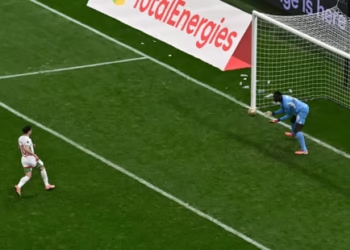 Brahim Díaz’s Panenka Fail Highlights Penalty Risks