Published: 28 January 2026. The English Chronicle Desk. The English Chronicle Online.
The Reform byelection row erupted in south-east Manchester as a newly selected candidate declined to retreat from contested remarks on British identity. The comments, resurfacing as campaigning began in Gorton and Denton, have sharpened debate about belonging, citizenship, and representation. They also arrive at a sensitive political moment, with parties mobilising voters across a constituency shaped by diversity, long-standing Labour loyalties, and recent boundary changes. Against this backdrop, the Reform byelection row has become a defining test of tone and trust during a fiercely watched contest.
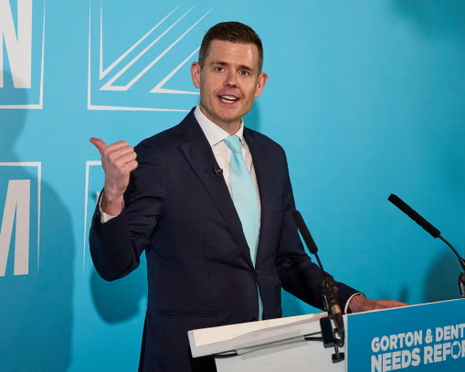
Matthew Goodwin, a hard-right activist and television presenter, was unveiled as Reform UK’s candidate at a press event in Denton. His selection drew immediate scrutiny because of previous statements suggesting that being born in the United Kingdom does not automatically confer Britishness. He had argued that citizenship involves more than paperwork, a position that critics say questions the belonging of UK-born people from minority ethnic backgrounds. When asked directly whether he stood by those views, Goodwin declined to answer, intensifying the Reform byelection row and inviting reactions from across the political spectrum.

The seat of Gorton and Denton is among Greater Manchester’s most demographically varied constituencies. According to the latest census, 44 per cent of residents identify with minority ethnic backgrounds, while 79 per cent identify as British. These figures underline why the controversy has resonated locally, where debates about identity intersect daily life, work, and community relations. Campaigners across parties say language matters profoundly in such places, shaping whether politics feels inclusive or alienating.
At the Denton event, Goodwin posed for photographs alongside Lee Anderson, Reform’s chief whip and a prominent figure within the party. Anderson praised Goodwin as “fearless” and ready to debate anyone, framing the controversy as evidence of forthrightness rather than division. Yet the refusal to disown the remarks kept the Reform byelection row alive, overshadowing attempts to pivot toward policy priorities.
Labour figures moved quickly to condemn the stance. Lucy Powell, Labour’s deputy leader, warned that such politics risked driving wedges between Manchester’s communities. She argued that the city’s strength lies in unity and shared pride, not suspicion. Her intervention echoed concerns voiced by local activists, who fear the language could harden lines between neighbours during an already heated campaign.
The Greens, who have built momentum in the area, were even more direct. Party leader Zack Polanski accused Goodwin of a track record of anti-Muslim bigotry, calling his candidacy an insult to constituents. Polanski has characterised the contest as a head-to-head between Reform and the Greens, describing it as a struggle for the country’s moral direction. In rallies, he has framed the Reform byelection row as emblematic of a broader choice about openness and fairness.
Reform UK, meanwhile, is seeking to overturn Labour’s 13,000-vote majority and secure its ninth MP. The party’s confidence has been bolstered by recent defections from senior Conservatives, including a former home secretary. Supporters argue that these moves signal momentum and legitimacy. Critics counter that the influx of establishment figures undermines Reform’s claim to insurgency, a charge frequently aired during campaign exchanges.
Goodwin’s past writing has further fuelled the controversy. Only weeks before his selection, he claimed Britain’s ruling class was suppressing debate about Islam, calling it an assault on free expression. In Gorton and Denton, where more than one in four voters identify as Muslim, such remarks have heightened anxieties about how communities are portrayed. Local leaders stress that free speech debates must be handled carefully, especially during elections.
Asked about his message to minority ethnic voters, Goodwin sought to reframe the discussion. He said his appeal was to everyone who worked hard, paid taxes, and contributed to the economy. He insisted that his politics were not about race or religion but about fairness, respect, and adherence to rules. He criticised the Labour government under Keir Starmer as disconnected from local concerns, arguing that long-held loyalties deserved reassessment. These comments, however, did little to quiet the Reform byelection row, which remained focused on his earlier language.
Anderson outlined Reform’s intended campaign themes, including crime, high street decline, and housing issues. He criticised houses of multiple occupancy, claiming they caused disruption in neighbourhoods. Both men referenced child grooming gangs several times, an issue with painful resonance in nearby areas. Opponents accused Reform of stoking fear rather than proposing constructive solutions, adding another layer to the unfolding Reform byelection row.
Beyond personalities, the contest reflects shifting political currents in Greater Manchester. Boundary changes in 2024 altered the seat’s composition, while national volatility has unsettled traditional voting patterns. The Greens believe these factors create space for a breakthrough. Labour aims to defend its legacy and reassure voters unsettled by rhetoric. Reform seeks to capitalise on frustration and position itself as a disruptive force.

Goodwin himself has described Reform’s polling rise as a historic insurgency, likening it to Labour’s ascent a century ago. Such claims energise supporters but also invite scrutiny. For many voters, the immediate question is less about grand narratives and more about whether candidates understand their lived realities. In that sense, the Reform byelection row has crystallised concerns about representation, respect, and the language politicians choose.
As campaigning intensifies, community groups are urging calm and dialogue. Faith leaders, residents’ associations, and youth organisations have emphasised shared values and practical needs, from jobs to safe streets. They warn that divisive debates risk overshadowing bread-and-butter issues. Whether the controversy fades or deepens may depend on how candidates respond in coming weeks.
Ultimately, the Gorton and Denton byelection has become a microcosm of national debates about identity and belonging. The Reform byelection row has forced parties to articulate where they stand and how they speak. Voters will decide whether firmness reads as honesty or exclusion, and whether unity can be rebuilt amid sharp disagreements. The result will be watched closely, not only in Manchester, but across a country wrestling with its political direction.
Related News:
 Peterborough Mosques Tighten Security After Attack
 Reeves Faces Setback as Labour May Miss Homes Target
 Hospice Cuts Raise Alarm Across England Amid Funding Crisis
 UK Woman Loses Child Benefit After Booking Flight She Never Took
 Kate Winslet to Narrate Film Highlighting King’s Environmental Mission
 Green Party Surges Past Labour in Latest UK Poll
 Trump’s UK Ambassador Urges North Sea Drilling to Strengthen US Ties
 Children to Learn Local History in Major Curriculum Overhaul
 Granit Xhaka Rescue Earns Everton Draw at Sunderland
 French Taxi Driver Cleared in David Lammy Theft Case After Fare Dispute
 The Lowry Hotel: Manchester’s Iconic Five-Star Retreat
 UK Bans Fake Numbers: Scammers Lose Their Trick
 Prince William Plants Trees with Brazil’s Nature Heroes
 M&S Profits More Than Halve After Cyber-Attack
 Just Stop Oil Protesters Convicted Amid Climate Defence Row
 Kent village told to remove flags before Christmas lights go up
 Tony Blair think tank warns Rachel Reeves must cut taxes if manifesto broken
 Patients to Test Health at Home to Ease NHS Winter Pressure
 Bellingham has ‘the edge’ among England No 10s
 King Charles to Lead Nation in Remembrance Sunday Service
 How to get help when a child goes missing – call 999 urgently
 Palace May Restore Hyphen to Andrew Mountbatten-Windsor’s Name
 Millionaires group urge Reeves to introduce wealth tax to ‘lift kids out of poverty’
 Starmer Faces Growing Dissent as Labour MPs Weigh Leadership Challenge
 Shouting Works Best to Deter Gulls, UK Study Finds
 Mary Earps’s Manchester United Return Faces Mixed Reception
 Reeves rejects £1bn plea for NHS redundancy payouts
 Northern Lights may illuminate UK skies this week
 PM Condemns Leaks, Vows Loyalty to Ministers and Stability
 Son Reveals UK Couple in Iran Resort to Hunger Strike for Help
 Major Rent Reform Ends No-Fault Evictions in England
 Peers Flood Assisted Dying Bill with 942 Amendments
 Former Lion Heskey Warns of Shortage of England Strikers
 Global markets drop amid tech sell-off and China slowdown
 Criminal Gangs Pose as Truckers to Hijack UK Supply Chains
 Mum Calls for New Licence Rules After Teen Road Death
 Stroke Patient Mistaken for Drunk, Care Delayed
 Mother Watches in Horror as Teen Daughter Dies on Tracks
 Van Dwellers Face Eviction After Park Misuse Sparks Outcry
 ‘Traumatic Wait’: Northern Ireland Women Face Breast Cancer Delays
 Serial Rapist and Former Cop Found Guilty Again
 Royal Navy Shadows Russian Warships Entering the Channel
 Coffins Now Too Large to Cremate Amid Rising Obesity Crisis
 Inside the Helpline Protecting Missing Children in the UK
 Most Tories Expect to Support a Farage-Led Government
 Boots Showstopper Beauty Bundle Outshines Many Advent Calendars This Holiday Season
 Bill Murray Terrified Wes Anderson but Became His Closest Collaborator
 Labour’s ‘blinkered’ drive to build risks pushing wildlife to point of no return, nature experts warn
 Labour MP claims devolution bill is ‘blatant discrimination’ against Cornwall
 PlayStation PS5 Deals Hit Lowest Prices Ahead of Black Friday
 Karen Carney Stuns on Blackpool Week, Deserves Strictly Final
 Millions Face Higher Taxes Under Reeves New Budget
 Five-Year-Old Dies After Rare Tonsil Surgery Complication
 Fibromyalgia Patients Struggle as NHS Fails to Provide Care
 Starmer Says Labour’s Economic Plan Needs Years to Deliver
 Virgin Media Fined £23.8m Over Telecare Safety Failures
 More Patients Now Contacting GPs Online, Data Shows
 UK unemployment rises to four-year high of 5.1% before budget
 Culture secretary to review Telegraph takeover by Daily Mail owner
 Wiltshire Police Use Lasso to Catch Rampaging Village Goat
 Prince George Helps Father at London Homelessness Charity
 Children to Receive Home Vaccines as England Acts
 Cambridge College Faces Backlash Over Private School Recruitment
 NHS Violence Crisis: Staff Face Daily Assaults
 Celebrity Campaign Highlights SMA Screening Failures
 Bereaved Fathers Gain New Paternity Leave Rights in UK
 Storm Goretti leaves Cornwall homes without power
 New Documentary Examines Teen’s Zombie Knife Murder
 Woman Jailed for Life After Killing E-Bike Rider in Tragic Mistaken Identity Case
 Right Must Unite After Jenrick Defection, Urges Rees-Mogg
 UK Ministers Drop Foreign Student Targets for Global Education Push
MPs warn AI financial risks threaten UK stability
UK Ministers Drop Foreign Student Targets for Global Education Push
MPs warn AI financial risks threaten UK stability
 No Gas Boiler Ban as UK Warm Homes Plan Backs Heat Pumps
 UK Glaucoma Rise Signals Looming Eye Health Crisis by 2060
 Shinzo Abe’s killer receives life sentence in Japan
 Police response times face strict new national limits
 Edinburgh, Glasgow Lead UK Nightlife Hotspots, Uber Data
 Labour policing overhaul sparks fears over growing central control
 Devon hosts first high-density hydro power system
 Pornhub blocks new UK users over age checks dispute