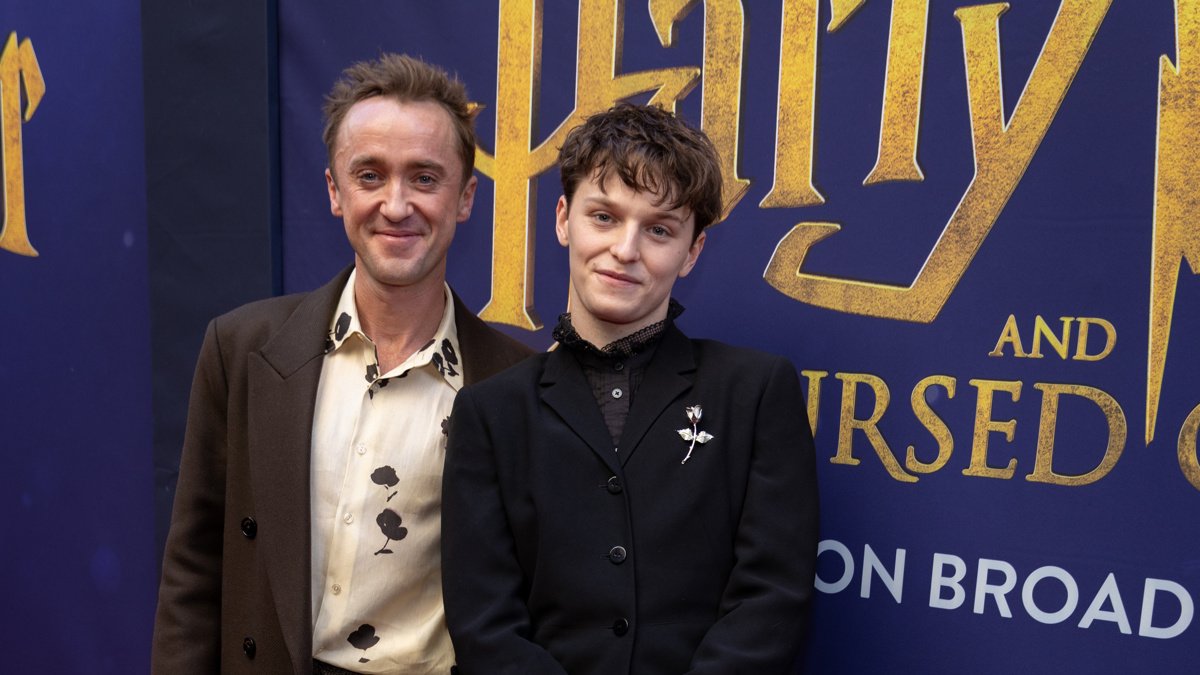
Published: 04 February 2026. The English Chronicle Desk. The English Chronicle Online
An unexpected and distinctly magical figure has taken centre stage in China’s Lunar New Year celebrations this year, as Draco Malfoy, the aristocratic Slytherin rival from the Harry Potter series, becomes an unlikely festive mascot. Across Chinese cities and online marketplaces, the pale-haired wizard’s familiar smirk is appearing on doors, walls and refrigerators, woven into traditional decorations meant to usher in luck, prosperity and happiness for the year ahead.
The phenomenon has surprised even devoted fans of the wizarding world. Draco Malfoy, portrayed by British actor Tom Felton, is hardly the first character that comes to mind when one thinks of good fortune. Yet cultural coincidence and linguistic charm have propelled him into a celebratory spotlight, turning a once-antagonistic character into a symbol of auspicious beginnings for the Lunar New Year.
The trend stems largely from the Chinese transliteration of Malfoy’s name. In Mandarin, “Malfoy” is rendered as “Ma-er-fu”, a combination of characters that carry particularly positive connotations. The word “Ma” means horse, while “Fu” signifies fortune or blessing. With the upcoming Lunar New Year marking the Year of the Horse, the name suddenly feels uncannily well-suited to the season. To many celebrants, the connection feels playful yet meaningful, aligning pop culture with centuries-old traditions of symbolism and wordplay.

As Lunar New Year approaches, households across China typically decorate their homes with couplets, vertical red banners inscribed with auspicious phrases wishing health, wealth and harmony. Another common decoration is the fuzi, a red square bearing the character “fu”, meaning prosperity or good fortune. These squares are often hung upside down, as the word for “upside down” in Chinese sounds the same as the word for “arrival”, symbolising that luck has arrived at the household.
This year, however, traditional characters are being joined by something far less conventional. On Chinese social media platforms, images have circulated of front doors adorned with festive couplets alongside portraits of Draco Malfoy. Some feature his trademark platinum blond hair and sardonic smile framed by red and gold borders, while others show upside-down images of the character in place of the usual fuzi, merging old customs with modern fandom.
The trend has spread quickly online, fuelled by humour and the communal joy of discovering an unexpected cultural crossover. On Weibo, one of China’s largest social media platforms, users have shared photos of Malfoy-themed decorations with captions encouraging others to repost them for good fortune. Comments range from playful amusement to genuine delight at what many see as a clever blend of East and West.
One popular comment described the phenomenon as “an oriental new year with magical elements”, while another simply invoked “Felix Felicis”, the fictional luck-enhancing potion from the Harry Potter universe. The reference resonated widely, reinforcing the idea that Malfoy’s image, however tongue-in-cheek, might just bring a little extra luck to the coming year.
E-commerce platforms have been quick to capitalise on the viral trend. On Taobao, China’s largest online marketplace, merchants are selling an array of Draco Malfoy-themed Lunar New Year decorations, including stickers, magnets, posters and door hangings. Many designs incorporate traditional red-and-gold colour schemes, blending seamlessly with more conventional festive decor. Some listings even promise to deliver “horse-year fortune” through Malfoy’s image, leaning into the linguistic coincidence that sparked the craze.
Harry Potter’s enduring popularity in China has provided fertile ground for the trend to flourish. The book series has sold hundreds of millions of copies in the country, and its cinematic releases have consistently drawn large audiences. When the first Harry Potter film was re-released in Chinese cinemas in 2020, it grossed more than 90 million yuan in just three days, underscoring the franchise’s lasting appeal across generations.
For many Chinese fans, the series represents not only a beloved fantasy world but also a cultural touchstone that accompanied their childhoods and adolescence. Characters like Draco Malfoy, once viewed primarily as villains or foils, have been reinterpreted over time through memes, fan fiction and nostalgic reflection. His transformation into a symbol of fortune fits neatly within this broader pattern of playful reinterpretation.
The trend has also crossed the digital divide, catching the attention of Tom Felton himself. The actor reshared an Instagram story highlighting Draco Malfoy’s unexpected status as a Lunar New Year symbol in China, describing it as his character becoming a “symbol of Chinese New Year”. His acknowledgement instantly amplified the excitement, with Chinese fans celebrating the moment as validation from “Malfoy himself”.
Felton’s reaction sparked a new wave of online enthusiasm. The hashtag praising his response quickly gained traction, with users calling him “100% hilarious” and applauding his willingness to embrace the joke. For many fans, the actor’s good-humoured engagement reinforced the sense that the trend is rooted in joy and cultural exchange rather than irony alone.
Beyond its novelty, the Malfoy phenomenon reflects a deeper pattern in how global pop culture is absorbed and reimagined in China. Lunar New Year decorations have evolved significantly in recent decades, incorporating cartoon characters, internet memes and celebrities alongside traditional symbols. The festival, while deeply rooted in history, has proven remarkably adaptable, allowing new icons to coexist with age-old customs.
Cultural analysts note that wordplay has always played a central role in Lunar New Year symbolism. Homophones, puns and linguistic coincidences are commonly used to convey blessings and good fortune. In that sense, Draco Malfoy’s rise as a festive mascot is not as strange as it might first appear. His name simply happens to align perfectly with the themes of the Year of the Horse, making him a natural, if unexpected, fit.

The wizarding world’s growing physical presence in China is also set to strengthen these cultural connections. Warner Bros Discovery has announced plans to open the largest Making Of Harry Potter studio tour in Shanghai in 2027. The attraction is expected to draw fans from across Asia, further cementing the franchise’s influence and offering new opportunities for cross-cultural engagement.
For now, Draco Malfoy’s Lunar New Year moment remains a light-hearted curiosity, a brief but joyful fusion of British fantasy and Chinese tradition. Whether the trend will persist beyond this year is uncertain, but its rapid spread highlights the creativity with which people adapt global culture to local contexts.
As families gather to welcome the new year, lighting lanterns, sharing meals and exchanging blessings, the sight of a Hogwarts student smiling down from a red paper square offers a reminder that tradition is not static. It evolves, absorbs and occasionally surprises. In the Year of the Horse, it seems that luck may arrive not only through ancient symbols, but also through a platinum-haired wizard who has found an unexpected home in Chinese celebration.
Related News:
 Prunella Scales: From Fawlty Towers Icon to Beloved Canal Explorer
 Charlie Kaufman: They told me Being John Malkovich would never get made
 The Line of Beauty, Almeida review: A wild, witty ride through Thatcher-era high society
 Kate Winslet to Narrate Film Highlighting King’s Environmental Mission
 The upcoming book-to-screen adaptations I’m most excited about
 Hollywood Is an Industry of Looney Tunes Pretending to Be Normal
 Prince of Wales showcases volleyball skills on Brazil visit
 My standout favourite book of 2025: The Names
 Top Christmas Books Reads: Classics to Cozy Romcoms
 Meghan ‘to return to acting’ after eight-year hiatus
 Oprah enjoys Meghan’s jam on English muffins
 Pauline Collins, Beloved ‘Shirley Valentine’ Star, Dies at 85
 Lola Petticrew: ‘Calling it the Troubles minimises what it really was’
 Amber Davies Shines on Strictly – Time to Drop the West End Debate
 VAR Must Rein Its Neck In to Save Football’s Spirit
 From Lego to Pokémon: How Adults Are Driving UK Toy Market Growth
 David Szalay’s ‘Flesh’ Wins 2025 Booker Prize
 Boos, backlash and body horror: The story of Alpha
 Pop Stars Call on UK Government to Cap Resale Prices for Fans
 Princess of Wales Hosts Festive Christmas Service at Abbey
 Anthony Joshua Faces Backlash Over Proposed Jake Paul Fight
 Akon Arrested in Georgia Over Outstanding Warrant
 Princess of Wales Hosts Carol Service Celebrating Love for All
‘I’ve Read 38 Books, but This Is My Standout Favourite’
Princess of Wales Hosts Carol Service Celebrating Love for All
‘I’ve Read 38 Books, but This Is My Standout Favourite’
 Pat Butcher Returns to EastEnders in Touching Dementia Storyline
 EastEnders icon Pat Butcher returns to Walford this Christmas
 Wuthering Heights: bold new trailer for Emerald Fennell’s epic adaptation

 Yungblud Pauses Tour Over Health Concerns, Apologises to Fans
 SS Rajamouli Announces ‘Varanasi,’ a Mythic Time-Travel Epic
 UK Government to Ban Reselling Tickets Above Face Value
 Tom Cruise Receives Honorary Oscar, Celebrates Cinema
 Eminem Takes Legal Aim at Australian ‘Swim Shady’ Brand
 The Lasting Legacy of Seven: Crime, Morality, and Urban Decay
 Two Judges Quit Miss Universe Amid Allegations of Rigged Competition
 New Miss Universe Crowned Amid Controversy in Thailand
 Australia to Ban Social Media for Kids Under-16 Starting December
 Director Michael Caton-Jones Reflects on Career and Beginnings
 TikTok Star Jessie Yendle Mocked by KFC
 Miss Mexico Wins Miss Universe After Walkout Drama
 Sony, Warner, Universal Sign AI Music Deals With Klay
 Chef Skye Gyngell, Slow Food Pioneer, Dies Aged 62
 11 Best Supermarket Wines Chosen by Experts and Sommeliers
 Reggae Legend Jimmy Cliff Dies at 81
 Rosalía Inspires Young Listeners to Discover Classical Music
 Belfast’s Elle Vosque finishes runner-up on Drag Race UK
 Rusty Bond-Era Aston Martin Restored to £1m Glory
 Pavarotti statue frozen in Italian ice rink sparks backlash
 Franklin Turtle, Sabrina Carpenter Slam US Social Media Use
 Liverpool Cinema Proposal Inspired by Love Actually’s Iconic Scene
 Stranger Things 5 Documentary Reveals Last-Minute Finale
 Amanda Seyfried, Faith and Fear in a Radical Musical Leap
 ‘A long time coming’: US table tennis finds its moment
 Victoria Beckham Breaks Silence as Spice Girls Close Ranks
 John Lithgow criticises Rowling stance in trans debate
 UK Banks Granted Reprieve as BoE Delays Basel III Capital Rules Until 2028
 Ozzy Osbourne: The Prince of Darkness Bows Out, Leaving Behind a Legacy of Metal and Myth
 Singapore Corruption Scandal: Details Emerge on Iswaran’s Luxury Flight and Ties to Tycoon Ong Beng Seng
 Corfu Beyond the Crowds: Discovering Serenity in Southern Villages and Hidden Taverns
 ‘Extinct’ Antelope Returns to Sahara, Bringing Hope
 IndiGo Cancels Hundreds of Flights Amid Pilot Shortages
 Young Britons Face Heaviest Burden from Ageing Population, Lords Warn
 U‑Turn on Farmers’ Inheritance Tax Sparks Political Firestorm
 Khaleda Zia Death in Bangladesh: First Female PM Dies at 80
 Children to Receive Home Vaccines as England Acts
 GMB Union Faces Turmoil Amid Female Leaders’ Claims
 MoJ Prison Leasing Scandal Triggers £100m Public Cost
 Cambridge College Faces Backlash Over Private School Recruitment
 Bereaved Fathers Gain New Paternity Leave Rights in UK
 Minnesota Sues Trump Administration Over ICE Surge
 US Senate rejects resolution limiting Trump military powers
 Woman Jailed for Life After Killing E-Bike Rider in Tragic Mistaken Identity Case
 Sydney Shark Attack Surge Shocks Australia Beaches
 No Gas Boiler Ban as UK Warm Homes Plan Backs Heat Pumps
 Sussan Ley leadership milestone shakes Liberal future
 Police response times face strict new national limits
 Devon hosts first high-density hydro power system
 US Dollar Hits Four-Year Low Amid Market Turmoil
 AI breast screening cuts later cancer diagnoses by 12%, study finds
 Police Doubt Fugitive Dezi Freeman Survived Bushland