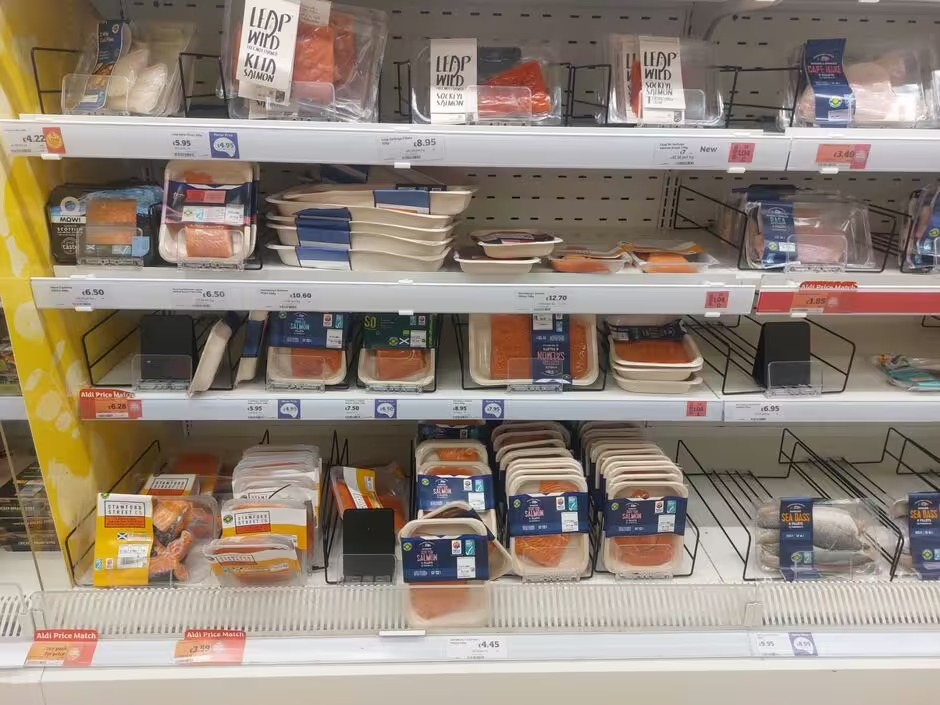
Sainsbury’s vs Aldi ! For years, I have been a loyal Sainsbury’s shopper, drawn by the convenience, variety, and quality of its products. However, a recent price hike on a single staple item forced me to rethink my loyalty — and ultimately sent me straight to Aldi. The Sainsbury’s vs Aldi price comparison highlights how small cost differences can influence everyday shopping choices in the UK, particularly for families and budget-conscious consumers.
Grocery prices have been steadily climbing across the country, with inflation, supply chain issues, and energy costs contributing to higher bills. While Sainsbury’s has maintained a reputation for quality and reliability, Aldi’s competitive pricing on essential items is increasingly appealing to regular shoppers looking to stretch their pounds further.
The tipping point came with the price of a standard 1-litre milk carton. At Sainsbury’s, it had recently increased to £1.40, whereas Aldi offered the same quantity for £0.95 — a saving of nearly 32%. While this might seem small in isolation, for someone shopping daily or feeding a family, the cost difference adds up quickly over time.

“I realised I could spend £10 less per week on the same basics by switching to Aldi for just a few items,” I reflected.
This experience illustrates how even minor price disparities can affect consumer habits, especially as shoppers become more aware of value for money.
Sainsbury’s remains appealing for its quality, brand variety, and convenience, often carrying premium and niche products that are harder to find elsewhere. However, Aldi has gained a strong following for its everyday essentials, including fresh produce, dairy, and pantry staples, often at significantly lower prices.
In many cases, Aldi’s house-brand items are indistinguishable in quality from branded equivalents at Sainsbury’s. For budget-conscious shoppers, this makes Aldi an increasingly attractive option, even for those who traditionally prioritise convenience or brand loyalty.
Retail analysts note that even a single high-priced item can trigger a shift in shopping habits. Once consumers notice a consistent price advantage elsewhere, they are more likely to explore alternatives and potentially change their regular shopping routines.
“Consumer behaviour is sensitive to perceived value. A noticeable price difference on staple goods can outweigh convenience or brand loyalty,” says retail analyst Claire Thompson.
In my case, the experience was a lesson in staying flexible as a shopper and regularly reviewing where I get the best value.
Switching one or two items to Aldi did not require a major change in routine, but it did involve a new route and learning a different store layout. Over time, I found that I could get all my staples without sacrificing quality while saving money.
Many shoppers report similar experiences, balancing convenience at larger chains like Sainsbury’s with cost savings at discount supermarkets.
The UK grocery market is seeing increased competition, with Aldi and Lidl capturing market share from traditional chains by focusing on affordability and private-label quality. Meanwhile, Tesco, Sainsbury’s, and Waitrose continue to emphasise customer service, premium offerings, and loyalty schemes.
Economic pressures have made shoppers more price-sensitive, encouraging experimentation and strategic switching between stores for specific items.

For consumers looking to maximise value while maintaining quality:
-
Compare staple prices between supermarkets regularly.
-
Consider buying high-volume or daily-use items at discount stores.
-
Use loyalty cards and vouchers to offset higher prices at convenience-focused chains.
-
Check product reviews for Aldi and Lidl brands to ensure quality.
-
Plan shopping trips to balance convenience and savings.
The experience demonstrates that a small price difference can have a big impact on budgets — and may influence long-term shopping habits.
While Sainsbury’s remains a favourite for many shoppers, the experience of switching one high-priced item to Aldi highlights the importance of value in everyday decisions. Rising prices across supermarkets make consumers more aware of cost differences, encouraging flexibility and strategic shopping.
For shoppers like me, loyalty may still matter — but not enough to ignore savings when they are staring at you on the shelves.
Related News:
 South Africa’s Garden Route Gem Faces Looming Water Crisis
 EXCLUSIVE: Shamed Andrew’s New Humiliation as King Lays Down New Rule After Royal Lodge Boot
 Labour Utterly Humiliated by Straight-Talking Mum Who Cut Through Keir Starmer’s Insanity
 Royal Family LIVE: ‘Pariah’ Andrew Mountbatten-Windsor Sparks Fresh Revolt Among Staff
 GMB Issues Bombshell Andrew Update Minutes Into Show as Furious Viewers ‘Switch Off’
 Possessions Stuck in Unsafe Flats Two Years On
 Stay Away from Collapsed Road, Council Urges
 Tributes to Hospital’s First Black Ward Sister
 I Stayed in Britain’s ‘Best’ and ‘Worst’ Hotels – Here’s What I Learnt