Published: 17 February 2025. The English Chronicle Desk. The English Chronicle Online
In the rugged Sudanese heartland stands one of the most evocative relics of British imperial history — the palace where General Charles George Gordon made his legendary Last Stand in Khartoum in 1885. But now this once-symbolic edifice, steeped in dramatic history and colonial memory, is on the verge of collapse. An urgent battle has begun to save the structure from decay as heritage groups, local custodians and international conservationists warn that time is rapidly running out.
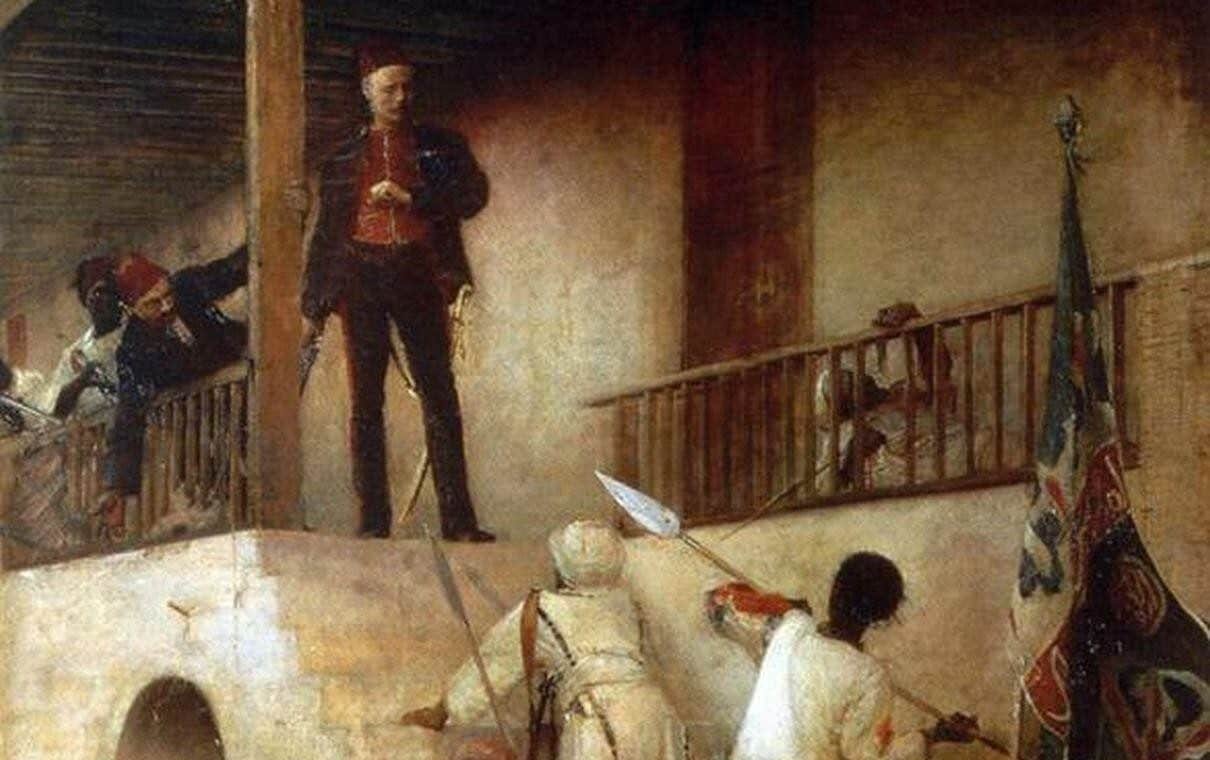
General Gordon — immortalised in British lore for his defiant leadership during the Mahdist siege — was killed when Khartoum fell to Mahdist forces after a protracted siege that captured global imagination. The building associated with his final defence has since weathered wars, revolutions and neglect. Today, its walls are pockmarked, its roof unstable and its foundations threatened by erosion and structural decay.

For local historians and Sudanese heritage advocates, the building is more than just a foreign relic; it is a testament to a pivotal chapter in Sudan’s own turbulent history. “This place holds stories that belong to all of us — not just one nation’s narrative,” said one preservationist who has been campaigning for years to secure emergency funding for restoration.
The palace’s plight reflects broader challenges facing Sudan’s heritage sites. Decades of conflict, economic hardship and political instability have left many historic structures vulnerable. With limited government resources and competing priorities such as infrastructure and public services, cultural preservation has often taken a back seat.
Now, as engineers and archaeologists survey the palace, the scale of the task has become apparent. Significant portions of the exterior walls are unstable, wooden beams are rotting, and centuries of wind and rain have swept away protective plaster. Without immediate intervention, experts warn the structure could be lost entirely within a matter of years.
International groups, including UNESCO and specialist conservation charities, have been approached for support. However, securing funding and political backing remains a complex process. In recent months, Sudanese officials have held meetings with foreign cultural agencies and philanthropists, emphasising the universal value of the site and seeking technical expertise.
The debate over the palace’s future also reflects tensions between preservation and ownership. Some local voices question whether foreign interest in the site — tied so closely to colonial history — should dictate its restoration. Others argue that collaborative international involvement is necessary to ensure the building’s survival.
British heritage organisations have expressed support for conservation efforts, framing the preservation of the palace as a bridge between historical understanding and cultural respect. They argue that safeguarding the site can foster education and dialogue about both shared and contested histories.
Yet practical challenges abound. Transporting materials, stabilising crumbling walls, and training local workers in specialised restoration techniques require significant investment. Meanwhile, political uncertainty in Sudan adds another layer of complexity, with shifting government priorities and security concerns complicating long-term planning.
Funding appeals have underscored the urgency. Estimates for emergency stabilisation alone run into the millions of pounds, and comprehensive restoration could cost many times more. Fundraisers have been launched in Europe and Africa, but progress has been slow.
Despite the obstacles, there are glimmers of hope. A consortium of archaeologists and engineers from Africa, Europe and the Middle East has outlined a phased plan that focuses first on structural reinforcement, followed by detailed conservation of masonry and interiors. Local artisans, eager to contribute, have already begun documenting traditional techniques that could be used in restoration work.

Community engagement has also risen. Residents of nearby Khartoum have organised volunteer clean-ups, educational tours and awareness campaigns to draw international attention. “This isn’t just an old building,” said a local teacher. “It’s part of our story — and we want it to stand for future generations.”
The palace’s symbolic power extends beyond Sudan’s borders. To British observers, it evokes the Victorian era’s imperial ambitions and the complexities of military heroism. To Sudanese citizens, it stands as a witness to resistance and change. For architects and conservationists, it represents the urgent global challenge of protecting vulnerable historic structures in conflict-affected regions.
As the battle to save the crumbling palace intensifies, time remains the most pressing adversary. Conservationists insist that without immediate action, the building’s gradual collapse will accelerate beyond the point of recovery. What emerges from this struggle will reveal not only whether an iconic piece of history can be preserved, but also how shared heritage can be protected amid the realities of politics, economics and cultural interpretation.