
The US military says two killed in strike on alleged drug boat after a targeted operation in the eastern Pacific, authorities confirmed on Friday, marking the continuation of a controversial campaign against suspected narco-trafficking vessels authorised by the current administration. The strike is the latest in a series of military actions in international waters that have drawn both support and criticism at home and abroad.
According to the United States Southern Command, the strike was carried out on Thursday against a vessel believed to be engaged in drug-smuggling operations. Intelligence reportedly showed the boat transiting along known narco-trafficking routes when it was struck. “Two narco-terrorists were killed during this action,” the command announced on social media platform X, adding that no U.S. personnel were harmed during the operation.

Operation Background and Ongoing Campaign
The U.S. military’s campaign against naval drug trafficking, often referred to as Operation Southern Spear, began in September 2025 under the direction of President Donald Trump’s administration. It has seen dozens of strikes against small vessels in the Caribbean Sea and eastern Pacific, with the U.S. asserting that these operations disrupt significant trafficking networks and curb the flow of illegal narcotics.
Thursday’s strike brings the reported death toll from these operations to at least 128 people killed across multiple engagements. While the military describes those killed as “narco-terrorists,” critics have questioned the legal basis and evidence supporting many of the strike claims.
The boat was destroyed after being located by U.S. intelligence assets, with footage shared by Southern Command showing the vessel exploding and engulfed in flames. The military says it acted in international waters, targeting what it claimed to be drug trafficking activities.
Political and Legal Debate
Supporters of the strikes, including senior administration officials, argue that military action against traffickers at sea is a necessary step to protect American citizens from the devastating impact of illicit drugs. President Trump has labelled some Latin American cartels as terrorist organisations and has framed the operations as part of a broader campaign to weaken their influence and capability.
However, the strikes have sparked heated debate in the United States and internationally. Legal experts and human rights advocates have raised concerns about the operations’ compliance with international law, noting that lethal military force against unverified suspects in international waters may lack proper legal authority. Critics also point out that the U.S. government has provided limited evidence that the targeted vessels were directly tied to drug shipments bound for the United States or that those aboard were confirmed traffickers rather than civilians.
Earlier lawsuits have been filed by relatives of victims killed in previous strikes, including claims that some attacks constituted unlawful killings or war crimes. In one high-profile case, the families of two men killed in a 2025 strike near Venezuela filed a wrongful death lawsuit against the U.S. government, arguing that the victims were not legitimate military targets and that the administration failed to justify the use of lethal force.
Impact and International Response
International observers and allied countries have watched the campaign closely, with some smaller nations in the region expressing unease over military actions in waters near their territories. While many governments support efforts to curb drug trafficking, there is concern that military force without clear judicial oversight could set a dangerous precedent. Human rights organisations have urged greater transparency in the intelligence used to justify strikes and for more stringent accountability mechanisms.
Domestically, the campaign has become a point of contention in U.S. politics, with lawmakers from both parties debating whether Congress has adequately authorised the use of military force for these operations. Many Democrats have criticised the administration’s approach as heavy-handed and lacking clear legal backing, while some Republicans defend it as a bold effort to protect U.S. borders and populations from drug-related harm.

What Comes Next?
The latest strike adds to a growing tally of lethal engagements that have kept the issue at the forefront of debates over U.S. military strategy, drug policy and foreign relations. Analysts say continued operations could face increased legal challenges and public scrutiny, particularly if civilian casualties or misidentifications are alleged.
For now, the US military says two killed in strike on alleged drug boat stands as the most recent chapter in a contentious and evolving military campaign aimed at disrupting international narcotics traffic — one that has reshaped how the United States confronts drug smuggling beyond its borders.
Publication Details
Published: 6 February 2026
The English Chronicle Desk
The English Chronicle Online
Related News:
 Thousands Protest ICE Operations in Nationwide US Day of Action
 US Defence Chief on Drug Boat Strike: “Did Not See Survivors”
 Trump Says US Will Act on Greenland ‘Whether They Like It or Not’
 Trump Receives Machado’s Nobel Medal in White House Meeting
 Emails Show Epstein Funded Mandelson’s Husband After Jail
 Epstein Files Reveal Trump Officials’ Emails with Financier
 Thousands Protest ICE in New York Against Trump Deportation Campaign
 US Must Be Prudent When Supplying Arms to Taiwan, Xi Tells Trump
 Fears of New Arms Race as US-Russia Nuclear Weapons Treaty Expires
 Trump Administration Dismisses 17 Immigration Judges, Sparking Debate Over Judicial Independence
 Northern Ireland Family of Three Shot Dead in Maguiresbridge Home Incident
 A Fugitive’s Double Life Uncovered: My Interview with Nicholas Rossi, Scotland’s Notorious Escapee Facing Utah Rape Trial
 Ministers Accused of Defamation Over Palestine Action Ban and Mass Arrests
 Failed New Mexico Candidate Sentenced to 80 Years for Drive-By Shootings at Lawmakers’ Homes
 Jailed Georgian Opposition Leaders Warn UK of Iranian Links to Ruling Party
 UK Extradition Law Change Sparks Fears Among Hong Kong Dissidents
 UK Gamer Recruited by Wagner Group Found Guilty of Arson
 Johnson Approved China’s London ‘Super-Embassy’ in 2018
 Just Stop Oil Protesters Convicted Amid Climate Defence Row
 China-critical UK academics face ‘extremely heavy’ pressure from Beijing
 British Grandmother to Return Home After Death Sentence in Bali
 Trump Urges Herzog to Grant Netanyahu Full Pardon
 US Justice Department Files Lawsuit Against California Over Partisan Voting Maps
 Oklahoma Governor Grants Last-Minute Clemency to Death Row Inmate
 Trump Deploys DHS to Charlotte in Major Arrest Operation
 Congress Approves Release of Epstein Files, Trump Expected to Sign
 Texas Governor Faces Lawsuit From CAIR
 Two National Guard Soldiers Critically Injured Near White House
 US National Guard Member Killed in DC Shooting
 Trump to Recheck Green Cards from 19 Nations After DC Attack
 Tokyo court rules Japan’s same-sex marriage ban constitutional
 Chinese & Japanese Boats Clash Near Disputed Islands
 Putin Meets US Envoy Amid Key Ukraine Peace Talks
 Indonesia to Repatriate Two Dutch Drug Convicts
 American Mother Extradited From UK to U.S. on Murder Charges
 Russia losses Ukraine war peace talks intensify amid rising deaths
 Trump Taiwan China drills: US President Downplays Tensions
 US Venezuela protests sweep cities after intervention
 US Cities Erupt in Protests Against Trump’s Venezuela Military Action
 Migrant father guilty of honour killing in Holland
 Shock US Raid: Maduro Pleads Not Guilty in Manhattan Court
 UK and France Agree Troop Deployment Plan for Ukraine
 Trump Escalates Minnesota Immigration Surge Amid Rising Tensions
 Capitol Attack Anniversary Sparks Deep Political Divide
 EU Weakens as Trump Targets Venezuela and Greenland
 Israel Dossier Sparks Australian Political Interference Concern
 Venezuela Oil Deal Opens Tensions with US Control
 Trump Labels Renee Good a ‘Paid Agitator’ After Minneapolis ICE Killing
 Trump Says US Must ‘Own’ Greenland to Block Russia, China
 US Citizens Warned to Venezuela Flee Amid Paramilitary Threats
 Trump Weighs Response to Iran Crackdown as Tehran Says Communication Open With US
 Australia’s US Ambassador Rudd to Step Down Early
 Trump Administration Probe of Fed’s Powell Draws Pushback
 Trump targets Iran trade with 25% tariff warning
 US Clears Nvidia AI Chip Sales to China in Policy Shift
 Trump Threatens Strong Action If Iran Executes Protesters
 Gulf states warn Trump Iran strikes risk wider Middle East war
 Machado Trump medal gesture reshapes Venezuela power struggle
 Greenland defence seen as shared Nato duty amid troop arrivals
 Iran unrest slows under brutal crackdown and global tensions
 Greenland Crisis Forces Europe to Draw a Line With Trump
 Guterres Warns Global Cooperation Under Threat at UN’s 80th Year
 Iran Cannot Be Bombed Into Democracy, Only Helped There
 South Korea Jails Ex-President in Martial Law Ruling
 Syria President Declares Victory as Ceasefire Reached with SDF
 US Considers Asylum for British Jews Amid Rising Antisemitism
 Starmer tariffs stance rejects US trade retaliation
 Trump Aide Sparks Fury as Greenland Dispute Intensifies
 American democracy faces crisis after Trump’s return
 Historic Abu Dhabi Talks Bring US, Ukraine and Russia Together
 EU Says US Ties Have Suffered ‘Big Blow’ After Greenland Crisis
 Russia Strikes Kyiv and Kharkiv as Peace Talks Enter Day Two
 Border Patrol Commander Leaves Minneapolis After Fatal Shooting
 Arizona border shooting leaves suspect hospitalised after agent pursuit
 Videos reveal earlier clash before Alex Pretti shooting
 Files Link Andrew to Epstein Dinner After Prison Release
 Partial US Government Shutdown Hits Homeland Security Funding
 ‘Painful Times’ as Melinda Gates Responds to Epstein Files
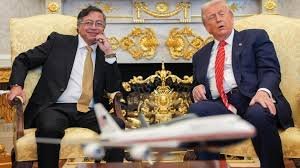 Trump Praises ‘Terrific’ Petro After White House Talks
 Starmer to Release Mandelson Files