Published: 10 February 2026. The English Chronicle Desk. The English Chronicle Online.
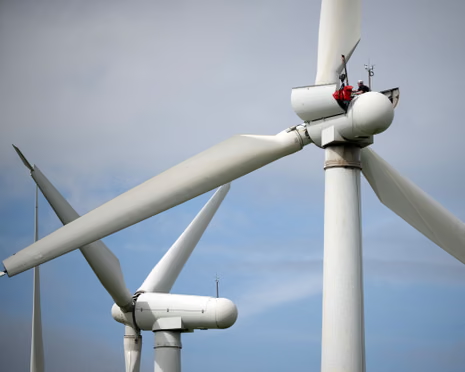
The UK government has dramatically expanded its renewable energy programme, awarding unprecedented green contracts aimed at transforming British power networks and boosting national energy security. The focus now is on renewable power capacity growth and a clean future that will profoundly alter how electricity is generated across the country. Green renewables have emerged at the heart of political strategy, promising to accelerate the shift from fossil fuel dependency to a system rooted in sustainability and innovation. The surge in renewable contracts also reflects a growing belief that Britain can lead the global clean energy transition. Green renewables now drive investments in onshore wind farms, solar arrays, and tidal schemes that will reshape the nation’s energy landscape. Green renewables are featured at the core of the government’s new Contracts for Difference scheme, which guarantees fixed prices for electricity to developers and gives them the confidence to build at scale. Today’s auction results show that Britain has awarded contracts of record scale, including support for the largest English onshore windfarm in a decade, and many other projects across the country. These contract awards follow the policy decision to remove a practical ban on onshore wind development in England, enabling communities to host new turbines and contribute to local clean energy generation. Green renewables will play a central role in securing the energy grid, reducing emissions, and fostering economic opportunities in regions that embrace this new era of power production.

Record allocations in this latest round include funding for more than 150 solar projects, nearly thirty onshore wind developments, and several tidal power initiatives that will add competitive capacity to the system. The government’s approach sets guaranteed prices below those of conventional gas generation, driving down long-term energy costs for households and businesses alike. This aggressive scaling of green renewables has attracted global attention and industry praise, as investors see growing confidence in the UK’s clean power ambitions.
Energy Secretary Ed Miliband emphasised that green renewables are not only about climate commitments but also about strengthening the economy and protecting families from volatile fossil fuel markets. The fixed pricing arrangements mean that when market electricity prices are low, developers are protected, and when prices are high, bill payers benefit from refunds, giving consumers greater stability and predictability. This arrangement aims to cushion energy bills, making clean energy both affordable and reliable.
The expansion of green renewables also brings significant employment and supply chain opportunities. Thousands of jobs are expected to be created across project development, turbine manufacturing, and grid connection infrastructure. Local communities hosting these projects could see investment in training programmes and ancillary services that come with large-scale construction and operation. Economists note that this comprehensive growth in green renewables will extend well beyond the energy sector, supporting innovation and decarbonisation in transport, housing, and industry.
Despite these advances, challenges remain. Planning and grid connection delays have previously held back some renewable projects, and analysts warn that these bottlenecks must be addressed to sustain momentum. Nonetheless, the latest contracts represent a milestone in the UK’s clean energy journey and underline the government’s determination to meet its 2030 decarbonisation goals.

As green renewables become entrenched in Britain’s power mix, there is growing public support for the transition, with many seeing tangible benefits in local clean energy production. Nationwide efforts to streamline regulatory processes and enhance grid capacity are now underway, aiming to unlock further potential for wind, solar, and marine energy sources.
Green renewables are expected to deliver long-term benefits by safeguarding energy independence, lowering emissions, and stimulating investment in future technologies. Experts believe that continued expansion of renewable capacity will be critical if the UK is to reach its net zero targets and secure a resilient, sustainable energy system for generations to come.
Related News:
 Peterborough Mosques Tighten Security After Attack
 Reeves Faces Setback as Labour May Miss Homes Target
 Hospice Cuts Raise Alarm Across England Amid Funding Crisis
 Kate Winslet to Narrate Film Highlighting King’s Environmental Mission
 Green Party Surges Past Labour in Latest UK Poll
 Trump’s UK Ambassador Urges North Sea Drilling to Strengthen US Ties
 Children to Learn Local History in Major Curriculum Overhaul
 Granit Xhaka Rescue Earns Everton Draw at Sunderland
 French Taxi Driver Cleared in David Lammy Theft Case After Fare Dispute
 UK Bans Fake Numbers: Scammers Lose Their Trick
 Prince William Plants Trees with Brazil’s Nature Heroes
 M&S Profits More Than Halve After Cyber-Attack
 Just Stop Oil Protesters Convicted Amid Climate Defence Row
 Kent village told to remove flags before Christmas lights go up
 Patients to Test Health at Home to Ease NHS Winter Pressure
 King Charles to Lead Nation in Remembrance Sunday Service
 How to get help when a child goes missing – call 999 urgently
 Palace May Restore Hyphen to Andrew Mountbatten-Windsor’s Name
 Millionaires group urge Reeves to introduce wealth tax to ‘lift kids out of poverty’
 Starmer Faces Growing Dissent as Labour MPs Weigh Leadership Challenge
 Shouting Works Best to Deter Gulls, UK Study Finds
 Reeves rejects £1bn plea for NHS redundancy payouts
 Northern Lights may illuminate UK skies this week
 PM Condemns Leaks, Vows Loyalty to Ministers and Stability
 Son Reveals UK Couple in Iran Resort to Hunger Strike for Help
 Major Rent Reform Ends No-Fault Evictions in England
 Peers Flood Assisted Dying Bill with 942 Amendments
 Former Lion Heskey Warns of Shortage of England Strikers
 Criminal Gangs Pose as Truckers to Hijack UK Supply Chains
 Stroke Patient Mistaken for Drunk, Care Delayed
 Mother Watches in Horror as Teen Daughter Dies on Tracks
 Van Dwellers Face Eviction After Park Misuse Sparks Outcry
 ‘Traumatic Wait’: Northern Ireland Women Face Breast Cancer Delays
 Serial Rapist and Former Cop Found Guilty Again
 Royal Navy Shadows Russian Warships Entering the Channel
 Inside the Helpline Protecting Missing Children in the UK
 Most Tories Expect to Support a Farage-Led Government
 Boots Showstopper Beauty Bundle Outshines Many Advent Calendars This Holiday Season
 Bill Murray Terrified Wes Anderson but Became His Closest Collaborator
 Labour’s ‘blinkered’ drive to build risks pushing wildlife to point of no return, nature experts warn
 PlayStation PS5 Deals Hit Lowest Prices Ahead of Black Friday
 Karen Carney Stuns on Blackpool Week, Deserves Strictly Final
 Five-Year-Old Dies After Rare Tonsil Surgery Complication
 Fibromyalgia Patients Struggle as NHS Fails to Provide Care
 Starmer Says Labour’s Economic Plan Needs Years to Deliver
 Virgin Media Fined £23.8m Over Telecare Safety Failures
 More Patients Now Contacting GPs Online, Data Shows
 UK unemployment rises to four-year high of 5.1% before budget
 Culture secretary to review Telegraph takeover by Daily Mail owner
 Wiltshire Police Use Lasso to Catch Rampaging Village Goat
 Prince George Helps Father at London Homelessness Charity
 Children to Receive Home Vaccines as England Acts
 Cambridge College Faces Backlash Over Private School Recruitment
 NHS Violence Crisis: Staff Face Daily Assaults
 Celebrity Campaign Highlights SMA Screening Failures
 Bereaved Fathers Gain New Paternity Leave Rights in UK
 Storm Goretti leaves Cornwall homes without power
 New Documentary Examines Teen’s Zombie Knife Murder
 Woman Jailed for Life After Killing E-Bike Rider in Tragic Mistaken Identity Case
 Right Must Unite After Jenrick Defection, Urges Rees-Mogg
 UK Ministers Drop Foreign Student Targets for Global Education Push
MPs warn AI financial risks threaten UK stability
UK Ministers Drop Foreign Student Targets for Global Education Push
MPs warn AI financial risks threaten UK stability
 No Gas Boiler Ban as UK Warm Homes Plan Backs Heat Pumps
 UK Glaucoma Rise Signals Looming Eye Health Crisis by 2060
 Shinzo Abe’s killer receives life sentence in Japan
 Police response times face strict new national limits
 Edinburgh, Glasgow Lead UK Nightlife Hotspots, Uber Data
 Labour policing overhaul sparks fears over growing central control
 Devon hosts first high-density hydro power system
 Pornhub blocks new UK users over age checks dispute
 Reform candidate sparks British identity row in byelection
 Starmer warns of toxic division politics in Reform challenge
 Households in England Face Rising Water Bills in April
 UK New Car Discounts Near £6,000 as Prices Are Slashed
 Pneumonia Surge Pushes England Emergency Cases Higher
 Harvey Willgoose School Stabbing Red Flags Missed
 Email Appears to Confirm Photo of Andrew With Virginia Giuffre Is Real
 Wigan Dump Crisis Sparks Health and Safety Alarm
 Palantir contracts face UK halt calls over transparency
 Teen Girl Chased in Broad Daylight in Ipswich