Published: 18 January 2026. The English Chronicle Desk. The English Chronicle Online
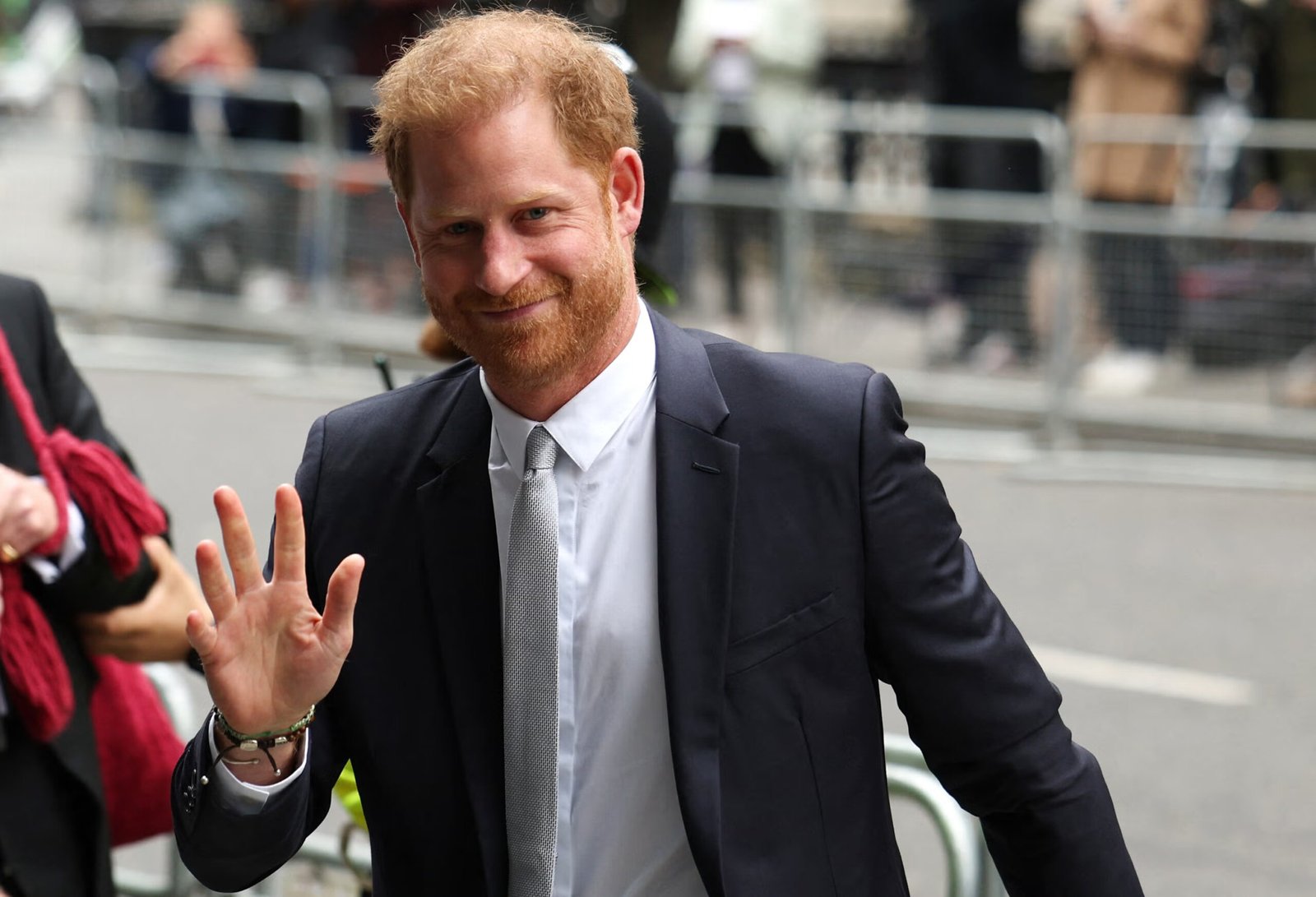
On Monday morning, courtroom 76 of the High Court in London will become the stage for one of the most consequential media trials in modern British history. Prince Harry’s long-running legal battle against the Daily Mail, one of the most powerful and influential newspapers in the UK, is finally set to be heard. The outcome could reverberate far beyond the personal grievances of a royal, potentially reshaping the boundaries of press freedom, privacy and accountability in Britain.
Prince Harry is not alone in this confrontation. Standing alongside him are figures whose names are woven deeply into British public life. Music legend Sir Elton John and his husband David Furnish are among the claimants, as are actors Liz Hurley and Sadie Frost. They are joined by Baroness Doreen Lawrence, whose son Stephen Lawrence was murdered in a racist attack in 1993, and former Liberal Democrat politician Simon Hughes. Together, they are challenging the publisher Associated Newspapers, the company behind the Daily Mail and its sister title, the Mail on Sunday.

At the heart of the case are allegations that strike at the core of journalistic ethics. The claimants allege that over many years the newspapers engaged in widespread unlawful information gathering. This, they say, included intercepting voicemails, tapping landlines, paying corrupt police officers, obtaining medical records through deception and even bugging private homes. Associated Newspapers has rejected these claims outright, describing them as “preposterous” and an insult to the integrity of its journalists.
The trial is expected to be fiercely contested. Paul Dacre, the long-serving and highly influential former editor-in-chief of the Daily Mail, is expected to give evidence. His appearance alone underscores the significance of the proceedings, which are projected to cost around £38m once legal fees on both sides are taken into account. Over the next nine weeks, the court will hear testimony that could expose decades of newsroom practices to unprecedented scrutiny.
For Prince Harry, this case is deeply personal. His hostility towards the British tabloid press is rooted in childhood trauma and reinforced by more recent experiences. His mother, Diana, Princess of Wales, died in a car crash in Paris in 1997 while being pursued by paparazzi, an event that left an indelible mark on her younger son. In adulthood, Harry has repeatedly criticised the media’s treatment of his wife, Meghan, the Duchess of Sussex, whom he believes was hounded and misrepresented.
That anger has already found expression in the courts. In 2021, the Mail on Sunday was found to have breached Meghan’s privacy by publishing extracts from a personal letter she had written to her estranged father. Two years later, Prince Harry made history by becoming the first senior royal in more than 130 years to give evidence in court when he testified against the publisher of the Daily Mirror. In that case, the judge ruled that Harry’s phone had been hacked “to a modest extent” between 2003 and 2009, awarding him more than £140,000 in damages.
Last year, Harry’s lawsuit against the publisher of the Sun and the now-defunct News of the World was settled at the doors of the court for a reported sum of about £10m. The publisher issued a public apology, acknowledging phone hacking and serious intrusion into Harry’s private life. These victories have strengthened the prince’s resolve, convincing him that confronting the tabloids is not only justified but necessary.
Yet the Daily Mail case is different. Associated Newspapers has shown no sign of backing down, and the legal and reputational risks are immense for both sides. For Harry, the case has come at a significant personal and financial cost. In his memoir, Spare, he described how his determination to hold the press to account strained his relationship with his father, King Charles, and his brother, Prince William, whom he felt were unwilling to challenge media wrongdoing publicly.
The case also hinges on controversial witnesses and disputed evidence. One central figure for the claimants is Graham Johnson, a former journalist who has investigated alleged wrongdoing at the Mail titles since 2015. Johnson’s credibility has been attacked vigorously by the defence. He previously pleaded guilty to phone hacking while working at the Sunday Mirror and has openly admitted in his memoir that he fabricated stories during his tabloid career before undergoing a moral reckoning.
Another complicating factor is the role of private investigators. Gavin Burrows, once thought to be a key witness, has retracted an earlier statement, claiming his signature was forged. Meanwhile, allegations involving Jonathan Rees, a private investigator with a notorious past, add further complexity. Rees has denied working for the Daily Mail but has claimed he was aware of surveillance allegedly carried out on Baroness Lawrence and her family, though he admits he cannot provide documentary proof.
Baroness Lawrence’s involvement lends the case particular moral weight. In 1997, the Daily Mail famously accused five men of murdering her son, Stephen, in a front-page headline that became iconic. Two of those men were later convicted, and Lawrence has previously expressed gratitude to the paper for its support. Her decision to join this legal action underscores the shock she felt when Prince Harry contacted her in 2022 to suggest she may herself have been targeted by unlawful information gathering.
Lawrence has said she was “floored” by the suggestion that her phone calls might have been intercepted while she was campaigning for justice for her son. Her claim includes the most incendiary allegation of all: that the Daily Mail instructed private investigators to conduct covert surveillance on her. Associated Newspapers has categorically denied this, and Rees is not expected to testify.

As the trial begins, the stakes could hardly be higher. If the claimants lose, they risk being saddled with enormous legal costs, potentially exceeding the limits of their insurance. The judge has already warned that coverage may not be sufficient. For the Daily Mail, victory would protect its reputation but may still leave lingering questions in the public mind. Defeat, on the other hand, could expose the paper to damages, further lawsuits and lasting damage to its standing.
Timing will also be crucial. The case was filed in 2022, and privacy claims are subject to a six-year limitation period from the point at which claimants became aware of potential wrongdoing. The Mail is expected to argue that the claims are time-barred. Even if successful, such a defence may be seen by critics as a technical escape rather than a moral vindication.
Whatever the verdict, the trial is set to shine an unforgiving light on the relationship between power, privacy and the press in the UK. For Prince Harry, pursuing what he sees as accountability is worth the risk. For the Daily Mail, defending its journalistic legacy is a matter of survival. As evidence unfolds and reputations are tested under oath, the broader question remains whether this confrontation can produce any true winners, or whether it will simply expose the deep scars left by decades of conflict between the powerful and those who report on them.
Related News:
 Tasers Introduced in UK Prisons to Combat Rising Violence and Protect Staff
 Supreme Court Ruling on Car Finance Scandal Poised to Impact Millions of Motorists and Banks
 Targeted Attack in Bury Sparks Murder Investigation as Community Awaits Justice
 Man Remanded After Children Fall Ill at Leicestershire Summer Camp in Shocking Child Cruelty Case
 Prison System Faced Collapse Under Sunak’s Leadership, Reveals Damning Review
 Hunt Intensifies for Southport Riot Suspects as Police Release Full List of 40 Still at Large
 AI Revolutionises Grooming Gang Investigations as Police Target Cold Cases Across England and Wales
 Diane lost her husband to a reckless driver — and the long wait for justice was nearly just as agonizing.
 UK Begins Migrant Returns Under Landmark Deal with France Amid Rising Channel Crossings
 David Lammy Faces Possible Legal Challenge Over Foreign Office Secondment Scheme
 Ministers Accused of Defamation Over Palestine Action Ban and Mass Arrests
 Police Advised to Disclose Ethnicity of Suspects in High-Profile Cases
 Inquest Finds Agency Worker Failings Led to Unlawful Death of Vulnerable 14-Year-Old
 Sally Rooney Pledges BBC Royalties to Support Palestine Action Despite UK Terror Ban
 Major Brand Has Advert Banned for Suggesting Black Skin Is ‘Problematic’
Government Signs Deal with Iraq to Return Illegal Migrants in Latest Bid to Deter Small Boats
Major Brand Has Advert Banned for Suggesting Black Skin Is ‘Problematic’
Government Signs Deal with Iraq to Return Illegal Migrants in Latest Bid to Deter Small Boats
 Migrant Hotel Chaos as Councils Consider Legal Action to Ban Asylum Seekers
 Merseyside Police Helicopter Crew Cleared After Low-Altitude Pursuit of Suspect
 High Court Rules Against Noel Clarke in Libel Case Against Guardian Publisher
 Angela Rayner Admits Underpaying Stamp Duty on £800,000 Seaside Flat
 Angela Rayner Faces Scrutiny as Stamp Duty Row Deepens
 Tanni Grey-Thompson Faces Abuse Over Opposition to Assisted Dying Bill
 Court Staff Cover Banksy Artwork of Judge Striking Protester on London’s Royal Courts of Justice
 UK Launches Major Crackdown on Networks Profiting from Online Child Sexual Abuse
 First “One In, One Out” Deportation Flight Departs Without Migrants Amid Legal Challenges
 Hillsborough Law to Hold Public Officials Accountable, Promising Jail for Serious Misconduct
 Corbyn and Sultana Clash Over Membership Portal as Divisions Surface in New Leftwing Party
 Commons Speaker Warns UK Parliament Vulnerable to Foreign Espionage After China-Linked Case Dropped
 Mahmood Pledges Reform of Modern Slavery Laws After Court Blocks Deportation Appeal
 Migrants in UK May Need to Contribute or Face Removal, Home Secretary Signals
 Jailed Georgian Opposition Leaders Warn UK of Iranian Links to Ruling Party
 No Evidence Found to Substantiate Alleged Rape in Oxfordshire Churchyard, Police Confirm
 MPs’ pay watchdog seeks to give public greater voice in how politicians are funded
 Digital ID Plans Ignite Debate Over £600m Treasury Tax Boost and Privacy Concerns
 Madeleine McCann Detectives to Testify Against Woman Accused of Stalking the Family
 Boris Johnson Breached Rules on Post-Office Business Contacts
 Judge Slams Lawyer for Using AI in Asylum Case
 Lucy Powell urged ministers to reconsider costly legal case for Labour donor’s firm
 Starmer Accused of Creating ‘Toxic Downing Street’
 UK Gamer Recruited by Wagner Group Found Guilty of Arson
 Migrant Sex Offender Deported After Erroneous Prison Release
Johnson Approved China’s London ‘Super-Embassy’ in 2018
Migrant Sex Offender Deported After Erroneous Prison Release
Johnson Approved China’s London ‘Super-Embassy’ in 2018
 Five More Prisoners Freed by Mistake in Essex Week
 Nearly 48,000 Zombie Knives Removed from UK Streets in a Year
 Afghan man charged with murder after west London knife attack
 Phillipson urges careful review of gender recognition guidance
 French Taxi Driver Cleared in David Lammy Theft Case After Fare Dispute
 Just Stop Oil Protesters Convicted Amid Climate Defence Row
 Met Police Culture Makes Racial Harm ‘Inevitable’
 Newcastle United Lifts Ban on Fan Over Gender-Critical Views
 British Grandmother to Return Home After Death Sentence in Bali
 Remaining rebel Labour MPs have whip restored
 King Charles to Lead Nation in Remembrance Sunday Service
 Government urges schools to ban phones to curb classroom disruption
 Palace to reinstate hyphen in Andrew’s surname
 Pop Stars Call on UK Government to Cap Resale Prices for Fans
 Victims’ commissioner Baroness Newlove dies aged 63
 Major Rent Reform Ends No-Fault Evictions in England
 Peers Flood Assisted Dying Bill with 942 Amendments
 UK Unveils Fast-Track Deportation and Asylum Overhaul
 UK Asylum Overhaul Sparks Debate Over Human Rights and Deportations
 UK Asylum Reforms: Temporary Refugee Status and Faster Deportations
 Mahmood Defends Tough Overhaul of UK Asylum System
 Paralegal Fired After Exposé on Illegal Worker Scam
 Westminster Advances Legacy Bill Amid Criticism
 Minister Defends Tough New Asylum Reform Plan
 Serial Rapist and Former Cop Found Guilty Again
 Peers Get Extra Time to Debate Assisted Dying Bill
 Second homes curbs quashed in Gwynedd legal ruling
 Virgin Media Fined £23.8m Over Telecare Safety Failures
 UK Police Forces Face Criticism Over Biased Facial Recognition Use
 Met Police Under Scrutiny for Vetting Failures Among Hundreds of Recruits
 Starmer’s communications chief to outline media strategy overhaul
 BBC Moves to Dismiss Trump’s $10bn Lawsuit Over Panorama Programme
 Freemasons Seek Injunction Over Met Officers’ Membership Policy
 Google Employee Claims Redundancy After Harassment Report
 Plans to Limit Jury Trials Face Retreat After Mounting Opposition
 Woman Jailed for Life After Killing E-Bike Rider in Tragic Mistaken Identity Case
 Betfair Faces Pressure Over Funds Lost to Gambling Fraud
 HMRC Delays Leave Taxpayers Waiting Over a Year for Refunds