Published: 02 February 2026. The English Chronicle Desk. The English Chronicle Online.
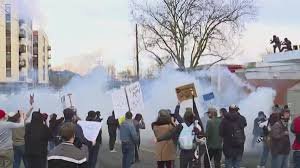
Portland’s mayor has called for ICE to leave the city after federal agents used teargas during a peaceful ICE protest, sparking widespread outrage. The focus on the ICE protest emerged immediately, as thousands gathered outside the South Waterfront facility, expressing anger over immigration enforcement practices. Witnesses described chaotic scenes, with families and children caught in clouds of gas, while agents deployed rubber bullets and pepper balls indiscriminately. Mayor Keith Wilson condemned the use of violence, emphasizing that most demonstrators posed no threat and had acted lawfully throughout the daytime march.
The protest, which took place on Saturday, highlighted the growing tension between local authorities and federal enforcement agencies. Erin Hoover Barnett, a former OregonLive reporter, recounted her proximity to the facility when agents launched gas canisters toward the crowd. “Parents were frantically tending to small children, while others struggled to navigate amid the chaos,” Barnett said. The demonstration, she added, was entirely peaceful until federal officers escalated the situation with aggressive tactics.

Wilson issued a strong statement calling for ICE personnel to resign and vacate the city. He declared that their actions during the ICE protest had replaced legitimacy with shame, noting that the use of chemical agents against civilians, including children, was unacceptable. Local police monitored the event but did not intervene aggressively, and the Portland fire bureau dispatched paramedics to care for those affected by exposure to teargas and pepper spray.
This ICE protest follows a series of similar demonstrations across the United States. In Minneapolis, federal intervention recently resulted in the deaths of two residents, Alex Pretti and Renee Good, intensifying public concern over the deployment of federal agents in civilian spaces. In Eugene, Oregon, protesters faced teargas when attempting to enter a federal building, with city authorities declaring a riot and ordering dispersal.
The national political response has further inflamed tensions. Former President Donald Trump posted on social media, asserting that local law enforcement should manage protests but insisted that ICE and Border Patrol maintain vigilance in protecting federal property. His statement emphasized punitive measures for anyone assaulting officers or property, framing enforcement as a matter of defending government institutions.
Portland’s mayor countered by introducing a fee on detention facilities that deploy chemical agents, signaling a municipal effort to hold federal authorities accountable. Wilson urged federal personnel to reconsider their actions, calling their use of force against children and peaceful demonstrators during the ICE protest “sickening” and morally indefensible.
Public reaction to the ICE protest has been immediate and widespread. Social media users shared images of children and elderly citizens fleeing clouds of gas, sparking renewed debate about federal overreach and the militarization of immigration enforcement. Advocacy groups have called for national oversight, highlighting the dangers posed by unregulated federal interventions in local communities.
Legal experts argue that these actions may violate constitutional protections, including the Fourth Amendment’s safeguards against excessive force. Civil rights organisations have demanded investigations into the events, particularly the targeting of minors and non-threatening participants. Portland’s decision to levy fines on chemical agent use in detention facilities represents a tangible attempt to enforce accountability, potentially setting a precedent for other municipalities facing similar challenges.
The ICE protest has reignited broader discussions about the role of federal agencies in local governance. Citizens and officials alike question the balance between national security mandates and the protection of civil liberties, underscoring the delicate interplay between federal authority and local autonomy. Political analysts note that Portland’s stance could influence policies in other cities, particularly as protests continue nationwide.
Eyewitness accounts from Saturday’s event describe a surreal atmosphere, with families using strollers and motorised carts to navigate the gas-filled streets. Barnett described the scene as terrifying, noting the confusion and panic among attendees who had not anticipated violence. Such accounts amplify concerns that federal actions are escalating rather than calming public unrest, contrary to official statements intended to justify aggressive measures.
International observers have taken note of the unfolding situation, with media outlets in Europe and Asia highlighting the ICE protest as indicative of growing civil resistance in the United States. The coverage underscores a pattern of confrontations between federal agents and local populations, particularly in regions where immigration enforcement has become a flashpoint.

Portland’s mayor insists that ICE personnel must answer for their conduct, warning that their actions are subject to legal and civic scrutiny. He emphasised that the use of chemical agents in a civilian context, especially against children, represents a moral and legal breach. Advocacy groups have praised the city’s stance, calling it a model for how municipalities can push back against federal overreach.
As Portland and other cities navigate these challenges, the tension between federal authority and local governance remains unresolved. Residents and officials alike are pressing for transparency, legal safeguards, and ethical enforcement practices, ensuring that public safety measures do not come at the expense of fundamental rights. The city’s proactive steps, including penalties for chemical agent use, represent a significant assertion of local oversight and community protection.
In conclusion, Portland’s confrontation with ICE underscores the delicate balance between enforcing national policies and protecting individual rights. The mayor’s demand for ICE to leave, coupled with tangible penalties on chemical agent use, marks a bold assertion of local governance. As public scrutiny intensifies, ICE faces mounting pressure to justify its actions, while communities nationwide watch closely, debating the appropriate limits of federal enforcement in civilian spaces.
Related News:
 Two National Guard Soldiers Critically Injured Near White House
 Putin Intensifies Territorial Demands Before US Talks
 US National Guard Member Killed in DC Shooting
 Trump to Recheck Green Cards from 19 Nations After DC Attack
 Trump to pause migration from ‘third-world countries’
 US Defence Chief on Drug Boat Strike: “Did Not See Survivors”
 Republicans Hold Tennessee Seat Despite Democratic Surge
 Franklin Turtle, Sabrina Carpenter Slam US Social Media Use
 American Mother Extradited From UK to U.S. on Murder Charges
 Russia losses Ukraine war peace talks intensify amid rising deaths
 US Cities Erupt in Protests Against Trump’s Venezuela Military Action
 Trump Escalates Minnesota Immigration Surge Amid Rising Tensions
 Capitol Attack Anniversary Sparks Deep Political Divide
 Portland Shooting: Federal Agents Open Fire Near Hospital
 Trump Labels Renee Good a ‘Paid Agitator’ After Minneapolis ICE Killing
 Federal Immigration Shift: Officers Leave Louisiana for Minneapolis
 Trump Says US Must ‘Own’ Greenland to Block Russia, China
 Homeland security agents deployed amid Minneapolis protests
 Minneapolis mayor demands state access to Renee Good probe
 Democrats Push Affordability to Challenge Trump Ahead of Votes
 German Supermarket Aldi to Open 180 US Stores This Year
 US judge allows Ørsted to resume Rhode Island offshore wind project
 Minnesota Sues Trump Administration Over ICE Surge
 Trump targets Iran trade with 25% tariff warning
 Greenland Faces Pivotal Summit Over Arctic Power Struggle
 US Clears Nvidia AI Chip Sales to China in Policy Shift
 Trump Threatens Strong Action If Iran Executes Protesters
 Government Unveils Northern Powerhouse Rail Plans
 Portland man pleads not guilty after Border Patrol shooting
 Trump press secretary attacks reporter over ICE question
 Kyrsten Sinema Faces High-Profile Lawsuit Over Marriage Interference
 ICE detainee death may be investigated as homicide in Texas camp
 Trump Receives Machado’s Nobel Medal in White House Meeting
 ‘He Believed Help Was Coming’: Why Iran’s Protesters Feel Betrayed
 Trump Aide Sparks Fury as Greenland Dispute Intensifies
 Trump Fed bid heads to Supreme Court
 EU Says US Ties Have Suffered ‘Big Blow’ After Greenland Crisis
 ‘A long time coming’: US table tennis finds its moment
 ‘Unfathomable’: Australian veterans rebuke Trump claims
 Trump officials continue false claims after Alex Pretti shooting
 Minneapolis pushes back against ICE’s federal crackdown
 Border Patrol Commander Leaves Minneapolis After Fatal Shooting
 Arizona border shooting leaves suspect hospitalised after agent pursuit
 ‘Evil is resilient’: Pressure Mounts on Stephen Miller
 Fulton election raid hits Georgia election office
 Videos reveal earlier clash before Alex Pretti shooting
 Partial US Government Shutdown Hits Homeland Security Funding
 Thousands Protest ICE Operations in Nationwide US Day of Action
 Epstein Files Reveal Trump Officials’ Emails with Financier
 Thousands Protest ICE in New York Against Trump Deportation Campaign
 Sinema payment row deepens after $9,000 transfer claim
 US-Cuba Negotiations Shift as Oil Blockade Looms
 Zelenskyy Signs Fighter Jet Deal Amid Russian Drone Attacks
 Sundar Pichai Cautions on AI Hype and Market Risks
 Shadow Fleet at Sea: Europe’s Battle Against Illicit Oil Shipping
 Snow and Ice Cause Travel Chaos in North Yorkshire
 Director Michael Caton-Jones Reflects on Career and Beginnings
 Inside the Helpline Protecting Missing Children in the UK
 PlayStation PS5 Deals Hit Lowest Prices Ahead of Black Friday
 US Suspends Afghan Immigration After White House Shooting
 Five-Year-Old Dies After Rare Tonsil Surgery Complication
 Starmer Says Labour’s Economic Plan Needs Years to Deliver
 ‘Extinct’ Antelope Returns to Sahara, Bringing Hope
 IndiGo Cancels Hundreds of Flights Amid Pilot Shortages
 Young Britons Face Heaviest Burden from Ageing Population, Lords Warn
 U‑Turn on Farmers’ Inheritance Tax Sparks Political Firestorm
 Khaleda Zia Death in Bangladesh: First Female PM Dies at 80
 Children to Receive Home Vaccines as England Acts
 GMB Union Faces Turmoil Amid Female Leaders’ Claims
 MoJ Prison Leasing Scandal Triggers £100m Public Cost
 Cambridge College Faces Backlash Over Private School Recruitment
 Bereaved Fathers Gain New Paternity Leave Rights in UK
 US Senate rejects resolution limiting Trump military powers
 Woman Jailed for Life After Killing E-Bike Rider in Tragic Mistaken Identity Case
 Sydney Shark Attack Surge Shocks Australia Beaches
 No Gas Boiler Ban as UK Warm Homes Plan Backs Heat Pumps
 Sussan Ley leadership milestone shakes Liberal future
 Police response times face strict new national limits
 Devon hosts first high-density hydro power system
 US Dollar Hits Four-Year Low Amid Market Turmoil