Published: 03 February 2026. The English Chronicle Desk. The English Chronicle Online.
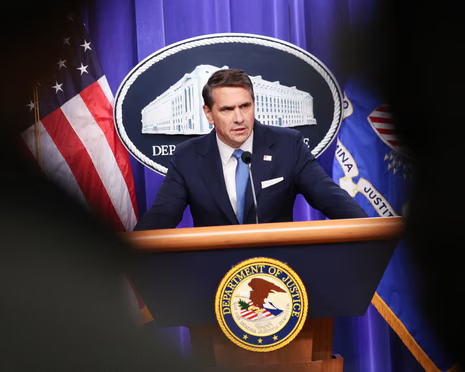
The recent Epstein files disclosure has reignited public outrage as advocates claim numerous documents remain withheld. Over three million pages from Jeffrey Epstein’s investigations were released last week, yet campaigners insist significant records are still missing, casting doubt on transparency claims. The Department of Justice, under Donald Trump’s administration, had been mandated to disclose all files by 19 December under the Epstein Files Transparency Act, but only a partial release was completed nearly six weeks later. Deputy Attorney General Todd Blanche, who previously served as Trump’s lawyer, defended the release, citing “a very comprehensive review process to ensure transparency and compliance with the law.”
Blanche explained that while over six million pages were initially identified as potentially relevant, only about three million were released due to over-collection and duplication. “The number of responsive pages is significantly smaller than the total initially collected,” he stated, emphasizing the department’s efforts to maximize disclosure without releasing non-relevant material. This explanation, however, has not satisfied legal advocates or victims, who continue to question how Epstein managed to evade serious federal charges despite decades of alleged abuse.

Jennifer Plotkin, representing more than 30 victims through Merson Law, condemned the DoJ’s approach, arguing that it reflects repeated governmental failure to hold Epstein accountable. “The government continues to avoid responsibility for the harm caused to hundreds of victims. The release demonstrates systemic negligence,” she said. Plotkin highlighted that the documents released fail to illuminate the broader protective mechanisms that allowed Epstein to secure a lenient plea deal around 2007, leaving survivors frustrated and underserved.
Dr. Ann Olivarius, a women’s rights attorney and founder of McAllister Olivarius, similarly criticized the disclosure. She explained that the files mostly cover Epstein’s criminal activities, rather than shedding light on those who shielded him from accountability. “We have numerous files on Epstein’s depravity, but the immunity files are still missing. Disclosures are incomplete if they reveal the criminal without exposing the shield,” Olivarius noted. She added that the discrepancy between identified and released documents raises concerns about potential strategic omissions.
The justice department’s decision to release only half of the identified six million pages has drawn attention from legal news outlets and civil rights groups. Radar Online, which pursued a lawsuit for over eight years due to FBI delays in releasing Epstein-related records, called last week’s disclosure insufficient. A spokesperson emphasized that the DoJ acknowledged millions of documents were entirely withheld, prompting ongoing appeals for comprehensive transparency. “This partial disclosure fails to address critical questions and leaves many survivors without clarity,” the spokesperson said.
Similarly, Jennifer Freeman, attorney for survivor Maria Farmer, described the disclosures as chaotic, citing extensive missed deadlines and problematic redactions. Freeman underscored the need for full access to files, including Farmer’s FBI records and complaints made by other victims, criticizing the DoJ for exposing survivors while protecting alleged perpetrators. “This is far from a complete release. We still need the rest of the files to ensure accountability,” she asserted, pointing to a pattern of partial transparency that she believes undermines public trust.
Political figures have also weighed in, condemning the DoJ’s handling. Congressman Jamie Raskin described the situation as a cover-up, noting that half of the identified documents remain unreleased with over 10,000 redactions in the files that were disclosed. He stressed that the public is only receiving fragments of information, leaving critical questions unanswered about both Epstein’s criminal network and those who enabled his activities.
Despite criticism, Blanche maintained that the department fulfilled its obligations under the Epstein Files Transparency Act. A DoJ spokesperson reiterated that all non-responsive items were excluded and public disclosures aligned with the act’s requirements. “This release produced more than 3.5 million pages in compliance with the law and clarified which items were not relevant,” the spokesperson stated. The department further urged that members of Congress review the legislative language before assuming incomplete compliance.
The release of Epstein files has thus sparked renewed scrutiny of federal oversight, the justice system’s handling of sexual abuse cases, and ongoing efforts to ensure transparency. Legal advocates emphasize that partial disclosures cannot substitute for comprehensive accountability, and survivors continue demanding clarity on how the wealthy financier avoided full prosecution for years. Observers note that while millions of pages have been made public, the absence of key documents leaves unresolved questions about institutional failures and protective measures that shielded Epstein from justice.

For advocates, survivors, and the public, the debate over Epstein files underscores persistent concerns about governmental transparency, accountability, and the adequacy of legal protections for victims. The ongoing demand for complete disclosure reflects a broader call for justice reform, particularly in high-profile cases involving systemic abuse. Experts predict further legal challenges as groups seek to compel the DoJ to release remaining files, ensuring that lessons from Epstein’s crimes lead to meaningful change in investigative and prosecutorial practices.
The Epstein files case exemplifies the tension between legal compliance and public demand for accountability. While the department claims it has met statutory obligations, critics argue the selective nature of disclosures obstructs truth and justice. With multiple lawsuits, congressional inquiries, and continued media scrutiny, the path toward full transparency appears uncertain, yet the pressure for a complete public record remains intense. For survivors, advocates, and observers, the hope is that continued legal efforts will ultimately compel the release of all relevant documents, providing a more thorough understanding of both Epstein’s actions and the system that failed to stop him.
Related News:
 Badenoch Warns Farage’s Grooming Gangs Plan Could Backfire
 Five More Prisoners Freed by Mistake in Essex Week
 Nearly 48,000 Zombie Knives Removed from UK Streets in a Year
 Afghan man charged with murder after west London knife attack
 Man Charged Over Cambridgeshire Train Stabbing
 Police Probe Four Knife Incidents Linked to Cambridgeshire Train Attack
 Phillipson urges careful review of gender recognition guidance
 French Taxi Driver Cleared in David Lammy Theft Case After Fare Dispute
 Just Stop Oil Protesters Convicted Amid Climate Defence Row
 China-critical UK academics face ‘extremely heavy’ pressure from Beijing
 Prison sentencing reforms expected to raise crime by up to 6%, police warn
 Met Police Culture Makes Racial Harm ‘Inevitable’
 Newcastle United Lifts Ban on Fan Over Gender-Critical Views
 British Grandmother to Return Home After Death Sentence in Bali
 Remaining rebel Labour MPs have whip restored
 King Charles to Lead Nation in Remembrance Sunday Service
 Government urges schools to ban phones to curb classroom disruption
 Seven Conditions That Automatically Qualify You for a Free Bus Pass
 Palace to reinstate hyphen in Andrew’s surname
 Pop Stars Call on UK Government to Cap Resale Prices for Fans
 South Korea’s Jeju Island Faces Rising Tide of Illicit Drugs
 Major Rent Reform Ends No-Fault Evictions in England
 Peers Flood Assisted Dying Bill with 942 Amendments
 US Justice Department Files Lawsuit Against California Over Partisan Voting Maps
 Oklahoma Governor Grants Last-Minute Clemency to Death Row Inmate
 Rio Raid’s Death Toll Raises Questions About Gang Impact
 UK Unveils Fast-Track Deportation and Asylum Overhaul
 Trump Deploys DHS to Charlotte in Major Arrest Operation
 Delhi Car Bomb Arrest: Suspect Linked to Deadly Attack
 UK Asylum Overhaul Sparks Debate Over Human Rights and Deportations
 UK Asylum Reforms: Temporary Refugee Status and Faster Deportations
 Mahmood Defends Tough Overhaul of UK Asylum System
 Paralegal Fired After Exposé on Illegal Worker Scam
 Charlotte Raids: 130 Arrested in Major Immigration Sweep
 South African Detained After Neo-Nazi Rally in Australia
 Convicted Killer Challenges Vegemite Ban Behind Bars
 Eminem Takes Legal Aim at Australian ‘Swim Shady’ Brand
 Westminster Advances Legacy Bill Amid Criticism
 Minister Defends Tough New Asylum Reform Plan
 Federal Court Blocks Texas Republican Maps Over Racial Bias
 Only One Republican Opposes Mass Release of Epstein Files
 Congress Approves Release of Epstein Files, Trump Expected to Sign
 Newport Man Left Injured After Electric Bike Collision
 Serial Rapist and Former Cop Found Guilty Again
 Man Charged Over Attempted Murder of Senior Officer
 Two Officers Injured After Van Deliberately Rams Patrol Car
 Man Denies Stealing Bronze Age Gold from Museum
 Trump Signs Bill Releasing Justice Department Files on Epstein
 Texas Governor Faces Lawsuit From CAIR
 Runaway Driver Caught by DNA Evidence
 Teens Launch High Court Challenge to Australia’s Social Media Ban
 Peers Get Extra Time to Debate Assisted Dying Bill
 Residents Face £3.6m Bill for Unsafe Kirkby Flats
 Singapore Women Acquitted After Pro-Palestine March
 US National Guard Member Killed in DC Shooting
 Second homes curbs quashed in Gwynedd legal ruling
 ICC to Rule on Duterte’s Provisional Release
 Tokyo court rules Japan’s same-sex marriage ban constitutional
 Virgin Media Fined £23.8m Over Telecare Safety Failures
 Chinese & Japanese Boats Clash Near Disputed Islands
 Hong Kong Orders Probe Into Deadly 151-Death Fire
 Putin Meets US Envoy Amid Key Ukraine Peace Talks
 Man Swallows $19K Fabergé Egg Pendant in Theft
 Indonesia to Repatriate Two Dutch Drug Convicts
 US Defence Chief on Drug Boat Strike: “Did Not See Survivors”
 Starmer’s communications chief to outline media strategy overhaul
 Mansfield condemns refusal to meet hunger strikers
 Google Employee Claims Redundancy After Harassment Report
 Plans to Limit Jury Trials Face Retreat After Mounting Opposition
 Australia grants Asio powers to designate hate groups under new laws
 Labour Faces Internal Rift Over Hillsborough Law Dispute
 Labor’s Hate Speech and Gun Laws Face Federal Roadblocks
 Woman Jailed for Life After Killing E-Bike Rider in Tragic Mistaken Identity Case
 Border Patrol Commander Leaves Minneapolis After Fatal Shooting
 NSW Inquiry Targets “Globalise the Intifada” in Public Spaces
 Study Finds One in Seven England Takeaways Are Dark Kitchens
 Files Link Andrew to Epstein Dinner After Prison Release
 Labour Attacks Reform Candidate Over Tommy Robinson Backing
 Partial US Government Shutdown Hits Homeland Security Funding
 Police Doubt Fugitive Dezi Freeman Survived Bushland