Published: 04 February 2026. The English Chronicle Desk. The English Chronicle Online
At the Singapore Airshow, where the global aviation industry gathers to showcase its latest ambitions, familiar giants dominate much of the floor. Scale models of the Airbus A320neo and Boeing 737 MAX sit beneath gleaming lights, surrounded by mock cockpits, immersive simulations and promises of greater efficiency. Yet amid these established heavyweights, one stand has been drawing particular curiosity and sustained attention: that of Comac, China’s state-owned aircraft manufacturer.
Comac, short for the Commercial Aircraft Corporation of China, is no longer content with being seen as a purely domestic player. Its presence in Singapore, one of the most important aviation hubs in the Asia-Pacific region, underlines a growing confidence and a clear strategic message. The company is positioning itself as a serious long-term challenger to Boeing and Airbus, especially in a part of the world where demand for new aircraft is expected to outstrip supply for decades.
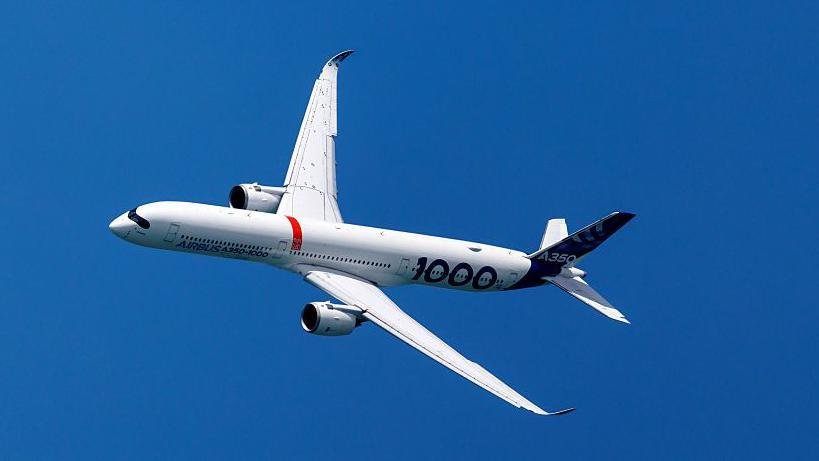
The centrepiece of Comac’s ambitions is the C919, a narrow-body passenger jet designed to compete directly with the Airbus A320neo and Boeing 737 MAX. When the aircraft first flew to Singapore two years ago, it marked its maiden appearance outside Chinese territory, a symbolic milestone that signalled Beijing’s intent to take its aviation programme global. Since then, Comac has steadily expanded its marketing push, targeting airlines that are frustrated by long delivery delays and limited choice.

At the airshow, the company made little attempt to hide its focus. In its own promotional material, Comac said it was “setting sights on the Southeast Asian aviation market”, a region where air travel is booming thanks to rising incomes, expanding tourism and the rapid growth of low-cost carriers. For airlines in this market, access to affordable and timely aircraft is becoming a critical issue.
Industry leaders acknowledge that Comac’s rise will not be immediate, but many see it as inevitable. Willie Walsh, director general of the International Air Transport Association, told the BBC that while Airbus and Boeing will remain dominant for years, China’s planemaker is on a clear trajectory towards global relevance. He said that in a decade or more, Comac would likely be spoken of in the same breath as the industry’s two traditional giants.
Walsh stressed that the Asia-Pacific region in particular has room for another major manufacturer. Airlines there are under growing strain as delivery backlogs at Boeing and Airbus stretch to unprecedented lengths. Engine shortages, labour constraints and fragile supply chains have all contributed to delays that are forcing carriers to operate older, less fuel-efficient aircraft for longer than planned.
According to IATA data, airlines worldwide are waiting longer than ever between placing an order and receiving delivery, with the average fleet age steadily rising. In Asia-Pacific, where growth is fastest, the problem is especially acute. Walsh said airlines in the region could see double-digit growth in 2026 if aircraft were available, but many are unable to expand because new jets simply are not arriving in time. The current wait, he said, can be as long as seven years from order to delivery.
Against this backdrop, Comac’s appeal becomes clearer. The company says it has already delivered more than 200 C909 and C919 aircraft, with roughly a quarter of them now operating outside mainland China. Airlines in Laos, Indonesia and Vietnam are among those flying Comac jets, marking an early but significant step into international markets.
Interest is also growing elsewhere in Southeast Asia. Brunei’s start-up carrier GallopAir has placed a sizeable order for Comac aircraft, while Cambodia is planning to acquire around 20 planes. These deals may be modest by global standards, but they represent an important breakthrough for a manufacturer that, until recently, was largely confined to domestic use.
Industry groups have welcomed the prospect of greater competition. Subhas Menon, director general of the Association for Asia Pacific Airlines, said the aviation supply chain has long suffered from excessive concentration. In his view, the dominance of Boeing and Airbus has created an effective duopoly, leaving airlines with limited leverage when problems arise. The entry of Comac, he said, could help rebalance the market and ease some of the pressure carriers currently face.
Menon described Comac as a “welcome introduction” and said the region has been waiting for a new supplier for a long time. For airlines operating on thin margins, particularly low-cost carriers, having another option could make a tangible difference to growth plans and cost structures.
Price is one of Comac’s key advantages. Backed by strong state support, the company is able to offer aircraft at lower prices than its Western rivals, making them attractive to budget airlines in emerging markets. For carriers focused on short- and medium-haul routes, the economics of a cheaper aircraft can be compelling, even if the brand lacks the long track record of Boeing or Airbus.
That said, significant hurdles remain. Certification is one of the biggest challenges facing Comac as it looks beyond China. While the C919 has been certified by Chinese regulators, it still needs approval from authorities such as the European Union Aviation Safety Agency and the US Federal Aviation Administration if it is to operate widely in global markets. This process is complex, time-consuming and highly political, particularly amid rising geopolitical tensions between China and the West.
Airline executives are watching closely but remain cautious. Mike Szucs, chief executive of Philippine low-cost carrier Cebu Pacific, said Comac’s entry into the market was encouraging, but stressed that certification and operational performance would be key. He said the airline welcomed all newcomers and more competition, but noted that Comac’s aircraft would likely only become a realistic option for major international carriers sometime in the 2030s.
Beyond certification, Comac must also build confidence in after-sales support, maintenance networks and spare parts availability. Airlines rely heavily on global service ecosystems to keep fleets flying, and Boeing and Airbus have spent decades developing these capabilities. Replicating that infrastructure across multiple continents will be a formidable task for the Chinese manufacturer.

Geopolitics also loom large. Trade tensions, export controls and uncertainty over tariffs have already complicated global manufacturing and procurement strategies. For Comac, reliance on foreign suppliers for key components, including engines and avionics, could pose risks if political relations deteriorate further. At the same time, China is investing heavily in developing domestic alternatives, aiming to reduce vulnerability to external pressure over the long term.
Despite these challenges, analysts agree that the strategic logic behind Comac’s rise is strong. Asia-Pacific is expected to account for a large share of global aircraft demand over the next 20 years, and China is determined not to rely indefinitely on foreign manufacturers. By nurturing a homegrown planemaker and gradually pushing it onto the world stage, Beijing hopes to secure a larger slice of a lucrative and strategically important industry.
For now, Comac’s presence at the Singapore Airshow represents both ambition and intent rather than immediate disruption. Boeing and Airbus remain far ahead in terms of scale, experience and global reach. Yet in an industry where demand is soaring and supply is constrained, even a gradual new entrant can have outsized influence.
As airlines continue to grapple with ageing fleets, delayed deliveries and rising costs, the appeal of an additional supplier is undeniable. Whether Comac ultimately becomes a true peer to Boeing and Airbus remains to be seen, but its emergence signals a shift that could reshape the balance of power in global aviation over the coming decades.
In the skies above Asia-Pacific, the competition for the future of flight is no longer a two-horse race.
Related News:
 Reeves Faces Setback as Labour May Miss Homes Target
 Virgin Trains Moves Closer to Challenging Eurostar Monopoly
 UK Small Business Owner to Challenge L’Oréal in Tribunal
 Trump’s UK Ambassador Urges North Sea Drilling to Strengthen US Ties
 150-Year-Old Arctic Beer to Be Reborn in Scotland
 Ryanair Chief UK Economy ‘Doomed’ Under Labour
 Court Hears Challenge Over Water Bills Funding Sewage Fixes
 ABF May Split Primark from Food Division Amid Tough Market
 Rachel Reeves Set to Break Labour Pledge and Raise Income Tax
 UPS Cargo Plane Crash in Kentucky Kills Seven
 M&S Profits More Than Halve After Cyber-Attack
 Tony Blair think tank warns Rachel Reeves must cut taxes if manifesto broken
 Oprah enjoys Meghan’s jam on English muffins
 MPs Press Rachel Reeves to Hike Gambling Taxes
 Earl of Yarmouth Faces £1.3m Legal Bill Over Family Estate
 North Sea oil workers must lose weight or face job loss
 Cuts to home insulation funding threaten UK climate goals
 Warning as Britons prepare to spend £4 billion this Black Friday
 Millionaires group urge Reeves to introduce wealth tax to ‘lift kids out of poverty’
 From Lego to Pokémon: How Adults Are Driving UK Toy Market Growth
 Borough Market Clash Sparks Influencer Backlash
 UK toy market enjoys bumper year as ‘kidults’ fuel demand
 New laws to bolster UK’s defences against cyber attacks on NHS, transport and energy
 Skims Eyes Global Expansion After Reaching $5 Billion Value
 US Strikes Last Penny After 230 Years of Production
 Trump Moves to Cut Coffee and Banana Tariffs in Latin America Deals
 Reeves’s Tax U-Turn Triggers Fresh Jitters in UK Markets
 Global markets drop amid tech sell-off and China slowdown
 Canada Passes Carney’s First Budget in Tight Parliamentary Vote
 UK Rejects Funding to Save Mossmorran Plant
 Nvidia Soars as Blockbuster Earnings Silence AI Bubble Fears
 PM Highlights UK Business at G20 in South Africa
 Mossmorran Plant Closure Hits Cowdenbeath Hard
 UK Taskforce Unveils Plan to Streamline Nuclear Reactor Rules
 Steel billionaire Lakshmi Mittal reportedly leaves UK
 English Mayors Set to Introduce Tourist Taxes
 India’s Labour Law Overhaul Sparks Fierce Debate
 EU reviews Apple Ads and Maps under strict digital rules
 Starmer Says Labour’s Economic Plan Needs Years to Deliver
 Virgin Media Fined £23.8m Over Telecare Safety Failures
 Rising Water Bills Lift Troubled Thames Back to Profit
 Tesla Warns UK That Weak EV Rules Could Threaten Sales
 Prada buys Versace for $1.38bn, expanding luxury fashion empire
 BP agrees £7.4bn Castrol sale to US investment firm
 Sainsbury’s CEO leads business honours in New Year list
 FTSE 100 Hits 10,000: UK Market Celebrates Record Year
 UK House Prices Fall Sharply at Year-End, Nationwide Reports
 UK Car Sales Pass 2 Million as Chinese Brands Surge
 Starmer Faces Parliamentary Battles Over UK-EU ‘Reset’ Plan
 Wessex Water chiefs receive £50,000 extra despite government bonus ban
 Austrian Airlines Halts Tehran Flights Amid Political Unrest
 3,000 Jobs at Risk Without UK Helicopter Order
 German Supermarket Aldi to Open 180 US Stores This Year
 Starmer links foreign trips to tackling cost of living crisis
 China Dependence Threatens UK Energy Supply Chains and Jobs
 Canada-China trade gains momentum in new strategic partnership
 ScottishPower Tops List of Worst UK Energy Suppliers
 Markets Slide As Gold Rally Signals Risk From Trump Greenland Tariff Plan
MPs warn AI financial risks threaten UK stability
Markets Slide As Gold Rally Signals Risk From Trump Greenland Tariff Plan
MPs warn AI financial risks threaten UK stability
 MPs warn AI financial risks threaten UK stability
 UK Eyes Global Investment with Visa Fee Refunds
 City & Guilds pay surge sparks backlash amid £22m cuts
 UK Inflation Hits 3.4% in December, Ending Five-Month Decline
 Trump Fed bid heads to Supreme Court
 UK Government Borrowing Drops to £11.6bn in December
 B&M and The Works Struggle During Christmas Trading
 ‘Black Tax’: Burden, Pride and Survival for African Workers
 UK Disposable Income Growth Transforms Eleven Towns and Cities
 AI job losses UK: Britain faces sharper employment shock
 India-EU Free Trade Deal Marks Historic Economic Shift
 US Dollar Hits Four-Year Low Amid Market Turmoil
 Amazon mistakenly signals new global layoffs to employees
 Labour Must Revive High Streets to Avoid Election Collapse
 Households in England Face Rising Water Bills in April
 UK needs new factory to reach 1.3m car target, says industry chief
 UK food industry urges transition if post-Brexit rules reset
 AstraZeneca China Investment Signals Strategic Shift Abroad
 UK New Car Discounts Near £6,000 as Prices Are Slashed
 Study Finds One in Seven England Takeaways Are Dark Kitchens
 Riverford sales surge as UK organic market booms