Published: 09 February 2026. The English Chronicle Desk. The English Chronicle Online.
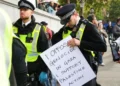
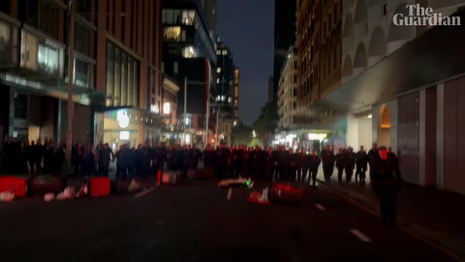
A tense Sydney protest erupted into confrontation after police used pepper spray on demonstrators opposing Israeli President Isaac Herzog’s official visit to Australia. The Sydney protest drew thousands near Town Hall, where crowds gathered to voice political anger and humanitarian concerns. The event followed days of online mobilisation and public debate across Australia and the United Kingdom. Verified reports from international and UK-based sources confirm that officers intervened after march attempts breached emergency protest limits. The Sydney protest quickly became a focal point for wider tensions around free speech, security laws, and global conflict reactions.
Crowds began assembling in central Sydney during the early evening as organisers called for a peaceful rally. Participants carried banners, chanted slogans, and listened to speeches from public figures and lawmakers. Greens senator Mehreen Faruqi and former Australian of the Year Grace Tame addressed attendees from a temporary stage near Town Hall. Several New South Wales Labor backbenchers also attended, despite government pressure discouraging their presence at the gathering. The mood was loud but initially controlled, with stewards urging calm and cooperation with authorities.

Police numbers steadily increased around the protest zone as the crowd grew larger and more energetic. Riot squad officers, mounted police units, and aerial surveillance were deployed across nearby streets and intersections. Barriers restricted movement toward major roads, including George Street, where demonstrators hoped to march symbolically. Officers cited recently strengthened state security laws that limit protest marches after the Bondi terror attack. Those laws allow static assemblies but restrict moving demonstrations without prior authorisation from police commanders.
Tension rose when protest organisers entered prolonged negotiations with police supervisors about allowing a short march route. Witnesses reported heated but structured discussions between liaison officers and rally representatives during the standoff. Many in the crowd began chanting demands to proceed, beating drums and calling for marching rights. When a section of protesters attempted to move forward together, police lines tightened and physical contact followed. Within moments, officers deployed pepper spray toward people at the front of the advancing group.
Video verified by multiple newsrooms shows several protesters recoiling and retreating after the pepper spray discharge. People near the front covered their faces, coughed heavily, and poured water over their eyes for relief. Medics and volunteer helpers moved through the Sydney protest crowd offering saline and basic first aid support. Some demonstrators fell during the sudden backward surge, creating confusion and brief panic near barricaded areas. Police then detained several individuals during scuffles that broke out along the edge of the restricted zone.
NSW Labor backbencher Anthony D’Adam, who attended the rally, later described the police response as excessive and avoidable. He said cooperation existed early, but the situation changed after a physical incident involving an officer and a woman. According to his account, an officer pushed a bicycle into a protester, causing distress and anger nearby. He alleged that further officers joined rapidly, forcing people down and throwing punches during the confrontation. Police officials said operational reviews would assess all use-of-force decisions made during the volatile moments.
Authorities stated that officer actions followed risk assessments linked to crowd movement and legal protest boundaries. They emphasised that unauthorised marches create unpredictable safety threats in high-density city locations during major events. No official injury totals were immediately released, though ambulance crews treated several people at the scene. Civil liberty advocates have since called for an independent review of the Sydney protest policing strategy. They argue that emergency laws should not permanently narrow peaceful assembly rights in democratic public spaces.
Parallel demonstrations unfolded in Melbourne, where thousands gathered to protest the same presidential visit and policies. Footage from Melbourne shows clashes in limited areas, with at least one protester affected by pepper spray. Victoria Police confirmed minor confrontations but said most of the rally activity remained within lawful behaviour limits. Speakers there included independent senator Lidia Thorpe, who condemned violence while expressing solidarity with Palestinian civilians. She also acknowledged victims of the Bondi attack, calling for empathy across communities facing trauma and fear.
President Herzog’s visit includes several community and memorial events connected to antisemitism and recent Australian tragedies. He attended a major solidarity gathering at Sydney’s International Convention and Exhibition Centre during the protests. The event honoured victims of the Bondi massacre and raised funds for community recovery initiatives. Australian Prime Minister Anthony Albanese and former Prime Minister Scott Morrison were both present at the ceremony. Security around the venue was extremely tight, with armed units, mounted patrols, and restricted perimeter access.
During his remarks, Herzog linked recent violence to long-standing antisemitic hatred that predates the modern Israeli state. He argued that certain protest slogans encourage hostility and deny Israel’s right to exist as a nation. He said he arrived in goodwill and respects democratic debate, but rejects calls that question national legitimacy. Some activist groups have demanded legal action against him following a disputed UN commission interpretation of statements. Herzog has strongly rejected genocide allegations and described related legal cases as defamatory and politically motivated.

The phrase “globalise the intifada,” heard at several rallies, has triggered sharp political disagreement within New South Wales. The state government is considering restrictions when the phrase is used to incite hatred or violence. Free speech advocates warn that phrase bans require careful legal framing to avoid suppressing legitimate political expression. Community leaders fear that escalating rhetoric on all sides risks deepening social division and mistrust across multicultural cities. Faith groups have urged calm dialogue and mutual respect during a period of emotional and geopolitical strain.
Digital platforms played a significant role in building turnout for the Sydney protest and Melbourne gatherings. Organisers used social media networks, encrypted messaging groups, and livestreams to coordinate timing and messaging. Analysts say this rapid mobilisation model increases participation but also complicates real-time crowd management for authorities. Police planners now routinely monitor online signals to anticipate protest size, movement, and possible flashpoint locations. Rights groups counter that surveillance transparency and oversight must grow alongside expanded digital monitoring powers.
The Sydney protest has therefore become more than a single confrontation between officers and demonstrators downtown. It now sits at the centre of a broader debate about protest law, proportional policing, and political dissent. Legal observers expect court challenges if arrests or force decisions appear inconsistent with statutory protest protections. Government officials maintain that public safety duties remain paramount during periods of heightened threat and mass gathering. Further official statements and independent reviews are expected as verified evidence continues to emerge from multiple recordings.
Related News:
 UK and France Agree Troop Deployment Plan for Ukraine
 British Woman in Iran ‘Losing Hope’ Amid Ongoing Detention
 BBC Journalist Held and Interrogated in Vietnam
 The diet that can significantly ease symptoms of IBS
 Trump Speaks on Prince Andrew’s Royal Scandal Fallout
 Pregnant UK Teen to Be Freed from Georgian Jail
 Zohran Mamdani becomes New York City’s first Muslim mayor
 Top Christmas Books Reads: Classics to Cozy Romcoms
 UPS Cargo Plane Crash in Kentucky Kills Seven
 Just Stop Oil Protesters Convicted Amid Climate Defence Row
Zohran Mamdani names all-female transition team for NYC mayoralty
Just Stop Oil Protesters Convicted Amid Climate Defence Row
Zohran Mamdani names all-female transition team for NYC mayoralty
 Tension and Turmoil at Aston Villa v Maccabi Match
 British Grandmother to Return Home After Death Sentence in Bali
 Parents Urge Home Office to Reunite Daughter After Hurricane
 Lando Norris Dominates Brazil GP to Strengthen F1 Title Bid
 Second world war veterans honoured as King leads Remembrance Sunday
 BBC director-general and news chief resign amid bias row
 Palace May Restore Hyphen to Andrew Mountbatten-Windsor’s Name
 Ronaldo Confirms Final World Cup and Plans Retirement
 Rama Rebukes Mahmood for Targeting Albanian Families
 Russian Vessel Used Lasers on RAF Pilots, UK Claims
 Royal Navy Shadows Russian Warships Entering the Channel
 Ireland Boosts Ukraine Aid as Zelensky Visits Dublin
 Shock US Raid: Maduro Pleads Not Guilty in Manhattan Court
 EU Weakens as Trump Targets Venezuela and Greenland
 Venezuela Oil Deal Opens Tensions with US Control
 US Citizens Warned to Venezuela Flee Amid Paramilitary Threats
 British skier killed in La Plagne avalanche tragedy
 Gulf states warn Trump Iran strikes risk wider Middle East war
 Machado Trump medal gesture reshapes Venezuela power struggle
 Greenland defence seen as shared Nato duty amid troop arrivals
 Gulf states warn Trump Iran strikes risk wider Middle East war
 Trump Receives Machado’s Nobel Medal in White House Meeting
 Iran unrest slows under brutal crackdown and global tensions
 Syria President Declares Victory as Ceasefire Reached with SDF
 US Considers Asylum for British Jews Amid Rising Antisemitism
 China embassy London approval expected this week
 UK Presses On With Chagos Handover Despite Trump Criticism
 Shinzo Abe’s killer receives life sentence in Japan
 US Africa aid remarks spark anger after leaked State email
 Russia Strikes Kyiv and Kharkiv as Peace Talks Enter Day Two
 Starmer China visit raises human rights pressure on Beijing
 UK and EU Signal Fresh Push for Defence Cooperation Talks
 UK New Car Discounts Near £6,000 as Prices Are Slashed
 Emails Show Epstein Funded Mandelson’s Husband After Jail
 Thousands Protest ICE Operations in Nationwide US Day of Action
 Epstein Files Reveal Trump Officials’ Emails with Financier
 Thousands Protest ICE in New York Against Trump Deportation Campaign
 Cory Bernardi joins One Nation for SA election
 Starmer Condemns ‘Depraved’ Russian Strikes on Ukraine
 Christchurch Shooter Seeks to Overturn Guilty Plea in Appeals Court
 UK Must Act with Courage and Clarity on Israel-Palestine Conflict, Says Foreign Affairs Committee Report
 Reeves Faces Setback as Labour May Miss Homes Target
 Kate Winslet to Narrate Film Highlighting King’s Environmental Mission
 Trump’s UK Ambassador Urges North Sea Drilling to Strengthen US Ties
 UK Bans Fake Numbers: Scammers Lose Their Trick
BBC to Apologise Over Edited Trump Speech Amid Backlash
UK Bans Fake Numbers: Scammers Lose Their Trick
BBC to Apologise Over Edited Trump Speech Amid Backlash
 Millionaires group urge Reeves to introduce wealth tax to ‘lift kids out of poverty’
 Reeves rejects £1bn plea for NHS redundancy payouts
 PM Condemns Leaks, Vows Loyalty to Ministers and Stability
 Greene Pushes Epstein Files Amid Trump Fallout
 Zelenskyy Signs Fighter Jet Deal Amid Russian Drone Attacks
 Shadow Fleet at Sea: Europe’s Battle Against Illicit Oil Shipping
 Inside the Helpline Protecting Missing Children in the UK
 PlayStation PS5 Deals Hit Lowest Prices Ahead of Black Friday
 US Suspends Afghan Immigration After White House Shooting
 Five-Year-Old Dies After Rare Tonsil Surgery Complication
 Starmer Says Labour’s Economic Plan Needs Years to Deliver
 ‘Extinct’ Antelope Returns to Sahara, Bringing Hope
 UK unemployment rises to four-year high of 5.1% before budget
 Wiltshire Police Use Lasso to Catch Rampaging Village Goat
 Children to Receive Home Vaccines as England Acts
 Cambridge College Faces Backlash Over Private School Recruitment
 Bereaved Fathers Gain New Paternity Leave Rights in UK
 US Senate rejects resolution limiting Trump military powers
 Woman Jailed for Life After Killing E-Bike Rider in Tragic Mistaken Identity Case
 Sydney Shark Attack Surge Shocks Australia Beaches
 No Gas Boiler Ban as UK Warm Homes Plan Backs Heat Pumps
 Police response times face strict new national limits
 Devon hosts first high-density hydro power system