Published: 16 February 2026. The English Chronicle Desk. The English Chronicle Online.
Britain and Germany’s top military commanders have issued a stark appeal for a renewed rearmament drive across Europe. In an unprecedented joint intervention, Air Chief Marshal Richard Knighton and General Carsten Breuer argued that strengthening armed forces is now a moral responsibility. They warned that Europe faces a shifting security order shaped by Russian aggression and deepening geopolitical uncertainty. Their message followed high-level discussions at the Munich Security Conference, where leaders debated the continent’s fragile strategic landscape.
Writing jointly in The Guardian and Die Welt, the two chiefs stressed that their appeal was not political theatre. They described it instead as a sober explanation of what is at stake for European security. Both men framed the rearmament drive as a necessary shield against potential escalation beyond Ukraine. They insisted that deterrence, rather than provocation, lies at the heart of their argument.

Their intervention arrives amid mounting anxiety across Europe. Nearly four years after Russia’s full-scale invasion of Ukraine, policymakers still struggle to balance domestic priorities with defence commitments. The commanders believe that public consent is essential for sustained military investment. They described the situation as demanding uncomfortable truths and collective resolve.
The phrase “moral dimension” featured prominently in their reasoning. They rejected the notion that rearmament drive equates to warmongering. Instead, they argued that it reflects a duty to protect citizens and preserve peace. According to their analysis, history repeatedly demonstrates that weakness invites aggression. Strength, by contrast, sustains stability and prevents miscalculation.
Public opinion, however, remains divided. In the United Kingdom, polling conducted by YouGov revealed limited enthusiasm for tax increases or spending cuts to fund defence expansion. Only minorities supported economic sacrifices, even among those who value national security highly. Similar hesitation appears in Germany and France. Surveys suggest that voters worry about trade-offs with healthcare, welfare, and economic recovery.
Prime Minister Keir Starmer has echoed calls for deeper European cooperation. Speaking during his visit to the Munich gathering, he argued that Britain must strengthen defence ties with continental partners. He insisted that the country has moved beyond post-Brexit estrangement and seeks renewed partnership. His remarks signalled an intention to integrate procurement and manufacturing frameworks more closely.
German Chancellor Friedrich Merz delivered equally forceful language. Addressing delegates, he warned that freedom can no longer be assumed permanent. He emphasised that Europe inhabits an era shaped by powerful states pursuing strategic dominance. Determination and unity, he said, are vital to preserving democratic values. His comments resonated strongly within the conference hall.
The commanders’ article described Russia’s military posture as shifting decisively westward. They argued that fragmented planning and inconsistent investment weaken collective deterrence. A coordinated rearmament drive, they maintained, would reduce vulnerability and send a clear strategic message. Europe, they suggested, cannot afford complacency at a time of intensifying threats.
Cooperation between London and Berlin has already expanded. In 2024, both governments signed the Trinity House agreement to deepen security collaboration. Joint exercises, intelligence sharing, and industrial partnerships have accelerated since then. Officials view these initiatives as foundations for a broader European framework.
Germany has announced plans to station a permanent combat brigade on NATO’s eastern flank. The deployment, numbering between 4,000 and 5,000 troops, signals Berlin’s long-term commitment. Constitutional amendments have unlocked substantial defence funding. Procurement programmes for armoured vehicles and advanced systems are underway. Industrial capacity is expanding to meet rising demand.
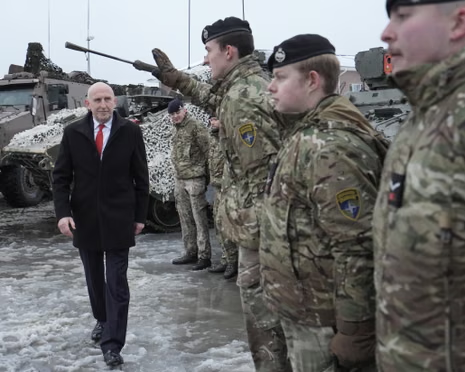
Britain is pursuing parallel measures. The Ministry of Defence confirmed plans to build up to six munitions factories. Officials describe this as creating an “always on” production model. The goal is to avoid shortages and maintain readiness. This industrial revival forms part of the wider rearmament drive championed by senior commanders.
Yet economic considerations complicate the picture. Germany faces prolonged stagnation and public concern over living standards. The government must reconcile growth ambitions with defence expansion. In Britain, debates within the governing Labour Party reveal ideological divisions. Some members fear that higher military budgets could limit spending on poverty reduction and healthcare.
At last year’s NATO summit in The Hague, leaders pledged to move towards spending five percent of GDP on defence and security by 2035. That target represents a dramatic shift from previous norms. Analysts argue that such investment could stimulate short-term economic activity. However, they caution that fiscal discipline remains essential.
Another layer of uncertainty stems from transatlantic politics. Former US President Donald Trump has questioned aspects of NATO’s burden-sharing model. Although American support remains central, European governments increasingly emphasise self-reliance. The rearmament drive therefore carries both symbolic and practical significance.
The debate also touches on nuclear deterrence. Chancellor Merz revealed preliminary discussions with French President Emmanuel Macron about closer cooperation under France’s nuclear umbrella. While details remain limited, the signal was unmistakable. Europe seeks credible security guarantees independent of fluctuating US politics.
Critics caution against overreaction. Some argue that diplomacy should retain primacy over military expansion. Others warn of an arms race dynamic that could entrench hostility. Nonetheless, supporters insist that credible defence prevents escalation rather than encourages it. They believe preparedness reduces the likelihood of conflict.
For Knighton and Breuer, communication with the public is paramount. They argue that defence cannot remain the exclusive domain of uniformed professionals. Instead, society must engage honestly with strategic realities. Infrastructure resilience, technological innovation, and civic preparedness form parts of this comprehensive approach.
The rearmament drive they describe extends beyond hardware procurement. It encompasses research partnerships, cyber defence, and industrial resilience. Private sector involvement will prove critical. National institutions must function effectively even under pressure. Such planning demands coordination at every level.

Across Europe, memories of the so-called peace dividend still shape political instincts. After the Cold War, many governments reduced defence spending and prioritised social investment. That era now appears distant. Leaders confront a harsher environment defined by renewed great power rivalry.
Whether the public ultimately embraces sustained military expansion remains uncertain. Opinion polls reveal anxiety about war, yet reluctance to bear financial cost. Bridging that gap constitutes the central challenge. Political leadership, transparent communication, and credible strategy will determine success.
As the conference concluded, the message from Britain and Germany stood clear. Unity, readiness, and resilience form the pillars of European security. The commanders framed their appeal as both practical necessity and moral obligation. In their assessment, failing to act would carry far greater risk than preparing decisively.
The coming years will test Europe’s resolve. Defence budgets, industrial capacity, and political consensus must align. The rearmament drive now unfolding signals a historic shift in priorities. Its outcome will shape the continent’s stability for decades to come.
Related News:
 High-speed Spain train crash leaves nation in mourning
 EU weighs response amid Greenland tariff crisis with Trump
 EU Says US Ties Have Suffered ‘Big Blow’ After Greenland Crisis
 EU launches Grok AI probe into X over explicit images
 Scotland–France Ferry Revival Tied to Dunkirk’s Green Rebirth
 Thousands Left Without Heating in Ukraine Amid Russia Strikes
 Russia sanctions hit economy hard, says EU envoy
 TikTok Design Faces EU Crackdown Over Addictive Features
 Italy Arrests Protesters Amid Milan Olympic Chaos
 Portugal Election Delivers Socialist Win as Far Right Surges
 UK Banks Granted Reprieve as BoE Delays Basel III Capital Rules Until 2028
 Singapore Corruption Scandal: Details Emerge on Iswaran’s Luxury Flight and Ties to Tycoon Ong Beng Seng
 Corfu Beyond the Crowds: Discovering Serenity in Southern Villages and Hidden Taverns
 Peter Andre Praises Son Junior’s ‘Quiet Season’ Amid Ongoing Family Dispute
 Massive 641-Mile Storm Set to Batter UK with 15 Hours of Rain and Strong Winds
 Jeremy Clarkson’s Pub: A Sunday Lunch Like No Other
 Scottish Government Mandates Single-Sex Toilets and Changing Facilities in Schools
 Reeves Faces Setback as Labour May Miss Homes Target
 Kate Winslet to Narrate Film Highlighting King’s Environmental Mission
 Trump’s UK Ambassador Urges North Sea Drilling to Strengthen US Ties
 UK Bans Fake Numbers: Scammers Lose Their Trick
 Vibe coding’ named Collins dictionary’s word of the year
BBC to Apologise Over Edited Trump Speech Amid Backlash
Vibe coding’ named Collins dictionary’s word of the year
BBC to Apologise Over Edited Trump Speech Amid Backlash
 Millionaires group urge Reeves to introduce wealth tax to ‘lift kids out of poverty’
 Reeves rejects £1bn plea for NHS redundancy payouts
 PM Condemns Leaks, Vows Loyalty to Ministers and Stability
 Phillipson Accused of Appeasing Unions by Diluting EBacc
 Saka Solidifies Role as Tuchel’s Key England Lieutenant
 Greene Pushes Epstein Files Amid Trump Fallout
 December Run-Off in Chile as Election Produces No Winner
 Zelenskyy Signs Fighter Jet Deal Amid Russian Drone Attacks
 Stroke Patient Mistaken for Drunk, Care Delayed
 Sundar Pichai Cautions on AI Hype and Market Risks
 What Now for the Queen’s Childhood Playhouse After Andrew’s Eviction?
 Shadow Fleet at Sea: Europe’s Battle Against Illicit Oil Shipping
 Tiny Curacao Makes History as Smallest Nation to Reach World Cup
 Snow and Ice Cause Travel Chaos in North Yorkshire
 Man Denies Stealing Bronze Age Gold from Museum
 Director Michael Caton-Jones Reflects on Career and Beginnings
 Inside the Helpline Protecting Missing Children in the UK
 Boots Showstopper Beauty Bundle Outshines Many Advent Calendars This Holiday Season
 PlayStation PS5 Deals Hit Lowest Prices Ahead of Black Friday
 Runaway Driver Caught by DNA Evidence
 US Suspends Afghan Immigration After White House Shooting
 Georgians Defy Government Crackdown After Year of Protests
 Five-Year-Old Dies After Rare Tonsil Surgery Complication
 ICC to Rule on Duterte’s Provisional Release
 Starmer Says Labour’s Economic Plan Needs Years to Deliver
 Rusty Bond-Era Aston Martin Restored to £1m Glory
 ‘Extinct’ Antelope Returns to Sahara, Bringing Hope
 IndiGo Cancels Hundreds of Flights Amid Pilot Shortages
 UK unemployment rises to four-year high of 5.1% before budget
 Young Britons Face Heaviest Burden from Ageing Population, Lords Warn
 Wiltshire Police Use Lasso to Catch Rampaging Village Goat
 Australia Face Big Changes as Cummins and Lyon Ruled Out of Ashes
 U‑Turn on Farmers’ Inheritance Tax Sparks Political Firestorm
 Tories and Labour face scrutiny over Abd el-Fattah support
 Khaleda Zia Death in Bangladesh: First Female PM Dies at 80
 Facebook Slow to Remove Bondi Attack Praise, Anti-Hate Group Claims
 Children to Receive Home Vaccines as England Acts
 Childhood Hypertension Sparks Urgent UK Testing Calls
 GMB Union Faces Turmoil Amid Female Leaders’ Claims
 Raducanu Battles Injury as Britain Exit United Cup
 MoJ Prison Leasing Scandal Triggers £100m Public Cost
 Cambridge College Faces Backlash Over Private School Recruitment
 Bereaved Fathers Gain New Paternity Leave Rights in UK
 Minnesota Sues Trump Administration Over ICE Surge
 US Senate rejects resolution limiting Trump military powers
 Woman Jailed for Life After Killing E-Bike Rider in Tragic Mistaken Identity Case
 Sydney Shark Attack Surge Shocks Australia Beaches
 No Gas Boiler Ban as UK Warm Homes Plan Backs Heat Pumps
 Sussan Ley leadership milestone shakes Liberal future
 Police response times face strict new national limits
 Devon hosts first high-density hydro power system
 US Dollar Hits Four-Year Low Amid Market Turmoil
 AI breast screening cuts later cancer diagnoses by 12%, study finds
 Police Doubt Fugitive Dezi Freeman Survived Bushland
 Most Statin Side-Effects Are Not Caused by Drugs, Study Confirms
 Australia’s Opposition Coalition Reunites After Rift
 Send spending gap leaves deprived areas behind