Published: 30 January 2026. The English Chronicle Desk. The English Chronicle Online.
The Green party has officially confirmed Hannah Spencer as their candidate for the Gorton and Denton byelection, signaling an ambitious effort to expand their political footprint in northern England. The Greens’ selection of Spencer, a former mayoral candidate and Trafford councillor, underscores the party’s strategy to challenge the established dominance of Labour and counter the emerging Reform UK presence. With her nomination, the focus on “Green politics” is already shaping local discussions about environmental policies, progressive reform, and youth engagement in the electoral process.
Spencer, who is also a qualified plumber by trade, previously contested the 2024 Manchester mayoral election, finishing fifth behind Labour’s Andy Burnham. Her deep ties to the constituency, coupled with her practical experience as a local councillor, positioned her strongly in the Green party’s internal vote, which was conducted through online hustings. Local party members widely endorsed her candidacy, defeating competitors including Fesl Reza-Khan and Sarah Wakefield.
Party leaders have hailed Spencer’s nomination as a strategic win. Zack Polanski, Greens’ leader and a Mancunian, emphasized her commitment to community engagement, describing Spencer as the type of representative who could energize voters and strengthen local political networks. “Hannah Spencer will be a brilliant MP for the people of Gorton and Denton. I’m a Mancunian and know when someone genuinely wants to roll up their sleeves and work for the community. Hannah is that person,” he said.

Should Spencer secure victory, she would become the first Green MP from northern England and the party’s youngest ever parliamentarian at 34. This potential milestone reinforces the party’s ongoing effort to broaden its national reach while maintaining a grassroots appeal, reflecting the growing interest in Green politics across previously untapped constituencies.
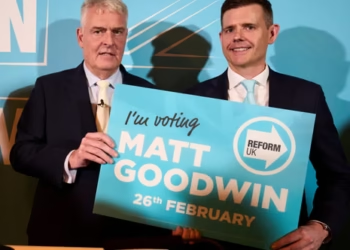
The selection follows Reform UK’s earlier announcement of Matt Goodwin, a former academic and conservative commentator, as their candidate. Labour is yet to confirm their representative, though internal discussions have reportedly focused on the implications of blocking Andy Burnham’s potential candidacy. This dynamic positions the Greens and Reform as the principal contenders in what observers are describing as a tightly contested electoral battle.
Spencer’s campaign launch stressed a clear message of hope versus the politics of division. Speaking to supporters, she stated, “This is a crucial byelection. The choice is clear – Green v Reform. Hope v hate. Only the Green party can stop Reform in this byelection. I want to thank every single member and supporter who has already been out on the doorstep listening to voters.” This rhetoric demonstrates the Greens’ strategic use of Green politics to frame the election as a broader ideological contest, resonating with constituents concerned about social justice, sustainability, and effective governance.
Labour sources, however, remain confident about their traditional base. They argue that the Greens lack the organizational infrastructure necessary for a successful campaign. “The Greens have no councillors and no data, which will make a big difference. They have a good social media game but no ground game,” said a party insider. The involvement of Labour deputy leader Lucy Powell, along with anticipated support from Andy Burnham, is expected to consolidate Labour’s local strength.
The Greens have actively sought to cultivate endorsements to strengthen their campaign credibility. Muslim Vote, a pressure group, has publicly supported the party in response to what it perceives as other parties’ inadequate positions on the Gaza conflict. With Muslim residents comprising roughly 30% of the constituency, this backing could prove pivotal. While some insiders suggest the endorsement initially assumed a different candidate, sources indicate that it will likely remain in place despite Spencer’s selection.
Polanski launched the campaign with notable appearances from former party leader Natalie Bennett and campaigner Salma Yaqoob, reinforcing the Greens’ broader political visibility. Despite speculation, the leadership has downplayed any formal alliance with Your Party, focusing instead on consolidating their Green politics narrative as central to the byelection debate.
The byelection was triggered by Andrew Gwynne’s resignation due to ill health, creating a vacuum that has energized local and national political activity. Analysts suggest that the contest could signal wider trends in UK politics, particularly regarding the increasing appeal of Green politics in areas historically dominated by Labour, and the challenges new parties like Reform UK face in translating media attention into votes.
Observers note that Spencer’s youth and experience as both a local councillor and a professional tradesperson could broaden the appeal of Green politics beyond its traditional supporters, particularly among younger voters and those seeking practical community engagement. Analysts also highlight the importance of the party’s digital outreach strategy, which may compensate for its limited physical presence in the constituency, demonstrating the evolving nature of political campaigning in the digital era.
The Greens’ decision to focus on local environmental and social issues aligns with their broader strategy to present Green politics as both relevant and immediate. Spencer’s platform emphasizes tackling housing concerns, expanding sustainable infrastructure, and promoting inclusive community policies, reflecting the party’s attempt to merge national ideology with local relevance..
As the campaign unfolds, the interaction between the Green party’s Green politics message and the competing narratives from Labour and Reform UK will be closely scrutinized. The contest is widely seen as a test case for the ability of smaller parties to convert grassroots enthusiasm into parliamentary representation, while also measuring how traditional parties respond to emerging political pressures in urban northern constituencies.
With voter interest intensifying, Spencer’s candidacy is generating significant media coverage and public discussion. Her combination of youthful energy, local familiarity, and clear alignment with Green politics positions her as a candidate capable of influencing both policy debate and voter engagement patterns in the region. Analysts suggest that even if victory is not guaranteed, the Greens’ presence will leave a lasting impression on the political landscape, reinforcing Green politics as a key factor in shaping future electoral contests.
The upcoming Gorton and Denton byelection is poised to become a microcosm of shifting UK political dynamics. Observers will watch closely how Green politics resonates with voters, whether traditional Labour loyalty can be maintained, and if Reform UK can capitalize on its growing visibility. This election may prove pivotal not only for parliamentary composition but also for understanding the evolving role of smaller parties in shaping national discourse, underlining the importance of local campaigning, ideological clarity, and strategic endorsements in modern elections.
Related News:
 British Woman in Iran ‘Losing Hope’ Amid Ongoing Detention
 BBC Journalist Held and Interrogated in Vietnam
 Green Party Surges Past Labour in Latest UK Poll
 Celebrities and Charities Demand UK Government Act on Child Poverty
 Trump’s UK Ambassador Urges North Sea Drilling to Strengthen US Ties
 FBI Director Kash Patel Defends Girlfriend Amid Government Jet Claims
 French Taxi Driver Cleared in David Lammy Theft Case After Fare Dispute
 Rachel Reeves Set to Break Labour Pledge and Raise Income Tax
 MPs Press Rachel Reeves to Hike Gambling Taxes
 Met Police Culture Makes Racial Harm ‘Inevitable’
 Boris Johnson accused of undermining BBC leadership
 Remaining rebel Labour MPs have whip restored
 ‘Reckless’ cuts to victims’ services will cost more than they save
 Millionaires group urge Reeves to introduce wealth tax to ‘lift kids out of poverty’
 Starmer Faces Growing Dissent as Labour MPs Weigh Leadership Challenge
 BBC Faces Backlash as Reform UK Withdraws from Film
 Reeves rejects £1bn plea for NHS redundancy payouts
 Farage appointee to lead Reform youth accused of anti-British views
 Palace to reinstate hyphen in Andrew’s surname
 Politics latest: Starmer ‘will fight any leadership coup’ as Streeting denies attempt to oust Labour PM
 PM Condemns Leaks, Vows Loyalty to Ministers and Stability
 Major Rent Reform Ends No-Fault Evictions in England
 Peers Flood Assisted Dying Bill with 942 Amendments
 England’s Special Needs Support Faces Breaking Point
 MoD warned over Excel risks before Afghan data breach
 UK Unveils Fast-Track Deportation and Asylum Overhaul
 UK Asylum Overhaul Sparks Debate Over Human Rights and Deportations
 UK Asylum Reforms: Temporary Refugee Status and Faster Deportations
 UK Candidate Moved to Safe House After Election Threats
 Mahmood Defends Tough Overhaul of UK Asylum System
 UK Warns China After MI5 Issues Espionage Alert
 Westminster Advances Legacy Bill Amid Criticism
 UK Vulnerable to Attack, Defence Committee Finds
 Labour Faces Historic Decline in Wales
 Rama Rebukes Mahmood for Targeting Albanian Families
 Russian Vessel Used Lasers on RAF Pilots, UK Claims
 PM Shares Emotional Letter to Son on Men’s Struggles
 PM Highlights UK Business at G20 in South Africa
 Kate Forbes: Motherhood Harder Than Politics
 Welsh Government Christmas 2020 Lockdown Criticised
Reeves to Crack Down on Benefit Fraud While Lifting Two-Child Limit
Welsh Government Christmas 2020 Lockdown Criticised
Reeves to Crack Down on Benefit Fraud While Lifting Two-Child Limit
 Most Tories Expect to Support a Farage-Led Government
 Labour MP claims devolution bill is ‘blatant discrimination’ against Cornwall
 English Mayors Set to Introduce Tourist Taxes
 Millions Face Higher Taxes Under Reeves New Budget
 Peers Get Extra Time to Debate Assisted Dying Bill
 Planned Palestinian Flag Raising at Belfast City Hall Faces Delay Amid Legal Concerns
 Government righting decades-old injustice for miners
 Starmer Says Labour’s Economic Plan Needs Years to Deliver
 UK delays ruling on China embassy plan until January
 Culture secretary to review Telegraph takeover by Daily Mail owner
 Andy Burnham Apologises for Past LGBTQ+ Police Discrimination
 Reeves Slams Farage Over Two-Child Benefit Cap Opposition
 Mandelson Refuses Apology Over Epstein Ties
 Plans to Limit Jury Trials Face Retreat After Mounting Opposition
 Jenrick Reform defection deepens Tory civil war
 China Dependence Threatens UK Energy Supply Chains and Jobs
 Right Must Unite After Jenrick Defection, Urges Rees-Mogg
 Romford MP Andrew Rosindell defects to Reform UK
 UK Ministers Drop Foreign Student Targets for Global Education Push
 MPs warn AI financial risks threaten UK stability
 MPs warn AI financial risks threaten UK stability
 No Gas Boiler Ban as UK Warm Homes Plan Backs Heat Pumps
 Hugh Grant Joins Call for Under-16 Social Media Ban in UK
 Shinzo Abe’s killer receives life sentence in Japan
 US Africa aid remarks spark anger after leaked State email
 Lords Vote Piles Pressure on Starmer Over Social Media Ban
 Judge-only trials plan fails to ease court backlog
 Planned Troubles Board Game Sparks Outrage in Northern Ireland
 Reform UK Health Plan ‘Would Cost £1.7bn’, Streeting Says
 Labour Blocks Burnham as Party Rift Deepens Ahead of Polls
 Police response times face strict new national limits
 Labour policing overhaul sparks fears over growing central control
 Tories criticised after Braverman defection sparks mental health row
 Burnham Westminster return hopes fade amid Labour rift
 Starmer warns of toxic division politics in Reform challenge
 Starmer China visit raises human rights pressure on Beijing
 Labour Must Revive High Streets to Avoid Election Collapse
 Conservative Party Rejects Centrism Under Badenoch’s Leadership
 Calls Grow for King Charles to Apologise for Crown’s Role in Slavery