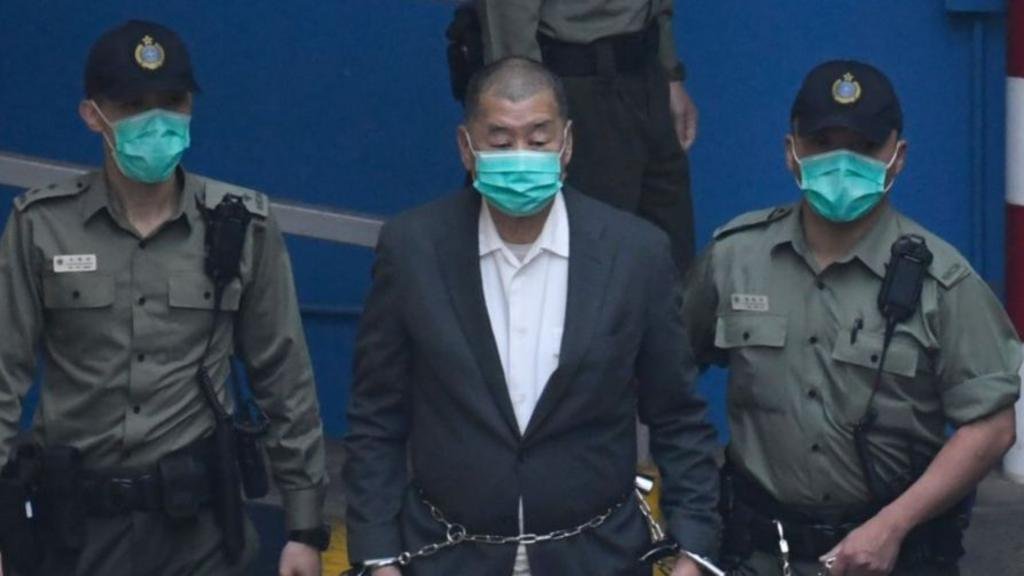
In a landmark and controversial ruling that has drawn global attention, a Hong Kong court has sentenced pro-democracy media tycoon Jimmy Lai to 20 years in prison after finding him guilty of national security offences including conspiracy to collude with foreign forces and publishing seditious materials. The verdict — one of the harshest since China’s national security law was imposed on the city — underscores the intensifying crackdown on dissent and independent media in the semi-autonomous territory.
Lai, 78, the founder of the now-defunct Apple Daily newspaper — once a vocal champion of press freedom and Hong Kong’s pro-democracy movement — has been in detention since 2020. His trial, which began in 2023 and lasted more than two years, culminated in a conviction in December 2025. On Monday, three government-vetted judges ordered the sentence, making it the longest handed down under the Beijing-imposed national security law to date.

Charges and Legal Context
The court found Lai guilty of two counts of conspiracy to collude with foreign forces — allegations that he worked with foreign entities to endanger national security — and one count of seditious publication. Prosecutors argued that Lai’s international engagements, interviews and publications advocating support for sanctions and democratic reforms amounted to dangerous collusion under the sweeping National Security Law (NSL) imposed by Beijing in 2020.
The 20-year term includes two years overlapping with Lai’s existing prison time for prior convictions, effectively adding 18 years to his current sentences for fraud and other earlier charges. Co-defendants — including former Apple Daily executives and pro-democracy activists — received jail terms ranging from around six to ten years.
Press Freedom and International Reaction
Rights groups and Western governments reacted with alarm to the ruling, warning it signals a further erosion of press freedom and judicial independence in Hong Kong. Reporters Without Borders described Lai’s long sentence as a decisive blow to the city’s media landscape, while organizations such as Human Rights Watch called the punishment “cruel and profoundly unjust.” Several nations, including the United States and the United Kingdom, publicly urged for Lai’s release and condemned the severity of the punishment.
Supporters and family members outside the courtroom expressed concern for Lai’s health, noting his advanced age and chronic conditions such as high blood pressure and other ailments exacerbated by years of detention and solitary confinement.
Government Response and Official Stance
Hong Kong and Beijing authorities defend the sentencing, insisting the trial was conducted according to the law and that Lai’s convictions were related to legitimately adjudicated criminal conduct. Officials have repeatedly rejected claims that the prosecution is politically motivated or designed to silence dissent, maintaining that security legislation aims to safeguard national stability.
The closure of Apple Daily in 2021 — following police raids and asset freezes — and Lai’s harsh sentence are widely viewed by critics as part of a broader campaign to quash independent media and suppress dissent in the city, once heralded as a bastion of press freedom in Asia.

Legacy and Broader Implications
Jimmy Lai’s sentencing marks a defining moment in Hong Kong’s post-1997 evolution, representing both the culmination of a years-long legal battle and a symbol of the tightening grip of national security laws on civic space. For many observers, the case encapsulates the challenges facing journalists, activists and civil society in the territory — and raises critical questions about the future of free expression in a jurisdiction once distinct from mainland China’s strict political controls.
Related News:
 Shock US Raid: Maduro Pleads Not Guilty in Manhattan Court
 UK and France Agree Troop Deployment Plan for Ukraine
 EU Weakens as Trump Targets Venezuela and Greenland
 Israel Dossier Sparks Australian Political Interference Concern
 Venezuela Oil Deal Opens Tensions with US Control
 US Citizens Warned to Venezuela Flee Amid Paramilitary Threats
 Trump Says US Will Act on Greenland ‘Whether They Like It or Not’
 Gulf states warn Trump Iran strikes risk wider Middle East war
 Machado Trump medal gesture reshapes Venezuela power struggle
 Greenland defence seen as shared Nato duty amid troop arrivals
 Gulf states warn Trump Iran strikes risk wider Middle East war
 Trump Receives Machado’s Nobel Medal in White House Meeting
 Iran unrest slows under brutal crackdown and global tensions
 Syria President Declares Victory as Ceasefire Reached with SDF
 US Considers Asylum for British Jews Amid Rising Antisemitism
 Russia Strikes Kyiv and Kharkiv as Peace Talks Enter Day Two
 Emails Show Epstein Funded Mandelson’s Husband After Jail
 Thousands Protest ICE Operations in Nationwide US Day of Action
 Epstein Files Reveal Trump Officials’ Emails with Financier
 Thousands Protest ICE in New York Against Trump Deportation Campaign
 US Must Be Prudent When Supplying Arms to Taiwan, Xi Tells Trump
 Fears of New Arms Race as US-Russia Nuclear Weapons Treaty Expires
 US Military Says Two Killed in Strike on Alleged Drug Boat in Eastern Pacific
 Trump Endorses Japan’s Takaichi Ahead of Snap Election
 Is Bangladesh’s Youth Turning Against India? — A Deepening Debate
 UK Must Act with Courage and Clarity on Israel-Palestine Conflict, Says Foreign Affairs Committee Report
 Northern Ireland Family of Three Shot Dead in Maguiresbridge Home Incident
 Tottenham Takes On Newcastle
 Gen Z Embraces the Big, Bold ‘Fake’ Indian Wedding Party Trend
 Radioactive Leak at UK’s Nuclear Warhead Base Sparks Outcry Over Safety and Secrecy
 Mutual Inconvenience: Why Alaska Was Chosen for the Trump-Putin Summit on Ukraine
 China’s crackdown on civil servant perks sparks economic concerns
 Terence Stamp, ’60s British Film Legend and Star of Superman, Dies at 87
 Hong Kong Summons UK and Australian Envoys Following Asylum Grants to Democracy Activists
 Is the UK Ready to Put Boots on the Ground in Ukraine? Assessing Military Capacity and Challenges
 Shein UK Faces Allegations of Shifting Majority of Profits to Singapore to Reduce UK Tax
 Channel Crossings Surge: Over 1,000 People Arrive in the UK in Small Boats in a Single Day
 Widow of Charlie Kirk Forgives Killer at Emotional Memorial Service
 Public Executions in Gaza City Captured on Video Amid Ongoing Conflict
 Macron Phones Trump Over Traffic Jam in New York
 Comey Indictment Deepens Fears of Political Retribution Under Trump
 Google at 27: The Untold Story of Ruth Kedar, the Woman Behind the Iconic Logo
 Yvette Cooper Signals Global Momentum Towards Gaza Peace Deal Amid Humanitarian Crisis
 “It Was Very Tough, But I Love Life”: Former Israeli Hostage Rebuilds Life After Family Killed by Hamas
 Chaos at Ibrox as Martin’s Rangers Era Comes to an End
 Nobel Prize Honours Pioneers Behind Materials That Could Heal the Planet
 Trump Claims Modi Has Agreed to Halt Russian Oil Imports Amid Heightened US Pressure
 Russia’s Latest Push to Win US Favors Shows Deep Desperation
 I’m a Celebrity 2025 line-up revealed: Osbourne joins
 BBC to Apologise Over Edited Trump Speech Amid Backlash
 Britain deploys RAF specialists to assist Belgium with drone threats
 Palace May Restore Hyphen to Andrew Mountbatten-Windsor’s Name
 Trump Urges Herzog to Grant Netanyahu Full Pardon
 Indian authorities demolish Kashmir home linked to Red Fort blast
 Greene Pushes Epstein Files Amid Trump Fallout
 December Run-Off in Chile as Election Produces No Winner
 Zelenskyy Signs Fighter Jet Deal Amid Russian Drone Attacks
 Shadow Fleet at Sea: Europe’s Battle Against Illicit Oil Shipping
 Tiny Curacao Makes History as Smallest Nation to Reach World Cup
 India’s COP30 Delay Raises Global Climate Concerns
 US Suspends Afghan Immigration After White House Shooting
 Georgians Defy Government Crackdown After Year of Protests
 ‘Extinct’ Antelope Returns to Sahara, Bringing Hope
 American Mother Extradited From UK to U.S. on Murder Charges
 Facebook Slow to Remove Bondi Attack Praise, Anti-Hate Group Claims
 Albanese Opens Door to Bondi Royal Commission Amid Rising Pressure
 Saudi Officials Report Zubaidi Flee Before Yemen Peace Talks
 Trump Weighs Response to Iran Crackdown as Tehran Says Communication Open With US
 US Clears Nvidia AI Chip Sales to China in Policy Shift
 US Senate rejects resolution limiting Trump military powers
 Geopolitical football: Iran, Trump and the World Cup clash
 EU weighs response amid Greenland tariff crisis with Trump
 Sydney Shark Attack Surge Shocks Australia Beaches
 Shinzo Abe’s killer receives life sentence in Japan
 American democracy faces crisis after Trump’s return
 EU Says US Ties Have Suffered ‘Big Blow’ After Greenland Crisis
 China General Under Investigation Amid Leadership Purge
 Videos reveal earlier clash before Alex Pretti shooting
 UK New Car Discounts Near £6,000 as Prices Are Slashed
 Israel Moves to Bar MSF From Gaza Operations