Published: 17 February 2025. The English Chronicle Desk. The English Chronicle Online
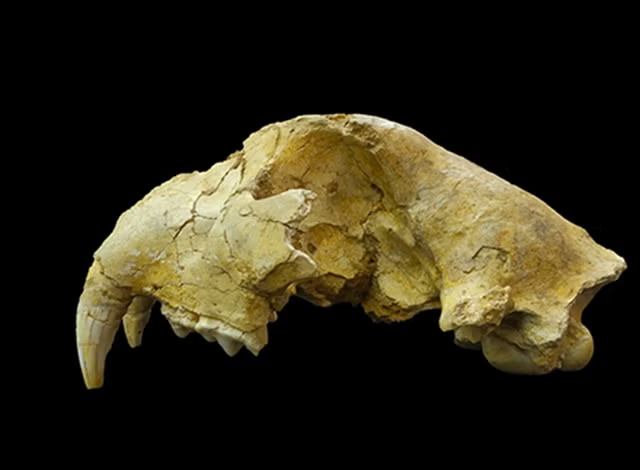
A groundbreaking scientific study has upended long-held assumptions about ancient wildlife in Japan, revealing that the large “tiger” fossils unearthed across the archipelago were not tigers at all — but belonged to a now-extinct species of cave lion that once roamed the region tens of thousands of years ago. The findings, published in the journal Proceedings of the National Academy of Sciences, challenge decades of belief about Japan’s prehistoric ecosystem and shed new light on migrations of large predators during the Late Pleistocene epoch.
For generations, palaeontologists and archaeologists had interpreted large feline fossil remains found from northern Aomori to southwestern Oita Prefecture as belonging to ancient tiger species, largely because of their size and anatomical features. These interpretations also fit with historical models suggesting that tigers once inhabited parts of East Asia and could have reached Japan during glacial periods when sea levels were lower.

However, the new study used advanced DNA sequencing and protein analysis to identify the true origins of these fossils. By extracting and comparing mitochondrial and nuclear DNA from subfossil specimens, researchers found that the genetic makeup of the bones matched that of Panthera spelaea — the cave lion — rather than any tiger species. Researchers also applied radiocarbon dating techniques, which indicated that these lions were present in Japan between roughly 72,700 and 37,500 years ago.
Cave lions are an extinct species that once ranged across northern Eurasia, from Siberia to parts of what is now Europe. They diverged from African lion populations long before spreading across the continent. While these lions disappeared elsewhere, the study suggests that Japan’s geographical isolation, interspersed with brief land connections during glacial periods, allowed relict populations to persist there for thousands of years. Some cave lion remains may date back more than 10,000 years after the species vanished elsewhere, indicating a uniquely extended presence in the Japanese archipelago.
The discovery not only corrects the scientific record but also opens up fresh questions about past ecosystems, predator-prey dynamics and how early humans interacted with their environment. Humans are believed to have arrived in Japan around 40,000 to 35,000 years ago, overlapping with the tenure of these apex predators in the region. How early human populations coexisted with — and responded to — such large carnivores remains an intriguing possibility for future research.

Experts say this research underscores the importance of molecular techniques in palaeontology. Traditional fossil analysis, based primarily on physical characteristics, can misattribute remains when species have similar body structures. Genetic evidence, by contrast, provides clearer insights into evolutionary relationships and species identity — a tool that is revolutionising how scientists interpret the prehistoric past.
Understanding East Asia’s palaeobiology also has broader implications for the study of biodiversity and extinction. The fact that cave lions survived longer in isolated regions like Japan highlights how geography and climate shaped ancient animal ranges. Such insights help scientists model how modern species might respond to environmental changes today.
Today, neither lions nor tigers exist in Japan’s wild landscapes. The only native wild feline remaining is the critically endangered Iriomote cat, a small wildcat found exclusively on Iriomote Island, which itself faces intense conservation challenges.
The revelation that Japan’s prehistoric “tigers” were in fact cave lions not only rewrites a chapter of Japan’s natural history but also evokes a vivid picture of an ancient world where majestic big cats once prowled now-quiet forests and plains.
Related News:
 After the Landslide: Can India Reset Ties with BNP Bangladesh?
 China Strikes at Japan’s Core — Will PM Takaichi Back Down?
 Kinnock’s Rebuke Echoes Loudly as Corbyn Allies Launch Left-Wing Breakaway: “A Gift to Farage”
 Trump Administration Dismisses 17 Immigration Judges, Sparking Debate Over Judicial Independence
 England’s Euro Odyssey: A Tale of Grit, Glory and the Lionesses’ Miraculous March to the Final
 UK Must Act with Courage and Clarity on Israel-Palestine Conflict, Says Foreign Affairs Committee Report
 Northern Ireland Family of Three Shot Dead in Maguiresbridge Home Incident
 Seventeen Dead as Russia Targets Ukrainian Prison in Devastating Airstrike
 Tottenham Takes On Newcastle
 Gen Z Embraces the Big, Bold ‘Fake’ Indian Wedding Party Trend
 Trump Threatens 100% Tariff on Nations Importing Russian Oil Amid India Standoff Over Ukraine War
 Radioactive Leak at UK’s Nuclear Warhead Base Sparks Outcry Over Safety and Secrecy
 Mutual Inconvenience: Why Alaska Was Chosen for the Trump-Putin Summit on Ukraine
 China’s crackdown on civil servant perks sparks economic concerns
 Terence Stamp, ’60s British Film Legend and Star of Superman, Dies at 87
 Hong Kong Summons UK and Australian Envoys Following Asylum Grants to Democracy Activists
 Is the UK Ready to Put Boots on the Ground in Ukraine? Assessing Military Capacity and Challenges
 Costa Blanca Holiday Horror as Food Poisoning Outbreak Hits Four-Star Hotel
 Shein UK Faces Allegations of Shifting Majority of Profits to Singapore to Reduce UK Tax
 Conservative Influencer Charlie Kirk Fatally Shot During University Debate
 Channel Crossings Surge: Over 1,000 People Arrive in the UK in Small Boats in a Single Day
 Widow of Charlie Kirk Forgives Killer at Emotional Memorial Service
 Las Vegas Faces Decline as Rising Costs Drive Tourists Away
 Public Executions in Gaza City Captured on Video Amid Ongoing Conflict
 Macron Phones Trump Over Traffic Jam in New York
 Comey Indictment Deepens Fears of Political Retribution Under Trump
 Google at 27: The Untold Story of Ruth Kedar, the Woman Behind the Iconic Logo
 Yvette Cooper Signals Global Momentum Towards Gaza Peace Deal Amid Humanitarian Crisis
 “It Was Very Tough, But I Love Life”: Former Israeli Hostage Rebuilds Life After Family Killed by Hamas
 Chaos at Ibrox as Martin’s Rangers Era Comes to an End
 Arsenal Showcase Depth and Flexibility as Arteta Eyes Title Challenge
 Nobel Prize Honours Pioneers Behind Materials That Could Heal the Planet
 Trump Claims Modi Has Agreed to Halt Russian Oil Imports Amid Heightened US Pressure
 Russia’s Latest Push to Win US Favors Shows Deep Desperation
 I’m a Celebrity 2025 line-up revealed: Osbourne joins
 BBC to Apologise Over Edited Trump Speech Amid Backlash
 Britain deploys RAF specialists to assist Belgium with drone threats
 Palace May Restore Hyphen to Andrew Mountbatten-Windsor’s Name
 Trump Urges Herzog to Grant Netanyahu Full Pardon
 Indian authorities demolish Kashmir home linked to Red Fort blast
 Greene Pushes Epstein Files Amid Trump Fallout
 December Run-Off in Chile as Election Produces No Winner
 Zelenskyy Signs Fighter Jet Deal Amid Russian Drone Attacks
 Orban Says Ukraine Has ‘No Chance’ as EU Support Continues
 Canada Passes Carney’s First Budget in Tight Parliamentary Vote
 Shadow Fleet at Sea: Europe’s Battle Against Illicit Oil Shipping
 Tiny Curacao Makes History as Smallest Nation to Reach World Cup
 Deadly Russian Strikes Hit Western Ukraine, 20 Killed in Ternopil
 Ukraine Peace Plan: Zelensky Ready for Dialogue
 India’s COP30 Delay Raises Global Climate Concerns
 Royal Navy Shadows Russian Warships Entering the Channel
 Trump EPA Moves to Roll Back Soot Pollution Limits
 US Suspends Afghan Immigration After White House Shooting
 Two National Guard Soldiers Critically Injured Near White House
 Georgians Defy Government Crackdown After Year of Protests
 Tokyo court rules Japan’s same-sex marriage ban constitutional
 ‘Extinct’ Antelope Returns to Sahara, Bringing Hope
 ‘The frontline is everywhere’: new MI6 head warns on Russian threat
 American Mother Extradited From UK to U.S. on Murder Charges
 Russia losses Ukraine war peace talks intensify amid rising deaths
 Facebook Slow to Remove Bondi Attack Praise, Anti-Hate Group Claims
 US Cities Erupt in Protests Against Trump’s Venezuela Military Action
 Albanese Opens Door to Bondi Royal Commission Amid Rising Pressure
 Trump Escalates Minnesota Immigration Surge Amid Rising Tensions
 Iran Protesters Defy Crackdown as Violent Clashes Intensify
 Trump Weighs Response to Iran Crackdown as Tehran Says Communication Open With US
 US Clears Nvidia AI Chip Sales to China in Policy Shift
 Gulf states warn Trump Iran strikes risk wider Middle East war
 EU weighs response amid Greenland tariff crisis with Trump
 Sydney Shark Attack Surge Shocks Australia Beaches
 EU Says US Ties Have Suffered ‘Big Blow’ After Greenland Crisis
 Videos reveal earlier clash before Alex Pretti shooting
 UK New Car Discounts Near £6,000 as Prices Are Slashed
 Israel Moves to Bar MSF From Gaza Operations
 Tragic Ski Lift Accident Claims Australian Snowboarder
 Portugal Election Delivers Socialist Win as Far Right Surges
 Claims Navalny Was Killed by Frog Toxin Spark Debate
 Australian Families Leave Syrian Camp for Home
 SA Police Intensify Search in Gus Lamont Case
 Starmer Weighs Fast-Tracking Defence Boost