Published: 18 February 2026. The English Chronicle Desk. The English Chronicle Online.
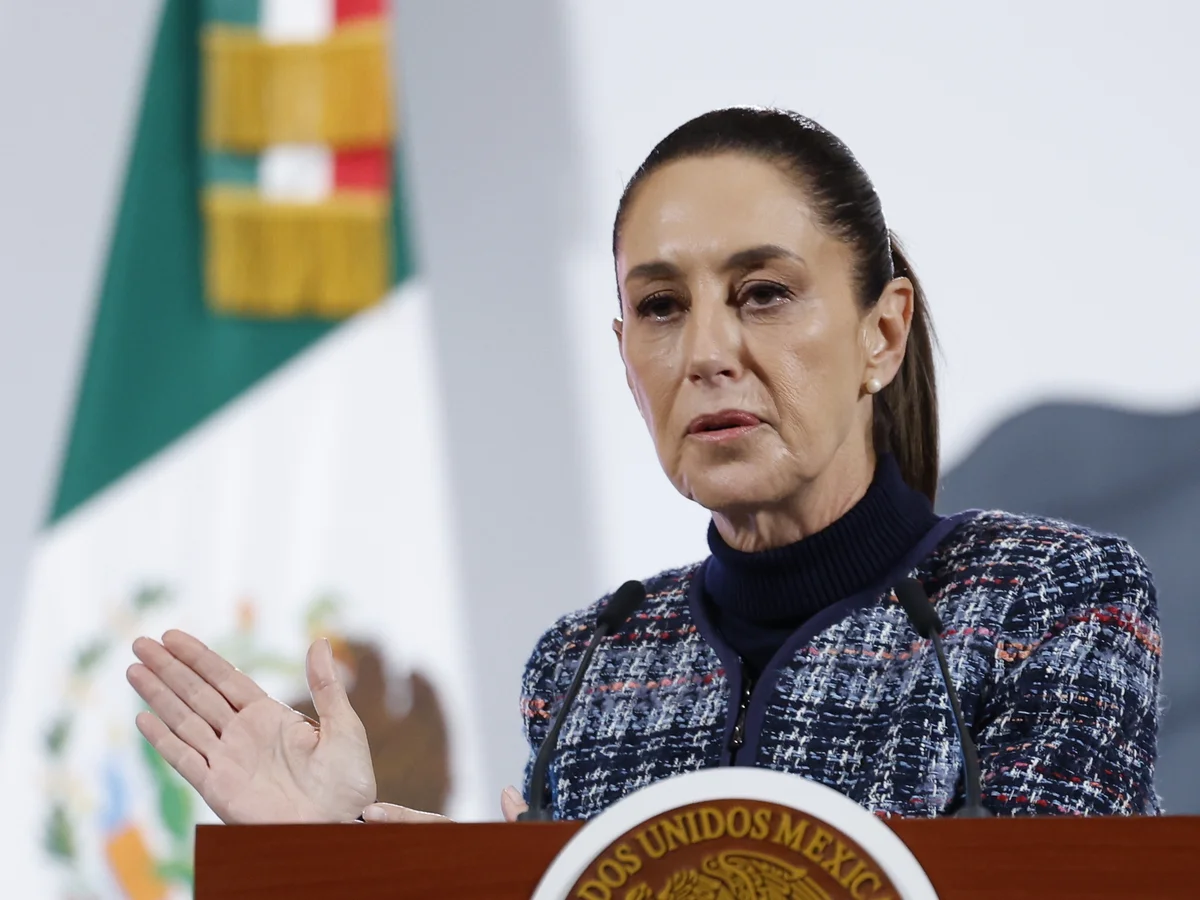
Mexico has formally protested a controversial UK asylum decision involving Karime Macías, the former first lady of Veracruz, intensifying diplomatic tensions between Mexico and the United Kingdom. The dispute centres on the UK asylum decision granted to Macías, who is accused by Mexican authorities of embezzling millions in public funds. President Claudia Sheinbaum confirmed that her administration will send a formal letter of complaint to British officials, questioning the legal and ethical grounds behind the move.
Speaking at a press briefing in Mexico City, Sheinbaum expressed disbelief that someone facing serious corruption allegations could be offered protection abroad. She argued that the UK asylum decision undermines Mexico’s judicial efforts and sends a troubling message about international cooperation against corruption. Her remarks were measured yet firm, reflecting both political pressure at home and the sensitivity of diplomatic ties.
Macías is the former wife of Javier Duarte, who once governed the Mexican state of Veracruz. Duarte resigned in 2016 amid sweeping accusations of organised crime and large-scale embezzlement. Prosecutors alleged that billions were siphoned from public coffers during his tenure. He later fled the country but was captured in Guatemala and extradited to Mexico, where he received a prison sentence for money laundering and criminal conspiracy.

The allegations against Macías centre on her role as head of the state welfare office during her husband’s administration. Mexican prosecutors claim she directed contracts worth millions of pounds to shell companies, diverting funds meant for vulnerable citizens. According to court documents, the missing resources were intended to support children, elderly residents and low-income families. Investigators later reported discovering warehouses filled with luxury goods linked to the couple.
The UK asylum decision followed years of legal proceedings in Britain. After an arrest warrant was issued in Mexico in 2018, Macías reportedly relocated to London. She was detained by British authorities in 2019 under an extradition request. However, she was released on bail after agreeing to wear an electronic monitoring device and surrender travel documents. In 2022, Westminster Magistrates’ Court ruled in favour of extradition, yet her legal team filed multiple appeals challenging the decision.
Central to her defence was the claim that she faced political persecution in Mexico. Her lawyers argued that the charges were motivated by shifting political rivalries rather than impartial justice. They also contended that procedural deadlines had expired in Mexico, rendering the case invalid. British courts examined these arguments over several years before the asylum application was approved last year, according to Mexican media outlet reports.
The UK asylum decision has reignited debate about Britain’s role as a destination for politically exposed individuals seeking refuge. Critics in Mexico question how Macías sustained what was described as a lavish lifestyle in London. Reports alleged she resided in Belgravia, one of the capital’s wealthiest districts, and spent tens of thousands of pounds monthly. President Sheinbaum publicly asked how such resources were obtained, noting that financial transparency remains unresolved.
British authorities have declined to comment on the specifics of the case, citing long-standing policy against discussing individual asylum matters. The Home Office reiterated its commitment to assessing each claim independently and in accordance with domestic and international law. The British embassy in Mexico has not publicly responded to the complaint letter announced by Sheinbaum.
The controversy touches on broader concerns about corruption in Mexico. During the presidency of Enrique Peña Nieto, high-profile graft cases dominated headlines and eroded public trust. Transparency International has consistently ranked Mexico among countries struggling with entrenched corruption. For many citizens, the prosecution of former officials symbolises accountability efforts long demanded by civil society.
Sheinbaum’s administration has framed the UK asylum decision as a setback to those efforts. The president emphasised that cooperation between democratic nations is essential in combating financial crimes that often cross borders. She suggested that granting protection to someone accused of diverting welfare funds risks weakening public confidence in justice systems on both sides.
Legal analysts in Britain note that asylum law operates under strict human rights standards. Applicants must demonstrate a well-founded fear of persecution in their home country. Courts assess evidence of political targeting, judicial independence and prison conditions. Even individuals facing criminal charges may qualify if credible risks are established. In this context, the UK asylum decision reflects judicial findings rather than political endorsement.
Nevertheless, the diplomatic dimension cannot be ignored. Mexico and the United Kingdom maintain strong trade and cultural ties. Cooperation spans education, climate initiatives and financial services. A formal protest letter signals dissatisfaction but stops short of broader sanctions or retaliatory measures. Observers suggest that both governments will likely seek quiet dialogue to prevent escalation.
Public reaction in Mexico has been intense. Social media users circulated images of notebooks allegedly belonging to Macías, including one page repeating the phrase “I deserve abundance.” President Sheinbaum displayed a copy during her remarks, using it to illustrate perceived excess during a period when public services faced shortages. The symbolism resonated with many citizens still affected by austerity and economic inequality.
Meanwhile, Duarte remains imprisoned in Mexico and faces additional proceedings over alleged misappropriation of state funds. Prosecutors recently sought to extend his sentence related to funds designated for children and elderly support programmes. The juxtaposition of his incarceration with his former wife’s asylum status has fuelled political debate.

Experts in extradition law explain that once asylum is granted, removal becomes legally complex. Revocation would require substantial new evidence undermining the original decision. As a result, the UK asylum decision could effectively halt further extradition attempts unless challenged through diplomatic or judicial channels.
For Sheinbaum, the issue carries domestic implications. She assumed office pledging transparency and institutional reform. Demonstrating firmness in high-profile corruption cases strengthens her political standing. At the same time, she must balance assertiveness with maintaining constructive foreign relations.
The coming weeks may reveal whether Mexico’s formal complaint leads to renewed discussions between legal authorities. British courts operate independently from government ministers, limiting executive influence over asylum determinations. Any reconsideration would likely require procedural review rather than political negotiation.
In the broader landscape, the case underscores the intersection of migration policy and anti-corruption enforcement. Global mobility allows alleged financial crimes to span jurisdictions. Effective cooperation depends on mutual trust in legal standards. When trust is questioned, diplomatic friction can follow.
As attention remains fixed on the UK asylum decision, both governments appear cautious in their public tone. Mexico seeks accountability and transparency. Britain emphasises rule of law and individual rights. The outcome will test how democracies reconcile domestic justice demands with international protection obligations.
Related News:
 British Woman in Iran ‘Losing Hope’ Amid Ongoing Detention
 BBC Journalist Held and Interrogated in Vietnam
 The diet that can significantly ease symptoms of IBS
 Trump Speaks on Prince Andrew’s Royal Scandal Fallout
 Pregnant UK Teen to Be Freed from Georgian Jail
 Zohran Mamdani becomes New York City’s first Muslim mayor
 Top Christmas Books Reads: Classics to Cozy Romcoms
 UPS Cargo Plane Crash in Kentucky Kills Seven
 Just Stop Oil Protesters Convicted Amid Climate Defence Row
Zohran Mamdani names all-female transition team for NYC mayoralty
Just Stop Oil Protesters Convicted Amid Climate Defence Row
Zohran Mamdani names all-female transition team for NYC mayoralty
 Tension and Turmoil at Aston Villa v Maccabi Match
 British Grandmother to Return Home After Death Sentence in Bali
 Parents Urge Home Office to Reunite Daughter After Hurricane
 Lando Norris Dominates Brazil GP to Strengthen F1 Title Bid
 Second world war veterans honoured as King leads Remembrance Sunday
 BBC director-general and news chief resign amid bias row
 Palace May Restore Hyphen to Andrew Mountbatten-Windsor’s Name
 Ronaldo Confirms Final World Cup and Plans Retirement
 Rama Rebukes Mahmood for Targeting Albanian Families
 Russian Vessel Used Lasers on RAF Pilots, UK Claims
 Royal Navy Shadows Russian Warships Entering the Channel
 Ireland Boosts Ukraine Aid as Zelensky Visits Dublin
 US Africa aid remarks spark anger after leaked State email
 Starmer China visit raises human rights pressure on Beijing
 UK and EU Signal Fresh Push for Defence Cooperation Talks
 UK New Car Discounts Near £6,000 as Prices Are Slashed
 Cory Bernardi joins One Nation for SA election
 Starmer Condemns ‘Depraved’ Russian Strikes on Ukraine
 Sydney Protest Pepper Spray Clash During Herzog Visit
 Trump Warns Over Chagos Islands Deal
 NSW Mental Health Crisis: Escapes Spark Alarm
 Trump and Chagos Deal Rift Over Iran Strikes
 Andrew Mountbatten-Windsor Arrest After FBI Radar
 Farage Chagos Islands Row Sparks Fury
 Trump Tariffs Threat Spark UK and EU Alarm
 Mediterranean Storms: A New Era of Climate Tragedies
 UK Allows US Base Use Amid Iran Tensions
 Middle East evacuation plans for Britons
 Iranian Australian community divided after vigils
 Trump rebukes Starmer over Iran strikes
 Trump Rebukes Starmer Over Iran Strikes Row
 US Iran strikes strain special relationship
 Iran War Threatens Globalisation and UK Economy
 Gulf shipping crisis sparks food price fears
 UK Rescue Flight Delayed Amid Middle East War
 UK Rescue Flight Leaves Oman After Delay Amid Evacuation Effort
 UK Prepares Aircraft Carrier for Middle East Crisis
 Gordon Brown urges court for crimes against children
 Yvette Cooper: UK Must Follow Principles, Not US Pressure
 Iran War Warning: Starmer Backs Ukraine Visit
 UK Wage Growth Slows as Jobs Market Holds Firm
 UK Minister Denies Iran Missile Threat to Britain
 Australia Imposes Sudden Travel Ban on Iranian Visitors
 Middle East Conflict to Hit UK Economy Hardest
 Army Probes Apache Flyover at Kid Rock’s Nashville Estate
 Relationship with Trump may be beyond repair, Starmer warned
 ICE Detains Soldier’s Bride Days After Louisiana Wedding
 Zelenskyy Warns US Trust in Putin Risks Middle East Safety
 Charles Faces Trump Test in High-Stakes US Visit
 UK Stands Firm on Falklands Amid US Rift
 Premier League drama defines crucial weekend
 Ceasefire Standoff Deepens in Ukraine War
 Koh-i-noor Diamond Row Reignites Colonial Debate
 RFU Backs Borthwick Despite England’s Poor Six Nations
 Starmer Faces Revolt After Crushing Election Losses
 Fear and Betrayal: The Chilling Case of Kouri Richins
 Tragedy in the Maldives: Inside the Deep Sea Rescue
 US Ebola Case Sparks Urgent Global Screening Measures
 UK Pushes for New EU Goods Trade Deal
 Reeves Fights to Keep Treasury Role Amid Labour Turmoil
 Farage and Reform UK Reshape British Politics
 Starmer Leadership Under Pressure After Setbacks
 Deadly Russian Air Raids Strike Across Ukraine
 Britain’s Crowning Butterfly Takes the Nation by Storm
 Russian Frigate Fires Warning Shots Near British Yacht
 UK Government Cancels Higher Education Programme for Women and Girls
 New South Wales Premier Chris Minns Signals Tough Road Ahead for Labor
 Violent London Clash After World Cup Semi-Final Match
 Labour MPs Urge Burnham to Revive UK Aid Target
 UK’s Largest Muslim Convention Scales Up Security Amid Rising Bigotry