Published: 19 February 2026. The English Chronicle Desk. The English Chronicle Online.
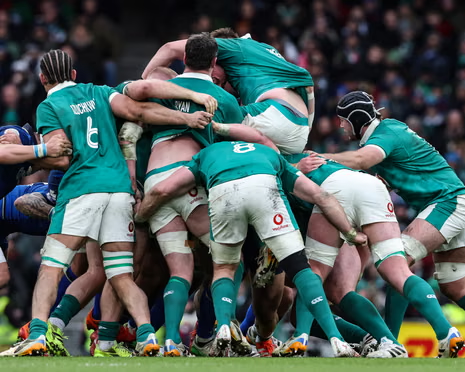
The scrum battle will define much of Saturday’s eagerly awaited England v Ireland showdown. As anticipation builds across south-west London, both camps understand that forward dominance often shapes Anglo-Irish contests. Recent evidence suggests the scrum battle could prove decisive once again at the highest level.
Memories linger from Ireland’s uncomfortable afternoon against Italy last weekend. Footage of Tadhg Furlong and Dan Sheehan being lifted skywards shocked many observers. Both are decorated British & Irish Lions, respected for strength and composure. Yet Italy’s power in the set-piece exposed vulnerabilities that England quickly noticed.
Across social media, supporters replayed those scrums with growing concern. Analysts across the United Kingdom and Ireland revisited the clips in detail. Former internationals questioned Ireland’s body angles and timing under intense pressure. The conversation soon shifted towards what England might attempt this weekend.
History adds further weight to the looming scrum battle narrative. In 2012, Ireland endured a painful afternoon at Twickenham. An early neck injury to Mike Ross disrupted their stability. England capitalised ruthlessly, earning a penalty try and several scrum penalties. That 30-9 defeat remains a stark reminder of front-row fragility.

Fourteen years later, lessons from that encounter still resonate deeply. Coaches repeatedly stress that no scrum often means no victory. At elite level, referees reward technical precision and collective power. Any weakness becomes magnified beneath the international spotlight.
Ireland’s more recent experience against England also raises eyebrows. In 2022, they conceded six scrum penalties at Twickenham. Only Charlie Ewels’s early red card shifted the contest’s balance. Despite that advantage, the pressure at the set-piece was unmistakable.
The shadow of South Africa’s dominance last November also lingers. Ireland’s pack struggled against the relentless force of the Springboks in Dublin. That examination exposed flaws in cohesion and timing. While England do not yet mirror South Africa’s fearsome reputation, they are steadily improving.
Head coach Steve Borthwick has prioritised set-piece development throughout his tenure. England’s scrum at Murrayfield offered one of few positives during a chaotic contest. Stability and discipline provided a foundation when other areas faltered. That progress now fuels quiet confidence within the squad.
Joe Heyes, England’s tighthead, has spoken candidly about the team’s intentions. He emphasised pride in maintaining a solid and reliable set-piece. His comments underline how central the scrum battle remains in preparation. England see opportunity rather than intimidation in Ireland’s recent difficulties.
Heyes developed his craft at Leicester under Dan Cole’s watchful guidance. Cole was integral to England’s dominance in the 2012 encounter. Experience passed between generations often shapes crucial matches like this one. Heyes respects Ireland’s front row but recognises moments of vulnerability.
He highlighted Italy’s technical execution rather than sheer brute force. Observers noticed how Italy’s back five initiated crucial movement. Subtle shifts in timing created upward pressure beneath Irish shoulders. England’s analysts have studied those sequences closely throughout the week.
Ireland, however, are unlikely to repeat identical mistakes. Their coaching staff will have scrutinised angles and engagement details thoroughly. Referee Andrea Piardi’s interpretations could influence early momentum significantly. Positive pictures for officials often decide marginal scrum calls.
Heyes acknowledged that adaptation remains essential during live contests. Initial plans may unravel under unexpected resistance. Front-rowers must react instantly to shifting weight and referee signals. Training sessions increasingly simulate those unpredictable match-day scenarios.
England are determined to avoid scrums collapsing into messy stalemates. They want sustained contests where forward motion clearly determines outcomes. Calls of “get to the contest” have echoed in recent fixtures. That phrase encapsulates their desire for clean, decisive engagements.
Referees prefer scrums that remain upright and stable. When bodies collapse, interpretations become subjective and contentious. England aim to remove ambiguity by maintaining structure and drive. Clarity, they believe, will tip marginal decisions their way.
From Ireland’s perspective, early setbacks could quickly escalate. Confidence at the set-piece often spreads across the entire team. Conversely, instability can unsettle even the most composed players. The psychological element of the scrum battle cannot be overstated.
This fixture carries additional emotional weight for Heyes personally. His mother, Rachel, is Irish, deepening family interest. More than twenty relatives and friends will attend in London. Most are expected to support Ireland passionately from the stands.
Such divided loyalties add intrigue without diminishing professional focus. Heyes insists personal connections heighten rather than distract motivation. Performing strongly in the scrum battle would offer private satisfaction. Yet he remains grounded in collective responsibility.
Supporters on both sides recognise the contest’s broader significance. England seek redemption after disappointment against Scotland. Ireland aim to silence doubts raised by recent scrummaging struggles. Momentum within the championship may hinge on Saturday’s outcome.
Modern rugby increasingly values speed and expansive play. However, foundational elements like scrummaging still determine championships. World Cup tournaments repeatedly highlight the importance of forward dominance. Coaches know that flair often flourishes only from solid platforms.
England’s pack features youthful energy alongside seasoned experience. Conditioning programmes emphasise explosive leg drive and stability. Meanwhile, Ireland rely on cohesion forged through provincial success. That blend of continuity and skill remains formidable despite recent scrutiny.

As kick-off approaches, both camps exude cautious confidence. Training ground intensity has mirrored the contest’s anticipated ferocity. Analysts expect an early arm wrestle at the first few scrums. Establishing authority quickly may shape tactical decisions thereafter.
Should Ireland secure stability, their attacking structure can flourish. Quick ball from a secure base releases dynamic backs into space. Conversely, repeated setbacks would force adjustments and territorial conservatism. England hope to dictate that strategic landscape from the outset.
Ultimately, the scrum battle symbolises deeper themes within this rivalry. It reflects tradition, pride, and the unforgiving nature of Test rugby. Margins remain slim, yet consequences feel immense. Saturday’s clash promises tension rooted firmly in forward exchanges.
Whatever the result, scrutiny will focus intensely on the set-piece. Coaches and pundits will dissect every engagement frame by frame. Supporters will debate interpretations long into the evening. For now, anticipation centres on whether England’s ambition or Ireland’s resilience prevails.
As history repeatedly demonstrates, dominance up front shapes destiny. The scrum battle stands ready to influence another chapter. In south-west London, reputations and momentum hang delicately in balance.
Related News:
 Granit Xhaka Rescue Earns Everton Draw at Sunderland
 Bellingham has ‘the edge’ among England No 10s
 Man City Masterclass on Guardiola’s Milestone Day Exposes Liverpool Woes
 VAR Must Rein Its Neck In to Save Football’s Spirit
 Mary Earps’s Manchester United Return Faces Mixed Reception
 UK and Ireland Announce Venues for Euro 2028 Tournament
 Saka Solidifies Role as Tuchel’s Key England Lieutenant
 Former Lion Heskey Warns of Shortage of England Strikers
 Tiny Curacao Makes History as Smallest Nation to Reach World Cup
 Haiti Qualifies for World Cup Despite Coach Never Visiting Country
 Moyes Defends Gueye After Dramatic Everton Bust-Up
 Mbappe Scores 4 as Real Madrid Edge Olympiakos
 Barcelona, Atletico set for decisive La Liga showdown
 Australia Face Big Changes as Cummins and Lyon Ruled Out of Ashes
 Van de Ven Tackle Leaves Isak with Fractured Leg
 ECB powerless to halt England’s recurring Ashes failures
 Stokes urges empathy for England players amid Ashes struggles
 Aston Villa Remain Arsenal’s Key Obstacle in Title Pursuit
 Salah Shines as Egypt Knock Out Ivory Coast at Afcon
 Raphinha doubles up as Barcelona beat Real Madrid in Super Cup
 Xabi Alonso leaves Real Madrid, Arbeloa Takes Over
 Maya Joint stunned by Valentová in Australian Open upset
 Chelsea warn fans of danger in Naples after hospital incidents
 Liverpool Chase Champions Glory With Stunning Qarabag Victory
 Carlos Alcaraz Triumphs Over Zverev in Five-Set Australian Open Epic
 Ben Stokes injury joke after brutal ball strike
 Wrestler at 60: A Powerful New Start in the Ring
 Infantino Faces Russia Threat and Trump Concerns at Uefa Congress
 Arsenal blow lead as Arteta rues Wolves draw
 Buttler Eyes Vital Run Surge as England Face New Zealand
 Manchester United Face Huge Bill After Ruben Amorim Exit
 Saka criticism response: Arsenal star dismisses outside noise
 India T20 World Cup Triumph Seals Historic Title Defence
 Abramovich Chelsea Sale Cash Faces Jersey Probe
 Champions League Failure Sparking Premier League Crisis
 African World Cup Fans Face $15,000 Entry Bond Fee
 Roy Hodgson Returns to Bristol City in Sensational Move
 Eddie Howe Faces Seven Game Test to Secure Newcastle Future
 ECB Faces Backlash Over Disability Premier League Inclusion
 Brighton Stun Arsenal as Liverpool Edge Past Charlton
 Maguire Commits Future to Manchester United with New Deal
 Can De Zerbi Restore Belief to Save Spurs From the Drop?
 Robots Outpace Humans in Beijing Half-Marathon
 Gianluigi Buffon: Reflections on a Legendary Career
 Ashley Cole: Finding His Voice and Vision in Italy
 A Nine-Goal Thriller Redefines European Football Brilliance
 George North Announces Retirement From Rugby
 $13bn World Cup Set to Break All Revenue Records
 Disney+ Wins Champions League Rights in Key Markets
 FIFA Confirms Global Ban for Benfica Star Prestianni
 The Global Battle for Control Over the Women’s Game
 Fernandes Equals Assist Record as United Secure Third
 Bracing for the Cherries: Guardiola Likens Vital Bournemouth Trip to the Dentist
 De Zerbi Rallies Spurs To Fight Relegation Threat
 The Battle for Wembley Sparking Unprecedented Legal Warfare
 Chasing Glory: The Quest for a New World Cup Champion
 Tuchel Defends Tough England Squad Decisions
 Farewell to an Icon: Pep Guardiola to Exit Manchester City
 Chasing Paris Glory Amid Familiar Echoes
 Tom Pidcock On Chasing Tadej Pogacar And His Future Ambitions
 Is Ollie Robinson the Chaos English Cricket Needs Today?
 Saka Playing Through Pain As England World Cup Campaign Looms
 Iran Files Official Fifa Complaint Over World Cup Travel
 Women’s T20 World Cup Breaks Records But Gaps Remain
 Serena Williams Returns to Wimbledon Centre Court
 Martinelli Strikes Late as Brazil Edge Past Brave Japan
 Paraguay Shock Germany in Historic Penalty Shootout
 France Dominate Sweden as Deschamps’ New Era Takes Shape
 Mexico World Cup Joy Turns to Tragedy as Two Die in Crowds
 US Advance Past Bosnia in World Cup Thriller
 Kane Saves Tuchel as England Survive Dramatic Exit
 The Stokes Departure: A New Era or a Tactical Mistake?
 Taylor Swift and Travis Kelce Marry at Madison Square Garden
 Trump’s Red-Card Intervention Hurts the US World Cup
 Trump Intervenes in Fifa World Cup Balogun Ban
 NCAA Rules Unchanged After Supreme Court Transgender Ruling
 USA World Cup Heartbreak: Belgium Ends Their Dream
 Mbappé Brilliance Leads France Into Semi-Finals
 Spain’s Superstar Fan: Keyne Yamal Steals the Spotlight
 Lamine Yamal’s Birthday: Football, Fame, and France