Published: 20 October 2025. The English Chronicle Desk. The English Chronicle Online.
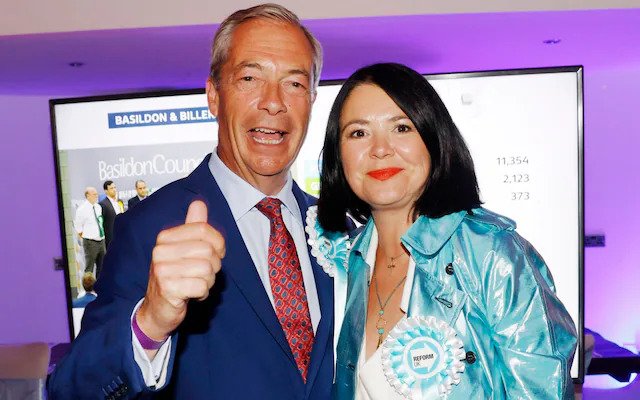
Nigel Farage’s partner, Laure Ferrari, has reportedly been caught up in a long-running investigation into alleged financial irregularities involving a Eurosceptic organisation she once managed in Brussels. Ferrari served as executive director of the Institute for Direct Democracy in Europe (IDDE), a think tank that was later forced into liquidation amid scrutiny over its finances.
The European Commission’s anti-fraud office, OLAF, spent several years examining the organisation and a related parliamentary group, in which the UK Independence Party (Ukip) was the largest member. The findings were subsequently referred to Belgian authorities for further action. The case is scheduled to be heard by Chamber 69 of the tribunal de première instance, a Brussels court specialising in financial crime, with a ruling expected on November 5. Officials have said it will be a “final judgment” with the possibility of appeal.

A spokesman for the federal prosecutor, Ann Lukowiak, declined to comment on specific individuals under investigation or the sanctions proposed, citing confidentiality. Ferrari, however, has dismissed the allegations, claiming that the investigation was politically motivated. She described the accusations as “fake” and stemming from a hostile Member of the European Parliament, suggesting a bias against the organisation. There is no indication of any wrongdoing on Farage’s part, who served as an MEP from 1999 until 2020.
Corporate filings reviewed by The Times indicate that Ferrari was officially listed as the “day-to-day manager” of IDDE during the period under investigation. Auditors’ reports, combined with referrals from EU parliamentary authorities, triggered the anti-fraud office’s inquiry. Although IDDE went into liquidation in 2017, OLAF continued examining alleged “serious irregularities” and, in December 2019, submitted a judicial recommendation to Belgian law enforcement—actions that were kept largely unknown to the public at the time.
The investigation also encompassed the Alliance for Direct Democracy in Europe (ADDE), a Brussels-based political party consisting of Eurosceptic MEPs. Its director was Roger Helmer, a Ukip representative who later resigned amid a separate inquiry into misuse of public funds. OLAF has confirmed that the investigations launched in 2016 involved both ADDE and its sister entity, IDDE, and concluded in 2019 with a judicial recommendation forwarded to Belgian authorities, as Belgium was responsible for follow-up actions on the groups registered within its jurisdiction.
A spokesperson for Ferrari elaborated on the context surrounding the probe. Following the Brexit referendum in 2016, multiple Eurosceptic parties, including ADDE, faced scrutiny from the European Parliament’s Bureau, which oversees the allocation of annual funds to such groups. According to the spokesperson, a Green MEP leaked false allegations regarding the misuse of funds to the Dutch press. While OLAF had a duty to investigate, the subsequent criminal referral was ultimately limited to ADDE. The case involving IDDE did not proceed to criminal court, and the EU Court of Justice later annulled attempts by the European Parliament to reclaim funds from IDDE.
Ferrari’s legal representatives have emphasised that she was not personally implicated in any confirmed wrongdoing and that the allegations against her were politically charged. They argue that the case reflects broader tensions within the European Parliament at the time, rather than evidence of criminal misconduct. Despite the media attention, there is currently no indication that Farage himself was involved or had any connection to the financial irregularities being investigated.
The tribunal’s forthcoming judgment is expected to clarify the status of the case, but experts caution that the complexity of EU funding regulations and the interplay between political and judicial processes can make such investigations lengthy and opaque. Analysts note that investigations of this nature often span multiple years, particularly when they involve cross-border political organisations and oversight from institutions such as OLAF.
The situation has revived interest in the governance and oversight of Eurosceptic organisations in Brussels, highlighting the scrutiny faced by political entities that receive EU funding. Transparency and accountability remain central concerns, with both national and European authorities monitoring compliance closely. The case also underscores the sensitive balance between political rivalry and regulatory enforcement within the EU, where disputes over funding can quickly become highly publicised controversies.
While the investigation focuses on historical activities, it continues to draw attention due to Ferrari’s connection to Farage and the high-profile nature of the organisations involved. Legal commentators emphasise that allegations alone do not imply guilt and that the judicial process in Brussels will ultimately determine the outcome. Observers also note the broader implications for other political entities operating in the EU, as the case highlights the potential legal and reputational risks associated with financial management and governance practices.
As the November court date approaches, all eyes remain on Chamber 69 of the tribunal de première instance. Legal analysts expect careful scrutiny of both procedural and substantive aspects of the case, including evidence submitted by OLAF and previous audits. While the details of individual involvement remain largely confidential, the outcome could set important precedents for how EU anti-fraud investigations are handled in relation to political organisations.

The case has also prompted discussion among political commentators regarding the transparency and accountability of think tanks and political parties operating at the European level. While OLAF’s mandate is strictly investigative and independent, its findings can have significant political and reputational implications, particularly when public figures are associated with the organisations under review.
Ferrari’s representatives continue to maintain that the allegations are unfounded and politically motivated, while Farage has not commented on the ongoing proceedings. The tribunal’s upcoming ruling will provide a clearer picture of the situation and potentially close a chapter on an investigation that has spanned nearly a decade, beginning with inquiries launched in 2016 and concluding with OLAF’s recommendations in 2019.
In the meantime, Brussels-based legal experts and EU political analysts will closely monitor the proceedings, noting that the outcome could influence future oversight of political organisations and funding practices. The investigation serves as a reminder of the stringent regulations governing European political funding and the high standards of accountability expected of those managing public resources.
Related News:
 Trump Administration Dismisses 17 Immigration Judges, Sparking Debate Over Judicial Independence
 Tasers Introduced in UK Prisons to Combat Rising Violence and Protect Staff
 Peter Kyle Condemns Nigel Farage Over Reform UK’s Promise to Scrap Online Safety Act
 Ex-Army Chief Under Fire for Lobbying Allegations Tied to US Defence Firm
 David Lammy Faces Possible Legal Challenge Over Foreign Office Secondment Scheme
 Ministers Accused of Defamation Over Palestine Action Ban and Mass Arrests
 Police Advised to Disclose Ethnicity of Suspects in High-Profile Cases
 Sally Rooney Pledges BBC Royalties to Support Palestine Action Despite UK Terror Ban
 UK’s First Transgender Judge Seeks Rehearing of Supreme Court Ruling on Biological Sex
 Government Signs Deal with Iraq to Return Illegal Migrants in Latest Bid to Deter Small Boats
 Migrant Hotel Chaos as Councils Consider Legal Action to Ban Asylum Seekers
 DWP Launches Independent Review of Post Office Staff Prosecutions
 Angela Rayner Admits Underpaying Stamp Duty on £800,000 Seaside Flat
 Angela Rayner Faces Scrutiny as Stamp Duty Row Deepens
 Shabana Mahmood Faces Daunting Challenges as New UK Home Secretary
 Tanni Grey-Thompson Faces Abuse Over Opposition to Assisted Dying Bill
New Home Secretary Hosts International Talks as Small-Boat Migrant Crossings Surge
Tanni Grey-Thompson Faces Abuse Over Opposition to Assisted Dying Bill
New Home Secretary Hosts International Talks as Small-Boat Migrant Crossings Surge
 Police Watchdog Calls for End to Recording Non-Crime Hate Incidents
 Father’s Tip Leads to Arrest in Charlie Kirk Murder Case
 First “One In, One Out” Deportation Flight Departs Without Migrants Amid Legal Challenges
 Hillsborough Law to Hold Public Officials Accountable, Promising Jail for Serious Misconduct
 Labour Urged to Rethink Growth Strategy as Top Economist Warns of Far-Right Surge
 Corbyn and Sultana Clash Over Membership Portal as Divisions Surface in New Leftwing Party
 Commons Speaker Warns UK Parliament Vulnerable to Foreign Espionage After China-Linked Case Dropped
Mahmood Pledges Reform of Modern Slavery Laws After Court Blocks Deportation Appeal
Commons Speaker Warns UK Parliament Vulnerable to Foreign Espionage After China-Linked Case Dropped
Mahmood Pledges Reform of Modern Slavery Laws After Court Blocks Deportation Appeal
 Migrants in UK May Need to Contribute or Face Removal, Home Secretary Signals
 Jailed Georgian Opposition Leaders Warn UK of Iranian Links to Ruling Party
 UK Police to Gain New Powers to Manage Repeated Protests, Home Office Announces
 MPs’ pay watchdog seeks to give public greater voice in how politicians are funded
 Digital ID Plans Ignite Debate Over £600m Treasury Tax Boost and Privacy Concerns
 Boris Johnson Breached Rules on Post-Office Business Contacts
 UK Extradition Law Change Sparks Fears Among Hong Kong Dissidents
 Shabana Mahmood Warns Border Failings Are Eroding Trust in States
 Lucy Powell urged ministers to reconsider costly legal case for Labour donor’s firm
 Starmer Accused of Creating ‘Toxic Downing Street’
 Tories Push to Dilute Labour’s Workers’ Rights Bill
 China Spy Case Hearing Reveals Key Gaps in Prosecution
 It’s time to come clean on the China spy case
Johnson Approved China’s London ‘Super-Embassy’ in 2018
It’s time to come clean on the China spy case
Johnson Approved China’s London ‘Super-Embassy’ in 2018
 Rachel Reeves Admits Renting Home Without Required Licence
 Experts Question HMRC Over Possible Child Benefit Privacy Breach
 Phillipson urges careful review of gender recognition guidance
 China-critical UK academics face ‘extremely heavy’ pressure from Beijing
 Met Police Culture Makes Racial Harm ‘Inevitable’
 Remaining rebel Labour MPs have whip restored
 Tim Davie resigns as BBC director general amid bias claims
 WASPI Women May Get Second Chance at Pension Redress
 Palace to reinstate hyphen in Andrew’s surname
 Trump Urges Herzog to Grant Netanyahu Full Pardon
 Victims’ commissioner Baroness Newlove dies aged 63
 BBC Apologises to Trump but Rejects $1bn Compensation Claim
 Major Rent Reform Ends No-Fault Evictions in England
 Peers Flood Assisted Dying Bill with 942 Amendments
 US Justice Department Files Lawsuit Against California Over Partisan Voting Maps
 Nandy says BBC review to probe political board influence
 Your Party Turmoil Deepens Over Withheld Donations
 Mahmood Plans Major Crackdown on Illegal Migration
 UK Unveils Fast-Track Deportation and Asylum Overhaul
 Trump Deploys DHS to Charlotte in Major Arrest Operation
 UK Asylum Overhaul Sparks Debate Over Human Rights and Deportations
 UK Asylum Reforms: Temporary Refugee Status and Faster Deportations
 Mahmood Defends Tough Overhaul of UK Asylum System
 Scottish Ministers Express Alarm Over UK Asylum Reforms
 South African Detained After Neo-Nazi Rally in Australia
 Westminster Advances Legacy Bill Amid Criticism
 Minister Defends Tough New Asylum Reform Plan
 UK Net Migration Falls Sharply After ONS Revisions
 Federal Court Blocks Texas Republican Maps Over Racial Bias
 Only One Republican Opposes Mass Release of Epstein Files
 Congress Approves Release of Epstein Files, Trump Expected to Sign
 Senedd Suspends Politician Over Offensive Racial Slur
 Trump Signs Bill Releasing Justice Department Files on Epstein
 Trump Slams Democrats With ‘Seditious’ Death Claim
 Covid Response in NI ‘Chaotic’, Says Inquiry
 Texas Governor Faces Lawsuit From CAIR
 Peers Get Extra Time to Debate Assisted Dying Bill
 Trump to pause migration from ‘third-world countries’
 Chinese & Japanese Boats Clash Near Disputed Islands
 Putin Meets US Envoy Amid Key Ukraine Peace Talks
 Franklin Turtle, Sabrina Carpenter Slam US Social Media Use