Published: 28 October 2025. The English Chronicle Desk. The English Chronicle Online.
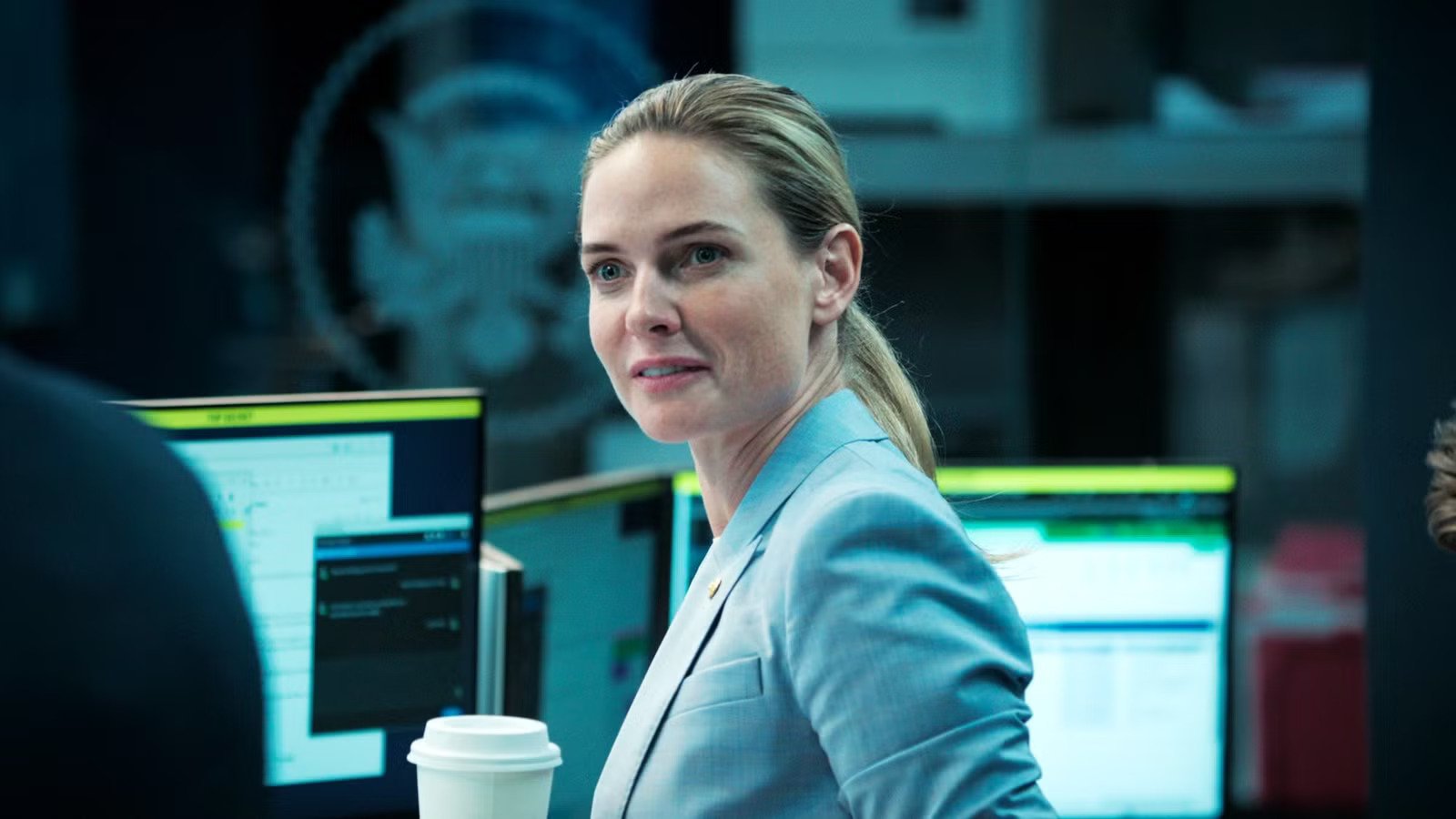
Netflix’s latest thriller, A House of Dynamite, directed by Kathryn Bigelow, promises high-stakes tension and an intense portrayal of national crisis. The film plunges viewers into the moments immediately preceding the potential detonation of a nuclear missile on US soil. Across multiple narrative perspectives—including those of military personnel, national security advisors, and the US president—the audience is presented with a meticulous portrayal of how a country might respond to such a catastrophe. The infrastructure, expertise, and procedural rigor of the characters offer an illusion of hyperrealistic competence, as if the nation were ready for a crisis of unprecedented scale. On paper, the film is a gripping study of preparation and leadership under pressure.
Yet, despite the veneer of logistical precision, the movie stumbles in its claim to realism, and the fault lies largely in its choice of political context. The story is told in a triptych structure, revisiting the same thirty-minute window from different viewpoints, culminating in a focus on the president, portrayed by Idris Elba. The character, identified solely by title, is calm, rational, and measured—a competent leader grappling with a terrifying situation. While Elba’s performance captures the tension and gravity of the role, it inadvertently underscores the central flaw of the film: its imagined president bears little resemblance to the real-life occupant of the Oval Office during any current US crisis. That reality, of course, is former President Donald Trump.

The absence of a Trump-like figure is a deliberate choice. Bigelow and writer Noah Oppenheim likely avoided incorporating a president whose personality traits—impulsivity, unpredictability, and public theatricality—would have dramatically altered the tone of the film. A Trump analogue would demand a narrative that leans into satire or dark comedy, much as Stanley Kubrick did with Dr. Strangelove. Kubrick initially intended his Cold War nuclear thriller to be serious but ultimately concluded that the absurdity of the political and military landscape demanded farce. A House of Dynamite, by contrast, opts for earnest tension, creating a dissonance between the story’s dramatic intentions and the political realities it evokes.
This choice of narrative sanitization has consequences. By imagining a crisis scenario under the guidance of highly competent and measured officials, the film effectively erases the chaotic, unpredictable elements inherent in contemporary politics. The result is a story that feels somewhat detached from the present day, reminiscent of an earlier era in American governance. While Idris Elba’s president is not intended as a stand-in for Barack Obama, the film’s tone and procedural approach evoke the careful, bureaucratic confidence associated with pre-Trump administrations. This sanitized reality, though internally consistent, diminishes the film’s claim to realism: it presents a nuclear crisis as something that might occur under near-perfect leadership conditions, rather than reflecting the messiness and volatility of actual political life.
From a storytelling perspective, the choice is understandable. A character modeled on Trump—or any leader with comparable public perception—would inject elements of unpredictability and impropriety, demanding a tonal shift away from suspenseful drama toward comedy, parody, or even political critique. Yet the film’s failure to confront this reality produces a fundamental tension: the depicted crisis is meant to be terrifying, yet it unfolds in an unrealistically competent world. The audience is left to grapple with a worst-case scenario managed almost flawlessly, undermining the intended suspense.
Despite this flaw, the movie does succeed in some areas. Bigelow’s direction captures the logistical and emotional weight of a national security crisis with precision. The tension is palpable as characters make split-second decisions, coordinate across agencies, and navigate a landscape where every choice carries profound consequences. Cinematography and pacing amplify the claustrophobic intensity, conveying a sense of urgency that mirrors the real stakes of nuclear escalation. The triptych narrative allows for a layered exploration of perspective, demonstrating how a single catastrophic event can ripple across various levels of command and responsibility.

Yet, for viewers aware of the real-world political context, these accomplishments coexist uneasily with the glaring absence of realism. The tension between the film’s hyper-detailed crisis management and its politically “idealized” leadership becomes increasingly apparent. The hypothetical scenario presented by the film—a meticulously coordinated response to an existential threat—invites questions about how it would play out under the influence of erratic decision-making or conflicting priorities. The imagined competence of every level of command is a dramatic device, but it simultaneously glosses over the unpredictability inherent in modern governance.
In this sense, the film operates as both cautionary tale and intellectual exercise. By presenting a nuclear crisis managed competently by every participant, it asks viewers to consider: if even the most capable leaders struggle under such circumstances, what hope exists in a world defined by real-world unpredictability? While this approach has narrative merit, it also risks distancing audiences from the stakes of the story. The tension arises from procedural fidelity rather than from the human or political chaos that might accompany a missile threat in reality.
Moreover, the absence of a politically recognizable leader, while understandable for storytelling purposes, inevitably limits the film’s capacity to resonate with contemporary anxieties. The world of A House of Dynamite feels almost timeless, or alternatively, like a historical what-if scenario. By sidestepping present-day political realities, the film sacrifices some immediacy and relevance, positioning itself in a space that is more speculative than reflective of current events.
Nevertheless, Bigelow and Oppenheim’s work raises interesting questions about leadership, crisis management, and national preparedness. The film’s characters—military advisors, intelligence officers, and the president—are depicted with a seriousness and intellectual rigor that underscores the complexity of responding to nuclear threats. In doing so, the story provides a glimpse into the layered decision-making processes that underlie high-stakes security operations, even if the scenario itself is fictionalized and idealized.
Ultimately, A House of Dynamite is a film defined by paradox. It is intense, suspenseful, and visually compelling, yet its claim to realism is undercut by the deliberate absence of modern political unpredictability. It is a thought experiment in controlled chaos, imagining the outcomes of extreme events under conditions of near-perfect leadership. The film’s tension is derived less from fear of real-world failure and more from the intricate choreography of its fictionalized officials.

While the movie may not fully convince audiences seeking a realistic portrayal of contemporary American leadership, it remains a compelling piece of cinema. Bigelow’s attention to procedural detail, combined with Elba’s measured performance, provides a study in crisis management and human decision-making under extreme pressure. Viewers are invited to examine how competence, communication, and clarity influence outcomes in moments of potential disaster, even if the narrative framework is necessarily sanitized.
In conclusion, A House of Dynamite excels as a gripping thriller and an exploration of structured crisis response. Yet it also serves as a reminder that realism in political cinema is inseparable from contemporary context. By omitting the unpredictability of real-world leadership, the film presents a coherent, tense, and intellectually satisfying narrative—but one that ultimately diverges from the messy, chaotic reality of nuclear crisis management in today’s America. Its greatest achievement may be in prompting reflection on how competence and human judgment shape outcomes in moments of extreme uncertainty, even while highlighting the limitations of cinema to capture the full scope of modern political reality.
Related News:
 Farewell to a Cultural Icon: Malcolm-Jamal Warner Dies at 54 During Holiday in Costa Rica
 The Walking Dead’ Actress Kelley Mack Dies at 33
 Sean Hayes Reimagined: From Sitcom Stardom to Serious Stage Acclaim
 Love? Actually, No: Emma Thompson Reveals Donald Trump Once Asked Her on a Date
 Millie Bobby Brown and Jake Bongiovi Begin Parenthood Through Adoption
 Chappell Roan Delivers Fairytale Spectacle at Reading Festival, Cementing Pop Stardom
 Emma Heming Willis Speaks Openly on Bruce Willis’s Declining Health Amid Dementia Battle
 September’s Must-See Films: From Spinal Tap II to Leonardo DiCaprio’s Latest Thriller
 Robert Redford: The Indispensable Patron of American Independent Cinema
 Watchdog, Cornflakes and Courage: Remembering John Stapleton, a Broadcaster Who Did It All
 Kerry Katona’s Heartfelt Regret Over Ricky Hatton’s Death
 Dawson’s Creek” Cast Reunites for Special Broadway Benefit to Support James Van Der Beek
 Beloved Actress Dame Patricia Routledge Dies Aged 96
 Karen Carney Shines on Strictly Come Dancing Week Two Despite Tango Wobbles
 Celebrity Traitors First Look: A Star-Studded Highland Adventure That Hooks from the Start
 Who is Ruth Codd? All about the Irish actress on Celebrity Traitors
 Academy Award-Winning Actress Diane Keaton Dies at 79
 Strictly Celebs Starstruck as Cynthia Erivo Shines
 Grange Hill Creator Criticises TV’s ‘Oxbridge Gang’ Rule
 Kaye Adams Yet to Receive Complaint Weeks After Suspension
 Dave Ball: The Unsung Genius Behind Soft Cell’s Bold Sound
 Prunella Scales: From Fawlty Towers Icon to Beloved Canal Explorer
 Kate Winslet to Narrate Film Highlighting King’s Environmental Mission
 The upcoming book-to-screen adaptations I’m most excited about
 Meghan ‘to return to acting’ after eight-year hiatus
 Pauline Collins, Beloved ‘Shirley Valentine’ Star, Dies at 85
 I’m a Celebrity 2025 line-up revealed: Osbourne joins
 Lola Petticrew: ‘Calling it the Troubles minimises what it really was’
 Amber Davies Shines on Strictly – Time to Drop the West End Debate
 Boos, backlash and body horror: The story of Alpha
 Pat Butcher Returns to EastEnders in Touching Dementia Storyline
 EastEnders icon Pat Butcher returns to Walford this Christmas
 Wuthering Heights: bold new trailer for Emerald Fennell’s epic adaptation

 Yungblud Pauses Tour Over Health Concerns, Apologises to Fans
 SS Rajamouli Announces ‘Varanasi,’ a Mythic Time-Travel Epic
 Tom Cruise Receives Honorary Oscar, Celebrates Cinema
 The Lasting Legacy of Seven: Crime, Morality, and Urban Decay
 Two Judges Quit Miss Universe Amid Allegations of Rigged Competition
 New Miss Universe Crowned Amid Controversy in Thailand
 Director Michael Caton-Jones Reflects on Career and Beginnings
 Robert Irwin Claims Dancing with the Stars Crown
 Rosalía Inspires Young Listeners to Discover Classical Music
 Belfast’s Elle Vosque finishes runner-up on Drag Race UK
 London Bids for 2029 World Athletics Championships with £45 Million Government Backing
 Ozzy Osbourne: The Prince of Darkness Bows Out, Leaving Behind a Legacy of Metal and Myth
 Justin Timberlake Shares His Lyme Diagnosis and the Strain of Performing Through Illness
 Heartbreak and Hardship at Diddly Squat: Jeremy Clarkson Faces TB Outbreak, Pup’s Death, Failing Crops, and Rising Theft Threats
 Unseen Killers of the Deep Inside the UK Lab Uncovering the Silent Deaths of Sea Creatures
 Gen Z Embraces the Big, Bold ‘Fake’ Indian Wedding Party Trend
 My Husband Won’t Stop Playing with Lego and It’s Driving Me Nuts
 Jack Osbourne Breaks Silence with Heartfelt Tribute Following Ozzy Osbourne’s Funeral
 Russell T Davies Warns of Declining UK Gay Rights Amid Rise of Reform UK and Trump Influence
 Terence Stamp, ’60s British Film Legend and Star of Superman, Dies at 87
 Peter Andre Praises Son Junior’s ‘Quiet Season’ Amid Ongoing Family Dispute
 Kelsey Parker Opens Up About Heartbreak and Healing Following Stillbirth
 Brad and Angelina’s Journey: Embracing Shiloh’s Identity While Protecting Childhood Privacy
 Patricia Crowther, Known as UK’s Oldest Witch, Dies Aged 97
 Jilly Cooper: The Bonkbuster Queen Who Redefined Romantic Fiction
 Paedophile Singer Ian Watkins Dies After Prison Attack
 Man Charged Over 2020 Death of Tattoo Artist Georgina Ward
 Fabio Wardley stuns Joseph Parker to earn Usyk title shot
 Charlie Kaufman: They told me Being John Malkovich would never get made
 The Line of Beauty, Almeida review: A wild, witty ride through Thatcher-era high society
 Hollywood Is an Industry of Looney Tunes Pretending to Be Normal
 Top Christmas Books Reads: Classics to Cozy Romcoms
 Oprah enjoys Meghan’s jam on English muffins
 VAR Must Rein Its Neck In to Save Football’s Spirit
 David Szalay’s ‘Flesh’ Wins 2025 Booker Prize
 Pop Stars Call on UK Government to Cap Resale Prices for Fans
 Pokémon to open world’s first theme park in Japan next year
 The Devil Wears Prada 2 teaser trailer revealed
 Eminem Takes Legal Aim at Australian ‘Swim Shady’ Brand
 Australia to Ban Social Media for Kids Under-16 Starting December
 Bill Murray Terrified Wes Anderson but Became His Closest Collaborator
 Reggae Legend Jimmy Cliff Dies at 81
 Karen Carney Stuns on Blackpool Week, Deserves Strictly Final
 Prisoner 951 Review: arrowing Retelling of Nazanin Zagharz-Ratcliffe
 Pavarotti statue frozen in Italian ice rink sparks backlash
 Prince Andrew Named Punchline in Top Christmas Cracker Joke