Published: 07th August 2025 | The English Chronicle Online
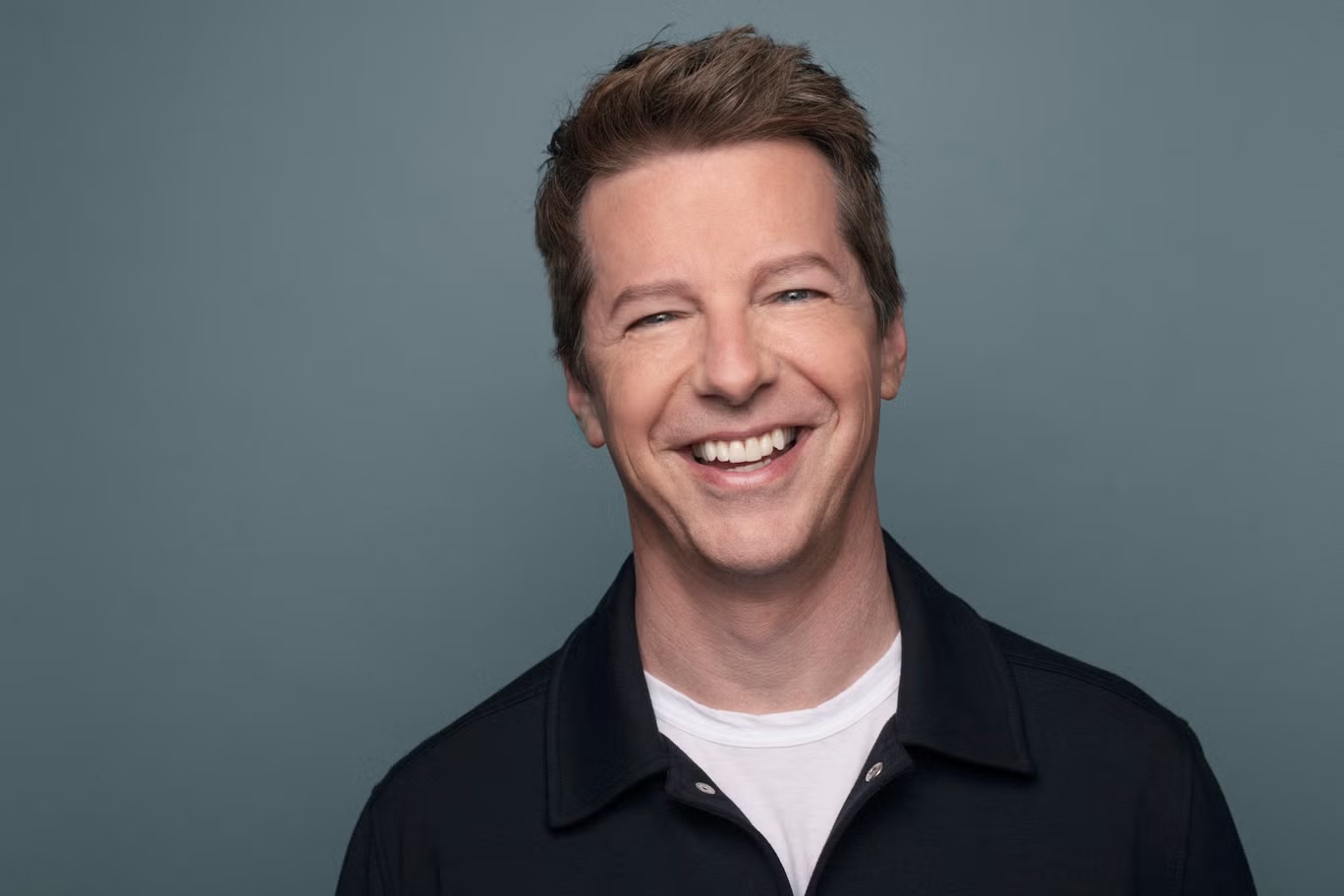
Sean Hayes, widely recognised for his flamboyant and comedic portrayal of Jack McFarland in the ground-breaking NBC sitcom Will & Grace, has undergone one of the most unexpected and rewarding artistic transformations in recent years. The actor, now 55, has stepped boldly away from the shadow of his sitcom persona to embrace a role that challenges, exhausts, and ultimately fulfils him: that of Oscar Levant, the brilliant but tormented mid-century pianist, raconteur and cultural commentator.

With a Tony Award already under his belt for his performance in Good Night, Oscar on Broadway, Hayes now reprises the role for its eagerly awaited transfer to London. The shift to the West End marks a significant moment in Hayes’s career—one that has been a long time in the making and is deeply personal. The actor is not merely portraying Levant; he is channelling a life of contradictions, complexities, and immense talent, much like his own.
Meeting Hayes, it becomes immediately clear how far removed he is from the exuberant character of Jack that defined his early fame. Clad in a simple sweater and jeans, he is candid, efficient in speech, and radiates a quiet confidence, seemingly at peace with both his past and the path ahead. While audiences once struggled to separate the actor from his iconic television role, his recent work has forced a reassessment. No longer just the face of gay representation on 1990s primetime television, Hayes is now lauded for his dramatic depth and classical piano virtuosity.
In Good Night, Oscar, Hayes delivers a dazzling final scene, performing a physically and emotionally charged rendition of George Gershwin’s Rhapsody in Blue. Far from a theatrical stunt, this musical feat is grounded in real skill—Hayes began piano lessons at age five, performed in competitions as a teen, and once served as music director at a dinner theatre. That he kept this talent under wraps for much of his career only underscores the sense of revelation now surrounding his stage work.
Hayes admits the role of Levant was never going to be handed to him. It took two decades of persistence and self-advocacy, fighting against industry typecasting that often traps actors in the roles that made them famous. In this, Hayes is unflinchingly honest: “Nobody would have ever cast me in this role,” he says. “You have to create your own path. You have to become self-generating because nobody’s going to do the work to see you in other roles.”
Levant, who died in 1972, was known as much for his sardonic television appearances as for his film and music career. He openly joked about his own mental health struggles, prescription drug addiction, and inner turmoil, often in front of millions on programmes like The Tonight Show. Hayes, who has been around mental health issues within his own family and has experienced personal challenges—including atrial fibrillation—relates deeply to Levant’s coping mechanisms and the audacious way he used humour as a lifeline.
Therapy, Hayes says, has helped him immensely—partly because his husband grew tired of being the default listener. His openness about his own vulnerabilities is disarming and refreshing. On his popular podcast SmartLess, co-hosted with Jason Bateman and Will Arnett, Hayes regularly discusses personal subjects, transforming private pain into shared understanding. He believes that talking—whether to a few friends or millions—is healing, and he credits his newfound confidence to this willingness to be seen for who he truly is.
Growing up in poverty in Chicago as the youngest of five children, Hayes often went without food, warmth, or even a working telephone. His father left when he was five, and his mother worked tirelessly to support the family. “Watching my mum work so hard and growing up like that gives you this incredible work ethic,” he says. “All five of us work really hard and I love that.” That ethos never left him. His first big purchase after Will & Grace’s success was a piano—a long-held dream finally realised.
His post-sitcom journey hasn’t been without stumbles. Though he landed a prominent role in the 2007 hit The Bucket List, acting alongside Jack Nicholson and Morgan Freeman, Hayes was still seen through the lens of his earlier work. “Even when I was in Will & Grace, I was like, ‘OK, what’s the plan to get out of this?’” he reflects. While grateful for the show’s impact—especially its quiet revolution in normalising gay characters—Hayes also acknowledges the double-edged sword of fame. Typecasting is real, and he has lived it.
Now, standing in Levant’s shoes, Hayes feels ready to face the industry on his own terms. “To take on new challenges in a way that I was never open to before,” he says. His readiness is not about chasing awards or critical acclaim, though both have come. Rather, it’s about finally embracing the parts of himself that were long hidden or underused.

When asked if his success with Good Night, Oscar will lead to more roles of similar depth, he answers with striking calm: “Fine if so. Fine if not.” It is the voice of a man who no longer measures himself by the spotlight’s intensity but by the richness of the work itself.
Back home in Los Angeles, Hayes plans to make a piano album—not for commercial success, but simply because it brings him joy. In that decision lies the essence of his reinvention: not chasing applause, but answering a quieter, deeper call to expression. From sitcom sparkle to dramatic gravitas, Sean Hayes has proven that true talent, when patient and persistent, can evolve—and shine—even brighter in its second act.
Related News:
 Farewell to a Cultural Icon: Malcolm-Jamal Warner Dies at 54 During Holiday in Costa Rica
 The Walking Dead’ Actress Kelley Mack Dies at 33
 Love? Actually, No: Emma Thompson Reveals Donald Trump Once Asked Her on a Date
 Millie Bobby Brown and Jake Bongiovi Begin Parenthood Through Adoption
 Chappell Roan Delivers Fairytale Spectacle at Reading Festival, Cementing Pop Stardom
 Emma Heming Willis Speaks Openly on Bruce Willis’s Declining Health Amid Dementia Battle
 September’s Must-See Films: From Spinal Tap II to Leonardo DiCaprio’s Latest Thriller
 Robert Redford: The Indispensable Patron of American Independent Cinema
 Watchdog, Cornflakes and Courage: Remembering John Stapleton, a Broadcaster Who Did It All
 Kerry Katona’s Heartfelt Regret Over Ricky Hatton’s Death
 Dawson’s Creek” Cast Reunites for Special Broadway Benefit to Support James Van Der Beek
 Beloved Actress Dame Patricia Routledge Dies Aged 96
 Karen Carney Shines on Strictly Come Dancing Week Two Despite Tango Wobbles
 Celebrity Traitors First Look: A Star-Studded Highland Adventure That Hooks from the Start
 Who is Ruth Codd? All about the Irish actress on Celebrity Traitors
 Academy Award-Winning Actress Diane Keaton Dies at 79
 Strictly Celebs Starstruck as Cynthia Erivo Shines
 Grange Hill Creator Criticises TV’s ‘Oxbridge Gang’ Rule
 Kaye Adams Yet to Receive Complaint Weeks After Suspension
 Dave Ball: The Unsung Genius Behind Soft Cell’s Bold Sound
 Netflix’s A House of Dynamite Hits Reality Walls
 Prunella Scales: From Fawlty Towers Icon to Beloved Canal Explorer
 Kate Winslet to Narrate Film Highlighting King’s Environmental Mission
 The upcoming book-to-screen adaptations I’m most excited about
 Meghan ‘to return to acting’ after eight-year hiatus
 Pauline Collins, Beloved ‘Shirley Valentine’ Star, Dies at 85
 I’m a Celebrity 2025 line-up revealed: Osbourne joins
 Lola Petticrew: ‘Calling it the Troubles minimises what it really was’
 Amber Davies Shines on Strictly – Time to Drop the West End Debate
 Boos, backlash and body horror: The story of Alpha
 Pat Butcher Returns to EastEnders in Touching Dementia Storyline
 EastEnders icon Pat Butcher returns to Walford this Christmas
 Wuthering Heights: bold new trailer for Emerald Fennell’s epic adaptation

 Yungblud Pauses Tour Over Health Concerns, Apologises to Fans
 SS Rajamouli Announces ‘Varanasi,’ a Mythic Time-Travel Epic
 Tom Cruise Receives Honorary Oscar, Celebrates Cinema
 The Lasting Legacy of Seven: Crime, Morality, and Urban Decay
 Two Judges Quit Miss Universe Amid Allegations of Rigged Competition
 New Miss Universe Crowned Amid Controversy in Thailand
 Director Michael Caton-Jones Reflects on Career and Beginnings
 Robert Irwin Claims Dancing with the Stars Crown
 Rosalía Inspires Young Listeners to Discover Classical Music
 Belfast’s Elle Vosque finishes runner-up on Drag Race UK
 Ozzy Osbourne: The Prince of Darkness Bows Out, Leaving Behind a Legacy of Metal and Myth
 Justin Timberlake Shares His Lyme Diagnosis and the Strain of Performing Through Illness
 Heartbreak and Hardship at Diddly Squat: Jeremy Clarkson Faces TB Outbreak, Pup’s Death, Failing Crops, and Rising Theft Threats
 Unseen Killers of the Deep Inside the UK Lab Uncovering the Silent Deaths of Sea Creatures
 Gen Z Embraces the Big, Bold ‘Fake’ Indian Wedding Party Trend
 My Husband Won’t Stop Playing with Lego and It’s Driving Me Nuts
 Jack Osbourne Breaks Silence with Heartfelt Tribute Following Ozzy Osbourne’s Funeral
 Russell T Davies Warns of Declining UK Gay Rights Amid Rise of Reform UK and Trump Influence
 Kneecap Pushes Forward with European Tour Despite Hungary Ban and Canceled Gigs
 Actor Noel Clarke Arrested at London Home Amid Ongoing Investigation
 Patricia Crowther, Known as UK’s Oldest Witch, Dies Aged 97
 Jilly Cooper: The Bonkbuster Queen Who Redefined Romantic Fiction
 Alan Davies Criticises England Flag Displays and Patriotism
 D’Angelo: Neo-Soul’s Radical Genius and Lasting Legacy
 Man Charged Over 2020 Death of Tattoo Artist Georgina Ward
 Fabio Wardley stuns Joseph Parker to earn Usyk title shot
 British Airways suspends podcast sponsorship after controversial interview
 Charlie Kaufman: They told me Being John Malkovich would never get made
 The Line of Beauty, Almeida review: A wild, witty ride through Thatcher-era high society
 Hollywood Is an Industry of Looney Tunes Pretending to Be Normal
 Top Christmas Books Reads: Classics to Cozy Romcoms
 Oprah enjoys Meghan’s jam on English muffins
 VAR Must Rein Its Neck In to Save Football’s Spirit
 David Szalay’s ‘Flesh’ Wins 2025 Booker Prize
 Pop Stars Call on UK Government to Cap Resale Prices for Fans
 Pokémon to open world’s first theme park in Japan next year
 The Devil Wears Prada 2 teaser trailer revealed
 Eminem Takes Legal Aim at Australian ‘Swim Shady’ Brand
 Australia to Ban Social Media for Kids Under-16 Starting December
 TikTok Star Jessie Yendle Mocked by KFC
 Bill Murray Terrified Wes Anderson but Became His Closest Collaborator
 Reggae Legend Jimmy Cliff Dies at 81
 Karen Carney Stuns on Blackpool Week, Deserves Strictly Final
 Prisoner 951 Review: arrowing Retelling of Nazanin Zagharz-Ratcliffe
 Pavarotti statue frozen in Italian ice rink sparks backlash
 Prince Andrew Named Punchline in Top Christmas Cracker Joke