Published: 02 May 2026. The English Chronicle Desk. The English Chronicle Online
A recent attempted assassination involving former US President Donald Trump has triggered a wave of political and legal controversy in Washington, with the incident quickly becoming a focal point for broader battles over security, free speech, and executive power.
Less than three days after the reported attack near the White House, the US Department of Justice (DoJ) filed an urgent court submission arguing that the incident strengthens the case for constructing a new secure White House ballroom. The filing came in response to an ongoing lawsuit brought by the National Trust for Historic Preservation, which had previously succeeded in temporarily halting construction of the project.
A federal judge had ordered a pause on the development earlier this month, although an appeals court later allowed construction activity to resume while legal proceedings continue. The DoJ’s latest filing, however, introduced a new and highly contentious argument: that the assassination attempt demonstrates an urgent need for expanded secure facilities for presidential events.

According to the submission, the White House described the incident as “a narrow miss” and referenced what it claimed were multiple assassination attempts against Trump since 2024. It argued that existing infrastructure in Washington, D.C., is insufficient to safely host large official gatherings and that delaying construction could pose risks to the president, future administrations, staff, and visiting officials.
Legal experts have described the tone of the filing as unusually forceful, with critics accusing the administration of using a security incident to strengthen its position in an unrelated infrastructure dispute. Supporters, however, argue that national security considerations are legitimate factors in determining presidential facility needs.
The case has intensified scrutiny of how the administration responds to political violence. Observers note that the White House has increasingly framed security incidents as justification for broader policy and institutional changes.
This pattern has also been seen in other recent events. Following the killing of conservative activist Charlie Kirk in a previous year, the administration publicly linked the incident to a broader crackdown on what it described as extremist political groups. Critics argued at the time that the response lacked clear evidence tying specific organisations to the attack.
Further controversy emerged this week when acting Attorney General Todd Blanche announced a grand jury indictment against former FBI Director James Comey. The charges relate to a social media post from last year in which Comey shared an image of seashells arranged to read “86 47”, a phrase interpreted by some as suggesting removal of Donald Trump, the 47th president.
Comey deleted the post and later stated that he did not intend any violent meaning and was unaware of the interpretation. The Justice Department, however, pursued an investigation lasting nearly a year before announcing charges shortly after the White House incident.
Civil liberties organisations strongly criticised the move. The American Civil Liberties Union (ACLU) argued that the indictment reflects an abuse of prosecutorial power. According to the organisation, political criticism should not be treated as criminal behaviour, warning that the case sets a troubling precedent for free expression in the United States.
Legal scholars have also raised concerns about timing, noting that the announcement came shortly after the attempted assassination near the White House. Some argue that the sequence of events suggests a coordinated effort to reinforce a narrative of political threat.
At the same time, the Federal Communications Commission (FCC) has become embroiled in a separate controversy involving comedian Jimmy Kimmel. The dispute began after Kimmel made a televised joke about First Lady Melania Trump during a broadcast, prompting criticism from the White House.
Melania Trump publicly condemned the remarks, describing them as harmful and politically divisive. Shortly afterwards, FCC Chair Brendan Carr announced an accelerated review of several broadcasting licences held by ABC-affiliated stations. While Carr denied any direct connection to the comments, critics argue that the timing raises serious questions about regulatory independence.
Media freedom advocates have warned that government agencies must not be used to pressure broadcasters over political satire or commentary. The Freedom of the Press Foundation stated that regulatory bodies should not act as arbiters of humour or political criticism, emphasising the importance of constitutional protections for free speech.
The wider political climate in Washington has become increasingly polarised in the wake of the attempted assassination. Security agencies have increased protective measures around federal buildings and political figures, while lawmakers debate how to respond to rising threats against public officials.
However, the speed at which the administration has linked the incident to unrelated legal and political actions has drawn concern from both legal analysts and opposition figures. Critics argue that the situation reflects a broader trend in which moments of national shock are used to advance policy goals or intensify political pressure.
Supporters of the administration maintain that such measures are necessary in times of heightened security risk, arguing that leaders must act decisively when faced with credible threats. They also point to the increasing frequency of politically motivated violence in recent years as justification for stronger institutional responses.

Despite these arguments, questions remain over the balance between security, legal process, and civil liberties. The overlap between criminal investigations, regulatory actions, and political messaging has fuelled debate over whether boundaries between institutions are becoming increasingly blurred.
As legal proceedings continue over the White House construction case and the Comey indictment moves forward, Washington remains on edge. The attempted assassination has not only raised concerns about presidential security but has also ignited a wider struggle over how power is exercised and justified in moments of crisis.
With multiple investigations unfolding simultaneously, the political impact of the incident is likely to extend well beyond the immediate security response, shaping debates over governance, free speech, and institutional authority in the months ahead.
Related News:
 US National Guard Member Killed in DC Shooting
 Trump to pause migration from ‘third-world countries’
 Franklin Turtle, Sabrina Carpenter Slam US Social Media Use
 Trump officials continue false claims after Alex Pretti shooting
 Partial US Government Shutdown Hits Homeland Security Funding
 Thousands Protest ICE Operations in Nationwide US Day of Action
 Swalwell Faces Pressure to Quit Governor Race
 Harmeet Dhillon Faces Scrutiny in DOJ Role Debate
 Trump at Press Dinner Sparks Tension
 Judge Blocks Trump Bid for Arizona Voter Data
 US Court Weighs Fate of TPS for Migrants
 Florida Redistricting Map Sparks Major US Political Battle
 US Voting Rights Ruling Sparks Celebration and Outcry
 US Court Ruling Reshapes Voting Rights Landscape
 US states redraw maps after voting rights ruling
 Judge halts deportation of Yemeni refugees in US
 Trump warns Iran as Middle East tensions surge again
 US Supreme Court fast-tracks Voting Rights ruling
 US Court Restores Abortion Pill Access Temporarily
 Immigration Judges Fear Pressure in Trump Era
 FDA Chaos Deepens as Trump Eyes Makary Exit
 US judge dismisses Kilmar Abrego Garcia indictment
 US green card applicants must apply from abroad, DHS says
 Tulsi Gabbard exits after turbulent intelligence tenure
 Trump’s Revenge Drive Deepens GOP Divide
 Former ICC prosecutor condemns US sanctions
 Gunman Killed After White House Security Shootout
 Prosecutor Proposes Law to Combat Election Deceit
 Trump Weighs Retreat from Controversial $1.8bn Slush Fund
 Mystery Grows Over Mitch McConnell’s Health
 Trump Refuses to Sign Housing Bill, But Law Takes Effect
 Trump Orders Signs Criticising Smithsonian Museum
 French Taxi Driver Cleared in David Lammy Theft Case After Fare Dispute
 Major Rent Reform Ends No-Fault Evictions in England
 Peers Flood Assisted Dying Bill with 942 Amendments
 US Justice Department Files Lawsuit Against California Over Partisan Voting Maps
 Trump Deploys DHS to Charlotte in Major Arrest Operation
 Peers Get Extra Time to Debate Assisted Dying Bill
 ICC to Rule on Duterte’s Provisional Release
 Australia grants Asio powers to designate hate groups under new laws
 Government Unveils Northern Powerhouse Rail Plans
 Trump press secretary attacks reporter over ICE question
 Kyrsten Sinema Faces High-Profile Lawsuit Over Marriage Interference
 Trump Fed bid heads to Supreme Court
 Tim Walz urges Trump to withdraw federal agents immediately
 Epstein Files Reveal Trump Officials’ Emails with Financier
 Sinema payment row deepens after $9,000 transfer claim
 Nurses’ families fear breakup under UK immigration crackdown
 California Democrats Vow Trump Reckoning
 Trump’s Surgeon General Pick Evades Vaccine Questions
 Adelaide University Faces Backlash Over Event Cancellation
 Proposed Law Leaves Gap for Children of Convicted Paedophiles
 Report Says Pezzullo Acted ‘Recklessly’ in Dealings
 Hungary election: Orbán faces biggest test amid scandal
 Melania Trump Epstein remarks spark survivor backlash
 Suspected Plot Targets Pipeline Before Hungary Vote
 Trump Signals Hope for New Iran Talks as Ceasefire Fades
 US Catholics Caught Between President and the Pope
 GOP Senator Criticizes Trump’s Feud With Pope Leo XIV
 UK Stands Firm on Falklands Amid US Rift
 Crackdown Backfires on UK Climate Protesters
 Investigation Into Anti-Trump Motives After Gala Shooting
 Trump Defiant After Washington Hotel Shooting
 Identity Revealed: Suspected Washington Gunman Named
 Trump orders US troop pullout from Germany
 Trump approval plunges amid Iran war fears
 Ohio’s Battle for Trust: Democrats Vying to Flip the Buckeye State
 US ‘Narco Boat’ Strikes Draw Global Outcry
 Ohio Primaries Set Stage for Crucial Midterms
 Afghan Families Left in Limbo Face Risk of Deportation
 Florida Surgeon ‘Devastated’ Over Fatal Surgery Error
 Tensions Emerge in Netanyahu-Trump Alliance
 US Awaits Iran Reply on New Ceasefire Proposal
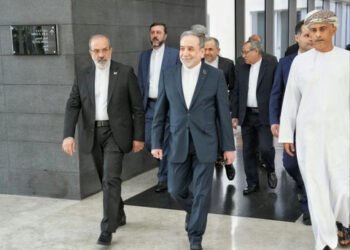 Hormuz Talks Near Critical Stage
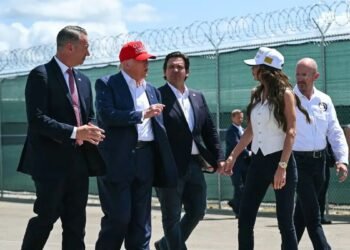 DeSantis’s ‘Alligator Alcatraz’ Faces Final Shutdown
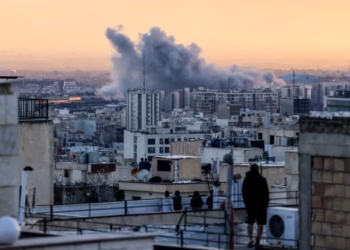 House Curbs Trump’s War Powers in Rare Rebellion
 US Courts Back Trump on Park Signage Removals
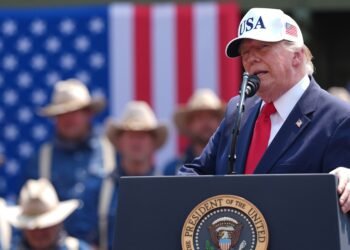 Trump’s Mount Rushmore Speech: A Divisive Anniversary
 Le Pen’s Popularity Holds Despite Conviction
 Houthis Strike Saudi Arabia as Middle East Tensions Rise