
Published: 30 April 2026. The English Chronicle Desk. The English Chronicle Online
In a move that signals the end of a British high-street institution, Whitbread, the parent company of Premier Inn, has announced it will cut approximately 3,800 jobs and shutter its remaining 197 branded restaurants, including the iconic Beefeater and Brewers Fayre chains. The bombshell announcement, delivered alongside flat full-year results, marks a dramatic escalation of the company’s “capital-light” pivot as it battles soaring taxes, rising business rates, and pressure from activist investors.

Exactly one year to the day after a similar plan to cut 1,500 roles, this new five-year strategy represents a total overhaul of the group’s business model. Whitbread will transition from a traditional “hotel-plus-restaurant” operator into a “pure-play” hotel business, selling off £1.5 billion of its freehold property to fund future expansion.
The decision to axe the remaining Beefeater and Brewers Fayre sites—brands that have served steaks and Sunday roasts to Britons since 1974—comes after hotel guests increasingly shunned the traditional pub-style dining for “integrated” hotel bistros.
The Conversion Plan: Whitbread will convert its remaining restaurants into hotel-integrated food and drink offerings, designed exclusively for hotel guests. This move will free up space for more “highly profitable” extension rooms.
The “Mojo” Shift: Chief Executive Dominic Paul stated that the plan would transform Whitbread into a “higher-margin” business. “We are going further and faster to deliver a great experience for our guests and high-quality returns for our shareholders,” he said.
Asset Recycling: By selling its freehold hotels and leasing them back, Whitbread aims to raise £1.5 billion to fuel its growth target of reaching 96,000 rooms by 2031.
The cuts represent roughly 12% of Whitbread’s 30,000-strong workforce. While the company hopes to “redeploy” a significant proportion of the 3,800 affected staff into its 15,000 annual vacancies, the news has been described by unions as a “hammer blow” to the hospitality sector.
Tax Pressures: The company blamed “significant cost increases” from the Chancellor’s Budget, specifically the rise in National Insurance and business rates, for forcing its hand.
The “Iran War” Inflation: In a grim financial note, Whitbread warned that surging energy prices caused by the conflict in the Middle East could feed into sustained inflation, further squeezing the hospitality sector’s margins.
Activist Pressure: The review was reportedly accelerated by Corvex Management, a US-based activist investor that has been pushing for a more aggressive sell-off of Whitbread’s property assets.
The Whitbread retreat is the latest evidence of a wider crisis in traditional British dining.
“The Beefeater was a fabled part of the UK high street when there was little choice in dining out,” noted one industry analyst. “Today, it is a casualty of a world where ‘pure-play’ efficiency and digital agility are the only ways to survive $118-a-barrel oil and soaring labor costs.”
As the King celebrates the “special relationship” in Washington, the sale of British freehold property to fund leasehold growth serves as a reminder of the shifting economic tides at home. For the families who have relied on the Beefeater for decades, the “Golden Tone” of a family dinner is being replaced by the sleek, minimalist efficiency of a “Hub by Premier Inn.”

Whitbread shares fell by nearly 7% in early trading this morning, as investors weighed the potential for high returns against the immediate costs of restructuring and the loss of food and beverage revenue, which is expected to drop by £160 million next year.
The “last orders” have been called for the Beefeater. For thousands of workers across the UK and Ireland, the focus now turns to a consultation process that will decide their future in a hospitality industry that is changing faster than ever.
Related News:
 Gender Pay Gap Won’t Close for Another 30 Years, Warns Union
 Royal Mail Blames Poor Weather and Sickness for Delayed Deliveries
 Popular UK Service Station Announces Closures Amid Another’s Liquidation
 Store at Famous Shopping Village to Close After 18 Years Due to Rising Costs
 Tesco Announces New Rule for Customer Parking Spaces – ‘We Need These Everywhere!’
 Fury as Jobless-Migrant Households Receive Benefits Worth £10bn – ‘We Need to End This’
 Closing Factory Workers Paid to Help at Food Bank
 South East Water Faces £22m Fine for Supply Failures Affecting Hundreds of Thousands
 Sarah Ferguson Loses Another £1.5m Amid Financial Struggles
 Courier Firm Bust After 14 Years as Evri Deliveries Face ‘Temporary Disruption’
 Fuel Costs Are Rising — Drivers on the Frontline of the Price Surge
 ‘Heating Oil Suppliers Are Holding Us to Ransom’ as Prices and Cancellations Surge
 Disabled Girl ‘Felt Like Alien’ in Shoe Row
 Rising Costs Force Families to Rethink Days Out
 Glasgow Central Set for Full Reopening After Fire
 Fire Crews Battle Major Blaze at Coventry Car Dealership
 Gridlock Britain: Easter 2026 Set for Busiest Roads in Four Years
 ‘Empty Tanks’: UK Drivers Cry Foul as Petrol Prices Surge Amid $120 Oil Threat
 Debt Relief or Drop in the Ocean? UK Caps Student Loan Interest at 6%
 The ‘Shredder’ Syndrome: Why the 2026 Job Market is Breaking Entry-Level Spirits
 Property Peak? UK House Prices Dip Amid Geopolitical Jitters and ‘War Uncertainty’
 The Kitchen Table Crisis: How the 2026 Iran War Hits Your Wallet
 The Pre-School Lottery: Families Left in ‘Holding Pattern’ as Local Places Vanish
 The Silent Lifeline: Why the 2026 Digital Switchover has Millions Saying, ‘I Didn’t Realise How Much I Needed My Landline’
 The Cost of Compassion: Rising Fuel Prices Put ‘Seismic’ Strain on Transport Charity
 The Price of Help: Fuel Surge Threatens Charitable ‘Power Plant’
 The Liquid Gold Heist: Arrests Made After Man Found with ’20 Olive Oil Bottles’
 The Freedom Hub: Can a Former Women’s Jail Unlock This City’s Potential?
 The Green Mile: Country Lane Solar Farm Set to Power 13,000 Homes
 The Sustainable Departure: Crematorium Completes £5m ‘Green’ Transformation
 The Waiting Ward: ‘Month of Worry’ as Doctor Strikes Trigger Seismic Surgery Delays
 Powering the Future: Green Light for ‘Seismic’ Nuclear Project Promising 8,000 Jobs
 ‘The Triple-Shift Generation’: The 20-Somethings Juggling Three Jobs to Stay Afloat
 Statistical Mirage: UK Unemployment Dips to 4.9% as Students Exit the Workforce
 ‘A Beacon of Hope’: £3m Injection Set to Transform Town’s Community Hub
 ‘The Flyover Returns’: A40 Westway Reopens Overnight Following Month-Long Gridlock
 ‘The Tap is Turning’: Stormont Eyes £3bn Windfall Through Water Charges and Rate Hikes
 ‘The Logistics of Mercy’: Charities Pushed to Breaking Point by 190p Fuel Spike
 ‘Economic Sandbags’: UK Retailers Activate Price Rise Contingency Plans as Supply Chain Strains Mount
 ‘The Cost of a Life’: Air Ambulances Fear Fuel Spikes May Force Operational Grounding
 McDonald’s Leadership Under Fire Over Stance on Workplace Misconduct
 UK Pub Price Hikes: Landlady Calls Drink Increases Last Resort
 Restoring the Gateway: £6.2m Investment to Save Historic Harbour
 “Jobs Will Go”: Rishi Sunak Warns AI is Already Eroding Entry-Level Opportunities
 The Hidden Debt Trap: Thousands Sued by Councils Over Soaring Home Care Costs
 The Price of Safety: Why Parents are Quitting Careers to Manage Child Food Allergies
 Insult to Injury: Sky Apologises After Demanding “Charred Remains” of TV Box from Fire Victim
 Insult to Injury: Sky Apologises After Demanding “Charred Remains” of TV Box from Fire Victim
 Human Capital for AI Infrastructure: Meta Cuts 8,000 Staff to Fuel $135bn Bet
 “Toxic from the Top”: Pride in London Sacks CEO Following Bullying and Luxury Spending Scandal
 Reform UK funding: mystery billionaire revealed
 “We Are Shielding Them”: UK Families Face £11 Billion Hit as Iran War Bills Surge
 “A Zero-Value Home”: Seven Years of Sinkhole Stagnation Leaves Family Trapped
 “An Encyclopaedia in a Shirt”: Retired IT Analyst Becomes Seventh Millionaire Jackpot Winner
 The “Cancer Commute”: Patient Warns of Breaking Point Over 40-Mile Treatment Trek
 “A Pint-Sized Crisis”: Publicans Warn of Industry ‘Carnage’ as Energy and Tax Hikes Loom
 A Century of Crust: The Family Pie Firm Celebrating 100 Years of Northern Soul
 Reality Check on Reform: Minister Says Outright Abolition of Leasehold “Impossible”
 UK House Price Growth Slows as Buyers Exercise Caution Ahead of Autumn Budget
 Reeves Faces Setback as Labour May Miss Homes Target
 Trump’s UK Ambassador Urges North Sea Drilling to Strengthen US Ties
 Millionaires group urge Reeves to introduce wealth tax to ‘lift kids out of poverty’
 Starmer Says Labour’s Economic Plan Needs Years to Deliver
 Historic £100-Weekly Pension Boost Brings Relief for UK Mineworkers
 Major UK Clothing Firm Collapses into Administration — 109 Jobs at Risk
 Could Manchester Lead the UK’s Economic Revival?
 Motorists Could Face ‘Mandatory’ Driving Ban for Road Offences Under Tougher Laws
 Lloyds Boss Accepts Concern Over Use of Staff Data in Pay Talks
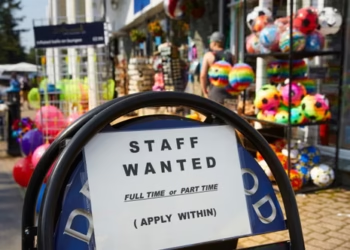 UK Job Vacancies Hit Five-Year Pandemic Low
 UK Youth Unemployment Surges Amid Tax Changes
 Calls Grow to Remove Billboard Following Lyra McKee Graffiti
 Charity Watchdog Takes Control of Learning Disability Care Home
 US Lawmaker Demands Testimony Over Sarah Ferguson’s ‘Close Epstein Ties’
 Woman Deported from China Over Manx Passport Mix-Up
 ‘My Hatred of Dogs is Ruining My Love Life’
 The 8 Million Dilemma: Why Britain’s Disability Safety Net is Facing a ‘2026 Reckoning’
 National Treasure: Raja Ravi Varma Masterpiece Smashes Indian Art Record with $17.9m Sale
 Roadside Reckoning: Nearly 160,000 Uninsured Vehicles Seized in National Crackdown
 ‘The Last of the Greatest’: UK’s Oldest WWII Veteran Passes Away Aged 109
 “Three-Wheeled Triumph”: Mayor of Erewash Completes 2,000-Mile European Charity Run