Published: 22 April 2026. The English Chronicle Desk. The English Chronicle Online
The UK’s air ambulance charities have issued a “stark and troubled” warning that the relentless surge in aviation fuel prices—driven by the War in Iran and the “War Tax” on global energy—is pushing life-saving services toward a “breaking point.” As the cost of Jet A-1 fuel follows the “shaken and stirred” trajectory of road petrol (now at 190p), charity leaders fear that without emergency intervention, the “Statutory Standard” of rapid emergency response could be compromised, directly affecting patient outcomes.
Unlike the land-based NHS ambulance service, the UK’s 21 air ambulance charities receive no direct government funding for their daily operations. They rely entirely on public donations—the very same “Triple-Shift” donors who are currently struggling to heat their own homes and fuel their own cars.

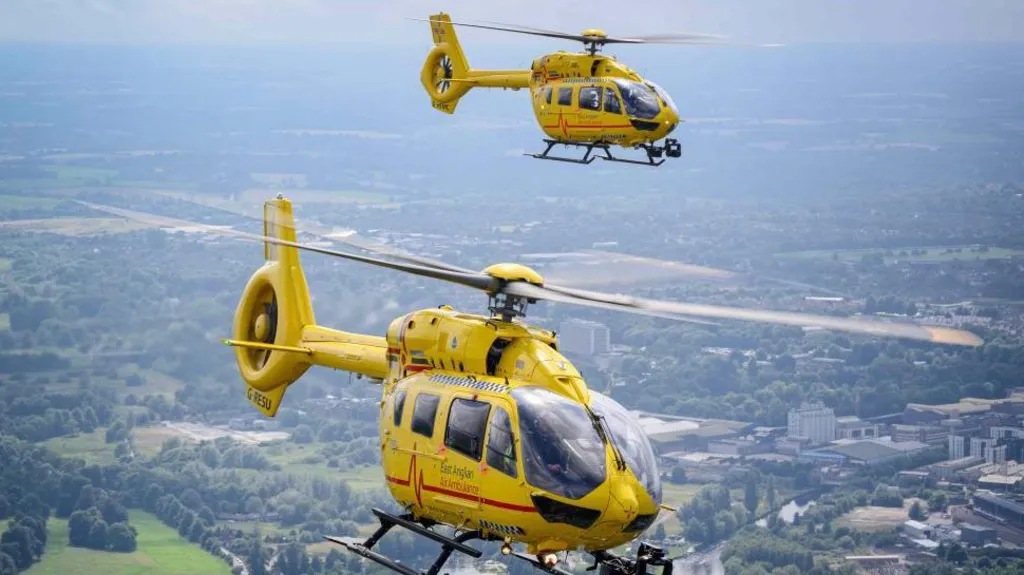
For an AW169 or H145 helicopter, fuel isn’t just an overhead; it is the “Logistics of Mercy.” The industry has seen a “low rumbling” of rising costs turn into a fiscal avalanche over the last eight weeks.
| Metric | Pre-Conflict (Feb 2026) | Current (April 2026) | Estimated Annual Impact |
| Jet A-1 Fuel (per Litre) | £0.75 | £1.20 | +60% increase |
| Cost per Mission | £3,500 | £4,600 | +£1,100 per flight |
| Charity Deficit | Balanced | “Red Alert” | £1.5m–£3m per charity |
The late zoologist Desmond Morris often emphasized the “Naked Ape’s” fragility when stripped of technological support. In modern trauma medicine, the “Golden Hour” is the “Statutory Standard”—the window in which a patient has the highest chance of survival if they reach a Major Trauma Centre. Air ambulances are the “shaken” bridges that make this possible in rural or congested areas.
“We are entering a ‘Human Zoo’ paradox,” says Simmy Akhtar, CEO of Air Ambulances UK. “The demand for our services is rising because the road network is gridlocked by ‘shaken’ infrastructure projects, yet our ability to fly is being curtailed by the very same fuel crisis. We are seeing a ‘huge relief’ of public will to support us, but people simply don’t have the spare ‘War Tax’ money to donate like they used to.”
While no charity has yet grounded a fleet, the “low rumbling” of contingency planning is underway. Some services are reportedly reviewing “dispatch criteria,” meaning the “Statutory Standard” for what constitutes an “air-worthy” emergency may become stricter.
“It is a ‘naked’ and terrifying prospect,” says a senior flight paramedic. “We never want to be in a position where we have to ask if a mission is ‘cost-effective.’ But when your monthly fuel bill jumps by £80,000, you have to look at the numbers. If we can’t afford the fuel, the helicopter stays in the hangar, and a patient in a rural ‘troubled’ spot waits 40 minutes for a car instead of 8 minutes for us.”

In a “shaken and stirred” appeal to the Treasury, the sector is calling for a permanent VAT rebate on fuel and a “Fuel Price Cap” specifically for emergency aviation. They argue that while they are charities, they provide a “Statutory Standard” of national infrastructure that the state currently doesn’t pay for.
As the Strait of Hormuz remains closed and the “Triple-Shift” donors tighten their belts, the air ambulance sector remains in a state of “high-altitude anxiety.” For the person lying on a roadside in the coming weeks, the “shaken” reality is that their survival may depend not just on a surgeon’s skill, but on whether a charity could afford the fuel to get them there.
Related News:
 The Cost of Compassion: Rising Fuel Prices Put ‘Seismic’ Strain on Transport Charity
 The Price of Help: Fuel Surge Threatens Charitable ‘Power Plant’
 The Waiting Ward: ‘Month of Worry’ as Doctor Strikes Trigger Seismic Surgery Delays
 NHS May Pay 25% More for Medicines Amid US Drug Talks
 UK Vets May Be Forced to Publish Prices After CMA Probe
 NHS Takes Over Nuffield Hospital in ‘Windfall’ for London Care
 North Sea oil workers must lose weight or face job loss
 Study Finds One in Seven England Takeaways Are Dark Kitchens
 Gender Pay Gap Won’t Close for Another 30 Years, Warns Union
 Royal Mail Blames Poor Weather and Sickness for Delayed Deliveries
 Illegal Skin Lightening Cream Being Sold in UK Butchers, Watchdog Warns
 Adoption Breakdown Ended My Career and Relationship – ‘We’re Told to Get On With It’
 Popular UK Service Station Announces Closures Amid Another’s Liquidation
 Store at Famous Shopping Village to Close After 18 Years Due to Rising Costs
 Tesco Announces New Rule for Customer Parking Spaces – ‘We Need These Everywhere!’
 Fury as Jobless-Migrant Households Receive Benefits Worth £10bn – ‘We Need to End This’
 Closing Factory Workers Paid to Help at Food Bank
 Mystery GP on Train Saves Passenger’s Life
 ‘I Almost Died After a Touch‑and‑Go C‑Section’
 Water Cremation Introduced in UK First
 GPs Losing a Day of Appointments to No‑Shows Each Month
 South East Water Faces £22m Fine for Supply Failures Affecting Hundreds of Thousands
 Scots Firefighter Cycles 800 Miles for MND Charity
 Woman, 29, ‘Chucked’ Into Care Home 100 Miles Away
 Father Dies by Suicide Weeks After Wedding in Clitheroe
 Sarah Ferguson Loses Another £1.5m Amid Financial Struggles
 SNP Health Secretary Criticised Over NHS Failures Locally
 Scotland Combines Alcohol and Drug Strategy to Cut Addiction Deaths
 Courier Firm Bust After 14 Years as Evri Deliveries Face ‘Temporary Disruption’
 Dad Delivers Baby After Midwife Flees During High‑Risk Labour in UK
 Schnauzer Travels 140 Miles for Life-Saving Spinal Surgery
 Fuel Costs Are Rising — Drivers on the Frontline of the Price Surge
 ‘Heating Oil Suppliers Are Holding Us to Ransom’ as Prices and Cancellations Surge
 Charity Watchdog Takes Control of Learning Disability Care Home
 Rising Costs Force Families to Rethink Days Out
 Glasgow Central Set for Full Reopening After Fire
 Brain-Damaged Scot ‘Stuck’ in Hospital at Centre of Police Probes
 Fire Crews Battle Major Blaze at Coventry Car Dealership
 ‘A Living Nightmare’: Parents of Vaccinated Teenager Speak Out After Rare Meningitis B Battle
 ‘A Cliff Edge’: Hospice Leaders Warn Cutbacks Are Only Way to Survive
 The High Cost of Survival: How the 2026 Fiscal Outlook is Redefining British Life
 Safety Fears at New £200m Maternity Unit: Mums-to-Be ‘Put at Risk’
 ‘Ripple of Fear’: Iran War Fears Sink UK Consumer Confidence to 11-Month Low
Fuel Famine: How African Nations are Rationing Power and ‘Diluting’ Petrol to Survive
‘Ripple of Fear’: Iran War Fears Sink UK Consumer Confidence to 11-Month Low
Fuel Famine: How African Nations are Rationing Power and ‘Diluting’ Petrol to Survive
 ‘My Daughter is Under the Rubble’: The Human Cost of the Tehran Strikes
 Parents Warned Against Letting Children Cuddle Lambs Following Infection Spike
 Gridlock Britain: Easter 2026 Set for Busiest Roads in Four Years
 ‘Empty Tanks’: UK Drivers Cry Foul as Petrol Prices Surge Amid $120 Oil Threat
 Debt Relief or Drop in the Ocean? UK Caps Student Loan Interest at 6%
 ‘Look After the Children’: The 84-Year-Old Widower Fighting a Broken Care System
 The ‘Shredder’ Syndrome: Why the 2026 Job Market is Breaking Entry-Level Spirits
 ‘The Best Decision I Ever Made’: A Mother’s Viral Plea After a Near-Miss with Lung Disease
 Property Peak? UK House Prices Dip Amid Geopolitical Jitters and ‘War Uncertainty’
 Swept Out in Seconds: Rip Current Warning After Dramatic Rescue of Five Teens
 The Kitchen Table Crisis: How the 2026 Iran War Hits Your Wallet
 The Miracle of Phoenix: ‘Half Dead’ Rescue Dog Defies the Odds in Worcestershire
 The Hidden Hurdle: Breaking the Silence on Athletic Incontinence
 The Pre-School Lottery: Families Left in ‘Holding Pattern’ as Local Places Vanish
 The Friendship Friction: Would You Call Out Your Friend’s Toxic Behaviour?
 The Silent Lifeline: Why the 2026 Digital Switchover has Millions Saying, ‘I Didn’t Realise How Much I Needed My Landline’
 The Sofa Sanctuary: Llantwit Major Family Living in ‘Disgusting’ Rat Infestation
 Near-Miss Tragedy: 11-Year-Old Injured After Found Gun Discharges
 The ‘Pain-Free’ Revolution: Hospital Celebrates ‘Seismic’ Hip Surgery Milestone
 Heroism on the Platform: Strangers Save Youth After Seizure on Train Tracks
 The Liquid Gold Heist: Arrests Made After Man Found with ’20 Olive Oil Bottles’
 Toxic Trail: Dog Owners Warned Over ‘Vile’ Poisoned Meat Found in Parks
 The Freedom Hub: Can a Former Women’s Jail Unlock This City’s Potential?
 The Green Mile: Country Lane Solar Farm Set to Power 13,000 Homes
 The Sustainable Departure: Crematorium Completes £5m ‘Green’ Transformation
 The Wheels of Hope: Charity Delivers ‘Seismic’ Joy Through Specialized Bikes for Children with Cancer
 Policy Stand-Off: Streeting Denies Any ‘System Update’ to Resident Doctor Pay Deal
 Rights and Respect: Nurse Wins Legal Settlement Over Transgender Pronoun Dispute
 The Pouch Peril: Dental Experts Probe the ‘Seismic’ Impact of Nicotine Pouches on Oral Health
 Accountability in Care: Nurse Struck Off Following ‘Seismic’ Failure to Administer Medication
 ‘A Walking Miracle’: UK’s Youngest In-Utero Transfusion Patient Celebrates Recovery
 ‘The Triple-Shift Generation’: The 20-Somethings Juggling Three Jobs to Stay Afloat
 Statistical Mirage: UK Unemployment Dips to 4.9% as Students Exit the Workforce
 ‘A Beacon of Hope’: £3m Injection Set to Transform Town’s Community Hub
 ‘The Flyover Returns’: A40 Westway Reopens Overnight Following Month-Long Gridlock
 ‘Economic Sandbags’: UK Retailers Activate Price Rise Contingency Plans as Supply Chain Strains Mount