Published: 30 April 2026. The English Chronicle Desk. The English Chronicle Online
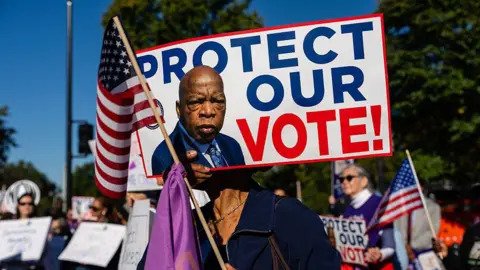
A wave of political activity has swept across the United States following a landmark decision by the Supreme Court of the United States that significantly weakened key provisions of the Voting Rights Act of 1965. The ruling has triggered urgent efforts in several states to redraw congressional districts, raising concerns among civil rights advocates that the changes could dilute Black voting power ahead of upcoming elections.
Even before the court’s decision was handed down, some states had already begun exploring mid-decade redistricting. Traditionally, electoral maps in the United States are redrawn once every ten years following the national census, a process intended to reflect population changes. However, political pressures and legal disputes have increasingly led to additional rounds of redistricting outside the usual cycle.
The current momentum can be traced in part to actions by Donald Trump, who last year encouraged Republican lawmakers in Texas to redraw district boundaries in a way that could strengthen the party’s position in midterm elections. That move prompted a response from Democratic-led states such as California, setting off a chain reaction that has now intensified in the wake of the Supreme Court’s latest ruling.

The decision has effectively opened the door for state legislatures to act more aggressively in reshaping electoral districts, particularly in regions where maps had already been tied up in court challenges. With legal constraints weakened, lawmakers in several southern states have moved quickly or signalled their intention to do so, often through special legislative sessions called by governors.
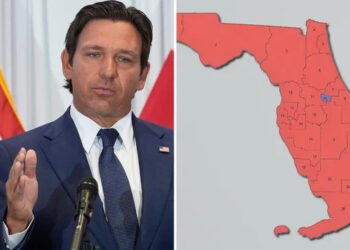
In Florida, the response was swift. Governor Ron DeSantis convened a special session of the state legislature, which passed new congressional maps designed to expand Republican representation. The revised map is expected to give Republicans a significant advantage in the majority of the state’s House seats, intensifying debate over partisan gerrymandering and electoral fairness.
Critics argue that such are designed not only to secure political gains but also to weaken the electoral influence of minority communities. Advocacy groups have warned that redistricting efforts carried out under the new legal environment could disproportionately affect Black voters, particularly in states with a history of racial discrimination in voting practices.
In Mississippi, Governor Tate Reeves announced plans to reconvene the state legislature for a special session focused on redistricting. The process had previously been delayed pending the Supreme Court’s ruling, but the new decision has cleared the way for lawmakers to proceed. Civil rights organisations, including the National Association for the Advancement of Colored People, have already begun mobilising in response, preparing to challenge any maps they believe undermine fair representation.
Louisiana and Alabama are also at the centre of the unfolding developments. Both states have faced legal challenges in recent years over their district maps, with courts previously finding that they failed to adequately represent Black voters. Officials in both states have indicated that they will move quickly to reassess their maps in light of the Supreme Court’s ruling, potentially reshaping districts that had been the subject of intense legal scrutiny.
In Louisiana, Attorney General Liz Murrill suggested that it may still be possible to introduce changes despite the proximity of upcoming elections. Meanwhile, in Alabama, Attorney General Steve Marshall stated that the state would act promptly to apply the court’s decision to its redistricting efforts. These moves have heightened concerns that changes could be implemented rapidly, with limited public input or oversight.
Tennessee has also entered the debate, with Senator Marsha Blackburn calling for the state legislature to reconvene and redraw districts in a way that could increase Republican representation. Her remarks, which specifically referenced altering the state’s only majority-Black district, have drawn sharp criticism from voting rights advocates who argue that such risk undermining the principle of equal representation.
At the heart of the controversy is the broader question of how electoral boundaries are drawn and who benefits from those decisions. Gerrymandering, the practice of manipulating district lines for political advantage, has long been a contentious issue in American politics. While both major parties have engaged in the practice, the current moment has intensified scrutiny due to the potential impact on minority voting power.
Supporters of the redistricting efforts argue that states have the legal authority to redraw their maps and that doing so can reflect changing political and demographic realities. They contend that the Supreme Court’s decision provides clarity and restores a degree of flexibility to the process, allowing states to manage their own electoral systems without excessive federal вмешательство.
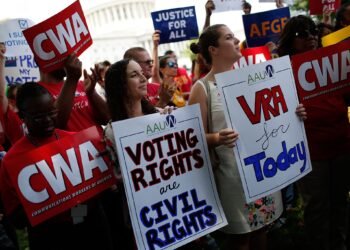
Opponents, however, see the developments as a significant setback for civil rights. They argue that weakening the Voting Rights Act removes critical protections that have historically helped ensure fair representation for minority communities. Without those safeguards, they warn, states may be more inclined to adopt maps that entrench political power at the expense of equitable participation.
The timing of these efforts adds another layer of complexity. With midterm elections approaching, many states face tight deadlines for candidate filings and primary contests. It remains uncertain how many will be able to implement new maps in time, though some lawmakers appear determined to move forward quickly regardless of logistical challenges.

Beyond the immediate political implications, the situation reflects deeper tensions within the American democratic system. The balance between state authority and federal oversight, the role of the judiciary in shaping electoral rules, and the ongoing struggle for voting rights all converge in this
For many observers, the current wave of redistricting represents a critical test of the resilience of democratic institutions. The outcome will not only influence the composition of Congress but also shape public confidence in the fairness of the electoral process.
As legal battles, political manoeuvring and public debate continue, the stakes remain exceptionally high. The decisions made in the coming weeks and months will have lasting consequences, determining not just who holds power, but how that power is contested and maintained in one of the world’s most influential democracies.
Related News:
 Thousands Protest ICE Operations in Nationwide US Day of Action
 US Court Ruling Reshapes Voting Rights Landscape
 Cartel crackdown raises fears of fresh violence
 Judge halts deportation of Yemeni refugees in US
 Trump warns Iran as Middle East tensions surge again
 US ‘Narco Boat’ Strikes Draw Global Outcry
 US Court Restores Abortion Pill Access Temporarily
 Immigration Judges Fear Pressure in Trump Era
 Trump’s Revenge Drive Deepens GOP Divide
 Former ICC prosecutor condemns US sanctions
 Gunman Killed After White House Security Shootout
 Mystery Grows Over Mitch McConnell’s Health
 Is America Ready for an AOC Presidential Run?
 China-critical UK academics face ‘extremely heavy’ pressure from Beijing
 US Justice Department Files Lawsuit Against California Over Partisan Voting Maps
 Trump Deploys DHS to Charlotte in Major Arrest Operation
 Congress Approves Release of Epstein Files, Trump Expected to Sign
 Texas Governor Faces Lawsuit From CAIR
 US National Guard Member Killed in DC Shooting
 Trump to Recheck Green Cards from 19 Nations After DC Attack
 Chinese & Japanese Boats Clash Near Disputed Islands
 Putin Meets US Envoy Amid Key Ukraine Peace Talks
 US Defence Chief on Drug Boat Strike: “Did Not See Survivors”
 Trump Escalates Minnesota Immigration Surge Amid Rising Tensions
 Greenland Faces Pivotal Summit Over Arctic Power Struggle
 Trump Threatens Strong Action If Iran Executes Protesters
 EU Says US Ties Have Suffered ‘Big Blow’ After Greenland Crisis
 Trump officials continue false claims after Alex Pretti shooting
 UK and EU Signal Fresh Push for Defence Cooperation Talks
 Partial US Government Shutdown Hits Homeland Security Funding
 Epstein Files Reveal Trump Officials’ Emails with Financier
 Thousands Protest ICE in New York Against Trump Deportation Campaign
 Trump Praises ‘Terrific’ Petro After White House Talks
 Sydney Protest Clash Triggers Police Probe
 Clinton Testimony Erupts in Fiery Exchange
 UK Prepares Aircraft Carrier for Middle East Crisis
 Pete Hegseth Iran War Remarks Spark Alarm
 Report Says Pezzullo Acted ‘Recklessly’ in Dealings
 Hungary election: Orbán faces biggest test amid scandal
 Suspected Plot Targets Pipeline Before Hungary Vote
 Iran Crisis Tests Trump’s Global Leadership
 Ben Roberts-Smith Denies War Crime Allegations in First Statement
 Trump Faces Crisis as Iran Reopens Hormuz Tensions
 Charles Faces Trump Test in High-Stakes US Visit
 UK Stands Firm on Falklands Amid US Rift
 Trump at Press Dinner Sparks Tension
 US Court Weighs Fate of TPS for Migrants
 Florida Redistricting Map Sparks Major US Political Battle
 US Voting Rights Ruling Sparks Celebration and Outcry
 US Charges Sinaloa Governor in Major Cartel Case
 Trump likens US Navy actions to ‘pirates’
 White House Security Case Sparks Political Firestorm
 Trump approval plunges amid Iran war fears
 Giuliani hospitalised in critical condition
 Ohio’s Battle for Trust: Democrats Vying to Flip the Buckeye State
 Trump Threatens UN Budget Cuts as US Pushes ‘Trade Over Aid’ Agenda
 US Supreme Court fast-tracks Voting Rights ruling
 Indiana Republicans Defy Trump in Key Vote Test
 Ohio Primaries Set Stage for Crucial Midterms
 Afghan Families Left in Limbo Face Risk of Deportation
 Florida Surgeon ‘Devastated’ Over Fatal Surgery Error
 Tensions Emerge in Netanyahu-Trump Alliance
 US Awaits Iran Reply on New Ceasefire Proposal
 FDA Chaos Deepens as Trump Eyes Makary Exit
 US green card applicants must apply from abroad, DHS says
 Tulsi Gabbard exits after turbulent intelligence tenure
 Hormuz Talks Near Critical Stage
 Trump Claims Iran Peace Deal Near Completion
 Irish Gangland Figure Fails in Dublin Election Bid
 Prosecutor Proposes Law to Combat Election Deceit
 Trump Weighs Retreat from Controversial $1.8bn Slush Fund
 US Midterm Primaries: Democrats Target Key Republican Seats
 House Curbs Trump’s War Powers in Rare Rebellion
 Le Pen’s Popularity Holds Despite Conviction
 Trump Refuses to Sign Housing Bill, But Law Takes Effect
 Senate Halts Defense Bill Over Iran Clashes
 Houthis Strike Saudi Arabia as Middle East Tensions Rise
 Trump Orders Signs Criticising Smithsonian Museum
 Israeli Strike in Southern Lebanon Kills Seven
 Five Years of Taliban Rule Leave Afghanistan in Crisis