Published: 29 January 2026. The English Chronicle Desk. The English Chronicle Online.
Artificial intelligence job losses are becoming an unavoidable reality as rapid automation spreads across Britain’s economy. Speaking candidly to business leaders in London, UK technology secretary Liz Kendall warned that some roles will disappear as intelligent systems replace human tasks. Her remarks marked one of the clearest acknowledgements yet from a senior minister that the advance of artificial intelligence will reshape employment faster than many expected. Kendall stressed that honesty was essential, saying the government must level with the public about difficult transitions ahead.
The speech, delivered at Bloomberg’s London headquarters, focused on how artificial intelligence job losses may affect graduates entering professions like law, finance, and consultancy. Kendall declined to give estimates, explaining that projections vary widely and remain uncertain. However, she accepted that white collar sectors, long considered insulated from automation, now face significant disruption. This admission reflects growing concern among young professionals who fear traditional career paths may narrow before they even begin.
Kendall emphasised that artificial intelligence job losses will not tell the whole story of technological change. She argued that while certain roles disappear, new jobs will emerge alongside them, often requiring different skills. Yet she cautioned against complacency, noting that past industrial revolutions created work only after painful periods of adjustment. Without active policy intervention, she warned, many workers could struggle to adapt quickly enough.

The warning echoes comments made earlier this month by London mayor Sadiq Khan, who described unchecked automation as a potential “weapon of mass destruction of jobs.” Khan argued that artificial intelligence must be deliberately shaped as a force for social good rather than allowed to deepen inequality. Kendall appeared to align with this view, insisting that government must guide adoption responsibly rather than resist innovation outright.
Central to Labour’s response is an ambitious training programme aimed at mitigating artificial intelligence job losses through large scale reskilling. Kendall announced plans to train up to ten million workers in basic AI literacy by 2030. This initiative will include civil servants and cabinet members, signalling that adaptation must occur at every level of government. The training is designed to help workers understand, use, and supervise intelligent systems rather than compete directly against them.
Kendall described the programme as the largest national upskilling effort since Harold Wilson’s creation of the Open University. Online courses will be rolled out with support from Multiverse, founded by Euan Blair, alongside initiatives focused on helping women transition into entry level technology roles. Ministers hope these measures will reduce the shock of artificial intelligence job losses by equipping workers with practical, transferable skills before displacement occurs.
Beyond training, the government aims to position Britain as a global leader in AI deployment. Kendall said Labour’s ambition is to make the UK the fastest AI adoption country in the G7. Four designated AI growth zones are expected to attract investment, foster innovation, and create new employment clusters. Officials argue that these hubs could offset artificial intelligence job losses by generating high value roles in development, maintenance, and oversight.
Despite the optimistic framing, critics argue that new jobs may not appear where losses occur. Many roles created by AI investment require advanced technical expertise, while displaced workers may come from administrative or clerical backgrounds. Kendall acknowledged this mismatch, stressing the importance of targeted retraining and local support. She insisted that Labour would not leave people to “struggle on their own” during the transition.
To coordinate policy, a new Future of Work Unit is being established within the Department of Science, Innovation and Technology. The unit will include representatives from trade unions, employers, and academic experts. Its mandate is to anticipate labour market shifts, advise ministers, and propose protections for workers affected by artificial intelligence job losses. The inclusion of unions reflects Labour’s attempt to balance innovation with social responsibility.
However, the government’s broader AI strategy has attracted criticism for its reliance on American technology firms. Some analysts argue that importing powerful models could accelerate artificial intelligence job losses among British professionals without ensuring domestic benefits. Concerns intensified after it emerged that a one million dollar donation from Meta, led by Mark Zuckerberg, is funding AI systems for defence, transport, and national security projects.
Further controversy surrounds the government’s partnership with Anthropic, a US startup valued at hundreds of billions of dollars. Anthropic has been selected to develop an AI assistant for public services on gov.uk, beginning with career guidance for jobseekers. While officials welcome the free pilot, sceptics question whether foreign firms should shape tools influencing employment advice during a period of artificial intelligence job losses.
The government also maintains a memorandum of understanding with OpenAI, creator of ChatGPT, reinforcing perceptions that Britain risks becoming dependent on overseas platforms. Kendall defended these partnerships, arguing that collaboration accelerates learning and avoids duplication. She insisted that domestic capability remains a priority, with public funding supporting British research institutions and startups.
Economists remain divided over the net employment impact of artificial intelligence. Some forecasts suggest productivity gains could ultimately create more jobs than are lost. Others warn that the speed of automation may overwhelm labour markets, producing prolonged insecurity. Kendall said she takes neither scenario for granted, emphasising that policy choices will shape outcomes more than technology alone.

Public reaction to Kendall’s remarks has been mixed. Business leaders welcomed her realism, saying clarity helps firms plan responsibly. Trade unions praised the acknowledgement of risk but demanded stronger guarantees, including retraining rights and income protection. Younger workers expressed anxiety online, fearing that artificial intelligence job losses could erode opportunities before safeguards are fully implemented.
Kendall closed her speech by framing the moment as a historic turning point. She compared the rise of artificial intelligence to an industrial revolution compressed into a single decade. While confident that technology can improve lives, she stressed that progress must be inclusive. The challenge, she said, is ensuring that Britain emerges stronger rather than divided as artificial intelligence reshapes work.
As AI adoption accelerates across sectors, the debate sparked by Kendall’s warning is likely to intensify. Artificial intelligence job losses are no longer a distant possibility but a present concern shaping policy, investment, and personal decisions. Whether Britain can balance innovation with fairness may define its economic future for a generation.
Related News:
 British Woman in Iran ‘Losing Hope’ Amid Ongoing Detention
 BBC Journalist Held and Interrogated in Vietnam
 Green Party Surges Past Labour in Latest UK Poll
 Celebrities and Charities Demand UK Government Act on Child Poverty
 Trump’s UK Ambassador Urges North Sea Drilling to Strengthen US Ties
 FBI Director Kash Patel Defends Girlfriend Amid Government Jet Claims
 French Taxi Driver Cleared in David Lammy Theft Case After Fare Dispute
 Rachel Reeves Set to Break Labour Pledge and Raise Income Tax
 MPs Press Rachel Reeves to Hike Gambling Taxes
 Boris Johnson accused of undermining BBC leadership
 Remaining rebel Labour MPs have whip restored
 ‘Reckless’ cuts to victims’ services will cost more than they save
 Millionaires group urge Reeves to introduce wealth tax to ‘lift kids out of poverty’
 Starmer Faces Growing Dissent as Labour MPs Weigh Leadership Challenge
 BBC Faces Backlash as Reform UK Withdraws from Film
 Reeves rejects £1bn plea for NHS redundancy payouts
 Farage appointee to lead Reform youth accused of anti-British views
 Palace to reinstate hyphen in Andrew’s surname
 Politics latest: Starmer ‘will fight any leadership coup’ as Streeting denies attempt to oust Labour PM
 PM Condemns Leaks, Vows Loyalty to Ministers and Stability
 Major Rent Reform Ends No-Fault Evictions in England
 Peers Flood Assisted Dying Bill with 942 Amendments
 England’s Special Needs Support Faces Breaking Point
 MoD warned over Excel risks before Afghan data breach
 UK Unveils Fast-Track Deportation and Asylum Overhaul
 UK Asylum Overhaul Sparks Debate Over Human Rights and Deportations
 UK Asylum Reforms: Temporary Refugee Status and Faster Deportations
 UK Candidate Moved to Safe House After Election Threats
 Mahmood Defends Tough Overhaul of UK Asylum System
 UK Warns China After MI5 Issues Espionage Alert
 Westminster Advances Legacy Bill Amid Criticism
 UK Vulnerable to Attack, Defence Committee Finds
 Labour Faces Historic Decline in Wales
 Rama Rebukes Mahmood for Targeting Albanian Families
 Russian Vessel Used Lasers on RAF Pilots, UK Claims
 PM Shares Emotional Letter to Son on Men’s Struggles
 PM Highlights UK Business at G20 in South Africa
 Kate Forbes: Motherhood Harder Than Politics
 Welsh Government Christmas 2020 Lockdown Criticised
Reeves to Crack Down on Benefit Fraud While Lifting Two-Child Limit
Welsh Government Christmas 2020 Lockdown Criticised
Reeves to Crack Down on Benefit Fraud While Lifting Two-Child Limit
 Most Tories Expect to Support a Farage-Led Government
 Labour MP claims devolution bill is ‘blatant discrimination’ against Cornwall
 English Mayors Set to Introduce Tourist Taxes
 Millions Face Higher Taxes Under Reeves New Budget
 Peers Get Extra Time to Debate Assisted Dying Bill
 Planned Palestinian Flag Raising at Belfast City Hall Faces Delay Amid Legal Concerns
 Government righting decades-old injustice for miners
 Starmer Says Labour’s Economic Plan Needs Years to Deliver
 UK delays ruling on China embassy plan until January
 Culture secretary to review Telegraph takeover by Daily Mail owner
 Andy Burnham Apologises for Past LGBTQ+ Police Discrimination
 UK to Launch Military ‘Gap Year’ Scheme to Boost Recruitment
 Reeves Slams Farage Over Two-Child Benefit Cap Opposition
 Mandelson Refuses Apology Over Epstein Ties
 Plans to Limit Jury Trials Face Retreat After Mounting Opposition
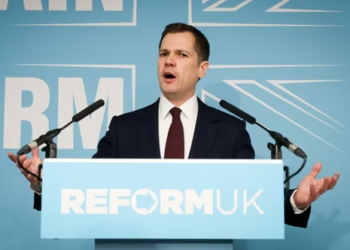 Jenrick Reform defection deepens Tory civil war
 China Dependence Threatens UK Energy Supply Chains and Jobs
 Right Must Unite After Jenrick Defection, Urges Rees-Mogg
 Romford MP Andrew Rosindell defects to Reform UK
 UK Ministers Drop Foreign Student Targets for Global Education Push
 MPs warn AI financial risks threaten UK stability
 MPs warn AI financial risks threaten UK stability
 No Gas Boiler Ban as UK Warm Homes Plan Backs Heat Pumps
 Hugh Grant Joins Call for Under-16 Social Media Ban in UK
 Shinzo Abe’s killer receives life sentence in Japan
 US Africa aid remarks spark anger after leaked State email
 Lords Vote Piles Pressure on Starmer Over Social Media Ban
 Judge-only trials plan fails to ease court backlog
 Planned Troubles Board Game Sparks Outrage in Northern Ireland
 Reform UK Health Plan ‘Would Cost £1.7bn’, Streeting Says
 Labour Blocks Burnham as Party Rift Deepens Ahead of Polls
 Police response times face strict new national limits
 Huge mistake: Labour blocks Burnham from byelection bid
 Labour policing overhaul sparks fears over growing central control
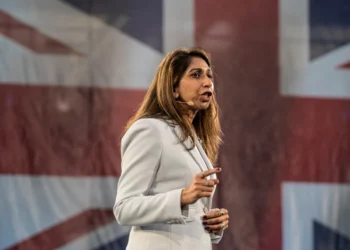 Tories criticised after Braverman defection sparks mental health row
 Burnham Westminster return hopes fade amid Labour rift
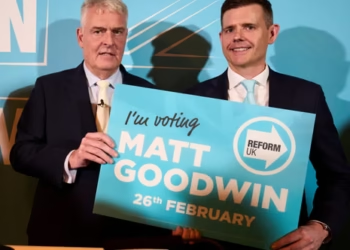 Starmer warns of toxic division politics in Reform challenge
 Starmer China visit raises human rights pressure on Beijing
 Labour Must Revive High Streets to Avoid Election Collapse
 Conservative Party Rejects Centrism Under Badenoch’s Leadership