Published: 31 January 2026. The English Chronicle Desk. The English Chronicle Online
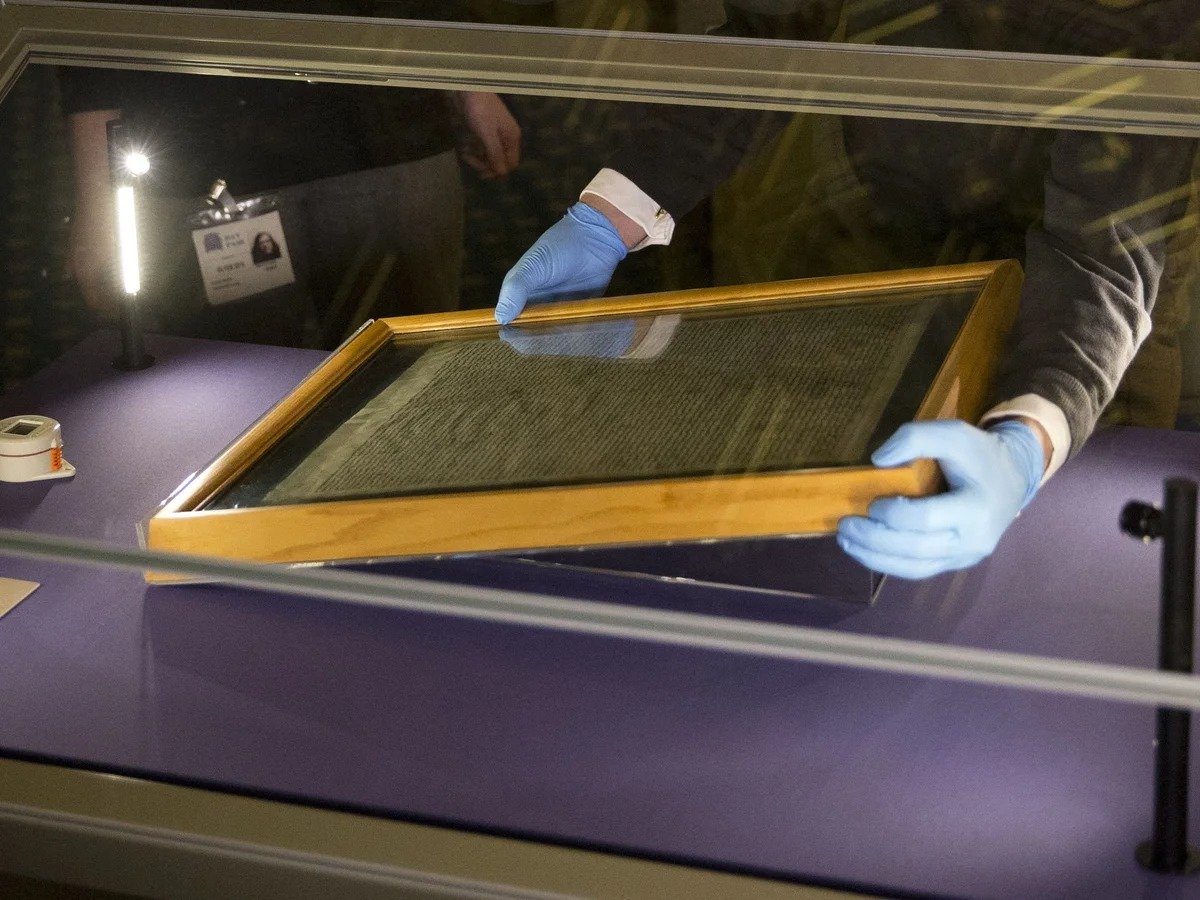
Concerns have been raised over the use of Chinese-made surveillance cameras protecting one of Britain’s most treasured democratic symbols, the Magna Carta, prompting renewed debate about ethics, security, and historical responsibility. Campaigners say the presence of this technology at such a landmark raises serious moral and geopolitical questions that extend far beyond routine security arrangements.
The Magna Carta, sealed by King John in 1215, is widely regarded as a foundation stone of modern democracy and human rights. One of the four surviving original copies is housed at Salisbury Cathedral, where it is displayed under strict security conditions. However, it has emerged that some of the cameras guarding the historic document are supplied by Dahua Technology, a Chinese surveillance company facing allegations over its role in human rights abuses.

The issue came to light through letters sent by international advocacy groups to Salisbury Cathedral and other European heritage authorities. These letters argue that the use of Dahua cameras contradicts the values represented by the Magna Carta itself. Campaigners say it is deeply troubling that technology allegedly linked to repression is being used to safeguard a symbol of freedom and justice.
Dahua Technology is based in Hangzhou, China, and is one of the world’s largest producers of surveillance equipment. The company has previously faced criticism for allegedly supplying technology used in China’s Xinjiang region. Human rights organisations claim that such systems have supported mass surveillance of the Uyghur population, contributing to what some groups describe as crimes against humanity.
The World Uyghur Congress, an international organisation representing Uyghurs living in exile, has been at the forefront of the campaign. In a letter addressed to Salisbury Cathedral’s head of security, the organisation urged the removal of Dahua equipment. It argued that the company’s technology has been implicated in systems designed to identify and monitor Uyghurs through facial recognition.
The organisation said the situation was particularly painful, given the Magna Carta’s global significance. According to the group, using technology linked to repression to protect a document symbolising liberty sends a deeply conflicting message. The letter stressed that safeguarding history should not come at the cost of ethical compromise.
Salisbury Cathedral has responded cautiously to the concerns. A spokesperson said the cathedral does not comment publicly on security matters but confirmed that its systems and suppliers are regularly reviewed with the help of external advisers. The cathedral also stated that it had not received the original email, although evidence suggests it was sent in December.
The surveillance system was reportedly installed by a UK-based firm, ARC Fire Safety & Security, acting as an intermediary supplier. The company has not publicly commented on the issue. This has added another layer of complexity, raising questions about procurement processes and due diligence in the heritage sector.
Similar concerns have been raised beyond the United Kingdom. The World Uyghur Congress has also written to Greek authorities responsible for the Parthenon, another globally recognised symbol of democratic heritage. That site reportedly uses cameras produced by Hikvision, another Chinese surveillance giant facing comparable allegations.
Hikvision and Dahua have both been subject to restrictions in several countries. In the UK, their equipment has been removed from what authorities describe as sensitive government sites. Officials previously cited fears that the systems could be remotely accessed, potentially allowing foreign interference or espionage.
The controversy has gained further momentum due to security concerns linked to the war in Ukraine. A Ukrainian organisation, Don’t Fund Russian Army, has highlighted cases where surveillance cameras manufactured by Chinese firms were allegedly exploited by Russian forces during the invasion.
According to the group, vulnerabilities in certain camera systems allowed hackers to access live footage. In some cases, this footage reportedly appeared online during missile strikes. Campaigners argue that such material may have been used to assess the effectiveness of attacks and intimidate civilians.
Oleksii Kuprienko, a representative of the Ukrainian organisation, said that footage from compromised cameras could be used for reconnaissance. He described incidents in which surveillance feeds appeared to show Ukrainian defence positions shortly before they were targeted. He warned that this posed serious risks to both military operations and civilian safety.
One particularly concerning case occurred in early 2024, when footage believed to originate from a Hikvision camera showed the operation of a Ukrainian air defence system. Shortly after the footage circulated online, the location was reportedly struck. Ukrainian officials believe this was not a coincidence.
Grigory Mamka, a Ukrainian member of parliament who sits on a committee overseeing law enforcement, confirmed that authorities had begun removing Dahua and Hikvision cameras. He said security services had discovered that entrance codes were hacked and connections were made to equipment installed by the two companies.
Mamka stated that investigations in 2024 revealed the cameras had been accessed by hostile forces, allegedly linked to the Russian military. He said this demonstrated the real-world risks posed by insecure surveillance technology, particularly during times of conflict.
Footage of missile strikes, apparently captured through compromised CCTV systems, has also appeared on video-sharing platforms. Ukrainian campaigners argue this forms part of a broader psychological warfare strategy, aimed at spreading fear and demonstrating military power.

Neither Dahua nor Hikvision has publicly responded to the latest allegations. Requests for comment from both companies have gone unanswered. This silence has done little to reassure critics, who say transparency is essential given the seriousness of the claims.
The debate raises broader questions about how democratic societies protect their cultural heritage in an increasingly interconnected world. Historic sites require modern security, yet the choice of technology now carries ethical, political, and security implications that were unthinkable decades ago.
Experts say institutions must balance cost, effectiveness, and values when selecting security systems. For campaigners, the issue is clear. They argue that symbols of democracy should not be guarded by technology associated with repression or alleged abuse.
As global tensions continue and concerns over digital security grow, the controversy surrounding the Magna Carta cameras may prompt wider reassessment across Europe. For many observers, the situation serves as a reminder that even the protection of ancient freedoms is now shaped by modern geopolitical realities.
Related News:
 Tasers Introduced in UK Prisons to Combat Rising Violence and Protect Staff
 Peter Kyle Condemns Nigel Farage Over Reform UK’s Promise to Scrap Online Safety Act
 David Lammy Faces Possible Legal Challenge Over Foreign Office Secondment Scheme
 Ministers Accused of Defamation Over Palestine Action Ban and Mass Arrests
 Police Advised to Disclose Ethnicity of Suspects in High-Profile Cases
 Sally Rooney Pledges BBC Royalties to Support Palestine Action Despite UK Terror Ban
 UK’s First Transgender Judge Seeks Rehearing of Supreme Court Ruling on Biological Sex
 Government Signs Deal with Iraq to Return Illegal Migrants in Latest Bid to Deter Small Boats
 Migrant Hotel Chaos as Councils Consider Legal Action to Ban Asylum Seekers
 DWP Launches Independent Review of Post Office Staff Prosecutions
 Angela Rayner Admits Underpaying Stamp Duty on £800,000 Seaside Flat
 Angela Rayner Faces Scrutiny as Stamp Duty Row Deepens
 Shabana Mahmood Faces Daunting Challenges as New UK Home Secretary
 Tanni Grey-Thompson Faces Abuse Over Opposition to Assisted Dying Bill
New Home Secretary Hosts International Talks as Small-Boat Migrant Crossings Surge
Tanni Grey-Thompson Faces Abuse Over Opposition to Assisted Dying Bill
New Home Secretary Hosts International Talks as Small-Boat Migrant Crossings Surge
 Police Watchdog Calls for End to Recording Non-Crime Hate Incidents
 Charlie Kirk Killing Used to Mobilise UK’s Largest Far-Right Rally in Decades
 First “One In, One Out” Deportation Flight Departs Without Migrants Amid Legal Challenges
 Hillsborough Law to Hold Public Officials Accountable, Promising Jail for Serious Misconduct
 Labour Urged to Rethink Growth Strategy as Top Economist Warns of Far-Right Surge
 Corbyn and Sultana Clash Over Membership Portal as Divisions Surface in New Leftwing Party
 Commons Speaker Warns UK Parliament Vulnerable to Foreign Espionage After China-Linked Case Dropped
Mahmood Pledges Reform of Modern Slavery Laws After Court Blocks Deportation Appeal
Commons Speaker Warns UK Parliament Vulnerable to Foreign Espionage After China-Linked Case Dropped
Mahmood Pledges Reform of Modern Slavery Laws After Court Blocks Deportation Appeal
 Migrants in UK May Need to Contribute or Face Removal, Home Secretary Signals
 Jailed Georgian Opposition Leaders Warn UK of Iranian Links to Ruling Party
 UK Police to Gain New Powers to Manage Repeated Protests, Home Office Announces
 MPs’ pay watchdog seeks to give public greater voice in how politicians are funded
 Digital ID Plans Ignite Debate Over £600m Treasury Tax Boost and Privacy Concerns
 Boris Johnson Breached Rules on Post-Office Business Contacts
 Shabana Mahmood Warns Border Failings Are Eroding Trust in States
 Lucy Powell urged ministers to reconsider costly legal case for Labour donor’s firm
 Starmer Accused of Creating ‘Toxic Downing Street’
 Tories Push to Dilute Labour’s Workers’ Rights Bill
 China Spy Case Hearing Reveals Key Gaps in Prosecution
 It’s time to come clean on the China spy case
Johnson Approved China’s London ‘Super-Embassy’ in 2018
It’s time to come clean on the China spy case
Johnson Approved China’s London ‘Super-Embassy’ in 2018
 Rachel Reeves Admits Renting Home Without Required Licence
 Experts Question HMRC Over Possible Child Benefit Privacy Breach
 Phillipson urges careful review of gender recognition guidance
 French Taxi Driver Cleared in David Lammy Theft Case After Fare Dispute
 Met Police Culture Makes Racial Harm ‘Inevitable’
 Remaining rebel Labour MPs have whip restored
 Tim Davie resigns as BBC director general amid bias claims
 Palace to reinstate hyphen in Andrew’s surname
 Victims’ commissioner Baroness Newlove dies aged 63
 BBC Apologises to Trump but Rejects $1bn Compensation Claim
 Major Rent Reform Ends No-Fault Evictions in England
 Peers Flood Assisted Dying Bill with 942 Amendments
 Nandy says BBC review to probe political board influence
 Your Party Turmoil Deepens Over Withheld Donations
 UK Unveils Fast-Track Deportation and Asylum Overhaul
 UK Asylum Overhaul Sparks Debate Over Human Rights and Deportations
 UK Asylum Reforms: Temporary Refugee Status and Faster Deportations
 Mahmood Defends Tough Overhaul of UK Asylum System
 Scottish Ministers Express Alarm Over UK Asylum Reforms
 Westminster Advances Legacy Bill Amid Criticism
 Minister Defends Tough New Asylum Reform Plan
 UK Net Migration Falls Sharply After ONS Revisions
 Peers Get Extra Time to Debate Assisted Dying Bill
 Plans to Limit Jury Trials Face Retreat After Mounting Opposition
 Starmer tariffs stance rejects US trade retaliation
 Tim Walz urges Trump to withdraw federal agents immediately
 UK Must Act with Courage and Clarity on Israel-Palestine Conflict, Says Foreign Affairs Committee Report
 Targeted Attack in Bury Sparks Murder Investigation as Community Awaits Justice
 Merseyside Police Helicopter Crew Cleared After Low-Altitude Pursuit of Suspect
 Nigel Farage Unveils Controversial Immigration and Welfare Plans at Reform UK Press Conference
 No Evidence Found to Substantiate Alleged Rape in Oxfordshire Churchyard, Police Confirm
 Kemi Badenoch Unveils ‘Golden Rule’ to Halve Spending Cuts for Deficit Reduction at Tory Conference
 UK border officers deployed to Balkans to tackle migrant smuggling
 UK MPs warn of repeat riots over online misinformation
 Army Barracks to House Migrants as Hotels Phase Out
 Trump’s UK Ambassador Urges North Sea Drilling to Strengthen US Ties
 Millionaires group urge Reeves to introduce wealth tax to ‘lift kids out of poverty’
 Reeves rejects £1bn plea for NHS redundancy payouts
 PM Condemns Leaks, Vows Loyalty to Ministers and Stability
 Trump Urges Herzog to Grant Netanyahu Full Pardon
Starmer Says Labour’s Economic Plan Needs Years to Deliver
Trump Urges Herzog to Grant Netanyahu Full Pardon
Starmer Says Labour’s Economic Plan Needs Years to Deliver
 Woman Jailed for Life After Killing E-Bike Rider in Tragic Mistaken Identity Case
 No Gas Boiler Ban as UK Warm Homes Plan Backs Heat Pumps
 Police response times face strict new national limits