
Published: 05 February 2026. The English Chronicle Desk. The English Chronicle Online.
The youth centre of Newcastle United’s grand Saudi vision appears increasingly distant and unrealised, leaving supporters wary. While the club enjoys sporadic victories and occasional Champions League excitement, the promises made by the Public Investment Fund of Saudi Arabia (PIF) remain largely unfulfilled. Fans hoped for transformative investment in infrastructure, training facilities, and the wider community, yet the reality has been far more muted. The youth centre of sporting and civic ambition, central to public support, now exists primarily in rhetoric rather than tangible achievement.
Last summer’s transfer window exemplified these concerns. Nick Woltemade, a £69 million signing, has struggled to find the net, while Anthony Elanga, acquired for £55 million, has barely featured. Malick Thiaw, purchased for £35 million from Milan, continues to commit basic defensive errors. Transfers were pursued without a sporting director and amid executive departures, leaving Eddie Howe to manage the squad with limited support. These underwhelming performances cast shadows over what should have been a summer of progress, and questions persist over Newcastle’s strategy under its Saudi ownership.

The wider project promises, meanwhile, have stalled. Plans for a state-of-the-art training ground near Newcastle Airport remain unrealised, with no construction or firm timeline in place. Likewise, visions of a new stadium at Leazes Park have failed to materialise. Amanda Staveley, during the takeover, pledged that the PIF would invest massively in local housing, community projects, and sporting infrastructure. Yet, more than four years on, tangible evidence of such investment is negligible. The youth centre of community engagement, a pillar of the original bid, remains unbuilt.
Saudi Arabia’s domestic projects offer further context for Newcastle fans’ unease. The PIF recently downscaled its ambitious £5.8 trillion Neom megacity, which included a futuristic 106-mile mirrored skyscraper corridor called The Line. Engineers and project managers reportedly misrepresented timelines and budgets to avoid disappointing Crown Prince Mohammed bin Salman. Tunnelling and excavation work has focused on a proposed high-speed rail and airport that may never open. Similarly, the colossal Mukaab skyscraper in Riyadh has been abandoned, reflecting a broader pattern of curtailed ambition.
These domestic challenges have implications for the PIF’s global sporting commitments. Reports suggest Cristiano Ronaldo has expressed frustration at Al-Nassr, citing insufficient investment. Mega-fight budgets for boxing in the kingdom are reportedly being scaled back. Even promised international investments, such as a $1 trillion commitment in the United States, face scrutiny amid falling oil revenues and a string of unsuccessful ventures, from cruise lines to electric vehicle companies. Within this broader financial recalibration, Newcastle’s youth centre of football development and infrastructure is a lower priority, raising concerns about long-term support.
At St James’ Park, fans remain cautiously optimistic but increasingly anxious. Alexander Isak’s exit appeared to signal potential player departures, while Sandro Tonali’s transfer negotiations created further uncertainty. Ross Wilson, the club’s sporting director, continues to settle into his role, and chief executive David Hopkinson’s ambitious goal of world-class success by 2030 seems distant. Newcastle currently sits 11th in the Premier League, with no new signings arriving in January. While supporters cherish fleeting moments of on-field success, the youth centre of strategic planning and sustained development has yet to arrive.
The gap between promise and delivery has broader societal implications. Public enthusiasm for the Saudi-backed vision was cultivated partly through pledges of community regeneration, infrastructure investment, and economic development in Newcastle. Without these initiatives, residents are left observing complex bureaucracies, geopolitical influences, and corporate restructuring from the sidelines. Their interests in football and local development are significant, yet their power to influence outcomes remains minimal. The youth centre of civic engagement, like its sporting counterpart, has become a symbol of deferred expectation.
Looking ahead, hope persists, albeit tentatively. Woltemade might rediscover his scoring form, Newcastle could enjoy a successful cup run, and investment in training facilities may eventually materialise. A new stadium might arise over the next decade, and PIF could renew its commitment. Yet, the past five years indicate that such hopes cannot be guaranteed. The youth centre of accountability and public involvement, essential to ensuring promises are kept, remains conspicuously absent. Fans’ faith has been maintained by patience, loyalty, and the thrill of fleeting victories, but these alone cannot compensate for unfulfilled commitments.
Newcastle’s experience highlights a wider tension between ambition and delivery in modern football. While the spectacle of investment and transfer fever captivates supporters, the infrastructure needed to support lasting success often lags behind. The youth centre of community, strategy, and accountability is critical, yet it remains largely aspirational. As oil markets fluctuate and Saudi investments are recalibrated, Newcastle fans confront the stark reality: dreams of transformative change can be fragile, delayed, or unrealised.
Ultimately, Newcastle United embodies the modern football paradox: immense financial backing exists, yet the tangible benefits of such investment, especially for fans and the local community, are frequently slow to appear. The youth centre of long-term development, from state-of-the-art facilities to community programmes, has yet to emerge from planning into reality. Fans must navigate optimism and skepticism, cherishing victories while recognizing that the promises underpinning the club’s future remain conditional and unfulfilled.
Related News:
 Tottenham shine at Everton but Frank wary of title push
 Matty Cash seals Villa win as City falter again at Villa Park
 Sarr Double Sinks Young Liverpool in Carabao Cup
 Nwaneri and Saka Secure Arsenal Win Over Brighton
 Woltemade Hot Streak Fires Newcastle Past Spurs
 Kieffer Moore Hat-Trick Ends Coventry’s Unbeaten Run
 Salah & Gravenberch Lead Liverpool to Win Against Villa
 Dyche Criticises Corner Decision as Forest Draw with United
 Caicedo Shines as Chelsea Edge Spurs in Chaotic Derby
 Granit Xhaka Rescue Earns Everton Draw at Sunderland
 Liverpool Edge Real Madrid 1-0 in Champions League Thriller
 Van de Ven Stunner Lifts 10-Man Spurs to UCL Glory
 Merino Shines as Arsenal Beat Slavia 3-0 Without Gyokeres
 Burn and Joelinton Head Newcastle to Victory Over Bilbao
 Foden shines as Man City dismantle Dortmund in dominant display
 Garnacho Spares Chelsea From Shock Champions League Loss in Baku
 Tension and Turmoil at Aston Villa v Maccabi Match
 Bellingham has ‘the edge’ among England No 10s
 Arteta Left Frustrated as Sunderland Deny Arsenal Late Win
Chelsea Cruise Past Wolves to Go Second in the Premier League
Man City Masterclass on Guardiola’s Milestone Day Exposes Liverpool Woes
Arteta Left Frustrated as Sunderland Deny Arsenal Late Win
Chelsea Cruise Past Wolves to Go Second in the Premier League
Man City Masterclass on Guardiola’s Milestone Day Exposes Liverpool Woes
 Lando Norris Dominates Brazil GP to Strengthen F1 Title Bid
 England cannot afford to be in awe of the All Blacks, warns Jamie George
 VAR Must Rein Its Neck In to Save Football’s Spirit
 Trescothick Hints Pope Will Keep Number Three Spot
 Ronaldo Confirms Final World Cup and Plans Retirement
 Mary Earps’s Manchester United Return Faces Mixed Reception
 Sam Kerr Stars in Chelsea Return with Champions League Double
 This kid is something else: Alex Scott’s rise to England call-up
 Anthony Joshua Faces Backlash Over Proposed Jake Paul Fight
 Former Lion Heskey Warns of Shortage of England Strikers
 Rogers Double Aston Villa as Leeds Slip Deeper into Trouble
Eze Hat-Trick Stuns Spurs in Dominant Arsenal Derby Win
Rogers Double Aston Villa as Leeds Slip Deeper into Trouble
Eze Hat-Trick Stuns Spurs in Dominant Arsenal Derby Win
 Moyes Defends Gueye After Dramatic Everton Bust-Up
 Rookie Driver Hollie McRae Flips Car but Walks Away Safe
 Gerrard warns Liverpool’s terrible run could worsen
 Jac Morgan to Miss Six Nations Start After Surgery
 Alexander Isak ends drought as Liverpool stop rot with win at West Ham
 Mbappe rescues Real Madrid with a penalty at Girona
 Wales hits 20,000-strong milestone in women’s football
 Stokes urges empathy for England players amid Ashes struggles
 Sports piracy surges in UK with 3.6bn illegal streams reported
 Chelsea fans inquiry launched after Charlton match policing concerns
 Arsenal vs Man Utd LIVE: Jesus Starts as Carrick Stays Loyal
 Arsenal Edge Closer to Ending ‘Nearly-Men’ Era After Cup Breakthrough
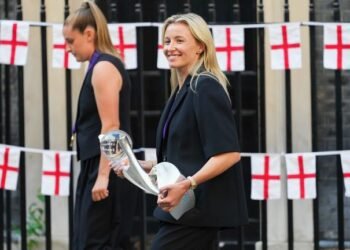 London Set to Honour Euro 2025 Champions as Lionesses Take Victory Parade Through the Capital
 Premier League Supercomputer Predicts Tough Season for Man Utd Amid Three-Team Title Battle
 Reeves Faces Setback as Labour May Miss Homes Target
 Kate Winslet to Narrate Film Highlighting King’s Environmental Mission
 Trump’s UK Ambassador Urges North Sea Drilling to Strengthen US Ties
 UK Bans Fake Numbers: Scammers Lose Their Trick
M&S Profits More Than Halve After Cyber-Attack
UK Bans Fake Numbers: Scammers Lose Their Trick
M&S Profits More Than Halve After Cyber-Attack
 Patients to Test Health at Home to Ease NHS Winter Pressure
 Millionaires group urge Reeves to introduce wealth tax to ‘lift kids out of poverty’
 Reeves rejects £1bn plea for NHS redundancy payouts
 Northern Lights may illuminate UK skies this week
 PM Condemns Leaks, Vows Loyalty to Ministers and Stability
 Major Rent Reform Ends No-Fault Evictions in England
 Saka Solidifies Role as Tuchel’s Key England Lieutenant
 Stroke Patient Mistaken for Drunk, Care Delayed
 Tiny Curacao Makes History as Smallest Nation to Reach World Cup
 Inside the Helpline Protecting Missing Children in the UK
 Boots Showstopper Beauty Bundle Outshines Many Advent Calendars This Holiday Season
 PlayStation PS5 Deals Hit Lowest Prices Ahead of Black Friday
 Five-Year-Old Dies After Rare Tonsil Surgery Complication
 Starmer Says Labour’s Economic Plan Needs Years to Deliver
 UK unemployment rises to four-year high of 5.1% before budget
 Wiltshire Police Use Lasso to Catch Rampaging Village Goat
 Australia Face Big Changes as Cummins and Lyon Ruled Out of Ashes
 Children to Receive Home Vaccines as England Acts
 Raducanu Battles Injury as Britain Exit United Cup
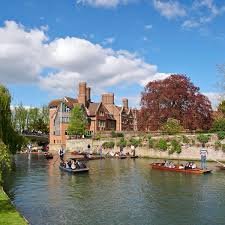 Cambridge College Faces Backlash Over Private School Recruitment
 Bereaved Fathers Gain New Paternity Leave Rights in UK
 Woman Jailed for Life After Killing E-Bike Rider in Tragic Mistaken Identity Case
 No Gas Boiler Ban as UK Warm Homes Plan Backs Heat Pumps
 Police response times face strict new national limits
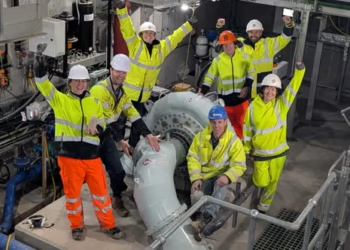 Devon hosts first high-density hydro power system
 Pornhub blocks new UK users over age checks dispute
 UK New Car Discounts Near £6,000 as Prices Are Slashed
 Pneumonia Surge Pushes England Emergency Cases Higher