Published: 05 December 2025. The English Chronicle Desk. The English Chronicle Online
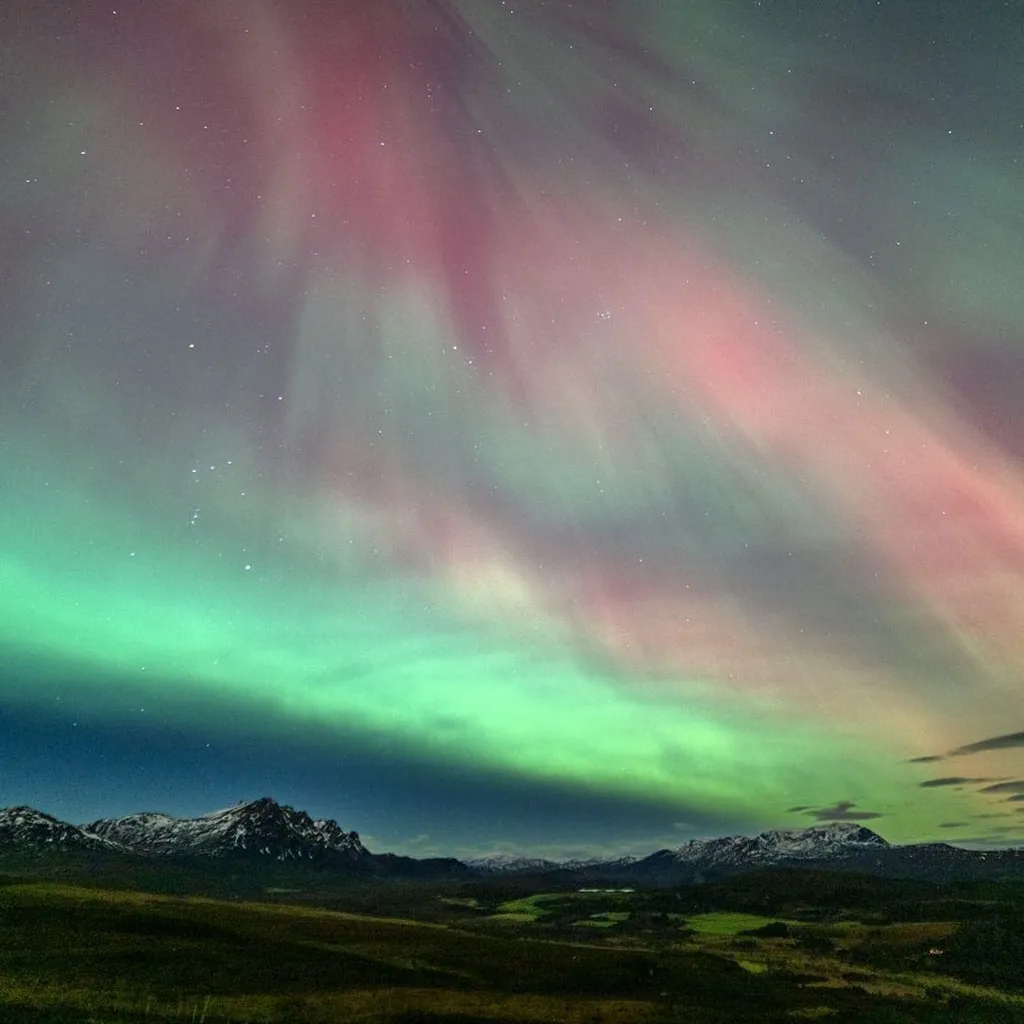
For travellers and astronomy enthusiasts, 2026 promises an exceptional year to witness the Northern Lights, or Aurora Borealis, one of nature’s most spectacular light shows. Stretching across the night sky in waves of green, pink, and violet, these auroras are caused by charged particles from the sun colliding with the Earth’s magnetic field. While the phenomenon can be unpredictable, careful planning and understanding of optimal viewing conditions can dramatically improve the chances of experiencing this celestial spectacle.
The Northern Lights are most frequently visible in high-latitude regions near the Arctic Circle, including Norway, Sweden, Finland, Iceland, Canada, and parts of Alaska. Within these regions, experts recommend seeking locations with minimal light pollution and open, unobstructed views of the northern horizon. Urban centres with artificial lighting can significantly diminish visibility, so travellers often head to remote villages, national parks, or coastal areas to fully immerse themselves in the auroral display.

Timing is also crucial for successful viewing. The peak season typically runs from September to March, when nights are longest and skies are darkest. While auroras can appear year-round in extreme northern regions, extended daylight during the summer months limits visibility. According to astronomers, the winter months of 2026 may be particularly promising due to predicted solar activity cycles, which affect the intensity and frequency of auroral events.
Weather conditions further influence the experience. Clear skies with minimal cloud cover are essential, as clouds can obscure even the most powerful auroras. Coastal and inland areas both offer opportunities, but higher-altitude locations often provide unobstructed skies and a better vantage point. Many guided tours in Scandinavia and Iceland offer flexible itineraries designed to move guests to areas with optimal cloud-free conditions, enhancing the chances of witnessing the lights in their full brilliance.
For photographers, capturing the Northern Lights requires careful preparation. Long exposure settings on cameras, use of sturdy tripods, and a keen understanding of night-time photography are recommended. Smartphone cameras with night modes can produce impressive results, but dedicated cameras with manual controls generally yield the most vivid and detailed images. Light pollution from towns, passing vehicles, or nearby settlements should be avoided for the clearest shots.
Beyond the visual spectacle, many travellers seek the Northern Lights as part of a broader cultural and adventure experience. Locations such as Tromsø in Norway, Rovaniemi in Finland, and the Canadian Yukon offer opportunities to combine aurora hunting with winter activities like dog sledding, snowmobiling, ice fishing, and visits to traditional Sami communities. In Iceland, visitors can pair aurora viewing with geothermal experiences and volcanic landscapes, creating a unique fusion of natural wonders.
Travel logistics and safety remain important considerations. Roads in Arctic regions can be icy and challenging, so guided tours and experienced local operators are often preferred for first-time viewers. Accommodation in aurora-rich zones is limited and should be booked well in advance, particularly during peak viewing months. For those planning a self-drive adventure, knowledge of weather conditions, road safety, and emergency preparedness is critical.
Astronomers also suggest leveraging aurora forecasting tools and apps that monitor solar wind activity and geomagnetic conditions. While predictions are not infallible, high geomagnetic activity correlates strongly with more vivid auroral displays, allowing travellers to plan their nights strategically. Flexibility is key, as auroras can appear suddenly and vanish just as quickly, rewarding patience and persistence.

For 2026, many experts predict a combination of high solar activity and long winter nights will create prime conditions for spectacular Northern Lights. Enthusiasts and travellers alike are advised to plan early, select optimal locations, and allow multiple nights for observation to maximise their chances. Whether experienced sky watchers or first-time visitors, witnessing the Northern Lights offers an unforgettable connection to the planet’s natural rhythms and the cosmic forces that surround us.
Ultimately, the Northern Lights are not just a visual phenomenon but a profound reminder of the interplay between Earth and the sun, combining science, awe, and adventure. With careful planning, respect for local conditions, and attention to weather and light, 2026 could be the year when travellers capture the magic of this extraordinary natural display.
Related News:
 How to Exit Your Broadband Contract Without Paying Exit Fees
 Michele Dougherty Makes History as the UK’s First Female Astronomer Royal
 Unseen Killers of the Deep Inside the UK Lab Uncovering the Silent Deaths of Sea Creatures
 UK Launches World-First Gonorrhoea Vaccine Amid Record Infection Surge
 AI Tools Used by English Councils Found to Downplay Women’s Health Issues, Raising Concerns Over Gender Bias in Care
 From ‘Skibidi’ to ‘Mouse Jiggler’: Cambridge Dictionary Expands with Modern Slang and Social Terms
 Shocking Rise in Children’s Exposure to Violent Online Pornography Raises Alarm
 Ed Davey Urges Government to Block Elon Musk’s Tesla from Supplying UK Home Energy
 Spectacular ‘Blood Moon’ Illuminates Skies Across the Globe
 Weatherwatch: From Astrology to Modern Meteorology
 British Pilot Joins Crew Training for Year-Long Mars Simulation Mission
 UK and US Forge Landmark Deals to Build Modular Nuclear Reactors Across Britain
 Big Pharma Investment Freeze Puts UK Life Sciences Sector Under Strain
 UK Could Generate Nearly £2bn Annually by Taxing SUVs, New Study Reveals
 Jaguar Land Rover Extends Production Halt Following Cyber-Attack
 Persistent Offenders Owe Over £700m in Ulez Fines as TfL Cracks Down on Evasion
 British AI Startup Outshines Human Forecasters in Global Prediction Contest
 UK Fighter Jet Purchase Could Breach Nuclear Treaty, Warns CND
 Google at 27: The Untold Story of Ruth Kedar, the Woman Behind the Iconic Logo
 Biomethane Found Unfit for Large-Scale UK Home Heating as Study Highlights Limitations
 Royal Mail Owner Acquires Stake in Collect+ and Launches High Street Rebrand
 Eligibility Confusion Over COVID Vaccination Leaves Pharmacies Struggling Across the UK
 Millions in the UK at Risk of Cyber-Attacks as Microsoft Ends Windows 10 Updates, Warns Which?
 Majority of UK Men Would Opt for Prostate Cancer Screening, Survey Finds
 Cooper Unveils £4m Cyber Plan Against Russian Hackers
 Yvette Cooper Backs Digital ID Plan for UK Teens
 Genetic Tests May Predict Return of Blood Cancer
 UK Woman Becomes Longest Survivor of Heart-Lung Transplant
 Labour MPs Warn Digital ID Scheme Risks Cost and Support
 ‘Game-Changing’ HIV Prevention Jab Set for NHS Approval
 Reform UK candidate fined £19,000 after using AI-generated cases to challenge election
 Harry and Meghan join global AI leaders urging superintelligence ban
 UK Campaigners Launch Bill to Grant Legal Rights to Nature
 Met Launches Drones to Respond Rapidly to 999 Calls
 Experts Warn Russia’s Burevestnik Missile Could Destabilise Arms Control
 Virgin Trains Moves Closer to Challenging Eurostar Monopoly
 UK Bans Fake Numbers: Scammers Lose Their Trick
 Vibe coding’ named Collins dictionary’s word of the year
 Patients to Test Health at Home to Ease NHS Winter Pressure
 Britain deploys RAF specialists to assist Belgium with drone threats
 Government urges schools to ban phones to curb classroom disruption
 Stop using ChatGPT to write speeches, AI minister tells MPs
 Northern Lights may illuminate UK skies this week
 New laws to bolster UK’s defences against cyber attacks on NHS, transport and energy
 Valve Opens the Door for Android Games on Steam
 Hitler’s DNA Confirms He Truly Had Only One Testicle
 Working-Class Men with Prostate Cancer Left Behind by NHS
 Pokémon to open world’s first theme park in Japan next year
 New AI tool could cut wasted efforts in organ transplants
 How Cultures Interpreted the Aurora Through History
 From Baby Teeth to Bioengineering: The Future of Self-Healing Teeth
 Sundar Pichai Cautions on AI Hype and Market Risks
 Google Chief Urges Caution: Don’t Trust AI Blindly
 UK launches major AI drive to fight deadly superbugs
 US Judge Says Meta Did Not Hold Illegal Social Media Monopoly
 Healthy Habits in Your 30s That Boost Life in Your 70s
 Raccoons Could Become America’s Next Pet
 Coffins Now Too Large to Cremate Amid Rising Obesity Crisis
 AI Actress Creator Says Tilly Norwood Won’t Replace Actors
 Starmer’s communications chief to outline media strategy overhaul
 Beachy Head Woman Identified as Local Eastbourne Resident
 AI Grok Sparks Child Safety Alarm in the UK
 Google Removes Some AI Health Summaries Over Safety Concerns
 Nasa ISS Medical Evacuation: Crew-11 To Return Early
 US Clears Nvidia AI Chip Sales to China in Policy Shift
 Amazon Milton Keynes closure sparks concern for UK warehouse workforce
 Astronomers Prepare for First-Ever Movie of a Black Hole
 Robo-Vaccination Could Transform Fight Against Bovine TB
 MPs warn AI financial risks threaten UK stability
 MPs warn AI financial risks threaten UK stability
 Pornhub blocks new UK users over age checks dispute
 Amazon mistakenly signals new global layoffs to employees
 AI breast screening cuts later cancer diagnoses by 12%, study finds
 UK Launches First Rapid-Charging Battery Train This Weekend
 UK New Car Discounts Near £6,000 as Prices Are Slashed
 South Africa’s Garden Route Gem Faces Looming Water Crisis
 Most Statin Side-Effects Are Not Caused by Drugs, Study Confirms
 BT Names New Openreach Chief Amid Major Fibre Expansion
 AI fears hit UK wealth and comparison sites
 Tech Trends Set to Transform Life in 2026