Published: 05 December 2025. The English Chronicle Desk. The English Chronicle Online
In a dramatic policy reversal that has reshaped the political landscape ahead of next year’s local contests, Sir Keir Starmer has abandoned plans to cancel and postpone local elections scheduled for May 2026. The decision affects 30 local authorities across England, where voters will now head to the polls as originally expected. The move follows mounting political pressure, a looming High Court challenge, and fresh legal advice that reportedly signalled the Government was likely to lose its case.
The announcement was confirmed in a letter from Steve Reed, the Local Government Secretary, issued on Monday. In the letter, Mr Reed stated that he had “decided to withdraw his decision to postpone the council elections of 30 local councils due to take place in May 2026 in the light of recent legal advice.” He further confirmed that Matthew Pennycook, the housing minister, had been asked to reconsider the original postponement order. Following that reconsideration, the Government determined that the elections should proceed as scheduled.

The reversal represents a significant climbdown for the Labour administration. Just months earlier, ministers had defended the delay on the grounds that impending local government reorganisation would render elections unnecessarily costly and administratively complex. Officials argued that structural reforms merging or reshaping certain councils would make holding elections in 2026 inefficient, particularly if newly elected councillors were to serve short or disrupted terms.
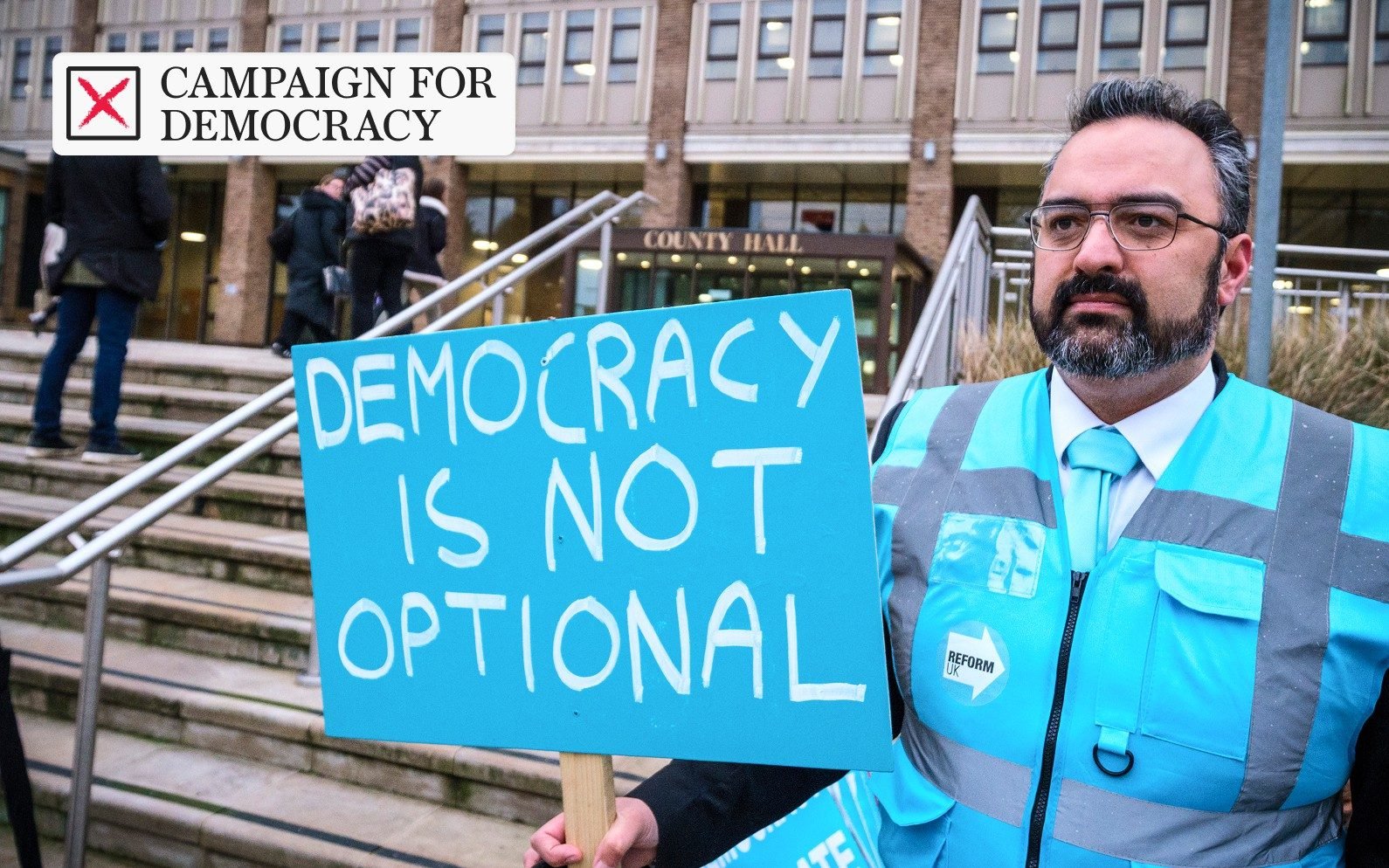
However, critics quickly challenged that reasoning. The delay would have resulted in some councillors serving up to seven years from a single election, rather than the standard four-year term. Opponents claimed this undermined democratic accountability and extended mandates without voter consent. Concerns intensified when it emerged that the opposition party Reform had formally instructed lawyers to challenge the postponement at the High Court.
The legal challenge was spearheaded by Reform’s leader, Nigel Farage, who compared Labour’s decision to that of a “dictator” and vowed to defend what he described as fundamental democratic principles. Reform argued that voters were being denied their right to choose local representatives at a politically sensitive moment. The party positioned itself as a defender of democratic norms, capitalising on dissatisfaction in several councils where Labour majorities appeared vulnerable.
Polling conducted last month suggested that Labour could face substantial losses if elections were held on schedule. In at least ten councils, Labour’s majorities were forecast to disappear entirely. The possibility of widespread seat losses fuelled speculation that political considerations, rather than purely administrative ones, had influenced the initial decision to postpone.
Mr Reed’s letter indicates that fresh legal advice played a decisive role in the Government’s U-turn. According to the correspondence, the Secretary of State will now seek to agree an order with Reform to dispose of the claim and has agreed to pay the claimant’s legal costs. Such language strongly implies that government lawyers believed the High Court challenge carried a high likelihood of success.
The climbdown also follows growing media scrutiny and civic advocacy. Campaigners argued that suspending elections risked setting a troubling precedent in British democracy. With local councils responsible for essential services ranging from housing and waste collection to education and social care, critics insisted that electoral accountability must not be postponed without compelling constitutional justification.
Financial considerations now come sharply into focus. It is understood that approximately £63 million will be allocated to the affected councils to ensure they can both conduct the May 7 elections and manage ongoing structural reforms. Government officials have emphasised that funding will support logistical preparations, staffing requirements, and administrative adjustments linked to the reorganisation process.
For councils themselves, the reversal introduces immediate operational pressure. Electoral teams must now accelerate preparations, finalise candidate nominations, coordinate polling stations, and communicate updated arrangements to residents. Many had already begun adjusting plans around the expectation of a delay until 2027. Reinstating the 2026 timetable compresses administrative timelines and may strain resources, even with additional funding pledged.
Politically, the episode marks one of the most notable reversals of Sir Keir Starmer’s premiership to date. While policy U-turns are not uncommon in modern governance, particularly when legal advice evolves, opponents argue that the episode raises broader questions about judgment and constitutional sensitivity. Supporters of the Prime Minister, however, contend that revisiting a decision in light of stronger legal guidance demonstrates pragmatism and respect for the rule of law.
Within Labour ranks, the decision has prompted quiet reflection. Some insiders had privately expressed discomfort at the optics of extending council terms beyond the customary four years. Others maintained that the administrative burden of reorganisation was genuine and that avoiding unnecessary expense remained a valid objective. The balancing act between efficiency and democratic process ultimately appears to have tilted decisively toward the latter.
The controversy also underscores the increasingly assertive role of smaller parties in shaping national discourse. Reform’s willingness to mount a legal challenge transformed what might have remained a technical administrative decision into a high-profile constitutional dispute. By framing the issue as one of democratic integrity, the party elevated its profile and placed additional pressure on ministers already facing competitive polling in key regions.
Beyond party politics, constitutional scholars note that local government elections are foundational to the UK’s democratic structure. While Parliament retains sovereignty and possesses the authority to alter electoral timetables, such changes traditionally require strong justification and cross-party consensus. Unilateral postponements, particularly when politically sensitive, are likely to attract judicial scrutiny and public scepticism.
The Government now faces questions about how the original postponement was formulated and whether legal risks were fully assessed at the outset. Transparency over the advice received and the reasoning behind the initial order may become a subject of parliamentary debate. Opposition parties are expected to demand further clarification, seeking to determine whether the reversal reflects oversight or miscalculation.

For voters across the 30 affected local authorities, the immediate outcome is clear. Ballot papers will be printed, campaigns will intensify, and polling stations will open in May 2026 as originally planned. The episode has reasserted the principle that electoral cycles should not be altered lightly, particularly when democratic mandates are at stake.
As preparations resume at pace, the broader political implications will unfold over the coming months. Should Labour suffer significant losses in May, critics will likely revisit the controversy as evidence of political vulnerability. If the party retains key councils, supporters may argue that the decision to proceed strengthened democratic legitimacy at a critical juncture.
Ultimately, the reversal serves as a reminder that constitutional decisions carry consequences beyond administrative convenience. In stepping back from postponement, the Government has chosen to reaffirm electoral accountability, even amid logistical complexity and political risk. Whether that choice stabilises or further unsettles the political climate remains to be seen, but the immediate effect is unmistakable: local democracy will proceed on schedule.
Related News:
 Tories Push to Dilute Labour’s Workers’ Rights Bill
 It’s time to come clean on the China spy case
 Rachel Reeves Admits Renting Home Without Required Licence
 Experts Question HMRC Over Possible Child Benefit Privacy Breach
 Phillipson urges careful review of gender recognition guidance
 French Taxi Driver Cleared in David Lammy Theft Case After Fare Dispute
 Met Police Culture Makes Racial Harm ‘Inevitable’
 Remaining rebel Labour MPs have whip restored
 Tim Davie resigns as BBC director general amid bias claims
 Palace to reinstate hyphen in Andrew’s surname
 BBC Apologises to Trump but Rejects $1bn Compensation Claim
 Major Rent Reform Ends No-Fault Evictions in England
 Peers Flood Assisted Dying Bill with 942 Amendments
 Your Party Turmoil Deepens Over Withheld Donations
 UK Unveils Fast-Track Deportation and Asylum Overhaul
 UK Asylum Overhaul Sparks Debate Over Human Rights and Deportations
 UK Asylum Reforms: Temporary Refugee Status and Faster Deportations
 Mahmood Defends Tough Overhaul of UK Asylum System
 Scottish Ministers Express Alarm Over UK Asylum Reforms
 Westminster Advances Legacy Bill Amid Criticism
 Minister Defends Tough New Asylum Reform Plan
 UK Net Migration Falls Sharply After ONS Revisions
 Peers Get Extra Time to Debate Assisted Dying Bill
 Plans to Limit Jury Trials Face Retreat After Mounting Opposition
 Tim Walz urges Trump to withdraw federal agents immediately
 UK and EU Signal Fresh Push for Defence Cooperation Talks
 Labour Attacks Reform Candidate Over Tommy Robinson Backing
 Tasers Introduced in UK Prisons to Combat Rising Violence and Protect Staff
 Tanni Grey-Thompson Faces Abuse Over Opposition to Assisted Dying Bill
 Mahmood Pledges Reform of Modern Slavery Laws After Court Blocks Deportation Appeal
 Migrants in UK May Need to Contribute or Face Removal, Home Secretary Signals
 Digital ID Plans Ignite Debate Over £600m Treasury Tax Boost and Privacy Concerns
 Johnson Approved China’s London ‘Super-Embassy’ in 2018
 Green Party Surges Past Labour in Latest UK Poll
 Celebrities and Charities Demand UK Government Act on Child Poverty
 Trump’s UK Ambassador Urges North Sea Drilling to Strengthen US Ties
 FBI Director Kash Patel Defends Girlfriend Amid Government Jet Claims
 Just Stop Oil Protesters Convicted Amid Climate Defence Row
 King Charles to Lead Nation in Remembrance Sunday Service
 ‘Reckless’ cuts to victims’ services will cost more than they save
 Millionaires group urge Reeves to introduce wealth tax to ‘lift kids out of poverty’
 Starmer Faces Growing Dissent as Labour MPs Weigh Leadership Challenge
 Reeves rejects £1bn plea for NHS redundancy payouts
 Politics latest: Starmer ‘will fight any leadership coup’ as Streeting denies attempt to oust Labour PM
 PM Condemns Leaks, Vows Loyalty to Ministers and Stability
 England’s Special Needs Support Faces Breaking Point
 US Justice Department Files Lawsuit Against California Over Partisan Voting Maps
 MoD warned over Excel risks before Afghan data breach
 Trump Deploys DHS to Charlotte in Major Arrest Operation
 Serial Rapist and Former Cop Found Guilty Again
 Most Tories Expect to Support a Farage-Led Government
 Labour MP claims devolution bill is ‘blatant discrimination’ against Cornwall
 Millions Face Higher Taxes Under Reeves New Budget
 US National Guard Member Killed in DC Shooting
 ICC to Rule on Duterte’s Provisional Release
 Starmer Says Labour’s Economic Plan Needs Years to Deliver
 Virgin Media Fined £23.8m Over Telecare Safety Failures
 Culture secretary to review Telegraph takeover by Daily Mail owner
 Google Employee Claims Redundancy After Harassment Report
 Woman Jailed for Life After Killing E-Bike Rider in Tragic Mistaken Identity Case
 Right Must Unite After Jenrick Defection, Urges Rees-Mogg
 UK Ministers Drop Foreign Student Targets for Global Education Push
 MPs warn AI financial risks threaten UK stability
 No Gas Boiler Ban as UK Warm Homes Plan Backs Heat Pumps
 Hugh Grant Joins Call for Under-16 Social Media Ban in UK
 Shinzo Abe’s killer receives life sentence in Japan
 Lords Vote Piles Pressure on Starmer Over Social Media Ban
 Reform UK Health Plan ‘Would Cost £1.7bn’, Streeting Says
 Police response times face strict new national limits
 Labour policing overhaul sparks fears over growing central control
 Tories criticised after Braverman defection sparks mental health row
 Starmer warns of toxic division politics in Reform challenge
 Starmer China visit raises human rights pressure on Beijing
 Study Finds One in Seven England Takeaways Are Dark Kitchens
 Palantir contracts face UK halt calls over transparency
 Australia’s Opposition Coalition Reunites After Rift
 Labour Lord Doyle Apologises Over Paedophile Ties in Political Storm
 Cabinet Secretary Shake-Up Triggers Due Diligence Warning
 Starmer Faces Inquiry Calls Over Thinktank Probe
 Royal Mail Delivery Crisis Deepens Amid Weather Chaos