Published: 17 February 2026. The English Chronicle Desk. The English Chronicle Online
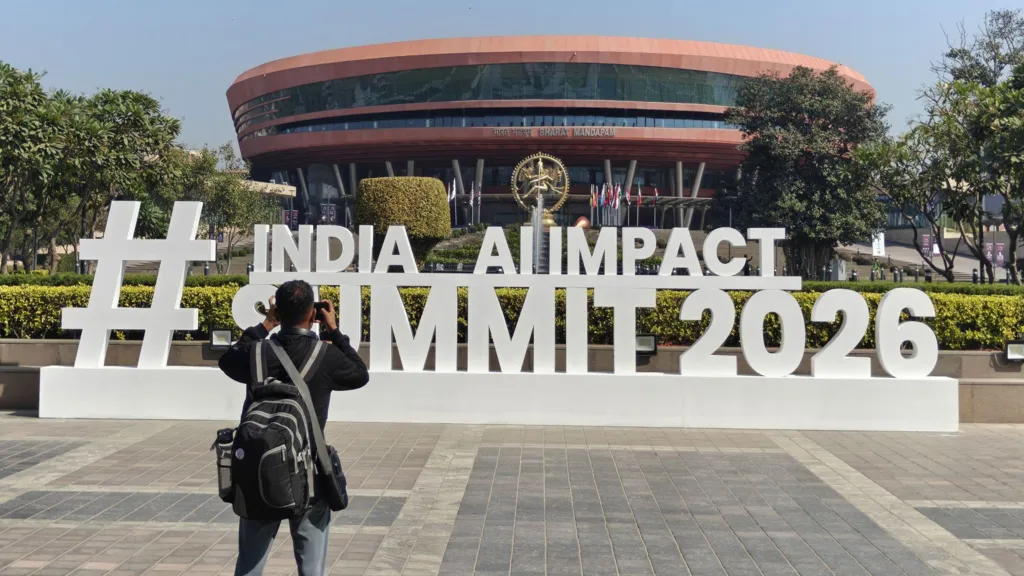
As leading tech executives descend on Delhi for an international summit on artificial intelligence, questions are being raised about whether their apparent humility in public appearances will translate into tangible safety measures for AI systems. Critics argue that while gestures of accountability and concern for ethical AI are welcome, history suggests that declarations alone may not lead to meaningful reform.
Over the past decade, AI development has accelerated at an unprecedented pace, with large language models, autonomous systems, and predictive algorithms permeating industries, government, and everyday life. Alongside the opportunities, experts have warned of risks including algorithmic bias, privacy violations, and unintended consequences in critical decision-making. The Delhi summit is billed as a forum for dialogue between governments, regulators, and private technology firms, many of whom have faced scrutiny for their role in shaping the AI landscape.

Observers note a striking contrast in tone compared with prior summits in Silicon Valley and Washington. Executives who were previously criticised for overconfidence and dismissive statements on AI safety have adopted a more measured approach, emphasising collaboration, regulation, and ethical frameworks. Some have publicly acknowledged past missteps, signalling an understanding that AI governance demands accountability beyond marketing statements.
Yet analysts caution that humility alone is insufficient. “Acknowledging risks is only the first step,” says Dr. Priya Menon, an AI policy researcher based in India. “The real question is whether these firms are willing to commit to concrete actions: safety audits, transparent reporting, and adherence to regulatory standards that prevent harm before it occurs.” Menon and other experts stress the importance of enforceable guidelines and independent oversight, arguing that voluntary pledges have historically been inconsistent and often reactive.
The summit in Delhi also reflects broader geopolitical tensions in AI governance. As countries compete for technological supremacy, the intersection of commercial ambition and public safety becomes increasingly delicate. Regulators in India and across Asia are using the forum to advocate for robust standards, cross-border cooperation, and mechanisms to monitor AI deployment in critical sectors such as healthcare, finance, and national security.
Public expectations are high, and tech companies are under pressure to demonstrate leadership. Civil society organisations have called for explicit commitments, including independent verification of AI systems, public disclosure of risk assessments, and limitations on particularly sensitive applications. The debate underscores a recurring tension: the same innovators who drive AI forward are often responsible for its oversight, raising concerns about conflicts of interest.
Some insiders suggest that the Delhi summit may mark a turning point in global AI discourse. The presence of high-profile executives in a venue far from their usual bases of influence highlights the growing international demand for accountability. By facing regulators, policymakers, and critics in person, tech leaders may be compelled to address questions they could previously deflect or ignore in more familiar forums.
Nevertheless, the scepticism remains. Past initiatives promoting ethical AI have sometimes produced glossy reports and PR campaigns without substantive enforcement or measurable outcomes. Analysts warn that unless commitments are codified into law, with clear penalties for non-compliance, gestures of humility risk being symbolic rather than transformative.

For the public, the stakes are tangible. AI systems increasingly shape access to information, employment opportunities, medical decisions, and even criminal justice. Failures in safety or governance can have wide-reaching consequences, underscoring the urgency for actionable reforms rather than rhetoric. The Delhi summit may therefore serve as a test: will tech executives translate their professed humility into practices that demonstrably improve AI safety, or will it remain a staged performance aimed at placating critics?
As discussions unfold, experts emphasise the need for ongoing scrutiny and vigilance. Regulators, journalists, and independent researchers will be watching closely, evaluating whether corporate pledges align with real-world outcomes. The decisions made in Delhi could influence AI governance globally, shaping both the trajectory of innovation and the mechanisms in place to protect society from harm.
Ultimately, the summit underscores a fundamental challenge in the AI era: balancing the ambitions of private industry with the public interest. Humility, while notable, is only meaningful when paired with accountability, transparency, and enforceable safeguards that ensure AI development benefits society safely and equitably.
Related News:
 How to Exit Your Broadband Contract Without Paying Exit Fees
 Michele Dougherty Makes History as the UK’s First Female Astronomer Royal
 Unseen Killers of the Deep Inside the UK Lab Uncovering the Silent Deaths of Sea Creatures
 UK Launches World-First Gonorrhoea Vaccine Amid Record Infection Surge
 AI Tools Used by English Councils Found to Downplay Women’s Health Issues, Raising Concerns Over Gender Bias in Care
 From ‘Skibidi’ to ‘Mouse Jiggler’: Cambridge Dictionary Expands with Modern Slang and Social Terms
 Shocking Rise in Children’s Exposure to Violent Online Pornography Raises Alarm
 Ed Davey Urges Government to Block Elon Musk’s Tesla from Supplying UK Home Energy
 Spectacular ‘Blood Moon’ Illuminates Skies Across the Globe
 Weatherwatch: From Astrology to Modern Meteorology
 British Pilot Joins Crew Training for Year-Long Mars Simulation Mission
 UK and US Forge Landmark Deals to Build Modular Nuclear Reactors Across Britain
 Big Pharma Investment Freeze Puts UK Life Sciences Sector Under Strain
 UK Could Generate Nearly £2bn Annually by Taxing SUVs, New Study Reveals
 Jaguar Land Rover Extends Production Halt Following Cyber-Attack
 Persistent Offenders Owe Over £700m in Ulez Fines as TfL Cracks Down on Evasion
 British AI Startup Outshines Human Forecasters in Global Prediction Contest
 UK Fighter Jet Purchase Could Breach Nuclear Treaty, Warns CND
 Google at 27: The Untold Story of Ruth Kedar, the Woman Behind the Iconic Logo
 Biomethane Found Unfit for Large-Scale UK Home Heating as Study Highlights Limitations
 Royal Mail Owner Acquires Stake in Collect+ and Launches High Street Rebrand
 Eligibility Confusion Over COVID Vaccination Leaves Pharmacies Struggling Across the UK
 Millions in the UK at Risk of Cyber-Attacks as Microsoft Ends Windows 10 Updates, Warns Which?
 Majority of UK Men Would Opt for Prostate Cancer Screening, Survey Finds
 Cooper Unveils £4m Cyber Plan Against Russian Hackers
 Yvette Cooper Backs Digital ID Plan for UK Teens
 Genetic Tests May Predict Return of Blood Cancer
 UK Woman Becomes Longest Survivor of Heart-Lung Transplant
 Labour MPs Warn Digital ID Scheme Risks Cost and Support
 ‘Game-Changing’ HIV Prevention Jab Set for NHS Approval
 Reform UK candidate fined £19,000 after using AI-generated cases to challenge election
 Harry and Meghan join global AI leaders urging superintelligence ban
 UK Campaigners Launch Bill to Grant Legal Rights to Nature
 Met Launches Drones to Respond Rapidly to 999 Calls
 Experts Warn Russia’s Burevestnik Missile Could Destabilise Arms Control
 Virgin Trains Moves Closer to Challenging Eurostar Monopoly
 UK Bans Fake Numbers: Scammers Lose Their Trick
 Vibe coding’ named Collins dictionary’s word of the year
 Patients to Test Health at Home to Ease NHS Winter Pressure
 Britain deploys RAF specialists to assist Belgium with drone threats
 Government urges schools to ban phones to curb classroom disruption
 Stop using ChatGPT to write speeches, AI minister tells MPs
 Northern Lights may illuminate UK skies this week
 New laws to bolster UK’s defences against cyber attacks on NHS, transport and energy
 Valve Opens the Door for Android Games on Steam
 Hitler’s DNA Confirms He Truly Had Only One Testicle
 Working-Class Men with Prostate Cancer Left Behind by NHS
 Pokémon to open world’s first theme park in Japan next year
 New AI tool could cut wasted efforts in organ transplants
 How Cultures Interpreted the Aurora Through History
 From Baby Teeth to Bioengineering: The Future of Self-Healing Teeth
 Sundar Pichai Cautions on AI Hype and Market Risks
 Google Chief Urges Caution: Don’t Trust AI Blindly
 UK launches major AI drive to fight deadly superbugs
 US Judge Says Meta Did Not Hold Illegal Social Media Monopoly
 Healthy Habits in Your 30s That Boost Life in Your 70s
 Coffins Now Too Large to Cremate Amid Rising Obesity Crisis
 AI Actress Creator Says Tilly Norwood Won’t Replace Actors
 Starmer’s communications chief to outline media strategy overhaul
 Beachy Head Woman Identified as Local Eastbourne Resident
 AI Grok Sparks Child Safety Alarm in the UK
 Google Removes Some AI Health Summaries Over Safety Concerns
 Nasa ISS Medical Evacuation: Crew-11 To Return Early
 US Clears Nvidia AI Chip Sales to China in Policy Shift
 Amazon Milton Keynes closure sparks concern for UK warehouse workforce
 BP’s Influence Sparks Controversy in UK STEM Education
 Astronomers Prepare for First-Ever Movie of a Black Hole
 Robo-Vaccination Could Transform Fight Against Bovine TB
 MPs warn AI financial risks threaten UK stability
 MPs warn AI financial risks threaten UK stability
 Pornhub blocks new UK users over age checks dispute
 Amazon mistakenly signals new global layoffs to employees
 AI breast screening cuts later cancer diagnoses by 12%, study finds
 UK Launches First Rapid-Charging Battery Train This Weekend
 UK New Car Discounts Near £6,000 as Prices Are Slashed
 Most Statin Side-Effects Are Not Caused by Drugs, Study Confirms
 BT Names New Openreach Chief Amid Major Fibre Expansion
 AI fears hit UK wealth and comparison sites
 Tech Trends Set to Transform Life in 2026
 Starmer Targets AI Chatbots Over Child Safety Concerns