Published: 19 February 2026. The English Chronicle Desk. The English Chronicle Online
Visiting Greenland recently offered a stark reminder of why United States President Donald Trump continues to make the vast Arctic island a central focus of his foreign policy — and why that ambition is fuelling tensions between Washington, Copenhagen and other Western capitals. In a dispatch from the remote territory, it’s clear that Greenland’s geostrategic and economic value has not diminished despite repeated rebuffs from Denmark and widespread local opposition to ceding control of the island.

Trump’s interest in Greenland is not new; he first floated the idea of purchasing the territory during his earlier presidency. Now, even after talks at forums such as Davos, he has reiterated his desire to negotiate a future arrangement with respect to the island and the broader Arctic region — although he has publicly ruled out using military force to seize it.
Greenland’s location at the gateway between the Arctic and the North Atlantic makes it highly attractive from a military and surveillance standpoint. The island’s proximity to North America, Europe and potential polar shipping routes gives it strategic importance in the context of great‑power competition with Russia and China — a point the Trump administration has seized on repeatedly as justification for its stance.
But it isn’t just military geography that motivates Trump’s continued focus on the Arctic. Beneath Greenland’s vast ice cover lies significant mineral wealth — including rare earth elements and other critical minerals essential for advanced technologies, renewable energy and defence production. Experts argue that as climate change reshapes the Arctic landscape and makes natural resources more accessible, Greenland’s economic value will only rise.
That combination of strategic positioning and potential resource access helps explain why Trump, backed by some in the US political establishment, remains determined to secure “more” from Greenland — even in the face of firm Danish resistance and scepticism from many Greenlanders themselves. Danish Prime Minister Mette Frederiksen has stressed that Trump remains intent on acquiring Greenland and has affirmed Denmark’s desire to protect the territory’s autonomy.
Amid these high‑level manoeuvres, regional actors are responding as well. Nordic governments are pursuing deeper cooperation and integration with Greenland and other Arctic partners, partly to counterbalance intense external pressure and to affirm the sovereignty of the island and its neighbouring regions.

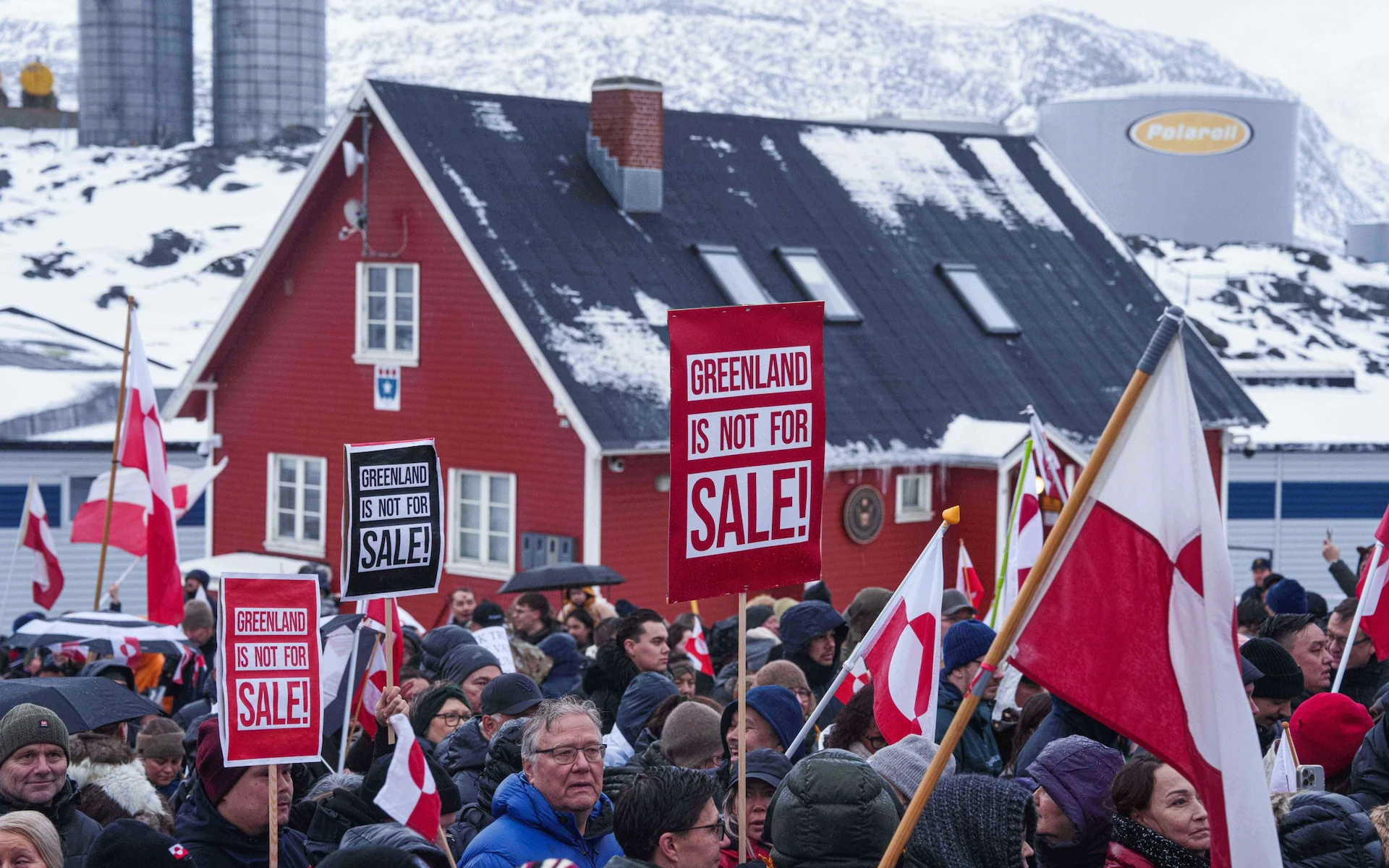
Yet for many residents and observers in Greenland, the debate isn’t just about geopolitics or economic opportunity. It touches on identity and self‑determination, as indigenous voices and local leaders insist the island is “not for sale” and reject any perceived attempts to diminish Greenlandic autonomy — even under the banner of security or economic development.
As Trump’s ambition for Greenland remains alive in diplomatic circles, the island continues to stand at the crossroads of geography, global power dynamics and the aspirations of its own people — a rare place where the interests of great powers and the will of a small community intersect with potentially world‑shaping consequences.
Related News:
 Trump Says US Will Act on Greenland ‘Whether They Like It or Not’
 Trump Receives Machado’s Nobel Medal in White House Meeting
 Thousands Protest ICE Operations in Nationwide US Day of Action
 Epstein Files Reveal Trump Officials’ Emails with Financier
 Thousands Protest ICE in New York Against Trump Deportation Campaign
 US Must Be Prudent When Supplying Arms to Taiwan, Xi Tells Trump
 Fears of New Arms Race as US-Russia Nuclear Weapons Treaty Expires
 US National Guard Member Killed in DC Shooting
 Trump to Recheck Green Cards from 19 Nations After DC Attack
 Republicans Hold Tennessee Seat Despite Democratic Surge
 Russia losses Ukraine war peace talks intensify amid rising deaths
 Shock US Raid: Maduro Pleads Not Guilty in Manhattan Court
 Trump Escalates Minnesota Immigration Surge Amid Rising Tensions
 Capitol Attack Anniversary Sparks Deep Political Divide
 Israel Dossier Sparks Australian Political Interference Concern
 Trump Plans Venezuela Meeting, Warns of Cartel Land Strikes
 Trump Labels Renee Good a ‘Paid Agitator’ After Minneapolis ICE Killing
 Trump: US Stands Ready to Help Iran Find Freedom Amid Widespread Unrest
 Homeland security agents deployed amid Minneapolis protests
 Top Senate Republican Says Federal Probe of Powell Could Challenge Fed Nominees
 Trump Administration Probe of Fed’s Powell Draws Pushback
 Mandelson apologises over Epstein ties after public scrutiny
 Trump targets Iran trade with 25% tariff warning
 Rudd successor: Defence chief and former ministers considered
 Trump Threatens Strong Action If Iran Executes Protesters
 Government Unveils Northern Powerhouse Rail Plans
 US Senate rejects resolution limiting Trump military powers
 Trump Calls Greenland Critical for US Security After Denmark Talks
 Machado Trump medal gesture reshapes Venezuela power struggle
 Trump press secretary attacks reporter over ICE question
 Kyrsten Sinema Faces High-Profile Lawsuit Over Marriage Interference
 Iran unrest slows under brutal crackdown and global tensions
 Trump Allies Pursue $200m European Gas Pipeline Deal
 Greenland Crisis Forces Europe to Draw a Line With Trump
 European Leaders Condemn Trump Tariff Threat Over Greenland
 Iran Cannot Be Bombed Into Democracy, Only Helped There
 US Considers Asylum for British Jews Amid Rising Antisemitism
 Starmer Challenges US Over Controversial Greenland Deal
 Starmer tariffs stance rejects US trade retaliation
 Spoof “Make America Go Away” Caps Rally Denmark Over Greenland
 Trump slams UK ‘stupidity’ over Chagos Islands, eyes Greenland takeover
 Shinzo Abe’s killer receives life sentence in Japan
 Trump Fed bid heads to Supreme Court
 Starmer Resists Matching Trump Amid Greenland Tensions
 American democracy faces crisis after Trump’s return
 Historic Abu Dhabi Talks Bring US, Ukraine and Russia Together
 Trump Pulls Canada from His Controversial ‘Board of Peace’ Plan
 EU Says US Ties Have Suffered ‘Big Blow’ After Greenland Crisis
 Russia Strikes Kyiv and Kharkiv as Peace Talks Enter Day Two
 ‘Unfathomable’: Australian veterans rebuke Trump claims
 Trump officials continue false claims after Alex Pretti shooting
 Turnbull urges Albanese to confront Trump’s global ‘bully’ politics
 ‘Evil is resilient’: Pressure Mounts on Stephen Miller
 Crisis Looms as Liberals Debate Sussan Ley Future
 Cambridge Faces Scrutiny Over Arms Investment Transparency
 Files Link Andrew to Epstein Dinner After Prison Release
 Emails Show Epstein Funded Mandelson’s Husband After Jail
 Partial US Government Shutdown Hits Homeland Security Funding
 Sinema payment row deepens after $9,000 transfer claim
 US-Cuba Negotiations Shift as Oil Blockade Looms
 Trump Praises ‘Terrific’ Petro After White House Talks
 Starmer to Release Mandelson Files
 California Wins Supreme Court Approval for New Map
 US Military Says Two Killed in Strike on Alleged Drug Boat in Eastern Pacific
 Trump Endorses Japan’s Takaichi Ahead of Snap Election
 Trump softens stance on Chagos Islands deal after Starmer call
 Epstein UAE Emails Shake British Royal Andrew’s Legacy
 Venezuela’s Opposition Says Party Leader Kidnapped Hours After Being Freed
 Liberal Fallout: Taylor Challenge Casts Shadow Over Sussan Ley’s Leadership
 Nurses’ families fear breakup under UK immigration crackdown
 ‘Trump Will Be Gone in Three Years,’ Top Democrats Tell Europe
 Hillary Clinton Accuses Trump of Epstein Files ‘Cover-Up’ in BBC Interview
 Ukraine, Russia Meet in Geneva Ahead of War Anniversary
 US Civil Rights Leader Jesse Jackson Dies Aged 84
 New Nuclear Talks Between US and Iran Begin in Geneva
 ‘He Did It for Us’: US Soldier Recalls Jesse Jackson’s Efforts to Free Him and Two Other POWs
 US Says It “Supports” UK Chagos Islands Deal
 Iran Says ‘Guiding Principles’ Agreed With US at Nuclear Talks
 Stephen Colbert Says CBS Spiked Interview With Democrat Over FCC Fears
 Britain’s Reliance on China Makes Us ‘Weak Link in the West’, Warn MPs