Published: 23 January 2026. The English Chronicle Desk. The English Chronicle Online
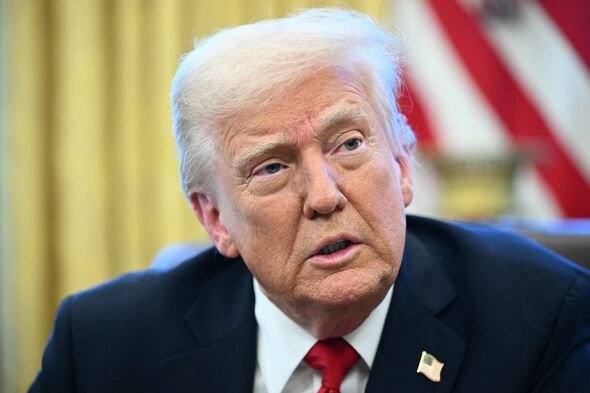
US President Donald Trump has abruptly withdrawn an invitation for Canada to join his newly announced global “board of peace”, escalating an already tense public exchange with Canadian Prime Minister Mark Carney and highlighting growing divisions among Western allies over Trump’s unconventional approach to global diplomacy.
The withdrawal was announced on Thursday through a post on Trump’s Truth Social platform, where he addressed Carney directly in characteristically blunt terms. In the message, Trump said the board was rescinding its invitation for Canada to join what he described as “the most prestigious Board of Leaders ever assembled, at any time”. The statement marked a sharp reversal from earlier indications that Ottawa had at least been open to participating in the initiative.
Trump unveiled the “board of peace” earlier this week at the World Economic Forum in Davos, portraying it as one of the most consequential international bodies in modern history. According to Trump, the board would play a central role in resolving major global conflicts and reshaping postwar governance arrangements, beginning with Gaza. The body is to be chaired by Trump himself and, despite initially being framed as temporary, has since taken on the appearance of a more permanent institution with significant financial and political commitments attached.

One of the most controversial aspects of the proposal is its funding structure. Trump has said that countries seeking permanent membership must contribute $1bn each to help finance the board’s work. This requirement immediately raised eyebrows among diplomats and policymakers, particularly in liberal democracies accustomed to multilateral institutions with clearer governance rules and accountability mechanisms.
Canada had initially appeared cautiously receptive. Before the Davos meeting, Carney had accepted the invitation in principle, though he emphasised that his government needed time to review the details. Speaking to reporters over the weekend, the Canadian prime minister said officials were still examining “the structure, how it’s going to work, what the financing is for”, stressing that Canada wanted any contribution it made on the international stage to deliver maximum impact.
That cautious stance hardened in the days that followed. On Tuesday, Canada’s finance minister, François-Philippe Champagne, made it clear that Ottawa had no intention of paying the $1bn fee reportedly required for permanent membership. His comments effectively placed Canada at odds with the financial model underpinning Trump’s initiative and appeared to set the stage for the diplomatic rupture that soon followed.
The withdrawal of Canada’s invitation did not occur in isolation. It came against the backdrop of an increasingly public war of words between Trump and Carney during the Davos summit. In a widely circulated speech earlier in the week, Carney warned that the world was witnessing a “rupture” in the long-standing rules-based international order, an order he said had traditionally been overseen by the United States. While he did not name Trump directly, the implication was clear, particularly as he criticised aggressive unilateral behaviour and the erosion of multilateral norms.
Trump, for his part, seemed keenly aware of Carney’s remarks. In his own address at Davos on Wednesday, he delivered a pointed comment aimed squarely at the Canadian leader. “Canada lives because of the United States,” Trump said. “Remember that, Mark, the next time you make your statements.” The remark was widely interpreted as a reminder of Canada’s economic and security ties to its southern neighbour, and it sparked swift reactions back home.
Carney responded firmly the following day. “Canada doesn’t live because of the United States,” he said. “Canada thrives because we are Canadian.” The exchange resonated strongly with Canadian audiences and underscored a broader assertion of national independence at a time when relations with Washington appear increasingly strained.
By Thursday evening, Trump’s decision to withdraw the invitation to Canada formalised what had already become an open rift. Neither Carney’s office nor the White House immediately responded to requests for comment, leaving the Truth Social post as the clearest indication of the administration’s position.
Trump has remained unapologetic about both the board and his approach to diplomacy. Speaking in Switzerland on Thursday, he doubled down on the scope of the initiative, saying that once the board was fully formed, “we can do pretty much whatever we want to do”, adding that its actions would be taken “in conjunction with the United Nations”. That assertion has raised further questions among international law experts and diplomats about how the board would interact with existing multilateral frameworks and whether it might undermine established institutions.
The board’s creation has already received a degree of formal international recognition. Its establishment was endorsed by a United Nations Security Council resolution as part of Trump’s Gaza peace plan. However, UN officials have been careful to limit expectations. UN spokesperson Rolando Gomez said on Thursday that the organisation’s engagement with the board would be confined strictly to the context of that resolution, suggesting a narrower role than Trump’s rhetoric might imply.
Membership of the board so far reflects a mix of regional and political alignments. Countries that have agreed to join include Argentina, Bahrain, Morocco, Pakistan and Turkey. Notably absent are several of Washington’s closest traditional allies. Britain, France and Italy have all indicated that they will not join the board for now, citing concerns over its structure, mandate and financing. Their reluctance underscores a broader unease in Europe and elsewhere about Trump’s preference for personalised, leader-driven diplomacy over established multilateral processes.
For Canada, the episode highlights a delicate balancing act. Ottawa has long sought to maintain close ties with Washington while also projecting itself as a defender of multilateralism and the rules-based order. Carney’s refusal to commit large sums of money to an initiative with unclear governance reflects both fiscal caution and political principle, particularly at a time when domestic priorities and global uncertainties are competing for attention.
Analysts say Trump’s decision to publicly withdraw the invitation may play well with his domestic base, reinforcing his image as a leader unwilling to tolerate dissent or half-measures from allies. At the same time, it risks further alienating partners whose cooperation the United States relies on to address global challenges, from conflict resolution to climate change and economic stability.

The controversy surrounding the “board of peace” also raises deeper questions about the future of international cooperation. Trump has framed the initiative as a bold alternative to what he portrays as slow, ineffective global institutions. Critics counter that bypassing established mechanisms in favour of ad hoc bodies led by a single powerful figure could weaken international norms and concentrate decision-making in ways that lack transparency and accountability.
As the dust settles from the Davos summit, the immediate implications of Canada’s exclusion from the board remain uncertain. The initiative is still in its early stages, and its effectiveness, legitimacy and longevity have yet to be tested. What is clear, however, is that the episode has exposed fault lines among Western allies and highlighted contrasting visions of global leadership at a moment of profound geopolitical change.
For Trump, the withdrawal of Canada’s invitation sends a clear message about the terms on which he expects countries to engage with his flagship peace initiative. For Carney, it reinforces his argument that Canada must chart its own course, even when that means pushing back against pressure from its most powerful ally. And for the wider international community, it offers an early glimpse of how Trump’s second-term foreign policy may continue to challenge, and disrupt, familiar diplomatic norms.
Related News:
 UK Prepares Aircraft Carrier for Middle East Crisis
 Charles Faces Trump Test in High-Stakes US Visit
 UK Stands Firm on Falklands Amid US Rift
 UK Must Act with Courage and Clarity on Israel-Palestine Conflict, Says Foreign Affairs Committee Report
 MPs Call on UK Government to Delay Biometric Visa Checks for Gaza Students Amid Humanitarian Crisis
 Radioactive Leak at UK’s Nuclear Warhead Base Sparks Outcry Over Safety and Secrecy
 Mutual Inconvenience: Why Alaska Was Chosen for the Trump-Putin Summit on Ukraine
 Is the UK Ready to Put Boots on the Ground in Ukraine? Assessing Military Capacity and Challenges
 Protests Expected as Israeli Arms Firms Join Global Defence Trade Fair in London
 Thousands Gather in London to Protest Donald Trump’s Second UK State Visit
 Trump Urges UK to “Call Out the Military” to Secure Borders Amid State Visit
Trump’s UN Speech Criticises London and UK Policies, Draws Far-Right Attention
Trump Urges UK to “Call Out the Military” to Secure Borders Amid State Visit
Trump’s UN Speech Criticises London and UK Policies, Draws Far-Right Attention
 UK Fighter Jet Purchase Could Breach Nuclear Treaty, Warns CND
 A Third of EU Citizens in UK Report Discrimination by Public Bodies Post-Brexit
 Jailed Georgian Opposition Leaders Warn UK of Iranian Links to Ruling Party
 Russia repeatedly targets UK military satellites, warns Space Command chief
 Pro-Palestine March to Proceed in London Despite Calls to Cancel After Manchester Attack
 UK Universities Warn Students Ahead of 7 October Pro-Palestine Protests
 Public Trust in SNP Hits Historic Low Amid NHS Concerns
 Johnson Suggests Mandelson Linked to China Spy Controversy
 Witness statements reveal the CPS China spy row collapse in the UK
 Nigel Farage Calls Vladimir Putin ‘A Very Bad Dude’
 Rachel Reeves signals welfare reform ahead of key budget
 Kosovo agrees to host Britain’s refused asylum seekers
 Rachel Reeves to lead UK trade push in Saudi Arabia amid rights debate
 British Woman in Iran ‘Losing Hope’ Amid Ongoing Detention
 Johnson Approved China’s London ‘Super-Embassy’ in 2018
 BBC Journalist Held and Interrogated in Vietnam
 New review urges UK to repatriate Shamima Begum, others from Syria
 Rama Rebukes Mahmood for Targeting Albanian Families
 Russian Vessel Used Lasers on RAF Pilots, UK Claims
 Trump Escalates Minnesota Immigration Surge Amid Rising Tensions
 Greenland Faces Pivotal Summit Over Arctic Power Struggle
 Greenland Crisis Forces Europe to Draw a Line With Trump
 Barron Trump police call heard in London assault trial
 Historic Abu Dhabi Talks Bring US, Ukraine and Russia Together
 EU Says US Ties Have Suffered ‘Big Blow’ After Greenland Crisis
 UK and EU Signal Fresh Push for Defence Cooperation Talks
 Thousands Protest ICE Operations in Nationwide US Day of Action
 Epstein Files Reveal Trump Officials’ Emails with Financier
 Thousands Protest ICE in New York Against Trump Deportation Campaign
 Starmer Condemns ‘Depraved’ Russian Strikes on Ukraine
 Trump and Chagos Deal Rift Over Iran Strikes
 Andrew Mountbatten-Windsor Arrest After FBI Radar
 Farage Chagos Islands Row Sparks Fury
 California Democrats Vow Trump Reckoning
 Trump Tariffs Threat Spark UK and EU Alarm
 Clinton Testimony Erupts in Fiery Exchange
 Thousands Protest Iran Strikes Outside US Embassy London
 US Bombers Arrive at RAF Base Amid Rising Iran Tensions
 Pete Hegseth Iran War Remarks Spark Alarm
 Yvette Cooper: UK Must Follow Principles, Not US Pressure
 UK Minister Denies Iran Missile Threat to Britain
 Army Probes Apache Flyover at Kid Rock’s Nashville Estate
 Can King Charles Calm Trump on Key US Visit?
 Trump Faces Crisis as Iran Reopens Hormuz Tensions
 US Court Ruling Reshapes Voting Rights Landscape
 US states redraw maps after voting rights ruling
 Judge halts deportation of Yemeni refugees in US
 Trump approval plunges amid Iran war fears
 Ohio’s Battle for Trust: Democrats Vying to Flip the Buckeye State
 Trump Threatens UN Budget Cuts as US Pushes ‘Trade Over Aid’ Agenda
 Trump warns Iran as Middle East tensions surge again
 US ‘Narco Boat’ Strikes Draw Global Outcry
 Ohio Primaries Set Stage for Crucial Midterms
 Afghan Families Left in Limbo Face Risk of Deportation
 Tensions Emerge in Netanyahu-Trump Alliance
 US Awaits Iran Reply on New Ceasefire Proposal
 Hormuz Talks Near Critical Stage
 UK Pushes for New EU Goods Trade Deal
 Former ICC prosecutor condemns US sanctions
 Gunman Killed After White House Security Shootout
 Trump Claims Iran Peace Deal Near Completion
 Starmer Leadership Under Pressure After Setbacks
 Deadly Russian Air Raids Strike Across Ukraine
 House Curbs Trump’s War Powers in Rare Rebellion
 New South Wales Premier Chris Minns Signals Tough Road Ahead for Labor
 Labour MPs Urge Burnham to Revive UK Aid Target
 Houthis Strike Saudi Arabia as Middle East Tensions Rise
 Is America Ready for an AOC Presidential Run?