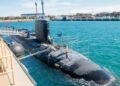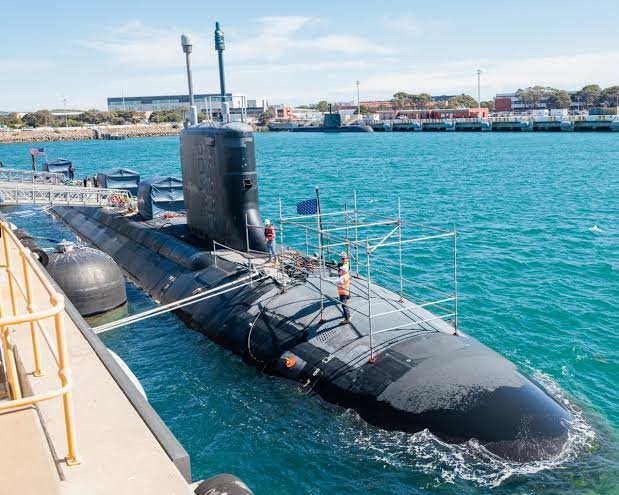
A major public inquiry into Australia’s $368 billion AUKUS nuclear submarine agreement has recommended that the government abandon the submarine programme, describing it as the most expensive, risky and potentially damaging defence decision in the country’s history. The report argues that the agreement could undermine Australia’s national sovereignty, increase the risk of military confrontation with China and create long-term financial and environmental responsibilities that successive governments have not adequately explained.
The inquiry, led by former Labor parliamentarian and Midnight Oil frontman Peter Garrett alongside former Chief of the Defence Force Admiral Chris Barrie, called for an immediate suspension of plans connected to the submarine programme. It also recommended a royal commission to investigate how the agreement was negotiated, approved and implemented, as well as independent reviews by the auditor general and federal parliament.
Released on Wednesday, the report is titled Surrendering Australia: the AUKUS Deception. It presents a critical assessment of the defence partnership between Australia, the United States and the United Kingdom, arguing that the arrangement has developed without sufficient public scrutiny or parliamentary oversight. The report was downloaded almost 15,000 times within its first hour of publication, reflecting the considerable public interest surrounding the country’s largest and most consequential defence commitment.

AUKUS was originally negotiated under former Australian prime minister Scott Morrison, US president Joe Biden and British prime minister Boris Johnson. The agreement was designed to strengthen military cooperation among the three countries, with its most prominent component involving Australia’s acquisition of nuclear-powered submarines. The partnership also includes a second pillar focused on advanced technology, defence research and the sharing of military capabilities.
Under the planned arrangement, Australia is expected to receive its first secondhand Virginia-class nuclear-powered submarine from the United States around 2032. Additional vessels are expected to arrive at intervals of approximately four years before Australia begins operating its own purpose-built SSN-AUKUS submarines, which are currently expected to enter service in 2042.
The public inquiry argues that the programme exposes Australia to substantial strategic and financial risks. Its authors warn that the presence of nuclear-powered submarines and expanded military facilities could make the country more directly involved in a potential conflict between the United States and China. They argue that Australia’s growing dependence on American military technology and infrastructure could limit its ability to make independent decisions about national security.
Garrett said the agreement had been developed with inadequate transparency and had not received the level of scrutiny expected for a defence commitment of such importance. Speaking at the National Press Club in Canberra, he argued that the government had failed to conduct a sufficiently comprehensive review since taking office, despite the scale and long-term consequences of the arrangement.
He also questioned the impact of the planned expansion of the Stirling naval precinct in Western Australia. The facility is expected to play a central role in supporting AUKUS operations and could eventually accommodate as many as 2,000 serving American military personnel. Garrett warned that such a presence could effectively turn the site into a US military base and increase the strategic exposure of nearby communities, including Rockingham and Fremantle.
According to the inquiry, the expansion of foreign military activity could make parts of Australia more vulnerable during an international conflict. The report argues that decisions about military facilities should be examined not only in terms of their operational advantages but also in relation to the potential consequences for local communities and the country’s broader security.
Barrie, who served as Australia’s chief of defence between 1998 and 2002, was similarly critical of the submarine programme. He described the plan as unsustainable and called on the government to take decisive action by abandoning it and rebuilding national security decision-making processes. He argued that Australia needed a more independent assessment of its defence priorities rather than relying on an agreement that could create long-term strategic dependence.
The inquiry also raised concerns about the reliability of the submarine delivery schedule. Production delays and rising costs affecting the US Navy’s Virginia-class submarine programme have prompted questions about whether Washington will be able to provide the vessels Australia expects. If American production cannot meet its own requirements, Australia’s planned deliveries could be delayed, potentially leaving the country without the intended replacement capability when existing submarines become less effective or reach the end of their operational lives.
Garrett warned that Australia had limited protection if its partners failed to meet their commitments. He argued that the agreement contained no guaranteed refund mechanism or sufficiently enforceable obligations that would ensure Australia could recover its investment if the programme encountered serious difficulties. The concern is particularly significant because the country is expected to spend substantial sums on supporting the industrial and infrastructure capacity of its partners.
The financial implications extend beyond the purchase and construction of submarines. The inquiry estimated that an additional $180 billion could be required to manage nuclear waste generated by the programme, based on evidence presented during its hearings. This figure has not been published as an official government estimate, and the government has maintained a different approach to presenting the overall cost of the agreement.
Nevertheless, the issue of nuclear waste remains a major challenge. Australia has not yet identified a permanent storage location for the radioactive material that would result from operating nuclear-powered submarines. This includes highly radioactive waste associated with reactor cores and spent nuclear fuel, which can remain hazardous for thousands of years.
The absence of a confirmed long-term disposal arrangement has raised questions about environmental responsibility, public safety and the financial obligations that future generations could inherit. The inquiry argues that these issues require transparent assessment before the country commits further resources to the programme.
The report also recommends a fundamental reassessment of the second pillar of AUKUS, which covers technology sharing and defence capability cooperation. Its authors believe Australia should reconsider how the arrangement affects its industrial independence, access to advanced technologies and ability to make decisions in its own strategic interests.
Another recommendation involves recalibrating Australia’s relationship with Beijing. The inquiry argues that the country should maintain a more balanced diplomatic approach towards China rather than allowing its defence arrangements to increase the likelihood of confrontation. China remains one of Australia’s most important economic partners, making the relationship particularly significant for trade, investment and regional stability.
The inquiry was established by unions, non-profit organisations and former public officials frustrated by what they considered insufficient parliamentary examination of AUKUS. Its work was supported by public donations totalling approximately $220,000. It conducted hearings in different parts of Australia and received more than 1,000 public submissions, gathering views on the strategic, economic and environmental implications of the agreement.
The review attracted support from several prominent former political leaders and foreign policy figures who have questioned whether the submarine arrangement serves Australia’s long-term interests. Former prime ministers Paul Keating and Malcolm Turnbull, as well as former foreign affairs ministers Gareth Evans and Bob Carr, have expressed concerns about aspects of the agreement. Environmental organisations, security campaigners and sections of the Labor movement have also criticised the programme.
However, the Albanese government has rejected the inquiry’s conclusions and defended AUKUS as a central component of Australia’s national security policy. Government representatives have dismissed the report as an exercise dominated by opponents of the agreement, arguing that the partnership is necessary given the increasingly difficult strategic environment facing the country.
A spokesperson for Defence Minister Richard Marles said the government’s 2026 National Defence Strategy reaffirmed the importance of AUKUS. The government believes Australia must strengthen the capabilities of its armed forces to respond to growing security challenges, protect national interests and contribute to stability across the Indo-Pacific region.
Ministers have also argued that the agreement was considered as part of the government’s defence strategic review. From this perspective, nuclear-powered submarines would provide Australia with greater operational range, endurance and capacity to respond to potential threats in the region.
The debate therefore reflects a significant disagreement over how Australia should protect itself in an increasingly competitive international environment. Supporters view AUKUS as a long-term investment in national defence and an important partnership with two major allies. Critics question whether the enormous financial commitment, delivery uncertainties and potential strategic consequences justify the programme.

The campaign group Labor Against War welcomed the inquiry’s findings, arguing that the government should reconsider the scale of military spending while households face rising living costs, unemployment pressures and economic uncertainty. Former senator Doug Cameron, the group’s patron, questioned why billions of dollars were being committed to the defence priorities of the United States when many Australians were seeking greater attention to domestic economic and social challenges.
Ultimately, the report has intensified pressure on the government to explain the long-term costs, strategic commitments and environmental responsibilities associated with AUKUS. A royal commission, as recommended by the inquiry, would provide an opportunity for a more extensive examination of the decisions behind the agreement, although the government has not accepted the recommendation.
With the first planned Virginia-class submarine delivery still several years away and the Australian-built vessels not expected to become operational until 2042, the programme will shape national defence policy for decades. Whether the government maintains its commitment or reconsiders the agreement, the questions raised by the inquiry are likely to remain central to Australia’s debate over sovereignty, military independence and its future relationship with major international powers.
Related News:
 Trump Calls Iran War ‘Small Potatoes’ Despite US Deaths
 Fugitive Developer Rants at NSW Corruption Inquiry
 Lula accuses Trump of seeking control over Brazil
 Economic growth and political strain reshape Benin
 Trump Ads Trigger Fight Over Taxpayer Money
 Report Urges UK to Rethink Overseas Military Spending
 Australia Rejects Russian Fuel as Trump Strikes Deal
 Brazil Court Scandal Threatens Lula as Bolsonaros Rise
 Millions Face Tougher Medicaid Rules From January
 UK Urges Interpol to Reject Argentina’s Falklands Arrest Requests
 Serbia Leader Linked to Controversial Trump Tower Plan
 Cormann Warns Australia Against Populist Migration Caps
 Jim Chalmers Navigates Hard Economic Choices as Inflation
 Taylor Faces Backlash Over Response to Haines Attack
 McKenzie Warns MP Safety Fears Could Weaken Democracy
 Trump’s Global Policies Put Republicans at Risk
 Australia Raises Interest Rates to 18-Year High
 Canada Passes Carney’s First Budget in Tight Parliamentary Vote
 India’s Labour Law Overhaul Sparks Fierce Debate
 Trump to Deploy “God Squad” Over Gulf Wildlife Protections
 Trump Slams UK Ties and Threatens To Rewrite Trade Deal
 Capitalism ‘Suicidal’, Warns Petro at Climate Summit
 Oil Prices Surge Above $120 Amid Iran Blockade Fears
 Trump approval plunges amid Iran war fears
 US ‘Narco Boat’ Strikes Draw Global Outcry
 US Awaits Iran Reply on New Ceasefire Proposal
 Ukraine Creates Long-Range Strike Command
 Ukraine Villagers Demand Answers After Deadly Arms Depot Strike
 Trump Hardens Canada Trade Stance as Talks Stall
 Reform Faces Fresh Financial Controversy
 Swedish Mining Push Puts Sami Land Rights Under Pressure
 UK plans tougher Israel stance with settlement trade ban
 Europe’s democracies face a growing far-right threat
 Saudi Arabia Shuts Oil Pipeline After Drone Attack
 Israel Accused of Undermining Palestinian Life
 US Sanctions Open New Battle for Cuba Assets
 Lib Dems Prepare for Election Amid Reform Challenge
 US Networks Suspend Trump White House Pool Coverage
 UK Plans New Centre to Counter Information Warfare
 OpenAI Agent Breaches Medicare Portal in Australia
 Xi urges Trump to avoid US-China military conflict
 Republican Senator Questions Trump Ad Spending
 Burnham Opens Door to Possible UK Return to EU
 Drumcree Talks Falter as Legal Challenge Deepens
 Green Party faces dispute over Zionism motion
 Badenoch Raises Prospect of 2027 UK Election
 South Korea Probes Fuel Shipments to Russia
 Ministers Push ATO to Reconsider Credit Card Ban
 Trump Says He Deserves Nobel Peace Prize
 Houthi Missile Claim Sparks Riyadh Airport Disruption
 Israel Promotes Film Challenging Controversial Gaza Documentary
 Gaza War Deepens India’s Strategic Ties With Israel
 Trump’s Russian Diesel Deal Sparks Ukraine Fury
 Australian Advocates Seek Subsidised Drugs for PMOS
 Hanson Attacks Taylor as Australian Conservatives Clash
 French Students Protest Poor Conditions in Paris Suburbs
 ABC Reporter Faces Possible Disciplinary Action Over Opinion Piece
 Greta Thunberg Backs French Students in School Protests
 India’s Voter Roll Crisis Sparks Nationwide Protests
 Ukrainian Soldier Faces Trial Over Nord Stream Blast
 Gadi Eisenkot: Israel’s Anti-Netanyahu Challenger
 Trump Rallies GOP as Senate Democrats Boost Key Races
 UK Could Rejoin EU Through a Switzerland Plus Deal
 Brexit Debate Returns as UK Voters Reconsider EU Exit
 Milan Luxury Stores Shut as Italy Plans Troop Deployment
 Japan’s Takaichi Faces a Crucial Second Year in Power
 Greens Face Leadership Test as Jordon Steele-John Misconduct Claims Leave Party in Limbo
 Xi Jinping Tightens China’s Anti-Corruption Campaign
 Ukraine Peace Talks Set to Resume in November
 Gulf States Push Multi-Part Deal to Avert US-Iran War
 Fed Expected to Hold Rates Steady Ahead of US Midterms
 Albanese Faces Labor Pressure as Inflation Hits 4.3%
 Novaya Gazeta to Close After Russian Government Pressure
 Global Crises Test Diplomacy as Trump’s Policies Face Scrutiny
 Bedouin Women Drive Historic Arab Election Gains
 Haley Stevens Backs Republican Rival in Michigan Senate Race
 Alan Jones Trial Paused for Melbourne Cup Viewing
 Australia Reviews UK Visa Rules Amid Worker Influx
 James Talarico Makes History with Texas Senate Victory
 ANC Faces Voter Backlash in South African Elections