Published: 02 October 2026. The English Chronicle Desk. The English Chronicle Online
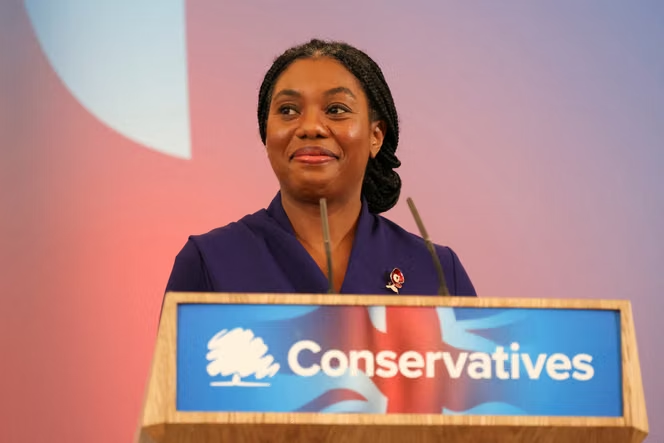
Conservative leader Kemi Badenoch has suggested that Britain could face a general election as early as May 2027, despite Prime Minister Andy Burnham repeatedly indicating that he does not intend to hold an early national vote.
Badenoch made the claim as the Conservative party prepares for its annual conference, arguing that the timing of several major policies announced by Burnham has raised questions about the government’s plans for the remainder of the current parliamentary term.
The Conservative leader pointed specifically to policies that Burnham has said would take effect after the next general election. She argued that the government’s decision to outline measures extending into the next decade could indicate that ministers are preparing for an election sooner than publicly acknowledged.
“We could be having a general election next May,” Badenoch said, while suggesting that the government’s long-term policy announcements were evidence that an earlier contest remained possible.

Her comments add to speculation that has circulated in Westminster in recent weeks. However, there is currently no confirmed announcement of an early election, and Burnham has publicly rejected the suggestion that he is preparing to call one.
The prime minister has said that the next general election is expected in 2029. His position has been consistent with the government’s recent presentation of policies designed to extend beyond the current parliamentary term.
Burnham’s first major Labour conference speech as prime minister included several proposals whose implementation would begin after the next election. Among them was a plan to establish a National Care Service, alongside changes to the state pension system that would begin from 2030.
He also announced plans to examine reform of Britain’s electoral system and develop a longer-term relationship with the European Union. Other proposals included greater public involvement in utilities and a significant expansion of social housing.
Burnham has presented those policies as part of a long-term programme rather than an indication of an imminent election. He has said that some of the country’s most difficult problems cannot be resolved quickly and that his government needs time to develop and implement its plans.
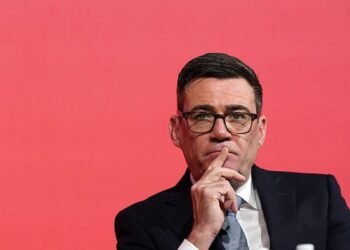
The timing of the proposed pension changes has nevertheless become politically significant. Burnham has said that the current pension triple lock will remain in place during the present parliamentary term, while a revised arrangement would begin in April 2030 if Labour remains in government after the next election.
The proposed change would alter the way state pensions increase, while the government says the reform would help create funding capacity for a new National Care Service.
The announcement provides one of the clearest examples of why opposition parties are scrutinising the government’s election timetable. Because the pension changes are scheduled for 2030, their implementation would depend on the outcome of the next general election.
Badenoch has argued that such long-term pledges could be politically significant if ministers were contemplating an earlier vote. Her interpretation, however, remains a political claim rather than evidence that an election has been scheduled.
The prime minister has directly rejected the idea of an early contest. In recent interviews, Burnham has said he wants to move away from speculation about elections and concentrate on delivering policies intended to address the country’s economic and social pressures.
The issue comes as Britain’s political landscape remains fragmented. Labour, the Conservatives, Reform UK, the Green party and other parties are competing for support across different parts of the electorate, while recent polling has generated considerable attention in Westminster.
Recent surveys have shown Labour improving its position compared with earlier periods of the year, although the figures vary significantly between polling organisations and should not be interpreted as a forecast of the eventual election result.
The Conservatives are also attempting to establish a clearer political direction under Badenoch. The party’s conference provides an opportunity for its leader to set out policy priorities and respond to the changing political environment.
Badenoch has sought to frame the possibility of an early election as a reason for Conservatives to prepare immediately. Her argument is that political volatility and the emergence of several strong parties make it possible for the government to change its electoral timetable.
The government, meanwhile, has continued to emphasise longer-term policy planning.
One of the most prominent examples is the proposed National Care Service. Burnham has said that the system would eventually provide publicly funded adult social care and would be developed during the next parliamentary term.
The government has also proposed changes to Britain’s electoral arrangements. Burnham has said Labour will contest the next general election with a manifesto commitment to reform the first-past-the-post system and has proposed a national commission to examine possible changes.
That proposal has further reinforced the government’s focus on the period surrounding the next scheduled election rather than an imminent vote.
Another major issue is Britain’s future relationship with the European Union. Burnham has indicated that he wants to explore a closer long-term relationship with the bloc, while stressing that any significant change would require political and public consideration.
The Brexit debate has already created disagreement between the government and opposition parties. Reform UK leader Nigel Farage has argued that Burnham’s renewed focus on Britain’s relationship with Europe has created political opportunities for his party.
The possibility of an early election also comes against a challenging economic background. Britain’s borrowing costs have risen sharply amid turbulence in global bond markets, while energy prices have increased as international tensions continue to affect energy supplies.
The yield on long-term UK government bonds recently reached levels not seen for decades, increasing pressure on the government ahead of the October budget.
The economic situation could therefore become an important factor in political discussions about the timing of an election. Governments generally face difficult choices when attempting to balance public spending, taxation, borrowing and investment, particularly when financial markets are volatile.
Within Labour, there have also been concerns about the government’s economic strategy and the forthcoming budget. Some Labour figures have questioned whether the government’s plans for investment and growth have been sufficiently detailed, while others have expressed concern about the possibility of further pressure from financial markets.
The government has insisted that it will continue to follow its fiscal rules and has sought to present its economic programme as part of a longer-term plan.
Alongside economic questions, the government is dealing with challenges involving the prison system, energy supplies and public services. Ministers have recently defended a programme allowing some prisoners to leave jail earlier in response to overcrowding, while insisting that strict conditions remain in place to protect the public.
The government has also sought to reassure households that Britain has sufficient diesel supplies despite international pressure and rising prices. Ministers have described the country’s fuel supply network as resilient and diversified.
These issues are contributing to the wider political atmosphere in Westminster, where opposition parties are seeking to exploit divisions and government difficulties while ministers attempt to demonstrate that their programme can be delivered over several years.
For Badenoch, the election question provides another opportunity to challenge Burnham’s political strategy. Her claim that an election could take place in May 2027 places pressure on the government to clarify its intentions, even though Burnham has already indicated that he expects the next election to take place in 2029.
The constitutional framework also matters. The government has considerable flexibility over the timing of a general election within the existing legal limits, meaning an early contest is possible without necessarily following the traditional electoral cycle.
But the existence of that possibility does not establish that an election will actually be called. The decision would ultimately depend on the government’s political calculations, parliamentary circumstances and the legal timetable.
For voters, the distinction between speculation and a formal election decision is therefore important. Political parties routinely discuss possible election dates and prepare for different scenarios, particularly when polling or political developments change.
Badenoch’s comments should consequently be viewed in the context of opposition strategy and the increasingly competitive political environment rather than as confirmation of an election date.

The coming months could nevertheless provide greater clarity. The government’s October budget, its handling of economic pressures and the public response to Burnham’s long-term programme will all shape the political environment.
The Conservative conference will also give Badenoch an opportunity to explain how her party intends to respond to Labour’s policies and the growing influence of smaller parties.
For now, the central positions remain clear: Badenoch believes a May 2027 election is possible and says Labour may be preparing for one, while Burnham has publicly indicated that the next general election will take place in 2029.
Until the government formally changes its position, the May 2027 date remains a matter of political speculation rather than an announced election timetable. The competing claims nevertheless demonstrate how quickly Britain’s political debate can shift as parties prepare for the possibility of another national contest.
Related News:
 Burnham Opens Door to Possible UK Return to EU
 Councils spend £125m on illegal children’s care
 Patriot Platform Raises Concern Across Britain
 Reform UK Receives Record £36m Donation From Crypto Billionaire
 Election Candidate Abuse Raises Alarm in England
 Thinktank Calls for Abolition of UK State Pension
 Free Speech Emerges as Key UK Election Issue
 Dale Vince Plans New London-Wide News Operation
 UK University Strikes Spread as Financial Pressure Grows
 Drumcree Talks Falter as Legal Challenge Deepens
 UK-France Returns Deal Faces Expiry as Talks Stall
 Hundreds of UK prisoners released early amid overcrowding
 Drumcree Talks End Without Agreement Ahead of Appeal
 UK Doubles Steel Tariffs to 50% to Protect Domestic Plants
 City & Guilds Sale Sparks Fees and Pay Uproar
 Reform UK funding: mystery billionaire revealed
 BBC News Faces Deep Cuts in 2,000 Job Plan
 UK may ban protests amid rising antisemitism fears
 Barrister Criticises Trial After Suicide Case Verdict
 Immigration Judges Fear Pressure in Trump Era
 UK Pushes for New EU Goods Trade Deal
 Reeves Fights to Keep Treasury Role Amid Labour Turmoil
 Westminster Council Threatens Charing Cross Soup Kitchen
 BBC Warned About Missing Clothes of Murder Victim
 Cambridge Professor Jason Arday Found Dead at Home
 Burnham unveils £65m drought aid for farmers
 Unions Warn Labour Over Zero-Hours Contract Reforms
 RAF Barnham Protests Fuel Tensions in Norfolk Town
 UK Households Could Save £173 on Fixed Energy Deals
 Burnham Faces Mounting Budget Challenges
 Internal Exclusions Surge in England’s Schools
 Green Leader Targets Starmer’s Former Seat
 Reform Faces Fresh Financial Controversy
 UK House Prices Fall as Mortgage Rates Rise
 UK plans tougher Israel stance with settlement trade ban
 Thames Water Revises Oxfordshire Mega-Reservoir Plan
 UK Retailers Accused of Breaking Refund Laws
 UK Pay Growth Slows to 3.9% as Rate Decision Nears
 Bank Urged to Slow Bond Sales as UK Costs Rise
 UK Inflation Hits 3.1% as Household Pressure Grows
 Slave-Trade Wealth Embedded in Britain’s Financial System
 Piddington Votes for Symbolic Independence Over Asylum Plan
 Mayors Could Gain Greater Powers Over Water Firms
 Entain Plans 400 Job Cuts After Profit Update
 Lords Call for Tobacco-Style Gambling Ad Ban
 Tories Press Healey Over Tax Rises Ahead of Budget
 Trump Threatens EU With Tariffs Over Canada Proposal
 Trump Threatens EU Over Canada Partnership Proposal
 US Sanctions Open New Battle for Cuba Assets
 Omar Proposes Bill to Redirect ICE Funding
 Mahmood Warns Far Right Over Asylum Protests
 Disabled Travellers Seek Fairer UK Care Rules
 NHS Breast Care Review Finds Serious Patient Harm
 UK Rent Gap Puts Low-Income Families Under Pressure
 Lib Dems Prepare for Election Amid Reform Challenge
 Reform UK Faces Internal Debate Over £72m Spending
 Labour Apprenticeship Scheme Faces Slow Start
 Trump and Mamdani Hold Cordial Gracie Mansion Meeting
 UK Reviews Hague Child Abduction Cases Involving Abuse
 Democrat Says ICE Restricted Detention Camp Oversight
 King Refers Jamaica Slavery Petition to Privy Council
 MPs Defend UK Economic Watchdog Against Critics
 GP List Policy Risks Cutting Off Vulnerable Patients
 UK Pauses Chagos Deal Amid US Opposition
 Court Says Judge Should Not Have Heard Case From Bed
 Judge orders Trump to restore access for three media outlets
 Elif Eralp Emerges as Berlin’s Next Political Force
 Tony Blair Calls for Britain to Rejoin EU Within a Decade
 Far-Right Activist Arrested After Channel Dinghy Incident
 Portadown protest ends after tense Orange Order standoff
 Burnham Opens Debate on Pension Triple Lock for Care
 Fayed Survivors Demand Inquiry Into Medical Regulator
 New UK Homes in Flood Zones Face Insurance Risk
 London Facial Recognition Trial Ends With False Alert
 Poundland Rescue Bid Could Protect 11,000 Jobs
 Healey urged to act as UK energy bills rise 4%
 Green Party faces dispute over Zionism motion
 Senators warn US childcare policies could raise costs
 Almost Half of Fayed Accusers May Be Trafficking Victims
 Palantir Lobbyist Had Role in Burnham Campaign