Published: 19 September 2026. The English Chronicle Desk. The English Chronicle Online.
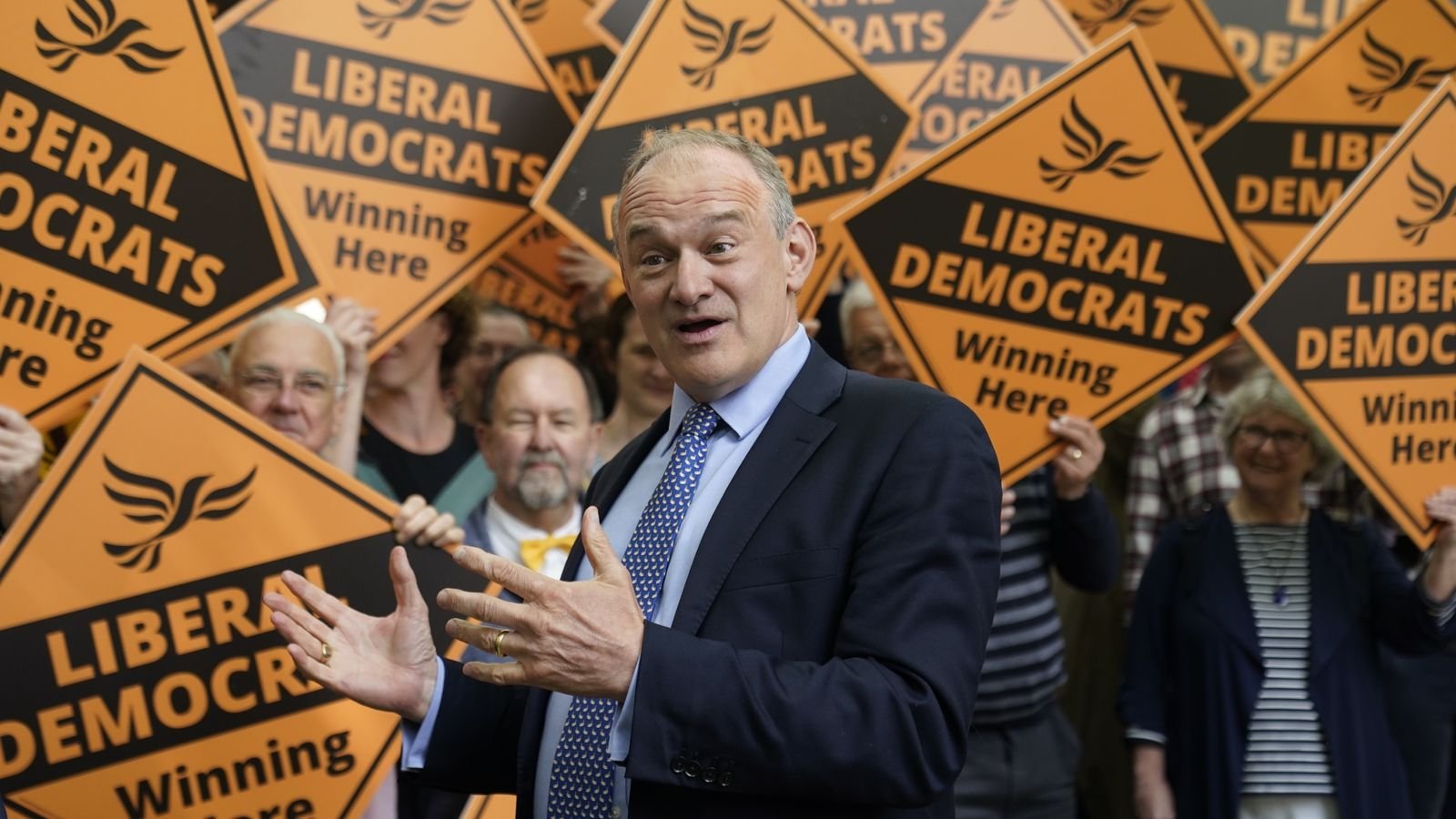
The Liberal Democrats have begun preparing a new manifesto in case Britain is called to a snap general election, with party leader Ed Davey saying his MPs must remain focused as the party seeks to defend its parliamentary gains and respond to the growing influence of Reform UK.
Speaking ahead of the Liberal Democrats’ annual conference in Brighton, Davey acknowledged frustrations among some MPs who believe the party has struggled to make its political message heard nationally. He nevertheless argued that current polling should not prompt the party to abandon its approach, pointing to the importance of local campaigning and tactical voting under Britain’s first-past-the-post electoral system.
The party won 72 seats at the 2024 general election, its strongest Westminster performance in a century. Since then, however, its national support has remained relatively limited compared with the four larger parties competing for attention across much of Britain. Recent polling has placed the Liberal Democrats at around 13%, while Labour and Reform UK have been competing closely at the top of the national voting-intention figures.
Davey said the party had already established a working group to prepare a manifesto in case Prime Minister Andy Burnham calls an early election. The group is being led by Cheadle MP Tom Morrison, reflecting the party’s decision to begin preparations earlier than would normally be expected.

The preparations come as the Liberal Democrats seek to consolidate their position following significant gains from the Conservatives at the 2024 election. The party has identified a large number of constituencies where its local campaigning organisation remains central to its strategy.
Rather than focusing solely on national vote share, Liberal Democrat strategists have traditionally concentrated on the geographical distribution of support. Under the first-past-the-post system, a party can win a substantial number of seats without securing the largest share of the national vote if its support is concentrated effectively in particular constituencies.
Davey believes that dynamic remains important. He has argued that the next general election could be heavily influenced by local campaigning and tactical voting, particularly in constituencies where several parties are competing closely.
The Liberal Democrats are also developing policies designed to distinguish the party from Labour, the Conservatives, Reform UK and the Greens. One of the most significant proposals concerns Britain’s relationship with the European Union. The party has backed seeking membership of the EU single market and has advocated closer European cooperation on migration and asylum.
The approach represents a more pro-European position than that taken by the major Westminster parties since Brexit, although the political significance of the issue remains contested among voters and within the wider political debate.
Davey has also placed growing emphasis on the threat posed by Reform UK. He said he regarded it as an important responsibility for Liberal Democrat candidates to compete strongly in constituencies where the party could influence the balance of seats.
His language has been particularly strong when discussing the possibility of a future Reform-led government. Davey has warned that the Conservatives could eventually seek cooperation with Nigel Farage’s party, although there is currently no such formal alliance.
The Liberal Democrat leader linked his concerns to recent demonstrations and what he described as rising levels of overt racism. His comments reflect the party’s intention to position itself as a significant electoral counterweight to Reform UK in constituencies where both parties are seeking support from voters dissatisfied with the traditional political parties.
At the same time, the Liberal Democrats face an internal debate about the best way to communicate their political identity.
Some MPs have expressed frustration that the party’s policy arguments have not received sufficient national attention. They argue that the Liberal Democrats need a clearer and more distinctive political message if they are to expand beyond the constituencies where they are already well established.
Davey has acknowledged those concerns, saying he understands the frustration of MPs who campaign locally but see little national media coverage of their work. He has nevertheless resisted suggestions that the party should make dramatic changes simply to improve short-term polling figures.
Recent analysis of the party’s electoral performance presents a mixed picture. National polling has remained relatively modest, while the Liberal Democrats have continued to make progress in local government.
The party made significant gains in the 2026 local elections, increasing its number of councillors and strengthening its position in several areas of southern England. It also recorded gains in the Scottish Parliament election, where it secured its largest group of MSPs since 2007.
The picture has been less positive in Wales, where the party remains comparatively weak and has struggled to translate its broader British support into additional representation.
The contrast illustrates the importance of geography to the Liberal Democrats. Their parliamentary strength is concentrated in particular regions and constituencies, particularly areas where they have built long-standing local organisations.
That concentration has shaped the party’s campaign strategy. Instead of attempting to compete equally across every constituency, the Liberal Democrats have focused resources on seats where they believe their candidates and local organisations can be competitive.
Davey has described this approach as a form of community politics, arguing that sustained local campaigning can turn relatively modest national support into a larger parliamentary presence.
Some Liberal Democrat MPs support that strategy and believe the party should avoid becoming too involved in national political polarisation. They argue that adopting sharply defined positions on divisive cultural issues could alienate the communities in which the party is trying to build support.
Others, however, believe the party needs to explain more clearly what modern Liberal Democrat politics represents. One concern expressed within the party is that voters may understand Labour and Conservative identities more readily while having a less defined view of the Liberal Democrats.
There is no current move to challenge Davey’s leadership, but the debate over the party’s direction has become more visible ahead of the conference.
Davey remains the party’s longest-serving national leader among the current Westminster parties, having led the Liberal Democrats since 2020. Under his leadership, the party has recovered much of the parliamentary ground lost following its period in coalition government with the Conservatives between 2010 and 2015.
The 2024 election was particularly significant, producing the party’s largest Commons representation for a century. The challenge now is to determine whether those gains can be maintained or expanded under a different national political environment.
The political landscape has changed considerably since the 2024 election. Labour has changed leadership, the Conservatives are attempting to rebuild their position, the Greens have expanded their national profile and Reform UK has become a major force in opinion polling and local politics.
That fragmentation could create opportunities for the Liberal Democrats in closely contested constituencies. It could also make the party vulnerable to tactical voting pressures in areas where it is not one of the principal challengers.
Recent YouGov figures provide some indication of the current landscape. A poll conducted on 13 and 14 September put Labour and Reform UK level at 23%, with the Conservatives on 20%, the Liberal Democrats on 13% and the Greens on 11%. Such figures describe national voting intentions at a particular point in time and do not directly translate into projected parliamentary seat totals.
The Liberal Democrats therefore continue to emphasise the limitations of national polling as a measure of their potential Westminster performance.
Their argument is based on the distinctive electoral geography of the party. In constituencies where the Liberal Democrats are already competitive, even relatively small shifts in voter behaviour can have significant consequences under the first-past-the-post system.
The party’s preparations for a possible early election reflect that calculation. Candidates are already being selected in a number of target constituencies, while campaign structures are being developed well ahead of a possible national contest.
The conference in Brighton is consequently likely to provide an opportunity for the party to define its priorities and address internal questions about its political identity.

For Davey, the immediate challenge is to balance two competing demands. Some members want a more forceful national presence and clearer policy messaging, while others believe the party’s relatively moderate image and concentration on local campaigning are central to its electoral strategy.
The party also faces the broader question of how to respond to Reform UK without allowing its campaign to become defined entirely by opposition to another political movement.
Davey’s comments suggest that preventing a Reform-led government will remain an important theme of Liberal Democrat campaigning. At the same time, the party will need to present its own policies on the economy, public services, Europe, immigration, defence and local government if it is to offer voters a broader political choice.
With a snap election not yet announced, the manifesto preparations are ultimately precautionary. But the decision to begin the process now indicates that the Liberal Democrats are treating the possibility of an early contest seriously.
The coming months will show whether the party can convert its local organisational strength and parliamentary base into a clearer national political profile. For now, Davey is urging MPs to remain focused on the electoral strategy that produced their major gains in 2024, while acknowledging the internal debate over how prominently and forcefully the Liberal Democrats should present themselves in an increasingly fragmented British political landscape.
Related News:
 Farage and Reform UK Reshape British Politics
 Starmer Leadership Under Pressure After Setbacks
 Is America Ready for an AOC Presidential Run?
 Five Years of Taliban Rule Leave Afghanistan in Crisis
 Ghent Professors Questioned Cofnas Appointment
 RAF Barnham Protests Fuel Tensions in Norfolk Town
 Green Leader Targets Starmer’s Former Seat
 Masked Protesters Bring Dover Port Traffic to Standstill
 Europe’s democracies face a growing far-right threat
 Pavlohrad Strike Kills Five, Injures 67
 Patriot Platform Raises Concern Across Britain
 Reform UK Receives Record £36m Donation From Crypto Billionaire
 Election Candidate Abuse Raises Alarm in England
 Slave-Trade Wealth Embedded in Britain’s Financial System
 New Evidence Deepens Church of England Slavery Reckoning
 British Woman in Iran ‘Losing Hope’ Amid Ongoing Detention
 BBC Journalist Held and Interrogated in Vietnam
 BBC director-general and news chief resign amid bias row
 Rama Rebukes Mahmood for Targeting Albanian Families
 Russian Vessel Used Lasers on RAF Pilots, UK Claims
 UK and EU Signal Fresh Push for Defence Cooperation Talks
 Starmer Condemns ‘Depraved’ Russian Strikes on Ukraine
 Trump and Chagos Deal Rift Over Iran Strikes
 Andrew Mountbatten-Windsor Arrest After FBI Radar
 Farage Chagos Islands Row Sparks Fury
 Trump Tariffs Threat Spark UK and EU Alarm
 Gordon Brown urges court for crimes against children
 Yvette Cooper: UK Must Follow Principles, Not US Pressure
 UK Minister Denies Iran Missile Threat to Britain
 Army Probes Apache Flyover at Kid Rock’s Nashville Estate
 Relationship with Trump may be beyond repair, Starmer warned
 Iran Crisis Tests Trump’s Global Leadership
 Kezia Dugdale Warns of Possible Reversal of Equal Rights Gains
 NHS Safety Fears as Nurses Cover Doctor Gaps
 Charles Faces Trump Test in High-Stakes US Visit
 UK Stands Firm on Falklands Amid US Rift
 Two Children Die in Wolverhampton House Fire Tragedy
 Reform UK funding: mystery billionaire revealed
 John Terry Faces Backlash Over Political Posts
 Cartel crackdown raises fears of fresh violence
 US states redraw maps after voting rights ruling
 US ‘Narco Boat’ Strikes Draw Global Outcry
 France Faces Record Presidential Crowded Race Amid Far-Right Surge
 Barrister Criticises Trial After Suicide Case Verdict
 Immigration Judges Fear Pressure in Trump Era
 Labour Members Turn Against Starmer Leadership
 UK Pushes for New EU Goods Trade Deal
 Deadly Russian Air Raids Strike Across Ukraine
 UK Nations Brace for Potential Breakup Amid Reform Surge
 New South Wales Premier Chris Minns Signals Tough Road Ahead for Labor
 Le Pen’s Popularity Holds Despite Conviction
 Labour MPs Urge Burnham to Revive UK Aid Target
 Three-Quarters of England’s Riverbanks Still Off Limits
 Westminster Council Threatens Charing Cross Soup Kitchen
 BBC Warned About Missing Clothes of Murder Victim
 Israeli Strike in Southern Lebanon Kills Seven
 Cambridge Professor Jason Arday Found Dead at Home
 Burnham unveils £65m drought aid for farmers
 Former Diplomats Urge UK and France to Act on Palestine
 British Museum Faces Questions Over Peter Thiel’s Private Bayeux Viewing
 Ukraine Villagers Demand Answers After Deadly Arms Depot Strike
 Internal Exclusions Surge in England’s Schools
 Nepal Flood Survivors Face Unimaginable Loss
 Bayeux Tapestry Revives Franco-British Ties
 Trump Calls Iran War ‘Small Potatoes’ Despite US Deaths
 Reform Faces Fresh Financial Controversy
 Nepal Tunnel Rescue Offers Hope Amid Flood Devastation
 UN expert urges UK to rethink Israel policy
 UK plans tougher Israel stance with settlement trade ban
 Councils spend £125m on illegal children’s care
 Royal Crown Branded Enslaved Africans in Britain’s Slave Trade
 Israel Accused of Undermining Palestinian Life
 Piddington Votes for Symbolic Independence Over Asylum Plan
 Amnesty Finds Coordinated Abuses in Iran Protest Crackdown
 Turkey LGBTQ Crackdown Expands With New Arrests
 Yemen War Displaces 125,000 as Fighting Intensifies
 Iran School Strike Raises War Crimes Questions, UN Says
 Mahmood Warns Far Right Over Asylum Protests
 Disabled Travellers Seek Fairer UK Care Rules
 NHS Breast Care Review Finds Serious Patient Harm