Published: 31 August 2026. The English Chronicle Desk. The English Chronicle Online.
The devastation in the village of Myla, just outside Kyiv, has left residents confronting not only the consequences of another deadly Russian attack but also difficult questions about why a major ammunition depot was located so close to ordinary homes.
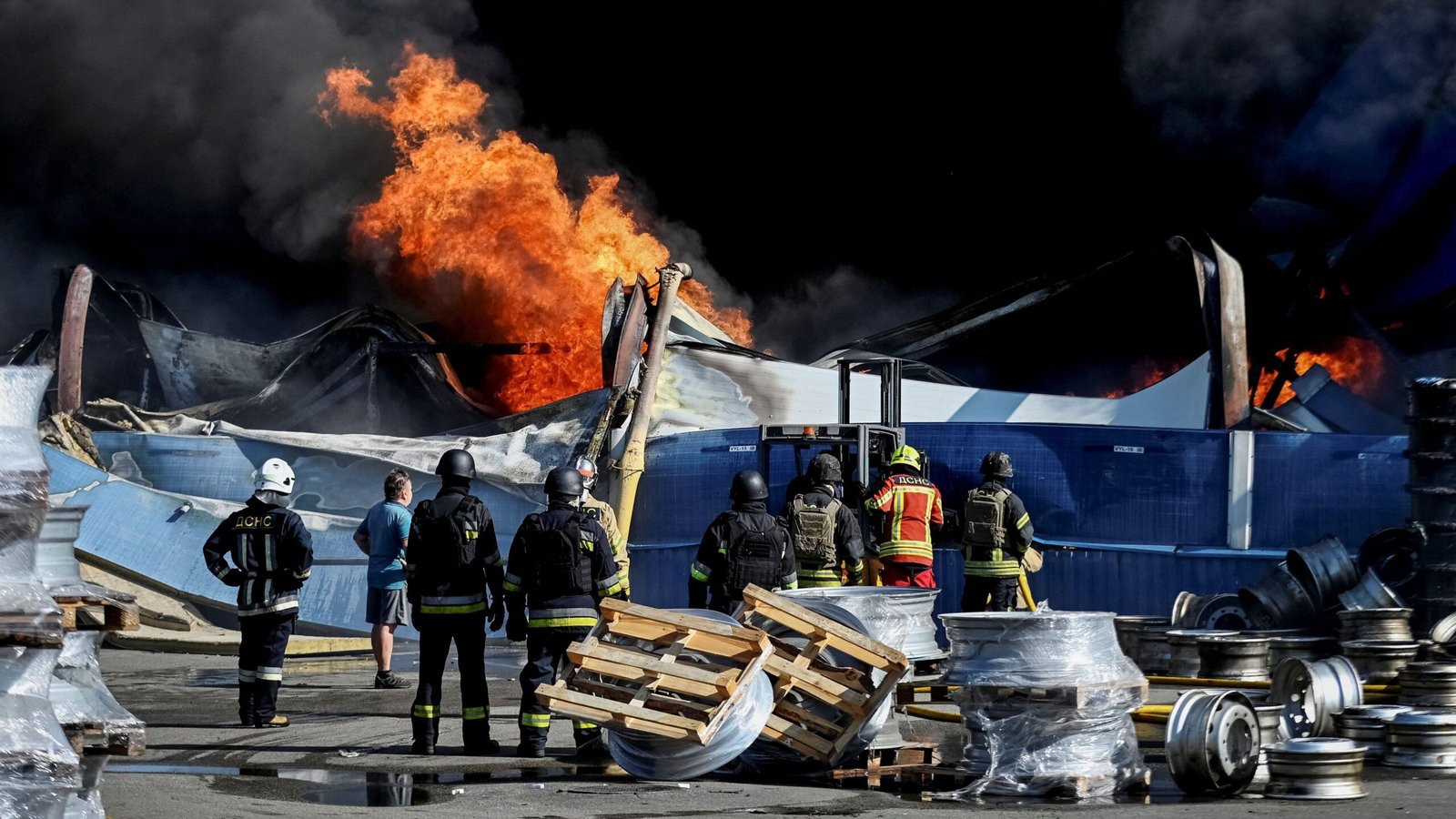
A Russian strike on the warehouse site triggered a devastating series of explosions that continued for hours, killing at least 38 people and leaving widespread destruction across the surrounding community. Several people were still reported missing as emergency services continued their work in an area littered with debris and unexploded ammunition.
For residents whose homes, gardens and livelihoods were destroyed, the anger is directed in two directions. Russia is blamed for carrying out the attack, but many villagers are also demanding answers from those responsible for storing weapons near a residential community.
In Myla, the physical evidence of the disaster is impossible to ignore. Houses have been severely damaged, roofs ripped apart, windows blown out and gardens reduced to fields of ash and debris. Families who survived the explosions now face the difficult task of rebuilding while dealing with disrupted electricity and water supplies.

For Volodymyr, a 61-year-old security guard, the destruction has transformed his family home into a scene of devastation. The roof has been badly damaged and windows shattered by the force of the explosions. His garden, once a productive space containing vegetables, vines and a greenhouse, has also suffered extensive damage.
The greenhouse was destroyed, parts of the vegetable garden were blackened and scorched, and sections of the family’s grapevines were ruined. Yet amid the destruction, the human instinct to preserve what remains was still visible. Even while showing the scale of the damage, Volodymyr found surviving fruit among the wreckage.
The attack began when a Russian jet-powered drone struck the ammunition storage site near the village. What followed was not a single explosion but hours of repeated detonations as ammunition stored at the location exploded.
Residents described taking shelter for long periods as explosions continued through the night. Some estimated that dozens of blasts occurred after the initial strike, turning what had begun as an attack on a military-related site into a prolonged disaster for the surrounding civilian population.
Vira, a 65-year-old resident, believes the location of the depot must now be investigated. Her family spent hours sheltering in a small bunker beside their home while explosions continued nearby.
For her, the question is straightforward. A village is a place where families live, children grow up and people cultivate gardens and build their lives. Storing large quantities of ammunition near homes, she argues, creates a danger that can turn a military attack into a catastrophe for civilians.
Her son Serhii said the family had not known ammunition was being stored so close to their home. He had believed the warehouse contained humanitarian supplies rather than military equipment.
That revelation has intensified the sense of anger among residents. Many say they were placed in danger without understanding the risks created by the nearby facility.
The aftermath has also exposed the continuing danger posed by unexploded munitions scattered across private properties and public areas. Residents reported finding military debris and ammunition fragments after the explosions subsided.
Cleanup teams have been working to remove dangerous materials, but the scale of the destruction has made the operation difficult. In some places, ammunition and damaged equipment remain scattered among homes, gardens and wooded areas.
Emergency workers have faced another serious problem: the continuing threat of further Russian drone attacks. Rescue and clearance operations have reportedly been disrupted as authorities monitor the skies and respond to new security warnings.
The warehouse site itself has been heavily damaged. Surrounding woodland and open areas show signs of intense fires, while emergency teams continue to assess the safety of the location.
The disaster has become even more tragic because many of those killed were reportedly connected to a care facility located close to the ammunition storage area. Around 30 of the victims were reported to have died at the nearby care home.
The proximity of the care facility to the weapons depot has become a major focus of public concern. Ukraine’s authorities have opened an investigation into the circumstances surrounding the storage site and the wider security arrangements.
The tragedy in Myla is not being viewed as an isolated incident.
Residents and officials have pointed to previous attacks on ammunition facilities located near populated areas. Earlier incidents have also resulted in civilian deaths and widespread damage to homes.
In Vyshneve, on the outskirts of Kyiv, another strike on a munitions storage site reportedly killed several people and damaged hundreds of homes. Authorities later detained individuals suspected of allowing weapons to be stored in an inappropriate location.
The repetition of similar incidents has increased pressure on Ukrainian authorities to review where military equipment and ammunition are stored during the continuing war.
Ukraine faces an extraordinarily difficult security environment. Russian forces have repeatedly targeted military infrastructure, logistics centres, warehouses and supply networks across the country. Ukrainian authorities must maintain the supplies needed for national defence while attempting to protect civilian communities.
However, the situation in Myla demonstrates the devastating consequences when military infrastructure is located close to densely populated areas.
The war has blurred many traditional boundaries between military and civilian spaces. Warehouses, transport routes and industrial facilities can become strategic targets, while communities living nearby may suddenly find themselves caught in the consequences of an attack.
For residents of Myla, however, this is not simply a strategic or political debate. It is a personal disaster.
Families are now attempting to repair damaged homes with limited resources. Some have lost electricity and running water. Others face uncertainty about whether unexploded ammunition remains hidden beneath rubble, inside gardens or among damaged buildings.
Liudmyla, another resident whose family home was badly affected, expressed frustration that similar disasters have occurred elsewhere around Kyiv.
Her anger reflects a wider feeling among those living near the destroyed warehouse. Residents understand that Russia launched the attack and hold Moscow responsible for the bombing. But they also believe Ukrainian officials must answer for decisions that may have increased civilian exposure to danger.
That distinction has become one of the defining features of the aftermath.
Ukraine remains a country fighting for survival against a much larger military power. Russian attacks have caused enormous civilian suffering, destroyed infrastructure and repeatedly struck towns and cities far from the front lines.
At the same time, a society at war must confront difficult questions about how to protect civilians while maintaining its ability to defend itself.
The Myla tragedy has brought that challenge into sharp focus.
Ukrainian President Volodymyr Zelenskyy has acknowledged concerns surrounding similar incidents involving weapons storage. The criminal investigation into the latest disaster is expected to examine how the depot was established and whether safety procedures were properly followed.
For residents, the investigation cannot undo the destruction. Homes remain damaged, families are grieving and emergency teams continue to work in dangerous conditions.
But many believe accountability is necessary to prevent another community from experiencing the same disaster.
The anger in Myla is therefore directed at both the immediate violence of war and the decisions made behind the scenes about how that war is managed.
Residents insist that civilians should not be placed unnecessarily close to facilities likely to become military targets. At the same time, they recognise the wider reality that Russia’s continued attacks remain the central cause of destruction across Ukraine.

For one resident, the responsibility could be expressed in two parts: the Russian leadership that ordered and sustained the war, and those who allowed dangerous military stockpiles to be positioned near ordinary families.
That painful dual reality now defines life in Myla.
As rescue workers continue clearing the area and investigators examine the circumstances of the warehouse, the village faces a long recovery. The physical scars of the explosions may eventually be repaired, but the questions raised by the attack are likely to remain.
For Ukraine, Myla has become another reminder that protecting civilians during wartime requires more than surviving enemy attacks. It also requires constant scrutiny of the decisions made to defend the country.
And for the families standing among shattered homes and ruined gardens, that scrutiny cannot come soon enough.
Related News:
 Israeli Strike in Southern Lebanon Kills Seven
 Cartel crackdown raises fears of fresh violence
 US ‘Narco Boat’ Strikes Draw Global Outcry
 Former ICC prosecutor condemns US sanctions
 Irish Gangland Figure Fails in Dublin Election Bid
 New Footage Revives Peter Falconio Mystery
 Ukraine Creates Long-Range Strike Command
 Dreyfus Statue Finally Gets Permanent Paris Home
 Five Years of Taliban Rule Leave Afghanistan in Crisis
 UK University Faces Counter-Terror Probe Over China Pressure
 Second world war veterans honoured as King leads Remembrance Sunday
 Ukraine-Russia war latest: Putin’s troops exploit bad weather to force Kyiv withdrawal from multiple towns
 New Epstein Files Spark Political Clash in Washington
 Ukraine Energy Corruption Scandal Hits Zelensky’s Inner Circle
 Greene Pushes Epstein Files Amid Trump Fallout
 UN Security Council Approves Trump’s Gaza Peace Plan
 WhatsApp Messages Expose Nathan Gill’s Bribery
 Venezuela Threatens Nobel Winner Machado with Fugitive Status
 Trump Envoy to Discuss Ukraine Peace at Kremlin
 Video shows Israeli troops kill Palestinians after surrender
 Guinea-Bissau President Flees After Military Coup
 Iran Leader Blames Protesters, Says They Serve Trump
 EU weighs response amid Greenland tariff crisis with Trump
 EU Says US Ties Have Suffered ‘Big Blow’ After Greenland Crisis
 Files Link Andrew to Epstein Dinner After Prison Release
 Emails Show Epstein Funded Mandelson’s Husband After Jail
 Thousands Protest ICE in New York Against Trump Deportation Campaign
 Saif al-Islam Gaddafi Reportedly Killed in Libya Shooting
 Belgium Narco-State Warning Raises Alarm Over Crime Surge
 Italian Town Buys Mussolini Villa to Keep Away Fascist Fans
 Hungary election: Orbán faces biggest test amid scandal
 Iran Crisis Tests Trump’s Global Leadership
 Ben Roberts-Smith Denies War Crime Allegations in First Statement
 Rat Poison Found in Baby Food Sparks Major Recall Row
 Police Suspect Help in Missing Alice Springs Girl Case
 US states redraw maps after voting rights ruling
 Judge halts deportation of Yemeni refugees in US
 Activists allege abuse after Gaza flotilla seizure
 Asylum deal sparks fears over Syria deportations
 Global order shifts amid Trump-era turmoil
 Ceasefire Standoff Deepens in Ukraine War
 Afghan Families Left in Limbo Face Risk of Deportation
 Trump Announces 3-Day Russia–Ukraine Ceasefire Deal
 France Faces Record Presidential Crowded Race Amid Far-Right Surge
 Norway Doubles Down on Oil and Gas for Europe Energy Security
 Search Intensifies for Missing Hiker on WA Bibbulmun Track
 Immigration Judges Fear Pressure in Trump Era
 Putin Declares Russia Victory at Scaled Victory Day Parade
 US judge dismisses Kilmar Abrego Garcia indictment
 China mine blast death toll rises to 90
 Ebola outbreak in DRC overwhelms health system as cases surge
 Zelenskyy warns over Oreshnik threat as Kyiv hit
 Gunman Killed After White House Security Shootout
 Deadly Russian Air Raids Strike Across Ukraine
 Le Pen to Run for President Despite Embezzlement Conviction
 Murder Probe Continues After Arrest Release
 Taliban global ties grow as rights fears mount
 Is America Ready for an AOC Presidential Run?
 Russian Missiles Intensify Pressure on Kyiv
 Deadly TikTok Driving Trend Alarms Ireland
 US immigration arrests hit record high in July
 BBC to Apologise Over Edited Trump Speech Amid Backlash
 Shadow Fleet at Sea: Europe’s Battle Against Illicit Oil Shipping
 Pentagon Signals Reduced Role in Deterring North Korea
 UK and US Drop in Global Corruption Index Rankings
 SA Police Intensify Search in Gus Lamont Case
 Canberra Poster Seizure Sparks Free Speech Row
 Evo Morales Returns After Mysterious Absence
 Jacinda Ardern Moves To Australia Following Her US Fellowships
 Jacinda Ardern Move Sparks Kiwi Reflection
 Nick Greiner Warns Over Election Review Fallout
 Kelly Wilkinson Inquest Reveals Bail Failure
 Injured Mojtaba Khamenei Elevated as Iran Leader
 Gordon Brown urges court for crimes against children
 Pakistan Targets Militant Hideouts in Afghanistan
 Air Canada CEO Faces Outcry Over Recent Language Misstep
 Relationship with Trump may be beyond repair, Starmer warned
 Maldives Cave Diving Tragedy Raises Safety Alarm
 Meta Under Fire: The Battle Over Addictive Social Media Design
 England and Norway Fans Turn Miami Into World Cup Carnival