Published: 15 October 2026. The English Chronicle Desk. The English Chronicle Online
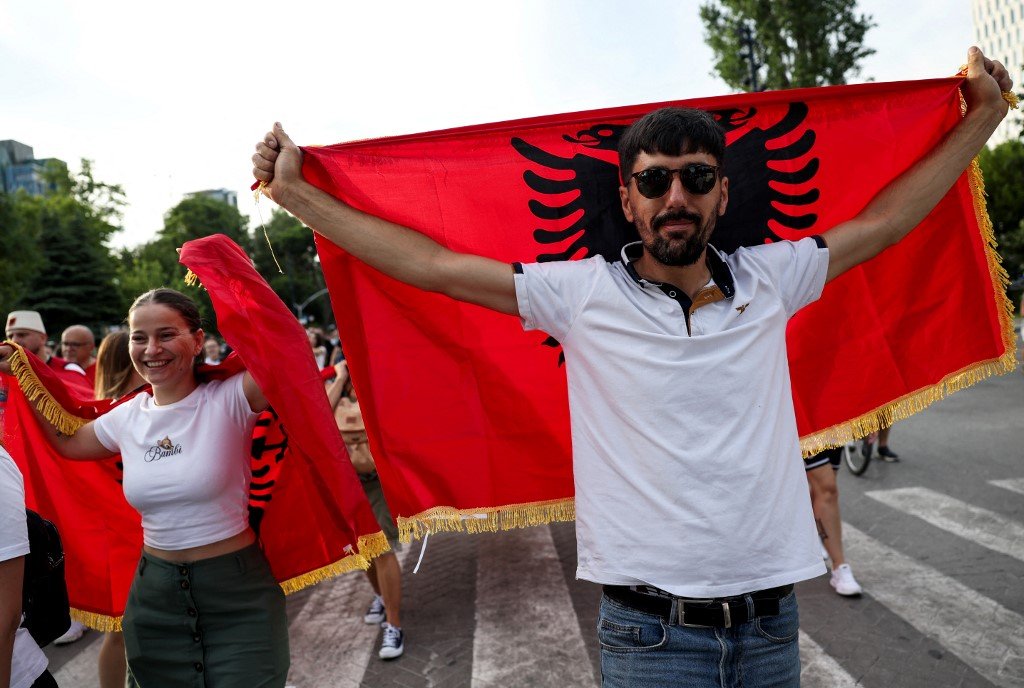
Albanian Prime Minister Edi Rama has vowed to remain in office despite three consecutive days of student-led demonstrations and violent clashes between protesters and police in the capital, Tirana. The unrest has intensified pressure on his government, with demonstrators demanding his resignation, improved university conditions and greater support for students facing the rising cost of education. As the protests spread beyond the capital, the confrontation has become a significant political challenge for a leader who secured a fourth consecutive term in office last year and has made European Union membership a central promise of his administration.
Police deployed tear gas and water cannon to disperse demonstrators marching along major roads in Tirana as tensions continued to rise. The demonstrations followed two days of serious confrontations in which protesters reportedly forced their way into several government buildings and set at least one building on fire. The scale of the unrest has raised concerns about public safety, the protection of government institutions and the government’s ability to respond to public dissatisfaction without deepening divisions.
Rama, however, has rejected demands that he resign, arguing that Albania’s political leadership must be determined through democratic elections rather than street protests. In written responses to Reuters, he said his government had received a strong mandate in last year’s election and maintained that the next political transition should follow the country’s constitutional and democratic processes.
“As for calls for my resignation, governments are changed through democratic elections. We had elections last year, not a revolution,” Rama said.

His response reflects the government’s position that public anger, even when expressed through large demonstrations, does not automatically invalidate an electoral mandate. At the same time, the prime minister acknowledged that his administration had a responsibility to listen to students and respond to legitimate concerns. He said he was prepared to discuss the rising cost of education, signalling a willingness to engage with some of the protesters’ demands while drawing a firm distinction between peaceful demonstrations and violence.
Rama argued that attacks on public institutions, damage to property and threats to public safety could not be justified by demands for educational reform. His comments came as police reported injuries among officers and arrests following the latest confrontations. The government faces the difficult task of maintaining public order while demonstrating that it is prepared to address the grievances that have brought students and other demonstrators onto the streets.
According to police figures, 51 officers were injured during Wednesday’s protests. Authorities also reported that 65 people had been arrested on suspicion of offences including attacks on police officers, institutions, and public and private property. The figures indicate the seriousness of the confrontations, although the reported arrests represent allegations and do not establish the guilt of those detained.
The number of injured protesters was less clear. Police did not provide a total, but a public hospital in Tirana reported that seven demonstrators who had been injured during the violence sought medical treatment. The absence of a comprehensive account of injuries among protesters has left some uncertainty about the overall human cost of the clashes.
Beyond the immediate confrontation, the demonstrations have exposed wider frustrations concerning access to higher education, university facilities and the financial pressure facing students. For many young people, the cost of obtaining a degree is closely connected to their future employment prospects, economic independence and ability to build a secure life. When education becomes increasingly expensive or university conditions fail to meet expectations, dissatisfaction can extend beyond individual campuses and develop into a broader challenge to political leadership.
The protesters’ demands therefore place Rama’s government under pressure on two fronts. It must respond to concerns about the affordability and quality of education while addressing the increasingly confrontational atmosphere surrounding the demonstrations. A response focused solely on policing risks leaving the underlying grievances unresolved, while concessions made without a credible plan could fail to restore confidence among students who believe their concerns have not received sufficient attention.
The latest unrest also comes after months of predominantly peaceful demonstrations connected to a controversial proposed luxury resort on Albania’s southern coast. The project, backed by Jared Kushner, the son-in-law of US President Donald Trump, has faced legal challenges and generated public opposition. Critics have raised concerns about the government’s approach to major development projects, transparency and the protection of public interests.
Although the student protests centre on education and Rama’s continued leadership, the wider climate of dissatisfaction has helped bring different public concerns into the same political debate. Opposition to the resort proposal and the latest demonstrations have contributed to scrutiny of the government’s decisions, particularly where questions of accountability and public confidence are involved.
The resort controversy has also placed the issue of corruption more prominently in discussions about Albania’s political future. Rama rejected the suggestion that corruption was being ignored, insisting that his government was addressing the problem and that the country was making progress towards European integration.
“Corruption must be confronted and, as the EU itself has recently reaffirmed, Albania is tackling it as never before,” he said.
The prime minister also suggested that some domestic and foreign forces might not want Albania to succeed in its ambition to become a leading candidate for EU membership. He insisted that violence would not be allowed to derail the country’s European future. His remarks underline how closely the government has linked its political credibility to the accession process, which it presents as a route towards stronger institutions, improved governance and closer integration with European economies.
Albania, alongside Montenegro, is among the leading Western Balkan countries in the EU accession process. The country is aiming to join the bloc as early as 2028, an ambitious objective that depends on progress through negotiations and the fulfilment of membership requirements. Those requirements involve more than political declarations. They include reforms, effective institutions, the rule of law and sustained efforts to address corruption.
The European Union’s delegation in Tirana responded to the latest escalation by renewing calls for restraint and de-escalation. It strongly condemned the violence at the protests and the destruction of public and private property, while urging demonstrators to refrain from further acts of violence.
The delegation stressed that violence had no place in a democracy. Its statement reflected the delicate balance facing Albania’s European partners: supporting democratic participation and the right to express grievances while opposing attacks that endanger people or damage public institutions.
The EU’s response also highlights the importance of maintaining stability as Albania moves through the accession process. Continued unrest could complicate the government’s efforts to demonstrate that the country can meet the political and institutional expectations associated with membership. However, stability alone is unlikely to be sufficient if it comes at the expense of meaningful engagement with citizens’ concerns. The government’s handling of the protests may therefore influence perceptions of its commitment to democratic accountability as well as its capacity to maintain public order.
For students, the immediate questions remain practical: whether higher education will become more affordable, whether university conditions will improve and whether the government will offer concrete measures rather than general assurances. For the administration, the challenge is to establish a credible path towards addressing those demands without accepting that violent confrontations should determine political outcomes.
The coming days could prove important in determining whether the protests continue to grow or whether dialogue can reduce tensions. A sustained response would require communication between the government and student representatives, clear consideration of education-related concerns and proportionate measures to protect public safety. Any investigation into violence or property damage would also need to respect due process and distinguish individual responsibility from peaceful participation in demonstrations.

Rama’s refusal to resign makes an immediate political change less likely, but it does not remove the pressure confronting his government. His electoral mandate gives him a basis to remain in office, while the protests demonstrate that sections of the public are dissatisfied with the government’s performance and priorities.
Albania now faces a test that extends beyond the question of who occupies the prime minister’s office. The country’s ability to reconcile public protest with democratic institutions, respond to student concerns and maintain confidence in its European ambitions will shape the next stage of the political crisis. Whether Rama can turn his promise to listen into meaningful action may be as important as his determination to stay in power.
For the students who have taken to the streets, the outcome will be measured not only by political statements but by whether their concerns produce tangible changes. For Albania, the wider challenge is to ensure that the pursuit of European membership is accompanied by public trust, accountable government and opportunities that young people can realistically afford and access.
Related News:
 French Student Protests Escalate Into Violent Clashes
 French School Protests Escalate as 400 Schools Close
 British Man Faces Deportation Threat in Sweden
 British widow says deportation from Sweden feels like a death sentence
 France Suspends Stun Grenades After Student Injury
 French Student Protests Grow Despite Government Pledge
 France Promises 3,000 Teachers as Student Protests Grow
 French Students Protest Poor Conditions in Paris Suburbs
 Greta Thunberg Backs French Students in School Protests
 China-critical UK academics face ‘extremely heavy’ pressure from Beijing
 Hungary election: Orbán faces biggest test amid scandal
 Canadian astronaut French words ease language row
 Ukraine Urges UK to Seize Russian Oil Tankers
 France Faces Record Presidential Crowded Race Amid Far-Right Surge
 Trump’s Revenge Drive Deepens GOP Divide
 Pope Meets Families in Italy Toxic Waste Zone
 Former ICC prosecutor condemns US sanctions
 Irish Gangland Figure Fails in Dublin Election Bid
 Le Pen’s Popularity Holds Despite Conviction
 Teen Charged After Layla Jeffery Found Dead
 England and Norway Fans Turn Miami Into World Cup Carnival
 Cambridge Professor Jason Arday Found Dead at Home
 Exeter Approves Saudi Military Training Partnership
 Internal Exclusions Surge in England’s Schools
 Councils spend £125m on illegal children’s care
 Briton Faces Cyprus Court Over Son’s Fatal Fall
 King Refers Jamaica Slavery Petition to Privy Council
 Paris child pickpocketing gang leader jailed for eight years
 Greece Pushes for Parthenon Marbles Reunification
 Elif Eralp Emerges as Berlin’s Next Political Force
 Madrid Tent Camp Grows as Spain Housing Crisis Deepens
 Cornell Fraternity Assault Investigation Reopened
 Israel-bound Plane Lands in Saudi Arabia After Cockpit Fight
 UK University Strikes Spread as Financial Pressure Grows
 Burnham Opens Door to Possible UK Return to EU
 Drumcree Talks Falter as Legal Challenge Deepens
 UK-France Returns Deal Faces Expiry as Talks Stall
 New Prosecutor Takes Over Cornell Assault Case
 Bosnia’s Young People Look Beyond Election Hope
 Latin America women fear rollback of rights
 Spain Sets Snap Election as Housing Crisis Deepens
 Lithuania Offers to Fund Permanent US Military Base
 France Braces for Major Student Protest Mobilisation
 France Schools Protests Draw 250,000 as Police Clash
 WHO Says Russia Plague Epidemic Risk Remains Low
 EU Divisions Deepen Over Israel Policy
 Trader Wins Unfair Dismissal Case After Overseas Work
 Navi Pillay Wins Nobel Peace Prize for Justice
 Three Convicted in Mexico Surfing Trip Murders
 UAE Says Co-Pilot Planned Suicide Attack on Israel
 Controversial Vaccine Trial Approved in Guinea-Bissau
 France Faces Debt Crisis as Protests and Markets Clash
 Premier League Faces a Crisis of Trust After City Verdict
 Trump Attacks Norway After Nobel Peace Prize Snub
 Delhi Braces for Youth Protests Over Voter Roll Dispute
 Delhi Detains Protest Leaders as Youth Rally Escalates
 Ten US Midterm Races That Could Defy Expectations
 Ohio Airports Become Key Hubs for ICE Deportation Flights
 Farage Rejects Claims Reform Would Let Troops Shoot Migrants
 Ukrainian Soldier Faces Trial Over Nord Stream Blast
 Brazil Cuts Working Week to 40 Hours in Lula Election Boost
 Gadi Eisenkot: Israel’s Anti-Netanyahu Challenger
 Talarico Faces Tough Voter Test in Texas Senate Race
 Tokyo court rules Japan’s same-sex marriage ban constitutional
 Ben Roberts-Smith Denies War Crime Allegations in First Statement
 Farage and Reform UK Reshape British Politics
 British Teens in EU Face Soaring UK University Fees
 Olympus Awaits Unesco Heritage Recognition
 Bayeux Tapestry Revives Franco-British Ties
 British Columbia Sues OpenAI Over School Shooting
 Democrat Says ICE Restricted Detention Camp Oversight
 Republican Senator Questions Trump Ad Spending
 London Facial Recognition Trial Ends With False Alert
 Badenoch Raises Prospect of 2027 UK Election
 South Africa Withdraws Directive on Asylum Applications
 Trump Names Katie Zachariah as Next White House Press Secretary
 Former Students Raise Concerns Over School Culture
 Elizabeth Struhs Inquest Examines Child Safety Failures
 India’s Voter Roll Crisis Sparks Nationwide Protests
 Pakistan School Roof Collapse Kills 27 Students