Published: 06 October 2026. The English Chronicle Desk. The English Chronicle Online.
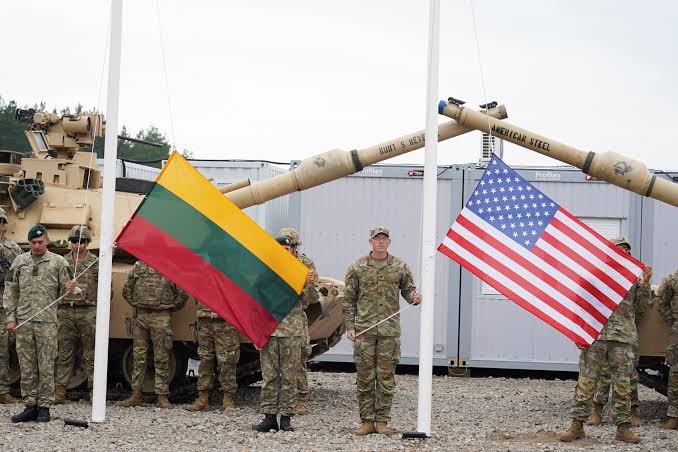
Lithuania has offered to cover the costs of establishing a permanent US military base on its territory if Washington agrees to turn its current rotational deployment into a long-term presence, in a move that could further strengthen the Baltic state’s security relationship with the United States.
Lithuanian Prime Minister Mindaugas Sinkevičius said on Tuesday that his government was prepared to finance the costs associated with a permanent American military presence if the United States accepted Vilnius’s proposal.
The offer comes after US President Donald Trump said he would consider Lithuania’s request for a permanent US base during remarks on Monday. Trump described Lithuania’s leaders as friends and indicated that Washington was prepared to examine the proposal.

For Lithuania, the possibility of a permanent American military installation carries significant strategic importance. The country is a member of both the European Union and NATO and shares borders with Russia and Belarus, a close military and political ally of Moscow. Its geographical position has made national security a particularly sensitive issue, especially amid continuing tensions between Russia and Western countries.
The Baltic states of Lithuania, Latvia and Estonia have repeatedly emphasised the importance of NATO’s collective defence commitments. Lithuania’s government has argued that a permanent US military presence would provide an additional layer of deterrence and reinforce the message that any threat to the country would involve a broader confrontation with the alliance.
American troops have already maintained a presence in Lithuania for several years. Since 2019, roughly 1,000 US soldiers have been stationed in the country as part of an armoured battalion deployment. However, the deployment has remained rotational rather than permanent.
Under the current arrangement, American troops periodically rotate into Lithuania while previous personnel leave. This system provides a continuing US military presence without creating a permanently established American base and associated long-term infrastructure.
Sinkevičius has now indicated that Lithuania wants to move beyond that arrangement.
The Lithuanian prime minister said he had raised the possibility of making the American deployment permanent during a meeting last month in Vilnius with John Coale, a representative of the Trump administration. The proposal would effectively transform the existing rotational arrangement into a permanent US military commitment.
The announcement reflects Lithuania’s broader concern about its security environment.
The country’s border with Belarus is particularly important because of Minsk’s close relationship with Moscow. Russia’s military presence and influence in Belarus have increased concerns among neighbouring NATO members, which view developments along their eastern borders as an important component of European security.
A permanent US base in Lithuania could therefore serve several purposes. It could strengthen NATO’s ability to respond rapidly to a potential crisis, improve military coordination between American and European forces and provide Lithuania with a more visible security guarantee.
For Vilnius, however, the issue is not only about the number of troops stationed in the country. A permanent installation would potentially involve substantial infrastructure, accommodation, training facilities, logistics systems and other military capabilities.
Lithuania’s willingness to pay the associated costs demonstrates the importance its government places on securing a lasting American presence.
Sinkevičius said he was pleased that the proposal was being taken seriously, describing the idea as an important guarantee for deterrence and security. He argued that the presence of US troops would provide reassurance to Lithuania and strengthen the country’s ability to deter potential threats.
The prime minister also indicated that the main decision now rests with Lithuania’s partners, particularly the United States. According to his comments, Lithuania is prepared to meet the costs if the political decision is made to maintain American forces permanently.
The proposal comes at a time when NATO members are facing renewed pressure to strengthen their defence capabilities and contribute more to collective security. European countries have been reassessing military spending, infrastructure and troop deployments as the security situation across the continent has become increasingly uncertain.
For Lithuania, those concerns are especially acute because of its location on NATO’s eastern flank.
The country has consistently supported stronger NATO military cooperation in the Baltic region. Its government has also sought closer security ties with the United States, viewing Washington’s military commitment as a key component of deterrence against potential aggression.
A permanent American base would represent a significant political signal. Unlike rotational deployments, a permanent base would create a more enduring US military footprint and could make it more difficult for an adversary to calculate that American forces could be withdrawn quickly during a crisis.
It could also improve military planning by allowing American personnel and their families to establish longer-term arrangements in the country while enabling infrastructure to be designed specifically around a permanent deployment.
However, the proposal would require agreement from Washington, and it remains unclear what form a permanent US military facility would take if the two governments reach an understanding.
There are also broader strategic considerations.
Any expansion of the American military presence in Lithuania would likely be closely watched by Russia and Belarus. Moscow has consistently opposed NATO’s expansion and increased military deployments near Russia’s borders, while Belarus has become increasingly integrated into Russia’s security and defence structures.
Lithuania’s proposal could therefore become part of a wider discussion about NATO’s long-term military posture in eastern Europe.
From Lithuania’s perspective, however, officials argue that the purpose is defensive rather than provocative. The government sees a permanent US presence as a means of preventing conflict by making the consequences of any potential attack unmistakably clear.
The proposal also reflects Lithuania’s willingness to make a financial commitment to support the American military presence. Rather than simply requesting additional US troops while expecting Washington to bear the full cost, Vilnius has offered to fund the expenses connected with establishing and maintaining the permanent deployment.
That offer could make the proposal more attractive to Washington, particularly as the Trump administration has repeatedly encouraged European allies to assume greater responsibility for their own defence and contribute more financially to collective security.
For Lithuania, the financial commitment could be viewed as an investment in national security. The country would gain from a more permanent American presence while also reinforcing its position within NATO’s wider defence structure.
The proposal nevertheless remains at an early stage. Trump’s comments indicate that Washington is willing to consider the request, but no final decision has been announced.
Much will depend on negotiations over the size, role and location of any permanent installation, as well as the costs and responsibilities associated with it.
The future of the existing American deployment will also remain important. Since 2019, the rotational armoured battalion has provided Lithuania with a consistent US military presence despite the absence of a permanent base. Turning that presence into a permanent arrangement would represent a substantial change in the character of the US commitment.
For Lithuania’s leadership, the political value of such a decision would extend beyond the military itself. A permanent American base would provide a highly visible demonstration of the country’s importance to the United States and NATO and could reassure a population that remains deeply conscious of the security risks associated with its geographical position.

The proposal also comes as European governments increasingly debate how much responsibility they should assume for their own defence. Lithuania’s offer to cover the costs of a permanent US installation could become an example of how smaller NATO members seek to deepen American involvement while taking on a greater share of the financial burden.
Ultimately, the decision will depend on Washington and the details of any agreement reached between the two governments. For now, Lithuania has made its position clear: if the United States is prepared to establish a permanent military base, Vilnius says it is ready to pay the associated costs.
Such a move would deepen the security relationship between the two countries and could further strengthen NATO’s military posture along its eastern flank. It would also send a powerful political message at a time when Lithuania and its Baltic neighbours remain focused on deterrence, territorial security and the long-term stability of Europe.
Related News:
 Former ICC prosecutor condemns US sanctions
 EU Says US Ties Have Suffered ‘Big Blow’ After Greenland Crisis
 Thousands Protest ICE Operations in Nationwide US Day of Action
 UK Prepares Aircraft Carrier for Middle East Crisis
 Hungary election: Orbán faces biggest test amid scandal
 US Court Ruling Reshapes Voting Rights Landscape
 US states redraw maps after voting rights ruling
 Trump orders US troop pullout from Germany
 Judge halts deportation of Yemeni refugees in US
 Trump likens US Navy actions to ‘pirates’
 Trump warns Iran as Middle East tensions surge again
 US Court Restores Abortion Pill Access Temporarily
 Putin Declares Russia Victory at Scaled Victory Day Parade
 Trump’s Revenge Drive Deepens GOP Divide
 Zelenskyy warns over Oreshnik threat as Kyiv hit
 Gunman Killed After White House Security Shootout
 Irish Gangland Figure Fails in Dublin Election Bid
 Mystery Grows Over Mitch McConnell’s Health
 Trump dismisses concerns over 250-day carrier deployment
 Russian Missiles Intensify Pressure on Kyiv
 Trump Media Ban Triggers First Amendment Clash
 Macron and Carney deepen France-Canada ties
 US Networks Suspend Trump White House Pool Coverage
 Trump Asked Xi About Buying US Weapons
 Republican Senator Questions Trump Ad Spending
 French Student Protests Escalate Into Violent Clashes
 Trump Ads Trigger Fight Over Taxpayer Money
 Russia Escalates Ukraine Energy Attacks as Winter Nears
 Ukraine’s New FP-7 Missile Makes Combat Debut
 Trump Immigration Policy Faces New Legal Tests
 French School Protests Escalate as 400 Schools Close
 Germany Pledges €1bn Military Aid to Ukraine
 Latin America women fear rollback of rights
 US Justice Department Files Lawsuit Against California Over Partisan Voting Maps
 Trump Deploys DHS to Charlotte in Major Arrest Operation
 US National Guard Member Killed in DC Shooting
 Trump officials continue false claims after Alex Pretti shooting
 Partial US Government Shutdown Hits Homeland Security Funding
 Epstein Files Reveal Trump Officials’ Emails with Financier
 Italian Town Buys Mussolini Villa to Keep Away Fascist Fans
 Report Says Pezzullo Acted ‘Recklessly’ in Dealings
 Suspected Plot Targets Pipeline Before Hungary Vote
 UK Stands Firm on Falklands Amid US Rift
 White House Security Case Sparks Political Firestorm
 Trump approval plunges amid Iran war fears
 Ohio’s Battle for Trust: Democrats Vying to Flip the Buckeye State
 US ‘Narco Boat’ Strikes Draw Global Outcry
 Afghan Families Left in Limbo Face Risk of Deportation
 US Awaits Iran Reply on New Ceasefire Proposal
 Immigration Judges Fear Pressure in Trump Era
 US green card applicants must apply from abroad, DHS says
 Tulsi Gabbard exits after turbulent intelligence tenure
 Discontent grows around Putin amid war strain
 House Curbs Trump’s War Powers in Rare Rebellion
 Le Pen to Run for President Despite Embezzlement Conviction
 Le Pen’s Popularity Holds Despite Conviction
 Houthis Strike Saudi Arabia as Middle East Tensions Rise
 Ukraine Villagers Demand Answers After Deadly Arms Depot Strike
 Trump Hardens Canada Trade Stance as Talks Stall
 Bayeux Tapestry Revives Franco-British Ties
 Trump Calls Iran War ‘Small Potatoes’ Despite US Deaths
 UK plans tougher Israel stance with settlement trade ban
 Trump gives $45,000 holiday gifts to White House aides
 Europe’s democracies face a growing far-right threat
 New Mexico Takes Facebook to Trial Over Data Scandal
 Sweden Election Hangs on Far-Right Breakthrough
 Israel Accused of Undermining Palestinian Life
 Democrat Says ICE Restricted Detention Camp Oversight
 Japan PM Backs International Criminal Court
 Xi urges Trump to avoid US-China military conflict
 Lula accuses Trump of seeking control over Brazil
 Madrid Tent Camp Grows as Spain Housing Crisis Deepens
 Burnham Opens Door to Possible UK Return to EU
 US Sends Third Carrier to Middle East
 Brazil Election Draws Religion Into Final Campaign
 Lula Warns of Bolsonaro Family Return as Brazil Votes
 DOJ Declines to Reopen Powell Renovation Probe
 Families Await USS Abraham Lincoln Homecoming
 Bosnia’s Young People Look Beyond Election Hope
 Quebec separatists return to power without majority