Published: 02 May 2026. The English Chronicle Desk. The English Chronicle Online
A major shift in transatlantic defence policy is unfolding as Donald Trump moves ahead with plans to withdraw thousands of American troops from Germany, intensifying tensions with NATO allies and raising fresh concerns over the future of US military strategy in Europe.
The Pentagon confirmed on Friday that around 5,000 US troops will be pulled out of Germany over the next six to 12 months. The decision marks one of the most significant reductions in American military presence in Europe in recent years and signals a deepening rift between Washington and its traditional allies in the North Atlantic alliance.
Germany currently hosts the largest contingent of US forces in Europe, with approximately 35,000 active-duty personnel stationed across multiple bases. These facilities serve as critical hubs for training, logistics, intelligence coordination, and operational support for US and allied missions across the continent and beyond.

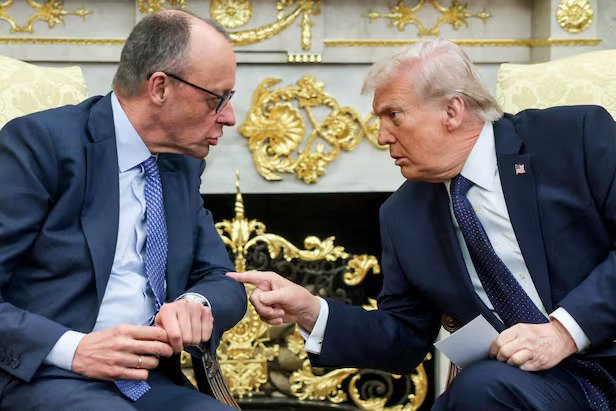
According to Pentagon officials, the withdrawal reflects a broader reassessment of US military posture. However, the move has also been closely tied to escalating political friction between Washington and Berlin, particularly after controversial remarks by German Chancellor Friedrich Merz, who suggested the United States had been “humiliated” in the context of recent tensions involving Iran.
A senior Pentagon official, speaking anonymously, described recent German statements as “inappropriate and unhelpful,” indicating that diplomatic strains may have influenced the timing and scale of the troop reduction. The announcement comes amid widening disagreements within NATO over the war in Iran and broader questions about burden-sharing among member states.
The US military presence in Germany has long been considered a cornerstone of NATO’s strategic infrastructure. Since the end of the Cold War, American bases in the country have played a central role in supporting operations in Iraq, Afghanistan, and more recently in Middle Eastern conflict zones. They also function as key staging points for rapid deployment across Europe and Africa.
Analysts warn that reducing troop levels could have far-reaching consequences for NATO readiness and deterrence capability, particularly at a time of heightened global instability. Some defence experts argue that even a partial withdrawal may weaken coordination between allied forces and signal uncertainty about long-term US commitments in Europe.
The decision has also sparked political debate in Washington. While the Trump administration has previously signalled its intention to reassess overseas military deployments, critics argue that such moves risk undermining long-standing alliances and emboldening adversaries.
Alongside the troop withdrawal announcement, the Pentagon also revealed a major expansion in artificial intelligence integration within the US military. Agreements have been signed with leading technology firms including SpaceX, OpenAI, Google, Nvidia, Microsoft, Amazon Web Services, and others to accelerate what officials describe as the transformation toward an “AI-first fighting force.”
The initiative is designed to enhance battlefield decision-making, improve intelligence analysis, and strengthen operational efficiency across all domains of warfare. Defence officials say the goal is to ensure technological superiority in an increasingly data-driven security environment.
However, the combination of troop reductions in Europe and rapid AI militarisation has raised questions among observers about the direction of US defence policy. Some analysts see a strategic pivot toward technological dominance over traditional force projection, while others view the developments as fragmented responses to multiple geopolitical pressures.
Tensions between the United States and European allies have also been heightened by economic disputes. In a separate development, Donald Trump announced new tariff increases on European Union vehicle imports, raising duties on cars and lorries from 15% to 25%. The decision effectively alters parts of a previously negotiated trade arrangement and has been criticised by European officials as destabilising.
The European Union has yet to issue a formal response to the latest tariff escalation, but trade analysts warn it could further strain already fragile transatlantic relations.
Meanwhile, domestic political tensions in the United States continue to rise. The administration is facing scrutiny over immigration enforcement policies after reports of a death in a US immigration detention centre in Georgia. Lawmakers have also raised concerns about alleged pressure within the Department of Justice regarding politically sensitive prosecutions, adding to a growing list of controversies surrounding federal institutions.
In parallel, the US political and media landscape remains deeply polarised. High-profile television commentators and political analysts have publicly clashed over foreign policy decisions, particularly the ongoing war in Iran and the United States’ strategic role in the region. These disputes have spilled into mainstream media debates, reflecting broader divisions over national security priorities.
The troop withdrawal from Germany is also likely to have economic implications for local communities surrounding US military bases. American personnel stationed in Germany contribute significantly to regional economies through housing, services, and local procurement. Any reduction in force levels could therefore affect businesses and employment in those areas.
European security experts have expressed concern that the move could embolden geopolitical rivals at a time when NATO unity is already under pressure. They warn that signals of disengagement, even if partial, may be interpreted as a weakening of collective defence commitments.

Despite these concerns, the Pentagon has insisted that the United States remains committed to NATO obligations and European security. Officials emphasised that the withdrawal should not be interpreted as a full strategic retreat, but rather as a recalibration of force distribution based on current priorities.
Still, uncertainty persists over how far the reductions may go in the future. Some policymakers fear that the current withdrawal could be the first stage of a broader drawdown of US forces in Europe, depending on political developments in Washington and shifting global security demands.
As the situation develops, both allies and critics are closely watching the evolving US posture. With tensions rising between major powers and ongoing conflicts reshaping global alliances, the decision to reduce troop presence in Germany marks a pivotal moment in the future of transatlantic defence cooperation.
For now, the next six to 12 months will determine how smoothly the withdrawal is executed—and whether it signals a temporary adjustment or a longer-term transformation of America’s military role in Europe.
Related News:
 Trump Receives Machado’s Nobel Medal in White House Meeting
 Thousands Protest ICE Operations in Nationwide US Day of Action
 Epstein Files Reveal Trump Officials’ Emails with Financier
 Thousands Protest ICE in New York Against Trump Deportation Campaign
 UK Prepares Aircraft Carrier for Middle East Crisis
 USS Gerald R Ford Ends Record Naval Deployment
 Trump likens US Navy actions to ‘pirates’
 Indiana Republicans Defy Trump in Key Vote Test
 Tensions Emerge in Netanyahu-Trump Alliance
 Putin Declares Russia Victory at Scaled Victory Day Parade
 Zelenskyy warns over Oreshnik threat as Kyiv hit
 Discontent grows around Putin amid war strain
 Former ICC prosecutor condemns US sanctions
 Houthis Strike Saudi Arabia as Middle East Tensions Rise
 Trump dismisses concerns over 250-day carrier deployment
 Putin Intensifies Territorial Demands Before US Talks
 Trump to Recheck Green Cards from 19 Nations After DC Attack
 Shock US Raid: Maduro Pleads Not Guilty in Manhattan Court
 Trump Escalates Minnesota Immigration Surge Amid Rising Tensions
 Greenland Faces Pivotal Summit Over Arctic Power Struggle
 Trump Threatens Strong Action If Iran Executes Protesters
 Machado Trump medal gesture reshapes Venezuela power struggle
 Iran unrest slows under brutal crackdown and global tensions
 US Considers Asylum for British Jews Amid Rising Antisemitism
 EU Says US Ties Have Suffered ‘Big Blow’ After Greenland Crisis
 Russia Strikes Kyiv and Kharkiv as Peace Talks Enter Day Two
 Trump Praises ‘Terrific’ Petro After White House Talks
 Clinton Testimony Erupts in Fiery Exchange
 Trump Faces Questions Over Iran Conflict Plan
 Pete Hegseth Iran War Remarks Spark Alarm
 Yvette Cooper: UK Must Follow Principles, Not US Pressure
 Trump’s Harsh Rhetoric on Iran Sparks Global Alarm
 Michigan Battleground: Middle East Crisis Stirs US Senate Race
 Trump Signals Hope for New Iran Talks as Ceasefire Fades
 Trump Faces Crisis as Iran Reopens Hormuz Tensions
 GOP Senator Criticizes Trump’s Feud With Pope Leo XIV
 Charles Faces Trump Test in High-Stakes US Visit
 UK Stands Firm on Falklands Amid US Rift
 RAF Typhoons scrambled amid Russian drone threat near Nato
 Investigation Into Anti-Trump Motives After Gala Shooting
 US Calls Australia Media Law “Foreign Extortion”
 Oil Prices Surge Above $120 Amid Iran Blockade Fears
 US Court Ruling Reshapes Voting Rights Landscape
 US states redraw maps after voting rights ruling
 Judge halts deportation of Yemeni refugees in US
 Activists allege abuse after Gaza flotilla seizure
 Ukraine strikes Tuapse as oil disaster worsens
 Global order shifts amid Trump-era turmoil
 Trump approval plunges amid Iran war fears
 Giuliani hospitalised in critical condition
 Ohio’s Battle for Trust: Democrats Vying to Flip the Buckeye State
 Trump Threatens UN Budget Cuts as US Pushes ‘Trade Over Aid’ Agenda
 Trump warns Iran as Middle East tensions surge again
 Australia pushes Pacific security pact amid China tension
 US ‘Narco Boat’ Strikes Draw Global Outcry
 US Court Restores Abortion Pill Access Temporarily
 Ohio Primaries Set Stage for Crucial Midterms
 Afghan Families Left in Limbo Face Risk of Deportation
 Middle East Crisis Escalates as Oil Routes Shake Markets
 US Awaits Iran Reply on New Ceasefire Proposal
 Fear and Betrayal: The Chilling Case of Kouri Richins
 US judge dismisses Kilmar Abrego Garcia indictment
 Tulsi Gabbard exits after turbulent intelligence tenure
 Hormuz Talks Near Critical Stage
 Trump’s Revenge Drive Deepens GOP Divide
 Gunman Killed After White House Security Shootout
 Trump Claims Iran Peace Deal Near Completion
 Trump Weighs Retreat from Controversial $1.8bn Slush Fund
 US Midterm Primaries: Democrats Target Key Republican Seats
 House Curbs Trump’s War Powers in Rare Rebellion
 Trump’s Iran Legacy Hangs on Tehran Deal
 Trump’s Mount Rushmore Speech: A Divisive Anniversary
 Mystery Grows Over Mitch McConnell’s Health
 Senate Halts Defense Bill Over Iran Clashes
 House Democrats Divided Over Israel Military Funding Bid
 Trump Jokes, Jabs and Press Tensions at WHCA Dinner
 Taliban global ties grow as rights fears mount
 Seoul proposes historic peace talks to replace Korean War armistice
 Is America Ready for an AOC Presidential Run?
 UK and US Drop in Global Corruption Index Rankings