Published: 02 May 2026. The English Chronicle Desk. The English Chronicle Online
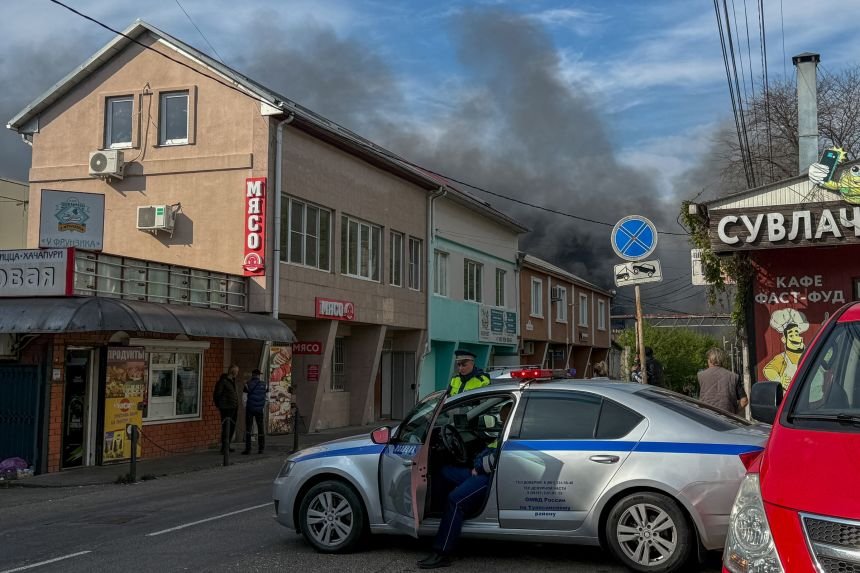
Ukraine has intensified its long-range drone campaign against Russian energy infrastructure, striking the Black Sea port of Tuapse for the fourth time in just over two weeks, as a growing environmental crisis unfolds along Russia’s southern coastline.
According to Ukrainian officials, the latest strike targeted a major oil refinery and seaport facility that plays a critical role in Russia’s export network. The operation, attributed to Ukraine’s SBU security service, caused further disruption at a site already damaged by repeated attacks since mid-April.
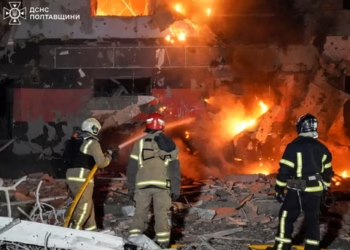
Russian authorities confirmed that a large-scale emergency response was under way to contain fires at the port, though they reported no casualties. However, the cumulative impact of the strikes has triggered significant environmental damage, with thick black smoke clouds lingering over the region and oil spills spreading along nearby beaches.

State media footage showed heavily contaminated shorelines, with workers attempting to remove polluted sand and debris. Officials said more than 13,000 cubic metres of oil and tainted soil had already been cleared, but concerns remain about long-term ecological consequences for the Black Sea coast, particularly in areas known for tourism.
The repeated attacks on Tuapse highlight Ukraine’s strategy of targeting energy and logistics hubs deep inside Russian territory. By disrupting refining capacity and export routes, Kyiv aims to weaken Russia’s economic and military infrastructure while drawing attention to vulnerabilities far from the frontline.
At the same time, Russia has escalated its own aerial campaign. Ukrainian authorities reported that Moscow launched nearly 410 drones in a single daytime assault, one of the largest such attacks in recent months. Air defence systems intercepted the vast majority, with Ternopil among the areas affected.
Local officials in Ternopil said at least 10 people were injured after infrastructure and industrial sites were hit. Further damage was reported in central regions, including Cherkasy and Vinnytsia, where residential buildings, schools, and power lines were struck.
In the south, near Odesa, drone attacks caused fires and structural damage to commercial properties. Ukrainian President Volodymyr Zelenskyy said at least five people were wounded in that region alone, underscoring the continuing threat to civilian areas.
Amid the intensifying conflict, Ukraine has announced plans for sweeping military reforms aimed at addressing manpower shortages and improving conditions for frontline troops. Zelenskyy said the changes would begin in June, with a focus on increasing pay and support for infantry soldiers who have borne the brunt of the fighting.
The reforms come as Ukraine enters the fourth year of full-scale war, with fatigue and recruitment challenges becoming more pronounced. Officials have acknowledged issues with training and mobilisation, while emphasising the need to maintain readiness in the absence of a negotiated peace settlement.
Defence Minister Mykhailo Fedorov described the planned overhaul as a “systemic transformation” of the armed forces, intended to strengthen operational effectiveness and sustain long-term resistance against Russian aggression.
Beyond the battlefield, the war continues to have global repercussions. Authorities in Peru have launched an investigation into an alleged human trafficking network that recruited citizens with false job offers in Russia before forcing them into combat roles in Ukraine.

Prosecutors said victims were lured through social media with promises of well-paid security work, only to find themselves compelled to join the conflict after arriving in Russia. Reports indicate that at least 13 Peruvians have died in the war, highlighting the far-reaching human cost of the conflict beyond Europe.
The situation reflects the increasingly complex and international nature of the war, with consequences extending into economic disruption, environmental damage, and human rights concerns across multiple regions.
As fighting continues, the repeated strikes on Tuapse underscore Ukraine’s evolving military tactics, while the environmental fallout adds a new dimension to the conflict. The combination of industrial damage and ecological harm raises concerns not only for immediate safety but also for long-term recovery in affected areas.
With both sides escalating attacks and no clear diplomatic breakthrough in sight, the war shows little sign of abating. Instead, it continues to expand in scope, affecting infrastructure, civilians, and even distant nations drawn into its orbit.
Related News:
 Putin Declares Russia Victory at Scaled Victory Day Parade
 Zelenskyy warns over Oreshnik threat as Kyiv hit
 Tragic End to Outback Search as Floods Claim a Life
 Trump orders US troop pullout from Germany
 Global order shifts amid Trump-era turmoil
 UN Faces Crucial Vote on Landmark ICJ Climate Ruling
 Discontent grows around Putin amid war strain
 Former ICC prosecutor condemns US sanctions
 Wildfires rage across Europe as hundreds arrested in France
 ‘Extinct’ Antelope Returns to Sahara, Bringing Hope
 Dutch Nationwide Fireworks Ban Expected to Transform New Year Traditions
 US Citizens Warned to Venezuela Flee Amid Paramilitary Threats
 Gulf states warn Trump Iran strikes risk wider Middle East war
 Iran unrest slows under brutal crackdown and global tensions
 High-speed Spain train crash leaves nation in mourning
 Half the World’s Largest Cities Face Rising Water Stress
 Thousands Protest ICE Operations in Nationwide US Day of Action
 Epstein Files Reveal Trump Officials’ Emails with Financier
 Thousands Protest ICE in New York Against Trump Deportation Campaign
 Sydney Protest Pepper Spray Clash During Herzog Visit
 Portugal Election Delivers Socialist Win as Far Right Surges
 Greenpeace $345m Ruling Sparks Appeal Battle
 Cyprus Drone Strike Sparks Europe’s Strong Response
 The Truth Behind Rising Energy Costs and Fossil Fuel Myths
 North Korea Fires Missiles Amid US-South Korea Drills
 Yvette Cooper: UK Must Follow Principles, Not US Pressure
 Russia Drone Attack Intensifies Ukraine War Pressure
 Extreme Weather: Europe Shivers as Cyclone Narelle Hits
 Trump to Deploy “God Squad” Over Gulf Wildlife Protections
 China’s Secret Mountain Ruins Rise Again in New Cold War
 Spain Faces Backlash Over Xenophobic Chants in Egypt Draw
 Italian Town Buys Mussolini Villa to Keep Away Fascist Fans
 Trump and Tehran Find Common Ground in Landmark Ceasefire
 Cyclone Maila Intensifies to Category Five Strength
 Hungary election: Orbán faces biggest test amid scandal
 Reeves Slams Trump Over Iran War Lack Of Exit Plan
 Broken Promises: Murray-Darling River Crisis Deepens
 Ukraine Urges UK to Seize Russian Oil Tankers
 US Calls Australia Media Law “Foreign Extortion”
 Escobar’s Hippos May Be Moved to India Zoo
 Capitalism ‘Suicidal’, Warns Petro at Climate Summit
 Oil Prices Surge Above $120 Amid Iran Blockade Fears
 Tragic End to Search for Missing Girl in Alice Springs
 Questions Remain Over The Tragic Bondi Massacre
 The Lion Guard: How One Woman Heals the Zambezi Valley
 Activists allege abuse after Gaza flotilla seizure
 Australia pushes Pacific security pact amid China tension
 Middle East Crisis Escalates as Oil Routes Shake Markets
 FIFA Confirms Global Ban for Benfica Star Prestianni
 New South Wales Wetland Rescue Legislation Passes
 Tensions Emerge in Netanyahu-Trump Alliance
 France Faces Record Presidential Crowded Race Amid Far-Right Surge
 Norway Doubles Down on Oil and Gas for Europe Energy Security
 Greece Probes Mystery Explosive Drone in Ionian Waters
 US and Mexico Face Heatwave as Floods Batter South Africa
 The Long Way Home: Australia’s High-Stakes Virus Mission
 Trump Warns Iran Ceasefire Is Now on Life Support
 Ex-Chief of Staff Named in Major Ukraine Corruption Probe
 Putin Signals War End as Russian Momentum Stalls
 Romania’s Judicial Crisis: A System Under Siege
 Chaos at Valdebebas: Florentino Pérez Calls for Elections
 Scepticism and tight security as Beijing braces for Trump
 Philippine Senator Flees After Days Under Senate Siege
 Solomon Islands Elects China Critic Matthew Wale as Leader
 Tragedy in the Maldives: Inside the Deep Sea Rescue
 US Ebola Case Sparks Urgent Global Screening Measures
 Fragile Truce Shattered as Violence Escapes Diplomatic Control
 The Hunt for Bato: Inside the Hunt for the Fugitive Senator
 Pope Meets Families in Italy Toxic Waste Zone
 Man killed in shark attack on Great Barrier Reef
 Deadly Russian Air Raids Strike Across Ukraine
 Outcry Over Kushner’s Albanian Resort
 Papal Visit Offers Political Lifeline to Spanish Premier
 Aukus Deal Facing Fierce Backing and Historic Criticism
 Thai Princess Bajrakitiyabha Passes Away at 47
 Sentenced to 30 Years: Former Leader’s Secret Drone Plot
 Le Pen to Run for President Despite Embezzlement Conviction
 Japan Bear Hunt: Serial Fridge Raider Sparks Panic
 Houthis Strike Saudi Arabia as Middle East Tensions Rise
 Wildfires Force Mass Evacuations in France And Spain