Published: 15 April 2026. The English Chronicle Desk. The English Chronicle Online.
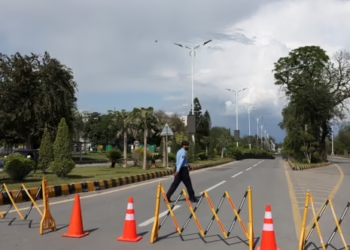
The international community is currently watching the Middle East with a sense of cautious hope. Washington and Tehran are now engaged in indirect talks to extend the current ceasefire period. This critical two-week truce is presently scheduled to expire on the twenty-second day of April. High-ranking officials are working behind the scenes to prevent a return to active military combat. Pakistan has emerged as a central mediator in this complex and high-stakes diplomatic chess match. The Pakistani army chief arrived in the Iranian capital today to facilitate these delicate discussions. His presence in Tehran underscores the urgency felt by regional powers regarding the potential escalation.
White House Press Secretary Karoline Leavitt addressed the media regarding the status of these talks. She denied that the United States has issued any formal request for a truce extension. However, she confirmed that Washington remains very much engaged in these ongoing diplomatic negotiations today. The administration is keeping a close eye on the progress of the current mediation efforts. Leavitt suggested that a second round of negotiations would likely take place in Islamabad soon. The White House currently feels positive about the prospects of reaching a new working deal. This optimism comes only days after an earlier attempt to reach a peace agreement failed. Official updates will only be provided directly from the White House press office going forward.
The diplomatic push involves a sophisticated round of shuttle diplomacy led by senior Pakistani officials. They are travelling across the region to marshal support for a sustainable and lasting peace. Field Marshal Asim Munir led a high-powered Pakistani delegation into Tehran on Wednesday afternoon. He carried a specific message from Washington intended for the top leadership of the Iranian state. The delegation also included the interior minister Mohsin Naqvi to assist with the high-level talks. They are working hard to arrange a second round of direct US and Iranian negotiations. Simultaneously, Prime Minister Shehbaz Sharif has begun a four-day tour of several key regional powers. He is visiting Saudi Arabia, Qatar, and Turkey to coordinate a unified stance on peace.

Regional reports suggest that both sides currently favour prolonging the existing military truce for now. President Donald Trump has suggested that an extension might not be necessary for a deal. He believes a final peace agreement could be reached before the current deadline actually expires. Iran’s foreign ministry spokesperson Esmail Baghaei noted that detailed views are being discussed right now. Messages continue to flow between Washington and Tehran despite the previous weekend’s breakdown in talks. Those earlier negotiations in Islamabad lasted for twenty-one hours before the parties originally dispersed. The continuation of messaging suggests that neither side wants a total collapse of the process. Diplomacy remains the primary tool for both nations as the ceasefire deadline fast approaches.
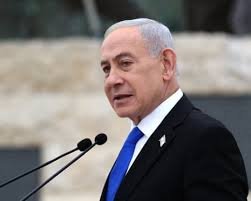
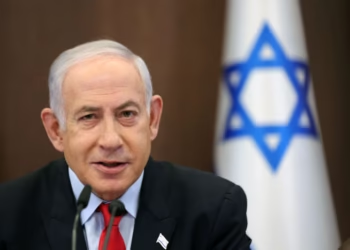
Sources in Tehran indicate that Iran has specific conditions for entering the next negotiation round. They are demanding an immediate end to all Israeli military attacks currently occurring in Lebanon. Israel has described its own talks with the Lebanese government as a unique historic opportunity. They hope to end the grip of the Iranian-allied Hezbollah militia over the Lebanese state. However, Prime Minister Benjamin Netanyahu released a video statement that complicates the current peace narrative. He indicated on Wednesday evening that he has not yet committed to any ceasefire deal. The Israeli leader stated that his forces are still actively striking Hezbollah in South Lebanon. He specifically mentioned ongoing operations in the militia stronghold located in the town of Bint Jbeil.
Netanyahu has given instructions to broaden the existing security zone by continuing these military operations. He claimed that Israeli forces are on the verge of fully conquering the Bint Jbeil area. The Israeli army chief Lt Gen Eyal Zamir also visited frontline troops on Wednesday afternoon. He vowed to eliminate the presence of Hezbollah south of the strategic Litani River line. This area sits approximately thirty kilometres from the northern border of the Israeli state today. Zamir has ordered that South Lebanon be turned into a zone targeting all terrorist activity. He stated that his forces are advancing while the enemy is currently in a retreat. Despite this rhetoric, some Lebanese officials told Reuters that a ceasefire might be announced soon. They did not provide specific details but hinted that negotiations are reaching a critical point.
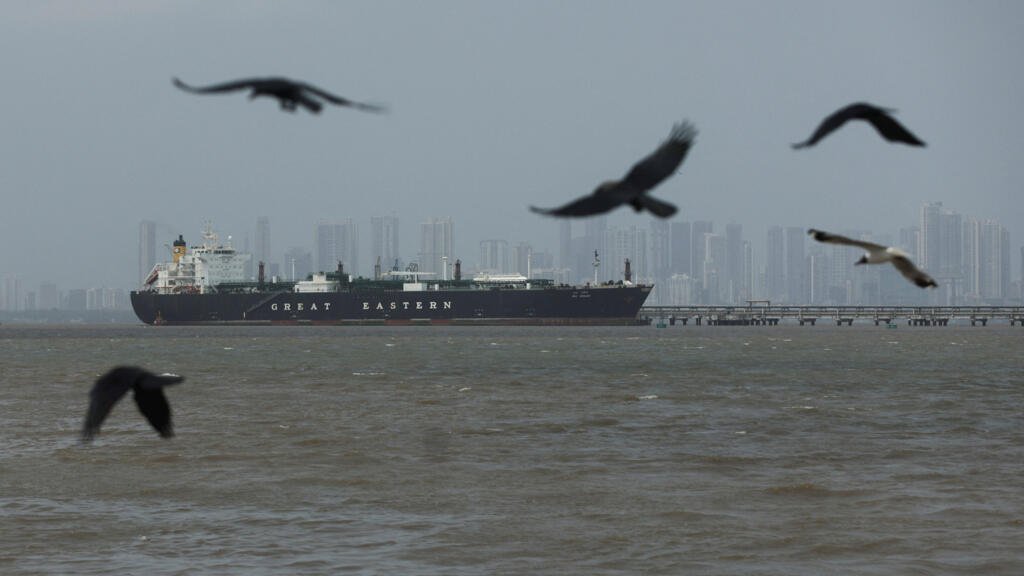
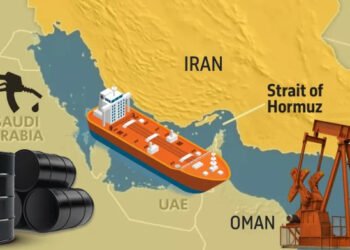
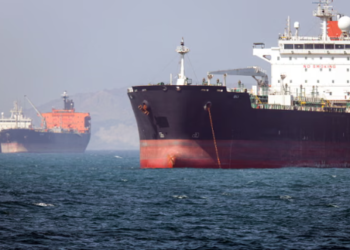
The military situation at sea remains tense as the United States enforces a naval blockade. This blockade was implemented against Iranian ports following the end of the previous Islamabad talks. The US military confirmed that the blockade is now fully implemented across the entire region. American warships recently turned back nine ships attempting to transit through the Strait of Hormuz. One of these vessels was the Chinese-owned tanker known as the Rich Starry on Tuesday. The United States has officially placed this specific tanker under a list of trade sanctions. Maj Gen Ali Abdollahi has warned that Iran might halt all trade in the Gulf. He stated that this would happen if the US does not lift its naval blockade. The threat to regional shipping remains a major concern for the global energy market today.
Treasury Secretary Scott Bessent has indicated that financial pressure on Iran will continue to escalate. He described the current economic strategy as the financial equivalent of a kinetic bombing campaign. The administration has warned international companies against buying any oil produced by the Iranian state. They have also warned countries against holding Iranian money within their own domestic banking systems. The United States is now willing to apply stern secondary sanctions against any non-compliant parties. Bessent believes the Iranians should understand the severity of these new financial measures being taken. This economic warfare is intended to bring Tehran back to the table for a deal. The impact on the Iranian economy is expected to be significant if these measures persist.

China has voiced its formal objections to the naval blockade currently imposed by the United States. However, President Trump claimed he won an agreement from President Xi Jinping regarding arms shipments. Trump stated that China has agreed not to send any weapons to Iran during this conflict. The foreign ministry in Beijing has consistently denied supplying weapons to Iran throughout the war. A recent report from the Financial Times has raised new questions about this specific relationship. The report claims that Iran acquired a Chinese spy satellite during the previous calendar year. Iran’s Revolutionary Guard allegedly used this satellite to target American bases during the war. This technological cooperation suggests a deeper link between the two nations than previously publicly admitted.
President Trump continues to predict a very swift end to the ongoing Middle East conflict. He has maintained this optimistic outlook since the start of the war with his allies. During a brief exchange with a correspondent, he predicted amazing days ahead for the world. The president believes the war could end before the ceasefire expires next Wednesday afternoon. He argued that the US could withdraw after inflicting major damage on the Iranian military. Alternatively, he suggested the US could exit the conflict following a formal deal with Tehran. Trump stated that a deal is the preferred outcome so that they can rebuild. He expects a sharp decline in global oil prices once the conflict finally concludes soon. Oil prices hovered around ninety-five dollars on Wednesday as traders watched the news closely.
The naval blockade remains a central pillar of the current American strategy against the Iranian state. Trump ordered this measure to counter Iran’s closure of the strategic Strait of Hormuz waterway. The blockade is designed to increase economic pressure and force a diplomatic resolution to the war. Ali Abdollahi has countered by warning that Iran will block all regional exports and imports. This threat extends to the Gulf, the Gulf of Oman, and the Red Sea area. He stated that Iran will act with strength to defend its national interests and sovereignty. The world now waits to see if diplomacy can triumph over this escalating military tension. Both nations are balancing on a thin line between a lasting peace and renewed war. The next few days will likely determine the future of the entire Middle Eastern region.
Related News:
 Saudi Arabia Urging US to Keep Up Iran Attacks
 Netanyahu Vows Continued Lebanon Strikes Amid Peace Talks
 Global order shifts amid Trump-era turmoil
 Middle East Crisis Escalates as Oil Routes Shake Markets
 Tensions Emerge in Netanyahu-Trump Alliance
 Netanyahu Calls Early Election Amid Coalition Turmoil
 Israeli Strikes in Lebanon Kill 10 Amid Ceasefire Strain
 Hunger increasingly weaponised in global conflicts
 Former ICC prosecutor condemns US sanctions
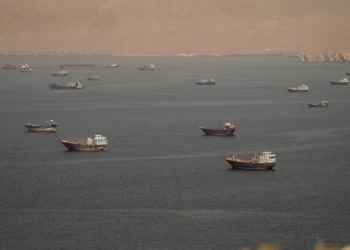 Iran To Propose New Shipping Fees In Strait Of Hormuz
 Grief and Devotion Amidst the Rubble of Nabatieh
 High Drama in Tehran Over Secret Nuclear Letters
 Houthis Strike Saudi Arabia as Middle East Tensions Rise
 US Citizens Warned to Venezuela Flee Amid Paramilitary Threats
 Gulf states warn Trump Iran strikes risk wider Middle East war
 Iran unrest slows under brutal crackdown and global tensions
 Thousands Protest ICE Operations in Nationwide US Day of Action
 Epstein Files Reveal Trump Officials’ Emails with Financier
 Thousands Protest ICE in New York Against Trump Deportation Campaign
 Sydney Protest Pepper Spray Clash During Herzog Visit
 Iran-Iraq Border Strikes Spark New Front Fears
 Ukraine war briefing: Zelenskyy offers help to Saudi Crown prince on combatting Iranian drones
 Mojtaba Khamenei Chosen as Iran’s New Supreme Leader
 Tehran Oil Depot Strikes Darken City With Toxic Smoke
 Seventh US Service Member Killed in Iran Conflict Identified
 Mojtaba Khamenei Supporters Rally as Iranians Fear Repression
 Tehran Strikes Mark War’s Most Devastating Night
 Iran Defiance Grows Amid US-Israel War Pressure
 Injured Mojtaba Khamenei Elevated as Iran Leader
 US Missile Strike on Iran School Sparks Global Shock
 Iran Gulf attacks escalate as ships and airports targeted
 Ancient Heritage Sites Damaged in Recent Airstrikes
 Gaza Detainee Abuse: Israel Drops Charges Against Soldiers
 Lebanon Ground Campaign Raises Occupation Fears
 Gulf Tensions Rise as Iran Alleges Covert Support
 Iranian President’s Son Shares Wartime Hopes and Fears
 Diplomacy on the Brink: Pakistan’s Risky Peace Mission
 Trump Threatens Iran With Total Infrastructure Destruction
 Iran Drone Strike Hits Kuwaiti Oil Tanker in Dubai Port
 Trump Slams Europe as Transatlantic Tensions Boil Over
 Trump’s Six-Week Iranian War: The High Cost of Ignorance
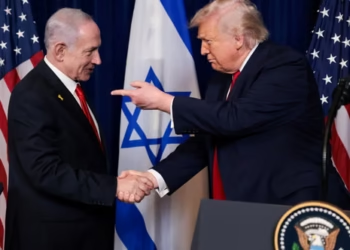 The Price of Hubris: Trump, Netanyahu, and the ‘Easy’ War
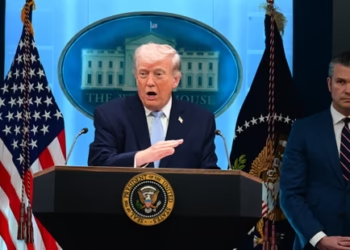 Trump and Tehran Find Common Ground in Landmark Ceasefire
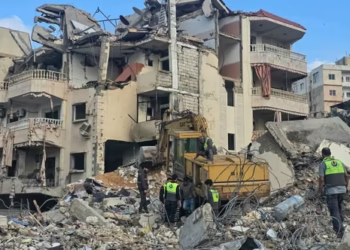 Israel Defies Ceasefire as Lebanon Operations Persist
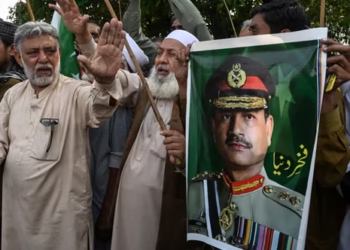 Pakistan Brokers Historic Peace Deal Amid Rising Tensions
 Middle East Analysis: The Cost of a Fragile Peace
 Islamabad Hosts Historic Peace Talks Between Iran and USA
 Reeves Slams Trump Over Iran War Lack Of Exit Plan
 Ukraine Urges UK to Seize Russian Oil Tankers
 US Calls Australia Media Law “Foreign Extortion”
 Tragic End to Search for Missing Girl in Alice Springs
 Activists allege abuse after Gaza flotilla seizure
 Ukraine strikes Tuapse as oil disaster worsens
 FIFA Confirms Global Ban for Benfica Star Prestianni
 Saudi Arabia Blocks Trump’s Naval Plan for Hormuz Strait
 New South Wales Wetland Rescue Legislation Passes
 US and Mexico Face Heatwave as Floods Batter South Africa
 The Long Way Home: Australia’s High-Stakes Virus Mission
 Trump Warns Iran Ceasefire Is Now on Life Support
 Putin Signals War End as Russian Momentum Stalls
 Scepticism and tight security as Beijing braces for Trump
 Philippine Senator Flees After Days Under Senate Siege
 Plea for Mercy: The Battle to Bring Ahmed al-Doush Home
 Tensions Flare as Israeli Nationalists March in Jerusalem
 Tragedy in the Maldives: Inside the Deep Sea Rescue
 US Ebola Case Sparks Urgent Global Screening Measures
 Fragile Truce Shattered as Violence Escapes Diplomatic Control
 Discontent grows around Putin amid war strain
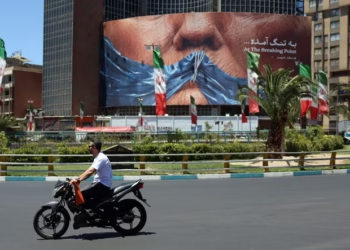 US Strikes Iranian Sites Amid Shaky Ceasefire Talks
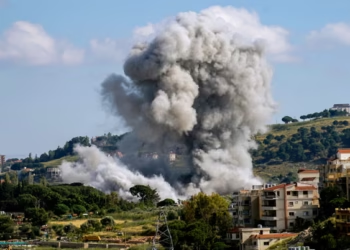 Israel Intensifies Lebanon Strikes to Crush Hezbollah
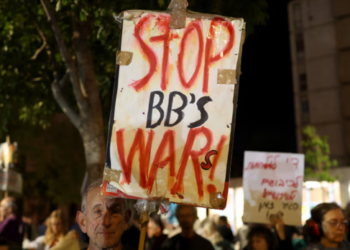 Trump’s Iran Deal Plan Sparks Intense Alarm Across Israel
 US and Iran Trade Fresh Strikes, Threatening Ceasefire
 Trump and Netanyahu Clash Over Crucial US and Iran Peace Deal
 Aukus Deal Facing Fierce Backing and Historic Criticism
 Thai Princess Bajrakitiyabha Passes Away at 47
 US and Iran Agree Historic Framework to End 15-Week War
 Iran Prepares for Massive Six-Day Funeral for Khamenei
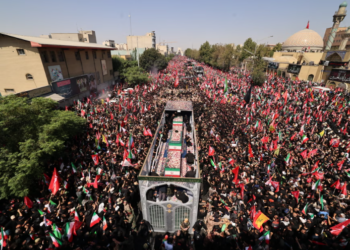 Iran Mourns: Millions at Khamenei’s Final Procession
 Israeli Officer Investigated for Car Grenade Attack
 Yemen Accuses Iran of Violating National Sovereignty