Published: 23 May 2026. The English Chronicle Desk. The English Chronicle Online
Airstrikes carried out by Israel in southern and coastal areas of Lebanon have killed at least 10 people in a 24-hour period, including six paramedics and a child, according to Lebanon’s health ministry, escalating tensions around an already fragile US-brokered ceasefire. The Lebanese government has condemned the attacks as serious violations of international humanitarian law, while Israel maintains the strikes were aimed at militant infrastructure linked to Hezbollah.
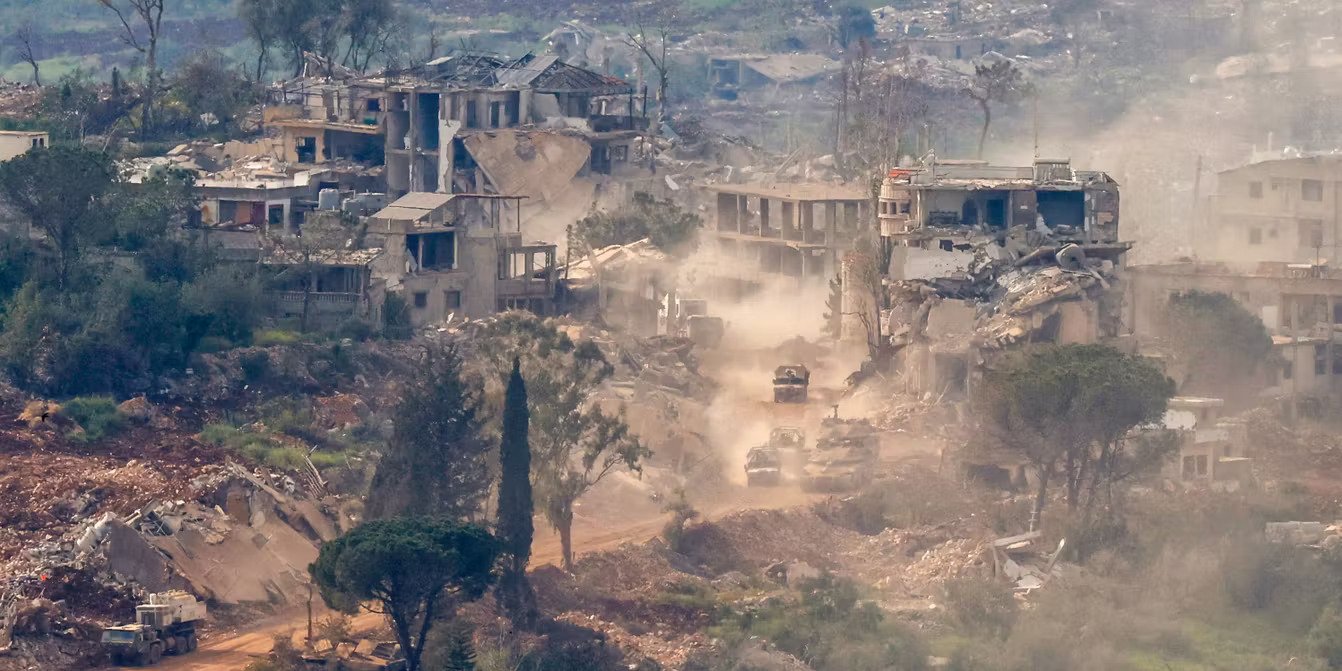
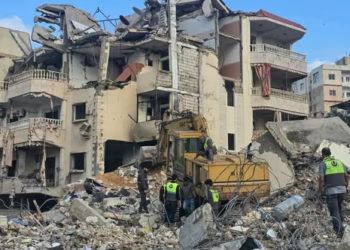
The latest wave of violence unfolded across multiple locations, including the southern towns of Hanaway and Deir Qanoun En-Nahr, as well as areas near Tyre and further north in the Nabi Sreij mountainous region. Local reports described a series of overnight explosions, damaged buildings, and mass evacuations as residents were urged by Israeli military warnings to leave targeted neighbourhoods.
Eyewitness accounts from the coastal city of Tyre described two separate airstrikes within minutes of each other, sending thick smoke into the sky and triggering panic among civilians. Earlier, evacuation orders were broadcast through loudspeakers, instructing residents to move away from identified areas before the strikes began.

According to Lebanon’s health ministry, one of the deadliest incidents occurred in Deir Qanoun En-Nahr, where an airstrike killed six people, including two paramedics and a Syrian child. Another strike in Hanaway reportedly killed four additional medics affiliated with the Islamic Health Association, an organisation operating ambulance and emergency services in southern Lebanon.
The targeting of medical workers has drawn strong condemnation from Lebanese authorities, who say the attacks are part of a pattern of strikes affecting healthcare personnel and infrastructure. Officials argue that repeated incidents involving paramedics and ambulances raise serious concerns under international law, which provides protection for medical staff operating in conflict zones.
The Israeli military, however, stated that the strikes were directed at Hezbollah operatives and infrastructure sites used by the group. In its statement, the military said it had identified militants operating in the areas targeted, including individuals travelling on motorcycles and personnel linked to armed activity. It also acknowledged reports of civilian casualties, saying it was reviewing claims that “uninvolved individuals” may have been harmed and that efforts had been made to reduce civilian exposure through prior evacuation warnings.
The conflict between Israel and Hezbollah has intensified in recent months despite attempts to stabilise the situation through a US-mediated ceasefire framework. The truce, which was intended to reduce cross-border escalation following prolonged exchanges of fire, has been increasingly strained by continued strikes and retaliatory actions.
In southern Lebanon, residents described a climate of fear and uncertainty as airstrikes expanded beyond previously targeted zones. In Nabi Sreij, residents reported hearing at least five explosions late on Friday night, marking one of the northernmost strike clusters since the ceasefire was announced. The region had largely been spared earlier in the conflict, raising concerns that the geographical scope of the strikes is widening.
Footage distributed by Lebanon’s health ministry, verified by independent reporting agencies, showed paramedics in reflective vests assisting an injured person on the roadside before a sudden explosion occurs nearby. The individuals appear to be thrown to the ground as an ambulance arrives at the scene. The authenticity of the location was confirmed through cross-referencing building structures and road layouts with archived imagery.
International organisations have expressed alarm over the rising civilian toll. The World Health Organization has previously reported that several hospitals in southern Lebanon have been damaged or forced out of service due to strikes, severely limiting emergency care capacity in affected areas. Humanitarian groups warn that continued targeting of medical infrastructure risks collapsing already strained health services.
Lebanon’s health ministry has released updated casualty figures indicating that more than 3,100 people have been killed since early March, when hostilities escalated further after cross-border fire initiated a broader conflict cycle. Among the dead are 123 medical personnel, 210 children, and nearly 300 women, highlighting the scale of civilian impact reported by officials.
Legal experts and humanitarian observers have pointed to international humanitarian law, which explicitly protects medical workers, ambulances, and healthcare facilities during armed conflict. Any intentional or indiscriminate attacks on such protected entities may constitute serious violations depending on the circumstances and evidence of military necessity.
In Israel, officials continue to argue that Hezbollah operates within civilian areas and uses infrastructure that complicates the distinction between military and civilian targets. They maintain that operational warnings and evacuation notices are issued to minimise civilian harm before strikes are carried out.

The escalation comes at a politically sensitive moment for regional diplomacy. The ceasefire arrangement, brokered with support from the United States, was intended to prevent a wider regional war and stabilise the Israel-Lebanon border. However, repeated violations and mutual accusations of breaches have weakened confidence in the agreement’s durability.
Analysts say the continued cycle of strikes and counterstrikes risks dragging both sides back into a prolonged conflict environment, with civilians bearing the highest cost. The involvement of paramedics in recent fatalities has intensified scrutiny from international bodies, particularly given their protected status under the Geneva Conventions.
As diplomatic pressure mounts, calls are growing for renewed negotiations and independent investigations into incidents involving healthcare workers. However, on the ground, the immediate reality remains volatile, with residents in southern Lebanon facing ongoing uncertainty and the threat of further airstrikes.
The situation underscores the fragile nature of ceasefire agreements in the region and the difficulty of enforcing protections in densely populated conflict zones where militant activity and civilian life are deeply intertwined.
Related News:
 Former ICC prosecutor condemns US sanctions
 Hunger increasingly weaponised in global conflicts
 Files Link Andrew to Epstein Dinner After Prison Release
 Emails Show Epstein Funded Mandelson’s Husband After Jail
 Thousands Protest ICE Operations in Nationwide US Day of Action
 Thousands Protest ICE in New York Against Trump Deportation Campaign
 Saudi Arabia Urging US to Keep Up Iran Attacks
 UN Warns Israeli Death Penalty Bill Could Be a War Crime
 Death, displacement and military duties: children plunged into crisis
 Bondi Nanny Adriana Rivas to Face Extradition to Chile
 Netanyahu Vows Continued Lebanon Strikes Amid Peace Talks
 US and Iran Pursue Extension of Ceasefire via Pakistan
 Ukraine Urges UK to Seize Russian Oil Tankers
 Aid Crisis Grows as Hormuz War Disrupts Supply
 Judge halts deportation of Yemeni refugees in US
 Activists allege abuse after Gaza flotilla seizure
 Global order shifts amid Trump-era turmoil
 Middle East Crisis Escalates as Oil Routes Shake Markets
 Tensions Emerge in Netanyahu-Trump Alliance
 Netanyahu Calls Early Election Amid Coalition Turmoil
 Plea for Mercy: The Battle to Bring Ahmed al-Doush Home
 US judge dismisses Kilmar Abrego Garcia indictment
 China mine blast death toll rises to 90
 Ebola outbreak in DRC overwhelms health system as cases surge
 Iran To Propose New Shipping Fees In Strait Of Hormuz
 Grief and Devotion Amidst the Rubble of Nabatieh
 High Drama in Tehran Over Secret Nuclear Letters
 New Footage Revives Peter Falconio Mystery
 Houthis Strike Saudi Arabia as Middle East Tensions Rise
 Taliban global ties grow as rights fears mount
 Just Stop Oil Protesters Convicted Amid Climate Defence Row
 Trump Deploys DHS to Charlotte in Major Arrest Operation
 Tokyo court rules Japan’s same-sex marriage ban constitutional
 Iran unrest slows under brutal crackdown and global tensions
 Concerns rise for Canberra boy amid Iran detention fears
 Australian Women in Syrian Camp Offer Separation Deal
 Anthony Albanese Must Uphold Rights for All Australians
 Tehran Strikes Mark War’s Most Devastating Night
 Iran Defiance Grows Amid US-Israel War Pressure
 Injured Mojtaba Khamenei Elevated as Iran Leader
 US Missile Strike on Iran School Sparks Global Shock
 Gaza Detainee Abuse: Israel Drops Charges Against Soldiers
 Lebanon Ground Campaign Raises Occupation Fears
 Diplomacy on the Brink: Pakistan’s Risky Peace Mission
 Canadian Mother and Daughter Released From ICE Detention
 Report Says Pezzullo Acted ‘Recklessly’ in Dealings
 Trump’s Six-Week Iranian War: The High Cost of Ignorance
 The Price of Hubris: Trump, Netanyahu, and the ‘Easy’ War
 Trump and Tehran Find Common Ground in Landmark Ceasefire
 Israel Defies Ceasefire as Lebanon Operations Persist
 Pakistan Brokers Historic Peace Deal Amid Rising Tensions
 Islamabad Hosts Historic Peace Talks Between Iran and USA
 Suspected Plot Targets Pipeline Before Hungary Vote
 Reeves Slams Trump Over Iran War Lack Of Exit Plan
 Kyiv and Odesa Mourn After Deadly Wave of Russian Strikes
 Ben Roberts-Smith Denies War Crime Allegations in First Statement
 Learner Driver Charged After Expo Tragedy
 Prominent Voices Challenge Palestine Action Ban
 Oil Prices Surge Above $120 Amid Iran Blockade Fears
 Trump orders US troop pullout from Germany
 Japan Protests Erupt Over Plans to Revise Constitution
 FIFA Confirms Global Ban for Benfica Star Prestianni
 Trump Announces 3-Day Russia–Ukraine Ceasefire Deal
 Trump Rejects Tehran Peace Plan as Regional Truce Crumbles
 Putin Signals War End as Russian Momentum Stalls
 Fear and Betrayal: The Chilling Case of Kouri Richins
 Scepticism and tight security as Beijing braces for Trump
 Philippine Senator Flees After Days Under Senate Siege
 Tensions Flare as Israeli Nationalists March in Jerusalem
 US green card applicants must apply from abroad, DHS says
 Discontent grows around Putin amid war strain
 US Strikes Iranian Sites Amid Shaky Ceasefire Talks
 Israel Intensifies Lebanon Strikes to Crush Hezbollah
 US and Iran Trade Fresh Strikes, Threatening Ceasefire
 Aukus Deal Facing Fierce Backing and Historic Criticism
 Thai Princess Bajrakitiyabha Passes Away at 47
 Controversial London Property Show Sparks Legal Fury
 Ukraine Creates Long-Range Strike Command
 Le Pen’s Popularity Holds Despite Conviction
 Yemen Accuses Iran of Violating National Sovereignty