Published: 05 May 2026. The English Chronicle Desk. The English Chronicle Online
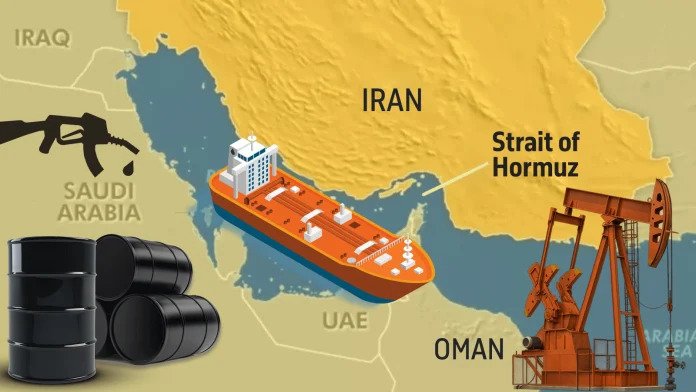
The latest escalation in the Middle East has sent shockwaves through global energy markets, financial systems, and diplomatic channels, as tensions around the Strait of Hormuz intensify and fears of a broader regional war grow. Reports from international monitoring agencies and multiple media outlets indicate a rapidly deteriorating situation involving the United States, Iran, Gulf states, and key global trade partners.
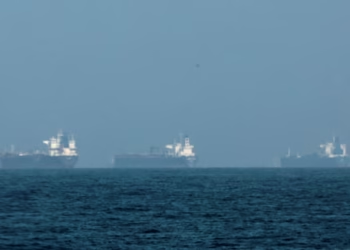
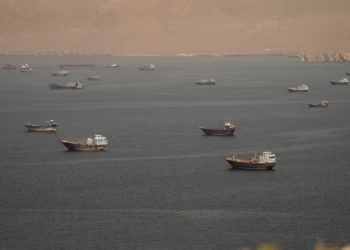
According to the unfolding developments, US military forces have engaged Iranian naval elements in the strategic waters near the Strait of Hormuz, a critical chokepoint through which nearly a fifth of the world’s oil supply passes. The US has claimed that it intercepted and neutralised multiple small Iranian vessels allegedly targeting civilian and commercial shipping lanes. Officials further stated that the operation was part of a broader mission aimed at reopening maritime routes and ensuring the safe passage of commercial vessels stranded due to ongoing hostilities.
Iran, however, has strongly denied these claims, insisting that its forces have not been destroyed and accusing Washington of fabricating incidents to justify military escalation in the region. Iranian military leadership has warned that any further US naval presence near the strait would be considered a direct threat and could be met with retaliatory strikes. The Iranian foreign ministry has also accused the United States and its regional allies of pushing the region toward instability.

The United Arab Emirates, a key US partner in the Gulf, has also reportedly come under renewed attack during the latest flare-up. Authorities in the country confirmed that several drones and missiles were intercepted by air defence systems, although some projectiles managed to cause damage in industrial zones, including an oil facility in Fujairah. Local reports confirmed injuries to foreign nationals and disruptions to energy infrastructure, raising alarm over the vulnerability of Gulf export routes outside the Hormuz corridor.
The situation has been further complicated by competing narratives from Washington and Tehran. US officials maintain that their operations are defensive and aimed at protecting international shipping, while Iran claims it is responding to what it describes as “military provocation” and “foreign interference” in its regional waters. Both sides have issued stark warnings, with the US President reportedly stating that any attacks on American vessels would be met with overwhelming force.
Amid the military confrontation, commercial shipping in the region has been severely disrupted. Several cargo vessels have been reported ablaze or damaged in waters near the UAE coastline, prompting emergency responses from naval and rescue teams. One South Korean-operated vessel experienced an onboard explosion and fire in the Strait of Hormuz, although the blaze was later extinguished and crew members were reported safe. Investigations into the cause remain ongoing, with conflicting accounts emerging regarding whether it was the result of an attack or technical failure.
The crisis has also triggered immediate economic consequences. Global stock markets reacted sharply to the escalation, with Asian and European indices declining amid fears of prolonged instability in energy supply chains. Although oil prices initially surged in response to the disruption, they later showed volatile movement as traders assessed the likelihood of sustained conflict or a potential diplomatic resolution. Brent crude remained elevated above the $100 mark, reflecting ongoing uncertainty in global supply.
In a significant development for global energy trade, reports confirmed that Japan has received its first shipment of Russian crude oil since the disruption of traditional Middle Eastern supply routes. The delivery, sourced from a Russian Arctic project, highlights how countries heavily dependent on imported energy are rapidly seeking alternative suppliers amid fears of prolonged instability in the Gulf. Japan, which relies on the Middle East for the vast majority of its oil imports, has accelerated efforts to diversify its energy sources following the closure and disruption of key shipping lanes.
International economic institutions have also issued warnings about the broader impact of the conflict. The International Monetary Fund has cautioned that prolonged disruption in the Strait of Hormuz could significantly increase global inflation and slow economic growth. In its assessment, sustained oil prices above $100 per barrel could push several economies into recessionary pressure, particularly if the conflict extends into the coming years.
Diplomatic reactions from around the world have been swift. The United Kingdom, Saudi Arabia, and other regional partners have urged immediate de-escalation and a return to negotiations. British leadership has emphasised the importance of maintaining open communication channels and preventing further deterioration of the ceasefire framework that had been loosely holding since earlier phases of the conflict. Saudi Arabia has also strongly condemned attacks on civilian and economic infrastructure in the Gulf, calling for respect for international maritime law and regional stability.

Meanwhile, Iran’s foreign minister has warned against what he described as “quagmire diplomacy,” urging external powers not to deepen their military involvement in the region. Tehran has reiterated that there is no viable military solution and has called for renewed political dialogue under international mediation. However, trust between the parties remains extremely low, and previous attempts at ceasefire enforcement have repeatedly broken down under renewed clashes.
The humanitarian and civilian impact of the conflict is also becoming increasingly visible. Several Gulf states have implemented precautionary measures, including remote learning for schools and heightened security protocols around energy installations. Shipping companies are rerouting vessels or delaying passage through high-risk zones, contributing to global supply chain delays.
As the situation stands, the Strait of Hormuz remains the central flashpoint in a rapidly escalating confrontation that now carries global implications. With military engagements intensifying, energy markets destabilised, and diplomatic efforts struggling to gain traction, the international community faces mounting pressure to prevent further escalation into a wider regional war.
The coming days are expected to be critical, as world powers attempt to balance military deterrence with urgent diplomatic intervention in one of the most strategically sensitive regions on the planet.
Related News:
 Houthis Strike Saudi Arabia as Middle East Tensions Rise
 UK Prepares Aircraft Carrier for Middle East Crisis
 Aid Crisis Grows as Hormuz War Disrupts Supply
 Activists allege abuse after Gaza flotilla seizure
 Trump likens US Navy actions to ‘pirates’
 Global order shifts amid Trump-era turmoil
 Tensions Emerge in Netanyahu-Trump Alliance
 Putin Declares Russia Victory at Scaled Victory Day Parade
 Hunger increasingly weaponised in global conflicts
 Discontent grows around Putin amid war strain
 Former ICC prosecutor condemns US sanctions
 Trump Claims Iran Peace Deal Near Completion
 Taliban global ties grow as rights fears mount
 Shock US Raid: Maduro Pleads Not Guilty in Manhattan Court
 Machado Trump medal gesture reshapes Venezuela power struggle
 Trump Receives Machado’s Nobel Medal in White House Meeting
 Iran unrest slows under brutal crackdown and global tensions
 US Considers Asylum for British Jews Amid Rising Antisemitism
 Russia Strikes Kyiv and Kharkiv as Peace Talks Enter Day Two
 Thousands Protest ICE Operations in Nationwide US Day of Action
 Epstein Files Reveal Trump Officials’ Emails with Financier
 Thousands Protest ICE in New York Against Trump Deportation Campaign
 Middle East Flights Halted After Iran Strikes
 Thousands Protest Iran Strikes Outside US Embassy London
 US Bombers Arrive at RAF Base Amid Rising Iran Tensions
 Ukraine war briefing: Zelenskyy offers help to Saudi Crown prince on combatting Iranian drones
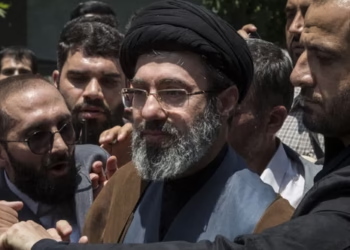 Mojtaba Khamenei Chosen as Iran’s New Supreme Leader
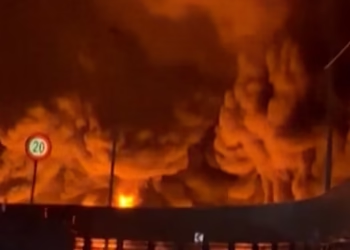 Tehran Oil Depot Strikes Darken City With Toxic Smoke
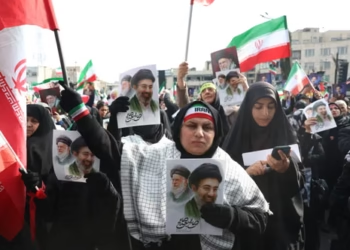 Mojtaba Khamenei Supporters Rally as Iranians Fear Repression
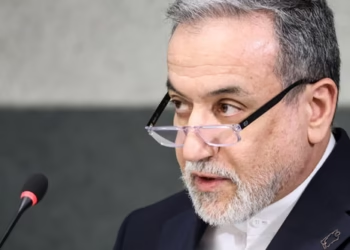 Iran Defiance Grows Amid US-Israel War Pressure
 Hormuz Crisis Sparks Global Oil Market Fears
 Iranian Exile Factions Seek US Backing for Iran’s Future
 Injured Mojtaba Khamenei Elevated as Iran Leader
 Yvette Cooper: UK Must Follow Principles, Not US Pressure
 Trump Iran War Stance Hardens as Conflict Widens
 Ghalibaf Iran: Survivor Emerges in Shifting Power Game
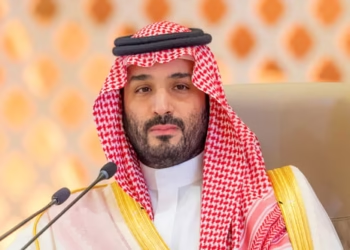 Saudi Arabia Urging US to Keep Up Iran Attacks
 Death, displacement and military duties: children plunged into crisis
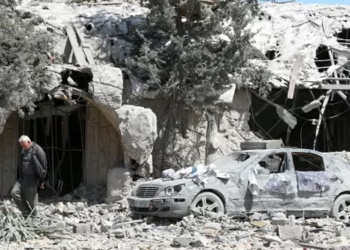 Netanyahu Vows Continued Lebanon Strikes Amid Peace Talks
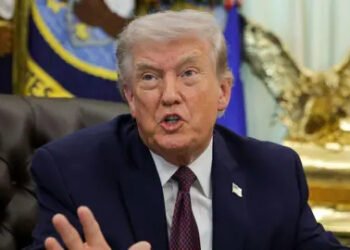 Iran Crisis Tests Trump’s Global Leadership
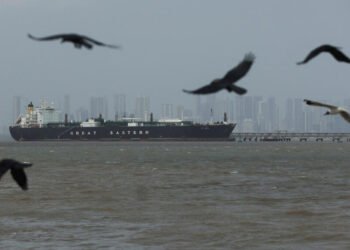 US and Iran Pursue Extension of Ceasefire via Pakistan
 Trump Faces Crisis as Iran Reopens Hormuz Tensions
 Iran Reimposes Strait of Hormuz Restrictions Amid Tension
 Ukraine Urges UK to Seize Russian Oil Tankers
 US Calls Australia Media Law “Foreign Extortion”
 Oil Prices Surge Above $120 Amid Iran Blockade Fears
 Trump orders US troop pullout from Germany
 Ohio’s Battle for Trust: Democrats Vying to Flip the Buckeye State
 Australia pushes Pacific security pact amid China tension
 Ceasefire Standoff Deepens in Ukraine War
 Indiana Republicans Defy Trump in Key Vote Test
 Trump Announces 3-Day Russia–Ukraine Ceasefire Deal
 Netanyahu Calls Early Election Amid Coalition Turmoil
 Israeli Strikes in Lebanon Kill 10 Amid Ceasefire Strain
 UK Pushes for New EU Goods Trade Deal
 Reeves Fights to Keep Treasury Role Amid Labour Turmoil
 Zelenskyy warns over Oreshnik threat as Kyiv hit
 Iran To Propose New Shipping Fees In Strait Of Hormuz
 Trump’s Iran Legacy Hangs on Tehran Deal
 Grief and Devotion Amidst the Rubble of Nabatieh
 High Drama in Tehran Over Secret Nuclear Letters
 Iran Prepares for Massive Six-Day Funeral for Khamenei
 Millions Gather for Khamenei’s Six-Day State Funeral
 Iran Mourns: Millions at Khamenei’s Final Procession
 Labour MPs Urge Burnham to Revive UK Aid Target
 Seoul proposes historic peace talks to replace Korean War armistice
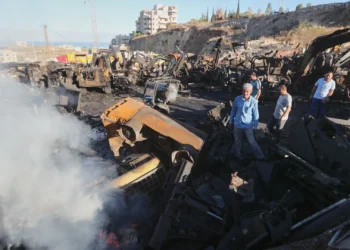 Israeli Strike in Southern Lebanon Kills Seven
 Trump dismisses concerns over 250-day carrier deployment
 BBC to Apologise Over Edited Trump Speech Amid Backlash
 Greene Pushes Epstein Files Amid Trump Fallout
 Shadow Fleet at Sea: Europe’s Battle Against Illicit Oil Shipping
 UK and US Drop in Global Corruption Index Rankings
 Investigation Into Anti-Trump Motives After Gala Shooting
 One Nation Candidate’s Surprising Ties to Independents
 Scepticism and tight security as Beijing braces for Trump
 Tensions Flare as Israeli Nationalists March in Jerusalem
 Tony Abbott Returns as New Liberal Party President
 Trump’s Mount Rushmore Speech: A Divisive Anniversary
 Trump Swaps Planes Amid Iran Tensions
 Yemen Accuses Iran of Violating National Sovereignty