Published: 5 May 2026. The English Chronicle Desk. The English Chronicle Online
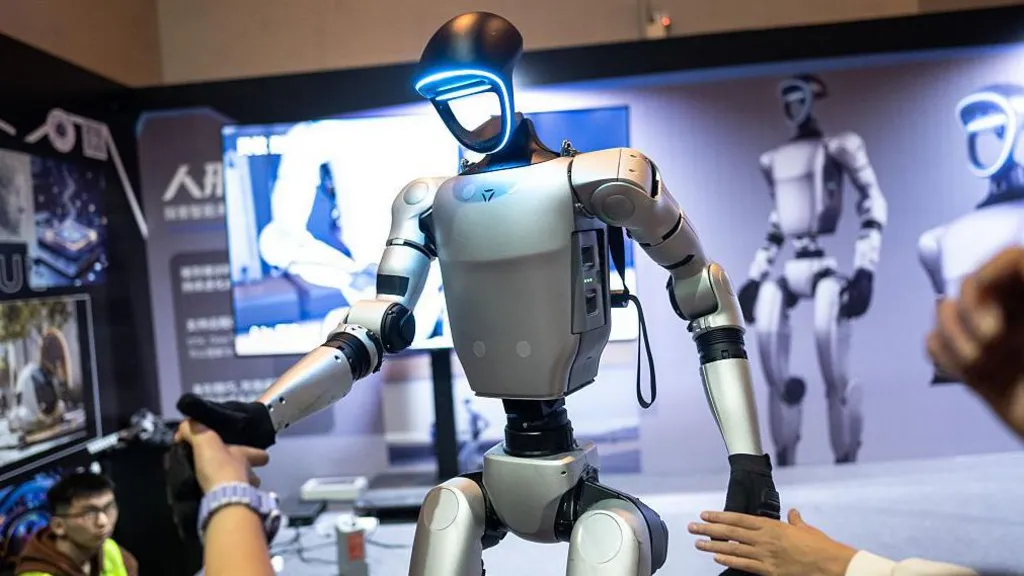
In a provocative move that has sent shockwaves through Silicon Valley and Westminster alike, a leading technology executive has called for the implementation of a “minimum wage for robots.” The proposal, aimed at curbing the rapid displacement of human workers by generative AI, suggests that firms should be legally required to pay a “human-equivalent” tax for every job role successfully automated.

The tech boss argued that without a financial “speed bump,” the “accountability rot” in corporate automation will lead to a permanent “resilience deficit” in the global middle class.
The proposed legislation would force AI firms and large-scale adopters to pay a fee into a “National Retraining Fund” for every AI agent or robotic unit deployed.
The Cost of Displacement: For every 40-hour work week performed by an AI in a role previously held by a human, the firm would pay a tax equal to the statutory minimum wage.
The “Humanity Offset”: Companies that maintain a specific human-to-AI ratio would receive tax credits, creating a “golden tone” for businesses that prioritize human-machine coordination over total replacement.
Targeting the “Clinical” Efficiency: The tax is specifically designed to hit sectors suffering from a “dopamine desert” of repetitive tasks—such as data entry, basic legal research, and customer service—where AI “clinical silence” is currently replacing thousands of entry-level roles.
The tech boss warned that current economic models are ill-equipped for the “160 MPH clip” at which AI is currently evolving.
The “Postcode Lottery” of Employment: Experts warn that without such a tax, certain regions heavily dependent on administrative hubs will face a “national security emergency” of mass unemployment.
Funding the “Resilience” Era: The revenue generated would not go into general government coffers but would be ring-fenced to provide “living stipends” for workers in transition—filling the “medication desert” of lost benefits and social stability.
The “Hormuz” of Intelligence: Just as the Strait of Hormuz conflict has forced a rethink of physical trade, this proposal argues for a “strategic bottleneck” on digital intelligence to ensure social cohesion remains intact.
Critics of the “Robot Minimum Wage” argue it would act as a “millstone” around the neck of national innovation.
The Global Race: Opponents argue that if the UK or US adopts such a tax, tech development will simply migrate to regions with fewer “clinical” restrictions, leading to an even greater “resilience deficit” in Western tech sovereignty.
Defining a “Robot”: Analysts have questioned how the law would distinguish between a “productivity tool” (like a spreadsheet) and a “job-replacing robot” (like a specialized AI agent), warning of a “legal accountability rot” in the definitions.

As the RHS Wisley wisteria blooms and the Southbank Centre celebrates 75 years of human creativity, the debate over taxing AI marks a definitive shift in the 2026 political landscape.
“Justice has no expiry date for the workforce,” the tech CEO concluded. “If we value the output of a machine, we must value the stability of the society it serves.” With the King’s Speech on May 13 expected to focus on “Technological Ethics and Economic Growth,” the concept of a “minimum wage for robots” has moved from a sci-fi theory to a primary pillar of the legislative agenda.
Related News:
 “Precision Over Personnel”: Robots Move In as Waste Firms Battle 40% Staff Turnover
 Quantum Computing: Is This the Tech Race Europe Could Finally Win?
 Reform UK funding: mystery billionaire revealed
 UK Fighter Jet Purchase Could Breach Nuclear Treaty, Warns CND
 Russia repeatedly targets UK military satellites, warns Space Command chief
 Yvette Cooper Backs Digital ID Plan for UK Teens
 UK to Test Digital ID Scheme with Veteran Card
 Reform UK candidate fined £19,000 after using AI-generated cases to challenge election
 Experts Warn Russia’s Burevestnik Missile Could Destabilise Arms Control
 Britain deploys RAF specialists to assist Belgium with drone threats
 BP’s Influence Sparks Controversy in UK STEM Education
 Iran Signals Permanent Break From Global Internet, Activists Warn
 MPs warn AI financial risks threaten UK stability
 MPs warn AI financial risks threaten UK stability
 Starmer Targets AI Chatbots Over Child Safety Concerns
 Trump Directs US Govt to Prepare Release of Files on Aliens and UFOs
 Bill Gates Pulls Out of India’s AI Summit Over Epstein Files Controversy
 Trump Vows UFO File Release After Obama Interview
 Musk Cuts Starlink Access for Russian Forces – Giving Ukraine an Edge at the Front
 Tories Would Scrap ‘Debt Trap’ of High‑Interest Student Loans, Says Kemi Badenoch
 MPs Backed by Phillipson as She Defends Student Loan Change; Average Repayments to Rise by £8 a Month
 Treasury AI plans spark influence concerns
 Anthropic Boss Rejects Pentagon Demand to Drop AI Safeguards
 UK Social Media Ban for Under-16s Gains Momentum
 UK Teen Social Media Ban Trials Begin
 Why Russia Controls Its People With a Flick of a Switch
 Boy George Says He’s Using ChatGPT to Help Write New Songs
 Protesters Rally in San Francisco Against OpenAI Deal With Pentagon
 Streeting Criticises SNP Over NHS App Dispute
 Baba Vanga’s Chilling World War 3 Prediction and Russia’s New Leader
 MPs Reject Under‑16s Social Media Ban, Opt for Flexible Powers
 Ministers Urged to Act Faster on Deepfakes Threat
 MPs Reject Ban on Social Media for Under-16s
 Iran War Puts Trump at Political Risk Amid Rising Prices
 AI Deepfake ‘Content Farms’ Target UK Politics
 Ukraine’s Anti-Drone Bullet Could Shield Gulf Skies
 India’s $300bn Outsourcing Industry Faces AI Test
 House of Lords Backs Landmark Social Media Ban for Youth
 UK Forecast to See Biggest Growth Hit from Iran War
 UK Forces Ready to Seize Russian Shadow Fleet Vessels
 ‘No Surprise’: Ramaphosa Downplays South Africa’s Exclusion from Emergency G7 Summit
 ‘Eye in the Sky’ Blinded: Photos Reveal Destroyed US Radar Jet at Saudi Base
 Record-Breaking Gridlock: DHS Freeze Becomes the Longest Partial Shutdown in US History
 The ‘Squeezed Middle’: India’s Educated Class Faces a 2026 Financial Triage
 Councils Pressed to Use Universal Parking App to Cut ‘Unfair’ Fines
 One Ant for $220: The New Frontier of Wildlife Trafficking
 Trump Considers Military Operation to Seize Iran’s Uranium
 Miliband Accused of ‘Cheating’ After Classing Foreign Gas as Clean Power
 Trump Signals US Exit From Iran as Tehran Eyes Peace
 Markets Shaken as Trump Vows to Hit Iran ‘Extremely Hard’
 Uncertainty Lingers as Trump’s Iran Strategy Remains Shrouded
 One Year of the “Trump Tariffs”: A Global Economic Shift
 China and the US: The Divergent Fronts of the Global AI Superpower Race
 Beyond the Far Side: Artemis II Restores Contact After 40-Minute Silence
 Beyond the Flyby: What Artemis II Tells Us About the Next Giant Leap
 Capitol Hill Showdown: Bill Gates to Testify in Expanding Epstein Inquiry
 The Great Chokehold: Why the Strait of Hormuz is the Epicenter of the 2026 Crisis
 The Silicon Emerald: How Irish Engineers are Cashing In on the AI Boom
 The Academic Chill: Beijing Condemns ‘Hostile’ US Questioning After Researcher’s Death
 OpenAI Halts Stargate UK Project Amid Energy Crisis
 Moldova River Crisis Exposes War’s Hidden Cost
 Artemis II Returns After Historic Moon Flyby
 Market Shock: Oil Surges Past $100 as US Initiates Naval Blockade
 The Frozen Frontier: Why Frostbite is the Least of Concerns for Canada’s Arctic Forces
 Big Tech Lobbies EU to Hide Massive Datacentre Emissions
 Robots Outpace Humans in Beijing Half-Marathon
 Canadian astronaut French words ease language row
 The Next Chapter: Apple’s Future Under the Stewardship of John Ternus
 “Don’t Ignore Us”: Bereaved Families Demand Urgent Summit as PM Meets Tech Giants
 Disneyland Adds Facial Recognition at Entrances
 Inside the World of AI Jailbreakers
 “Grounded”: Beijing Implements Total Ban on Drone Sales Citing Capital Security
 The “Dry” Life: Teens Trialing Social Media Bans Call Initial Disconnection “Boring” and “Dry”
 The “Dementia Deficit”: Why 2026 is the Breaking Point for UK Social Care
 “A Medicine Desert”: Why the Battle for Basic Prescriptions is About to Intensify
 BBC News Faces Deep Cuts in 2,000 Job Plan
 Trump likens US Navy actions to ‘pirates’
 Canadian Fiddler Sues Google Over AI Defamation Claim
 “Lotus Blooms in the East”: BJP Scripts History with Landslide Victory in West Bengal
 Middle East Crisis Escalates as Oil Routes Shake Markets