Published: 5 May 2026. The English Chronicle Desk. The English Chronicle Online
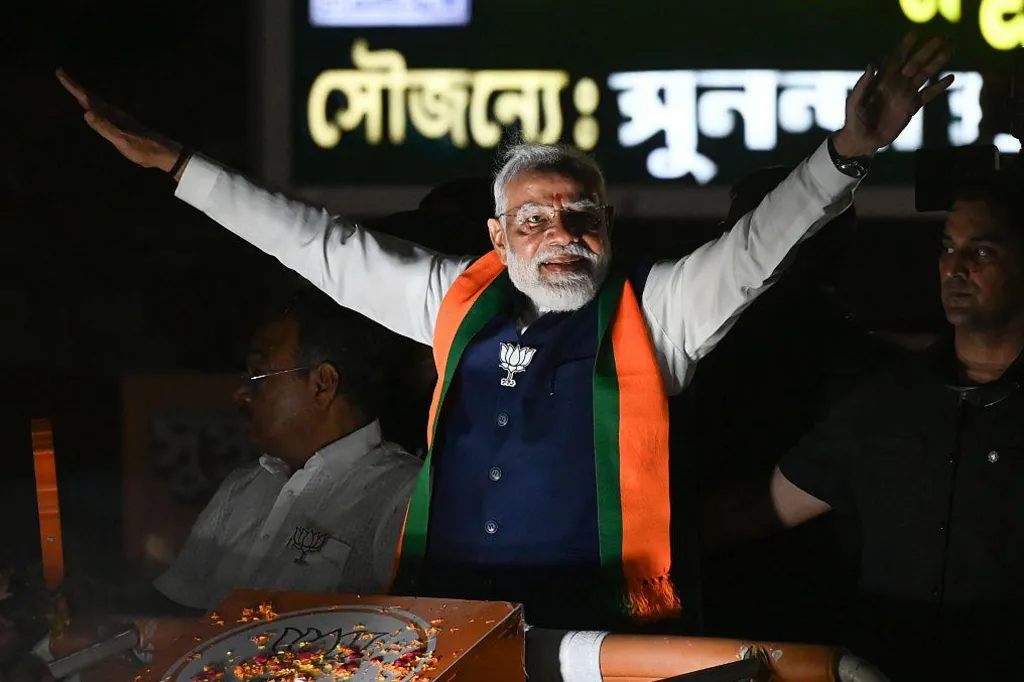
In a political shift of seismic proportions, the Bharatiya Janata Party (BJP) has shattered one of India’s most resilient political fortresses, securing a decisive majority in the West Bengal Assembly elections. Final results confirmed today by the Election Commission reveal that the BJP has won 207 seats in the 294-member house, comfortably crossing the halfway mark to form its first-ever government in the state.

The victory marks the end of Mamata Banerjee’s 15-year tenure as Chief Minister. Her Trinamool Congress (TMC) was reduced to just 80 seats, a dramatic “accountability rot” for a party that had long defined its identity as the sole defender of Bengali culture against “outsider” influence.
The most symbolic moment of the election came from the high-profile constituency of Bhabanipur, where Chief Minister Mamata Banerjee suffered a personal defeat.
The Giant-Killer: BJP leader Suvendu Adhikari defeated Banerjee by a margin of 15,105 votes. Adhikari, a former lieutenant of the Chief Minister, hailed the result as a “victory for Hindutva” and the definitive “retirement of Mamata Banerjee from politics.”
The Cabinet Collapse: The defeat was not limited to the top; nearly 63% of Trinamool ministers lost their seats, including heavyweights in Finance, Education, and Power.
The “Domestic” Milestone: In a story capturing the nation’s imagination, the BJP’s Kalita Majhi—who works as a house help earning ₹2,500 a month—won the Ausgram seat, becoming a symbol of the party’s grassroots “human-machine coordination.”
The BJP’s victory was fueled by a record-breaking 92.9% voter turnout, reflecting a state desperate to move past a perceived “resilience deficit.”
The “SIR” Controversy: The election was preceded by a controversial “Special Intensive Revision” of the electoral rolls, which saw 2.7 million voters removed. While the opposition decried it as a “national security emergency” targeting minorities, the BJP maintained it was a necessary “purging” of illegal voters.
The “Dopamine” of Development: Prime Minister Narendra Modi, who personally led the campaign, promised a “Sonar Bangla” (Golden Bengal), successfully countering the “outsider” tag with a narrative of “good governance” and economic integration.
The Minority Shift: While Banerjee retained support in specific wards, data suggests a significant “postcode lottery” shift, with traditional TMC bastions in North Bengal and rural pockets swinging toward the “Lotus.”
As King Charles concludes his Washington visit, the Bengal result is being analyzed globally as a major boost for Modi’s standing midway through his third term.
A First Since 1937: The BJP has become the first right-of-centre party to govern West Bengal since provincial elections began nearly a century ago, ending a cycle of Left and TMC dominance.
The “Hormuz” of the East: With Bengal’s strategic ports now under BJP control, the central government is expected to accelerate trade initiatives aimed at buffering India against the $126 oil spike and global shipping disruptions.
The Oath-Taking: The BJP has announced that the new government will be sworn in on May 9, a date already being described as a “milestone of Poriborton” (Change).
As the RHS Wisley wisteria blooms and the Southbank Centre celebrates 75 years of British culture, the streets of Kolkata are filled with saffron flags.

“The people’s power has prevailed,” Prime Minister Modi tweeted, bowing to the citizens of Bengal. However, the new administration faces a “clinical” challenge: managing a state deeply polarized by a campaign that saw vandalism and intense rhetoric on both sides.
“The Lotus has bloomed,” noted one veteran journalist. “But in the Garden of Time, the real test is how it handles the thorns of governance.” With the King’s Speech on May 13 likely to reference democratic resilience, the Bengal results have provided the ultimate case study in political persistence.
Related News:
 US Trade Deficit Hits Fresh High Despite Trump’s Tariffs
 US Eases Sanctions on Russian Oil Sales to India During Iran Conflict
 Iran War Puts Trump at Political Risk Amid Rising Prices
 UK Forces Ready to Seize Russian Shadow Fleet Vessels
 Trump Signals US Exit From Iran as Tehran Eyes Peace
 Markets Shaken as Trump Vows to Hit Iran ‘Extremely Hard’
 Uncertainty Lingers as Trump’s Iran Strategy Remains Shrouded
 Questions Linger as Trump’s Iran Strategy Faces Scrutiny
 Pakistan’s Diplomatic Gambit: Bridging the Divide in the Iran War
 The Economic Blockade: UK and 35 Allies Weigh “Unprecedented” Sanctions to Reopen Hormuz
 The Vance Verdict: How the Vice President Navigated the Islamabad “Pressure Cooker”
 The Blockade Gambit: Trump’s High-Stakes Threat Leaves Middle East Predicaments Unchanged
 Trump Faces Crisis as Iran Reopens Hormuz Tensions
 Iran Reimposes Strait of Hormuz Restrictions Amid Tension
 The “Taiwan Exception”: China Unveils Historic Zero-Tariff Access for 53 African Nations
 Trump likens US Navy actions to ‘pirates’
 Ohio’s Battle for Trust: Democrats Vying to Flip the Buckeye State
 Fog of War: US Rejects Iranian Claims of Missile Strike on Navy Frigate
 UK Must Act with Courage and Clarity on Israel-Palestine Conflict, Says Foreign Affairs Committee Report
 Radioactive Leak at UK’s Nuclear Warhead Base Sparks Outcry Over Safety and Secrecy
 Hong Kong Summons UK and Australian Envoys Following Asylum Grants to Democracy Activists
 Is the UK Ready to Put Boots on the Ground in Ukraine? Assessing Military Capacity and Challenges
 Channel Crossings Surge: Over 1,000 People Arrive in the UK in Small Boats in a Single Day
 Widow of Charlie Kirk Forgives Killer at Emotional Memorial Service
 Yvette Cooper Signals Global Momentum Towards Gaza Peace Deal Amid Humanitarian Crisis
 Russia’s Latest Push to Win US Favors Shows Deep Desperation
 BBC to Apologise Over Edited Trump Speech Amid Backlash
 Britain deploys RAF specialists to assist Belgium with drone threats
 Trump Urges Herzog to Grant Netanyahu Full Pardon
 Indian authorities demolish Kashmir home linked to Red Fort blast
 Greene Pushes Epstein Files Amid Trump Fallout
 December Run-Off in Chile as Election Produces No Winner
 Canada Passes Carney’s First Budget in Tight Parliamentary Vote
 Shadow Fleet at Sea: Europe’s Battle Against Illicit Oil Shipping
 India’s COP30 Delay Raises Global Climate Concerns
 Georgians Defy Government Crackdown After Year of Protests
 EU Says US Ties Have Suffered ‘Big Blow’ After Greenland Crisis
 Australian Families Leave Syrian Camp for Home
 Starmer Weighs Fast-Tracking Defence Boost
 Nine Arrested in France Over Death of Far‑Right Student
 Australian PM Says Former Prince Andrew Has Suffered ‘Extraordinary Fall’ but That Won’t Prompt Republic Referendum
 Musk Cuts Starlink Access for Russian Forces – Giving Ukraine an Edge at the Front
 Farage Chagos Islands Row Sparks Fury
 Ukraine Negotiator Reveals What It Feels Like Facing Russia
 Chad Shuts Border With Sudan in Bid to Stop Conflict Spreading
 French Minister Moves to Block US Envoy Kushner from Government Access
 Has Europe truly learned from the failures of 2022?
 American Citizen Killed in Cuba Boat Shooting, U.S. Officials Say
 Iran’s Regime Still Intact — Coming Days Will Test Its Survival
 Trump Faces Questions Over Iran Conflict Plan
 Herzog Asio meeting sparks security storm
 Petrol Prices Soar as Retailers Accused of Gouging Amid Global Tension
 Finland Plans to Lift Decades‑Old Ban on Hosting Nuclear Weapons
 Minister Meets Crews Who Will ‘Take Out’ Iranian Drones
 Nine Days of Strikes Reshape the Middle East
 Trump Pressures Congress Over Save America Act
 Iranian Football Squad Asylum Drama Shocks Australia
 Ukraine War Becomes Flashpoint in Hungarian Election
 Queensland Protest Laws Spark Free Speech Backlash
 Yvette Cooper: UK Must Follow Principles, Not US Pressure
 Trump Nato threats expose Iran strategy vacuum
 Trump’s Confidence Undimmed — But Every Iran Option Carries Risk
 Israel Says Iran Security Chief Larijani ‘Killed’
 Philippines energy emergency sparks coal power surge
 Trump Facing Backlash from Epstein Survivors Over Files
 ‘Eye in the Sky’ Blinded: Photos Reveal Destroyed US Radar Jet at Saudi Base
 Trump Considers Military Operation to Seize Iran’s Uranium
 Report Says Pezzullo Acted ‘Recklessly’ in Dealings
 Hungary Claims Plot to Target Gas Pipeline Pre-Vote
 Oil and Diplomacy: Russian Refineries Burn as Zelenskyy Secures Middle East Shield
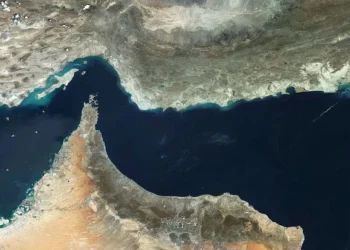 The Great Chokehold: Why the Strait of Hormuz is the Epicenter of the 2026 Crisis
 Moldova River Crisis Exposes War’s Hidden Cost
 The Frozen Frontier: Why Frostbite is the Least of Concerns for Canada’s Arctic Forces
 Diplomatic Deadlock: Lebanon Enters High-Stakes Border Talks with ‘No Cards to Play’
 The Fog of War and the Ticker Tape: Suspicious Trades Rile Washington
 Judicial Whiplash: Virginia Court Pauses Redistricting 24 Hours After Public Vote
 “Industrial-Scale Extraction”: White House Memo Accuses China of Mass AI Theft
 Capitalism ‘Suicidal’, Warns Petro at Climate Summit
 “An Endurance Test for the Mind”: British Couple Sentenced to 10 Years in Tehran
 Trump Threatens UN Budget Cuts as US Pushes ‘Trade Over Aid’ Agenda