Published: 17 January 2026. The English Chronicle Desk. The English Chronicle Online
Iran is preparing for what digital rights activists describe as a historic and deeply troubling shift: a permanent separation from the global internet, replacing open access with a tightly controlled system where only regime-approved individuals can connect beyond the country’s borders. If fully implemented, the plan would mark one of the most extreme examples of state-controlled connectivity in the modern digital era and could reshape Iranian society, its economy and its relationship with the outside world.
According to Filterwatch, an organisation that monitors internet censorship and digital repression in Iran, authorities are moving ahead with a confidential strategy to redefine internet access as a “governmental privilege” rather than a basic public utility. Citing multiple sources inside Iran, the group says senior officials and state-aligned media have already indicated that unrestricted access to the international internet will not return after 2026. Instead, a new normal is being prepared, one in which the vast majority of Iranians will be confined to a domestic, state-controlled network.

Under the reported plan, only individuals who pass government vetting or possess security clearance would be granted access to a filtered version of the global internet. Journalists, academics, government officials and select business figures could be among those approved. Everyone else would be restricted to Iran’s so-called national internet, a parallel digital ecosystem that operates entirely within the country and remains largely cut off from the wider world.
Amir Rashidi, the head of Filterwatch, says the current situation suggests authorities are already testing this model in practice. “It looks like they are satisfied with the current level of connectivity,” he said. “They believe this kind of shutdown helped them to control the situation, and that belief is driving policy.”
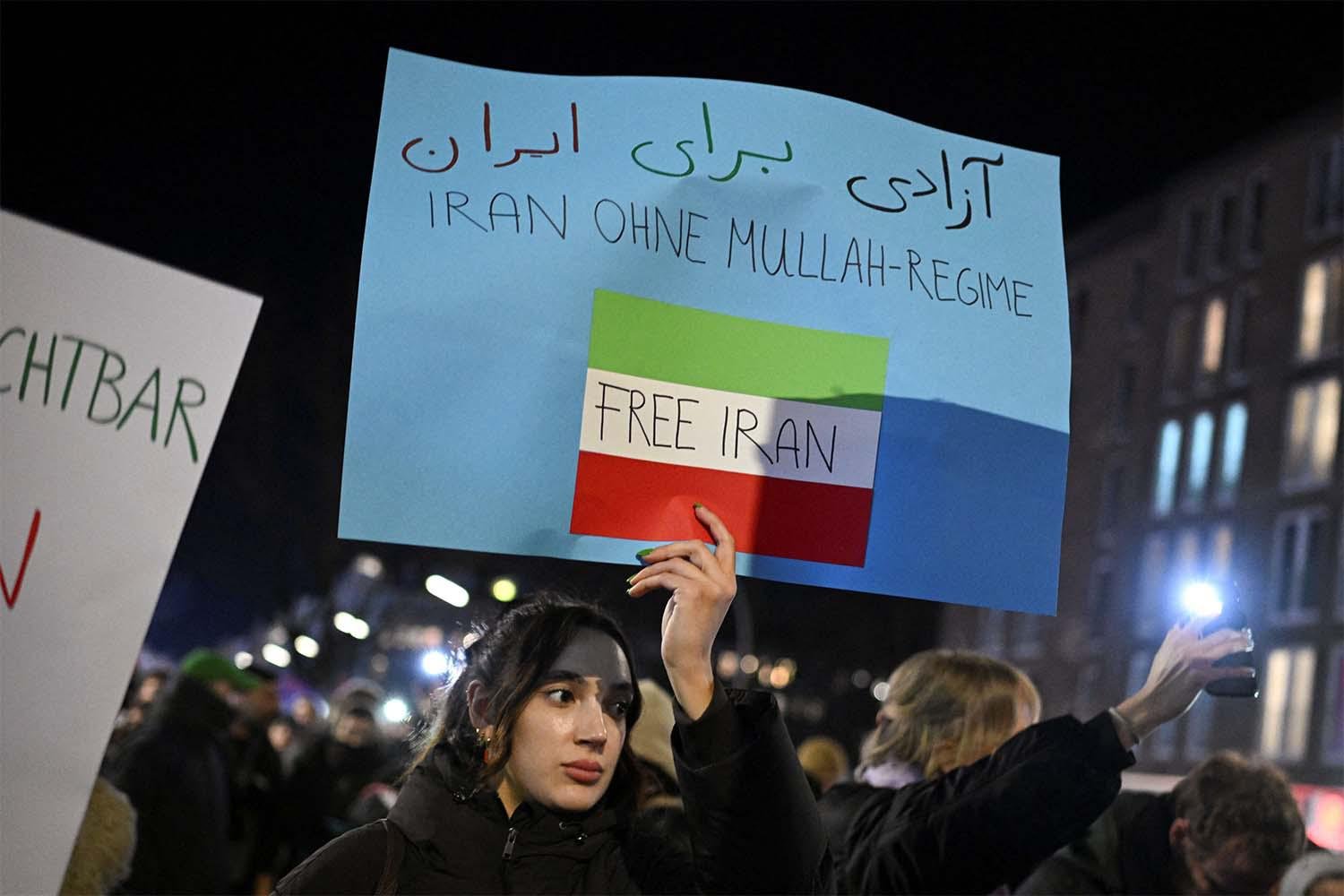
Iran’s latest internet shutdown began on 8 January following nearly two weeks of escalating anti-regime protests. The demonstrations, which spread rapidly across multiple cities, were met with an intense security response. Thousands of people are believed to have been killed, according to human rights groups, though exact figures remain difficult to verify because of the near-total blackout of information. While the protests appear to have slowed under the weight of arrests and violence, the shutdown has continued, severely limiting Iranians’ ability to communicate with each other and with the outside world.
Only fragments of information are escaping the country, making this one of the most severe internet shutdowns in history. It has already surpassed Egypt’s 2011 blackout during the Tahrir Square uprising in duration and scope. Iranian state media has quoted government spokespersons as saying that international internet access will remain blocked until at least Nowruz, the Persian new year on 20 March. Activists fear this deadline may simply mark another step toward a permanent disconnection.
A former US state department official who worked extensively on issues of internet freedom and censorship said the idea of Iran cutting itself off indefinitely from the global internet was both plausible and alarming. While acknowledging the technical feasibility, the official warned of immense economic and cultural consequences. According to this assessment, Iran risks inflicting long-term damage on its own society and economy by attempting to isolate itself digitally, potentially overestimating its ability to manage the fallout.
The current crisis is not an isolated decision but rather the culmination of a long-term strategy. For more than 16 years, Iranian authorities have steadily expanded their control over digital infrastructure and online activity. One key element of this strategy is a sophisticated filtering and surveillance system that allows selective access to the global internet while blocking the majority of users, a practice known as whitelisting.
Researchers specialising in Iran’s internet infrastructure, working with organisations such as Project Ainita and the Outline Foundation, say this system was likely enabled with the help of technology exported by China. High-capacity “middleboxes”, devices installed on network cables, allow authorities to monitor, inspect and manipulate vast amounts of internet traffic in real time. These systems can block specific websites, disrupt encrypted connections and limit or disable many virtual private network tools that Iranians have long relied on to bypass censorship.
According to these researchers, such technology can now be scaled to monitor the traffic of an entire country, enabling state surveillance at an unprecedented level. Every connection can be controlled in both directions, giving authorities the power not only to restrict access but also to track and identify users.
Alongside this surveillance apparatus, Iran has invested heavily in building a national internet, sometimes referred to as the “information network”. This domestic system allows access only to services hosted within Iran. It includes state-approved messaging platforms, search engines, navigation tools and a video streaming service designed to mirror global platforms like Netflix. While functional, it is heavily monitored and almost entirely disconnected from the broader internet.
The roots of this system go back to 2009, when authorities abruptly shut down internet access during mass protests following the disputed re-election of Mahmoud Ahmadinejad. At the time, the move caused widespread disruption, damaging banks, businesses and government operations. Officials later acknowledged that a complete shutdown carried enormous costs and risks.
By 2012, the government had learned from that experience and established the Supreme Council of Cyberspace to oversee a more sophisticated approach. Rather than pulling the plug entirely, authorities began selectively blocking platforms such as Facebook, Twitter and Google during periods of unrest, while keeping economically vital services running. Over time, this evolved into a more refined system of control.
In the decade that followed, Iran used a combination of incentives and pressure to bring critical digital infrastructure inside its borders. Online businesses, banks and internet service providers were encouraged to relocate data centres and offices domestically through tax breaks and regulatory advantages. Those who resisted found it increasingly difficult, or impossible, to operate within the country.
A breakthrough moment came in 2015, when researchers used Bitcoin to rent server space inside Iran and began scanning the country’s IP address space. What they discovered was striking: Iran was constructing a fully functional internal internet, partitioned from the outside world but using the same technical protocols found in private corporate networks. The system allowed seamless internal connectivity while making it effectively impossible for data to be routed outward.

Today, that national internet has proven resilient. It has continued to function throughout the recent protests and is now, for most Iranians, the only way to access online services. While it may expand in features and content, it remains closed to external users and isolated from global information flows.
Experts say Iran’s demonstrated capacity to control its internet places it ahead of many other authoritarian regimes that aspire to similar levels of digital sovereignty. However, whether it can sustain a permanent break remains uncertain. The economic implications alone could be severe, affecting trade, innovation, education and everyday life. Iranian authorities would ultimately bear responsibility for the damage inflicted by such isolation.
Digital rights groups argue that the alarm being raised now is justified. A permanent split from the global internet would not only restrict freedom of expression but also redefine citizenship and access to information along political lines. As the situation unfolds, the world is watching to see whether Iran will indeed cement this new digital reality, or whether the pressures of economic and social cost will force a rethink.
Related News:
 UK Fighter Jet Purchase Could Breach Nuclear Treaty, Warns CND
 Russia repeatedly targets UK military satellites, warns Space Command chief
 Experts Warn Russia’s Burevestnik Missile Could Destabilise Arms Control
 Britain deploys RAF specialists to assist Belgium with drone threats
 Night after night, Belgium is on high alert.
 Ukraine to Get 100 French Rafale Jets in Historic Deal
 Iran Social Media Strategy Shifts to Information War
 Cluster Strikes Test Israel’s Missile Defences
 Moldova River Crisis Exposes War’s Hidden Cost
 Canadian astronaut French words ease language row
 RAF Typhoons scrambled amid Russian drone threat near Nato
 Doomsday Clock Nears Midnight Amid Global Crises
 Kinnock’s Rebuke Echoes Loudly as Corbyn Allies Launch Left-Wing Breakaway: “A Gift to Farage”
 Trump Administration Dismisses 17 Immigration Judges, Sparking Debate Over Judicial Independence
 UK Must Act with Courage and Clarity on Israel-Palestine Conflict, Says Foreign Affairs Committee Report
 Trump Threatens 100% Tariff on Nations Importing Russian Oil Amid India Standoff Over Ukraine War
 Radioactive Leak at UK’s Nuclear Warhead Base Sparks Outcry Over Safety and Secrecy
 Mutual Inconvenience: Why Alaska Was Chosen for the Trump-Putin Summit on Ukraine
 Hong Kong Summons UK and Australian Envoys Following Asylum Grants to Democracy Activists
 Is the UK Ready to Put Boots on the Ground in Ukraine? Assessing Military Capacity and Challenges
 Conservative Influencer Charlie Kirk Fatally Shot During University Debate
 Channel Crossings Surge: Over 1,000 People Arrive in the UK in Small Boats in a Single Day
 Widow of Charlie Kirk Forgives Killer at Emotional Memorial Service
 Google at 27: The Untold Story of Ruth Kedar, the Woman Behind the Iconic Logo
 Yvette Cooper Signals Global Momentum Towards Gaza Peace Deal Amid Humanitarian Crisis
 Public Trust in SNP Hits Historic Low Amid NHS Concerns
 Johnson Suggests Mandelson Linked to China Spy Controversy
 Rachel Reeves signals welfare reform ahead of key budget
 Reform UK candidate fined £19,000 after using AI-generated cases to challenge election
 Russia’s Latest Push to Win US Favors Shows Deep Desperation
 BBC to Apologise Over Edited Trump Speech Amid Backlash
 Trump Urges Herzog to Grant Netanyahu Full Pardon
 Indian authorities demolish Kashmir home linked to Red Fort blast
 Greene Pushes Epstein Files Amid Trump Fallout
 Trump Deploys DHS to Charlotte in Major Arrest Operation
 December Run-Off in Chile as Election Produces No Winner
 Canada Passes Carney’s First Budget in Tight Parliamentary Vote
 Shadow Fleet at Sea: Europe’s Battle Against Illicit Oil Shipping
 India’s COP30 Delay Raises Global Climate Concerns
 Georgians Defy Government Crackdown After Year of Protests
 EU plans $105bn Ukraine aid using frozen Russian assets
 Trump Policies Boost China’s Global Rise, Survey Finds
 Guterres Warns Global Cooperation Under Threat at UN’s 80th Year
 Historic Abu Dhabi Talks Bring US, Ukraine and Russia Together
 Thousands Protest ICE Operations in Nationwide US Day of Action
 Starmer Condemns ‘Depraved’ Russian Strikes on Ukraine
 Herzog visit sparks protests across Australian cities
 Sydney Protest Escalates and Elderly Woman Suffers Severe Injury
 Tarique Rahman’s Rise Toward Bangladesh’s Top Job
 Starmer Targets AI Chatbots Over Child Safety Concerns
 AFP Reviews Pauline Hanson Comments
 Duterte ICC Hearing Begins Amid Defiance
 Trump Tariffs Threat Spark UK and EU Alarm
 The Dangerous Rise of Remigration Across Modern Europe
 Trump’s Marathon Speech Fails to Mask a Growing National Disconnect
 US to offer passport services in West Bank settlements
 Iran Defiance Grows Amid US-Israel War Pressure
 Danish Election Deadlock Shakes Frederiksen’s Grip
 Trump to Visit China in May After Iran War Delay
 Pope Rebukes Leaders for War as Middle East Tensions Rise
 Trump to Deploy “God Squad” Over Gulf Wildlife Protections
 Army Probes Apache Flyover at Kid Rock’s Nashville Estate
 Artemis II: Humanity Returns to the Moon After Decades
 Italian Town Buys Mussolini Villa to Keep Away Fascist Fans
 Report Says Pezzullo Acted ‘Recklessly’ in Dealings
 Trump Employs Nixon’s Madman Theory Amid Iran Crisis
 Hungary election: Orbán faces biggest test amid scandal
 Suspected Plot Targets Pipeline Before Hungary Vote
 Trump approval plunges amid Iran war fears
 Ohio’s Battle for Trust: Democrats Vying to Flip the Buckeye State
 US ‘Narco Boat’ Strikes Draw Global Outcry
 Afghan Families Left in Limbo Face Risk of Deportation
 US Awaits Iran Reply on New Ceasefire Proposal
 Discontent grows around Putin amid war strain
 Starmer Leadership Under Pressure After Setbacks
 House Curbs Trump’s War Powers in Rare Rebellion
 UK Ministers Lobby Trump Over Under-16s Social Media Ban
 Le Pen to Run for President Despite Embezzlement Conviction
 Ukraine Creates Long-Range Strike Command
 Houthis Strike Saudi Arabia as Middle East Tensions Rise