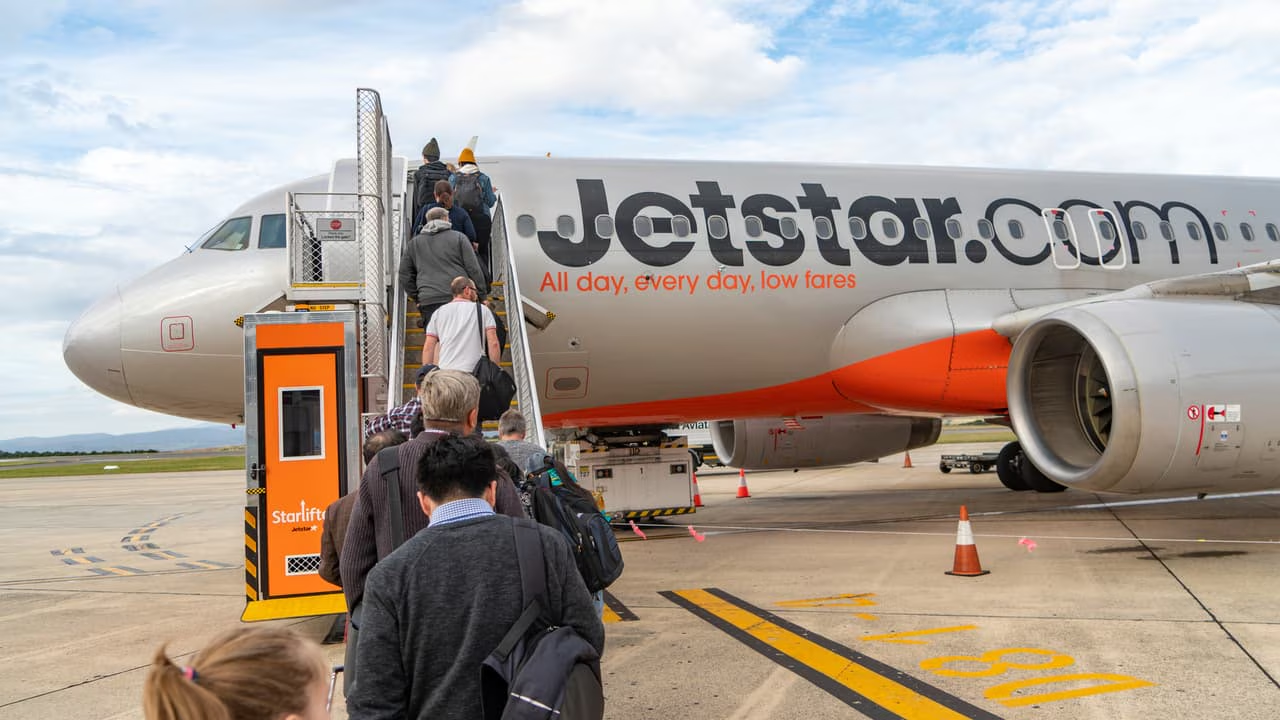
As many as 1.1 million Jetstar customers could be eligible to participate in a major class action lawsuit alleging that the Australian airline failed to provide cash refunds for flights cancelled during the Covid-19 pandemic. The legal proceedings centre on claims that passengers were offered travel credits instead of money they were allegedly entitled to receive after thousands of domestic and international flights were cancelled between 2020 and late 2022.
The case has gained renewed attention after Australia’s Federal Court confirmed that notices would be sent to potentially affected customers, informing them about their eligibility to participate in the proceedings or formally opt out. The notices are expected to reach approximately 1.1 million people by 4 December 2026, making the lawsuit one of the significant consumer disputes arising from the pandemic’s disruption of the aviation industry.

The legal firm Echo Law, which is leading the class action, has urged customers to pay attention to the notifications and understand their purpose. The firm said it wanted to ensure recipients recognised the communication as legitimate rather than mistakenly treating it as a scam. With such a large number of people potentially affected, clear public communication is considered important to ensure customers understand their legal options.
The lawsuit alleges that Jetstar failed to meet its obligations to passengers whose flights were cancelled during the pandemic. According to the claims, customers were issued flight credits rather than cash refunds, despite allegedly being entitled to have their money returned. The legal action argues that the airline’s approach breached Australian consumer law and left customers without access to funds that should have been refunded.
The allegations also include claims that Jetstar misled passengers and engaged in unconscionable conduct. Echo Law argues that the airline’s handling of cancelled bookings placed customers in an unfair position, particularly during a period when travel restrictions and uncertainty had already created significant financial and personal difficulties for millions of people.
The airline has denied the allegations and is defending the class action. It maintains that its response to the pandemic involved offering customers several options depending on the circumstances surrounding their disrupted travel arrangements.
A Jetstar spokesperson said the airline had taken a range of measures during the Covid-19 crisis to respond to rapidly changing travel restrictions while supporting customers affected by cancellations and other disruptions. These options included travel credits, changes to flights without fees and refunds, depending on individual circumstances.
The airline also stated that its Covid-19 vouchers remained valid after it removed their expiry dates in 2023. This means customers holding the credits were not required to use them within the original validity period. However, the central question in the legal dispute is whether customers should have received cash refunds in the first place rather than being directed towards credits.
Andrew Paull, a partner at Echo Law, alleged that Jetstar’s approach to issuing vouchers was designed to protect the airline’s cash position during the pandemic. He argued that customers were left holding credits when they should have received refunds, while the airline retained money paid for flights that were ultimately cancelled.
Paull also claimed that some passengers felt they had little practical choice but to accept the vouchers because they feared losing the value of their original bookings. According to the allegations, customers who later attempted to use their credits to arrange new journeys sometimes had to pay additional amounts because replacement fares were more expensive than their original tickets.
For affected families, the issue may have involved more than simply waiting for a refund. The pandemic caused widespread disruption to travel plans, employment arrangements and household finances. Passengers who had already paid for flights but could not travel may have needed the money for other expenses during a period of considerable uncertainty.
The class action seeks to address whether Jetstar’s treatment of these customers was consistent with its legal responsibilities. It also raises broader questions about the rights of airline passengers when services are cancelled and the extent to which travel companies can offer credits instead of returning money.
The case follows another major legal dispute involving pandemic-related travel credits, this time concerning Qantas, Australia’s largest airline. Echo Law previously brought a separate class action against Qantas over its handling of Covid-19 travel credits. In March 2026, Qantas agreed to settle that case for $105 million without admitting liability.
The settlement has drawn further attention to how major airlines managed customer payments during the pandemic. Although the Qantas proceedings and the Jetstar lawsuit are separate legal matters, both involve questions about the treatment of passengers whose travel arrangements were cancelled during the global health emergency.
The Jetstar case is scheduled for mediation in December 2026. Mediation will provide an opportunity for the parties to explore whether an agreement can be reached without proceeding to a full trial. If negotiations fail, the case is expected to move towards a trial, which is currently anticipated in March 2027.
The proceedings are being supported financially by Court House Capital, the litigation funder backing Echo Law’s class action. Litigation funding can allow large groups of consumers to pursue legal claims that might otherwise be too expensive or difficult to bring individually.
Heather Collins, chief investment officer at Court House Capital, criticised the pace of the dispute and accused Jetstar of seeking to delay a resolution while continuing to hold money that she said belonged to Australian families. Her comments reflect the frustration among those supporting the legal action, although the allegations remain contested and have yet to be determined by the court.
For customers who received travel credits during the pandemic, the court-approved notices represent an important development. Eligible passengers will have an opportunity to understand how the class action applies to them and whether they wish to remain involved or opt out. The precise circumstances of individual bookings may be relevant to determining who is covered by the proceedings and what claims can be pursued.
The large number of potentially affected passengers also highlights the scale of the financial impact that pandemic-era airline cancellations may have had on consumers. Travel restrictions forced airlines around the world to suspend services, cancel routes and adjust operations, leaving passengers facing uncertainty over bookings and payments.
While airlines were under considerable financial pressure during that period, consumer advocates and legal representatives argue that companies must still meet their obligations to customers. The dispute involving Jetstar will therefore be closely watched by passengers and the wider travel industry.
The outcome could help clarify how airlines should handle refunds when flights are cancelled and what protections customers can expect when travel services cannot be delivered. It may also influence how businesses approach customer credits and refunds during future large-scale disruptions.

For now, Jetstar continues to reject the claims and is preparing to defend itself through the legal process. The planned mediation in December could offer an opportunity to resolve the dispute, but if no agreement is reached, the Federal Court may ultimately be required to determine whether the airline’s actions breached consumer protection laws.
With notices expected to reach around 1.1 million people, the case has become a major test of airline accountability and consumer rights in Australia. For thousands of families who paid for journeys that never took place, the proceedings could represent an opportunity to seek answers about what happened to their money during one of the most disruptive periods in modern aviation history.
Related News:
 Trader Wins Unfair Dismissal Case After Overseas Work
 UK Retailers Accused of Breaking Refund Laws
 Queensland Hospital to Close Labs After Safety Probe
 AI Workplace Shift Raises Jobs and Workers’ Rights Concerns
 NSW Delays Tougher Rules on Property Underquoting
 Ukraine Urges UK to Seize Russian Oil Tankers
 Ukraine Moves to Seize Water Company
 Councils spend £125m on illegal children’s care
 Thames Water Revises Oxfordshire Mega-Reservoir Plan
 Seoul Restaurant Fined Over Ant-Topped Dessert
 Entain Plans 400 Job Cuts After Profit Update
 Lords Call for Tobacco-Style Gambling Ad Ban
 Australia Post Worker Jailed Over Stolen Bank Cards
 Trump and Mamdani Hold Cordial Gracie Mansion Meeting
 Elizabeth Holmes Set for Halfway House Transfer
 Dale Vince Plans New London-Wide News Operation
 UK University Strikes Spread as Financial Pressure Grows
 Burnham Opens Door to Possible UK Return to EU
 Poundland Rescue Bid Could Protect 11,000 Jobs
 Royal Nursing Union Ends Partnership With Teva UK
 Feeld Founders Receive Record Dividend as Sales Rise
 Badenoch Raises Prospect of 2027 UK Election
 BT Broadband Pauses Raise Digital Switchover Concerns
 NSW Leader Downplays Impact of Landmark Coal Ruling
 NSW Police Bid Delays Inquiry Into Sydney Protest
 Sam Wood Denied Bail Over Alleged Domestic Assault
 Ministers Push ATO to Reconsider Credit Card Ban
 US Senate Debates Turn Bitter as Midterms Near
 Australia Delays Tax Credit Card Payment Ban After Backlash
 Sydney Town Square Plans Face New Planning Hurdle
 UK Water Firms Earn Millions From Industrial Wastewater
 UK Pharmacy Body Drops Teva After Ethical Concerns
 Three Convicted in Mexico Surfing Trip Murders
 Premier League Faces a Crisis of Trust After City Verdict
 Hanson Attacks Taylor as Australian Conservatives Clash
 Bedbug Infestation Grounds Qantas Plane in Rome
 Baby Boy Found Dead at Adelaide Motel: Two Charged
 Elizabeth Struhs Inquest Examines Child Safety Failures
 Camera Discovery Triggers Navy Ship Investigation
 UK Water Firms Face £107m Bill Reduction Penalties
 Brazil Cuts Working Week to 40 Hours in Lula Election Boost
 One Nation Pledges $2,000 Baby Subsidy in Victoria
 Australian Mortgages Now Cheaper Than Rent in Some Suburbs
 Cormann Warns Australia Against Populist Migration Caps
 UK Family Linked to Offshore Gambling Licence Controversy
 Alberta Referendum Exposes Deep Divisions Over Independence
 Helen Haines Loses Leg in Alleged Targeted Attack
 Alberta Voters Reject Push for Canadian Independence
 Trump Pledges $400m to Boost Republicans in Midterms
 Helen Haines Loses Both Legs After Alleged Attack
 Greens Face Leadership Test as Jordon Steele-John Misconduct Claims Leave Party in Limbo
 Post Office Closures Raise Fears of UK Postal Deserts
 Former RAAF Pilot Accused of Murdering Wife
 UK Land Registry Plan Faces Opposition From Landowners
 Erin Patterson Faces Life in Prison After Appeal Loss
 Victorian Magistrate Reprimanded Over Courtroom Remarks
 WA Facial Recognition Trial Scans 1.38m Faces
 Australia Faces Deeper Economic Slowdown
 Alan Jones Trial Paused for Melbourne Cup Viewing
 Australia Defends Teen Social Media Ban in High Court
 David Jones Faces Administration After Talks Collapse
 Hanson Takes Racial Discrimination Case to High Court
 Lamarre-Condon Defends First Shot in Double Murder Trial
 UK Employers to Be Forced to Publish Job Salaries
 CFMEU Influence Under Scrutiny in Victoria Corruption Inquiry
 Victorian Labor Faces Election Crisis as Poll Slumps to 18%
 Starbucks to Create 7,500 UK Jobs in Major Expansion
 Australian Mortgage Confidence Hits 32-Year Low
 Tasmania Tells Tourists to Stay Away in Bold Campaign
 Megaspeed Mystery Deepens After Nvidia CEO Resigns
 Microsoft Outage Sparks Billion-Dollar Fears in Australia
 Melbourne Cup Horse Found Dumped in Sydney Skip Bin
 NSW Inquest Examines Deaths of Twins After Free Birth
 Labor Faces Five Major Battles Before Year-End
 Bikie Faces Questions Over Fake $20,000 Souvlaki Bill
 NSW Liberal Exodus Deepens as Mark Speakman Quits
 Toxic Vape Sedative Linked to Hospitalisations in NSW
 Indonesia Factory Fire Kills 24, Dozens Missing
 Alex Greenwich Withdraws Support for Fred Nile State Funeral
 Queensland Football Fee Dispute Sparks Club Revolt