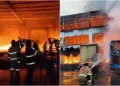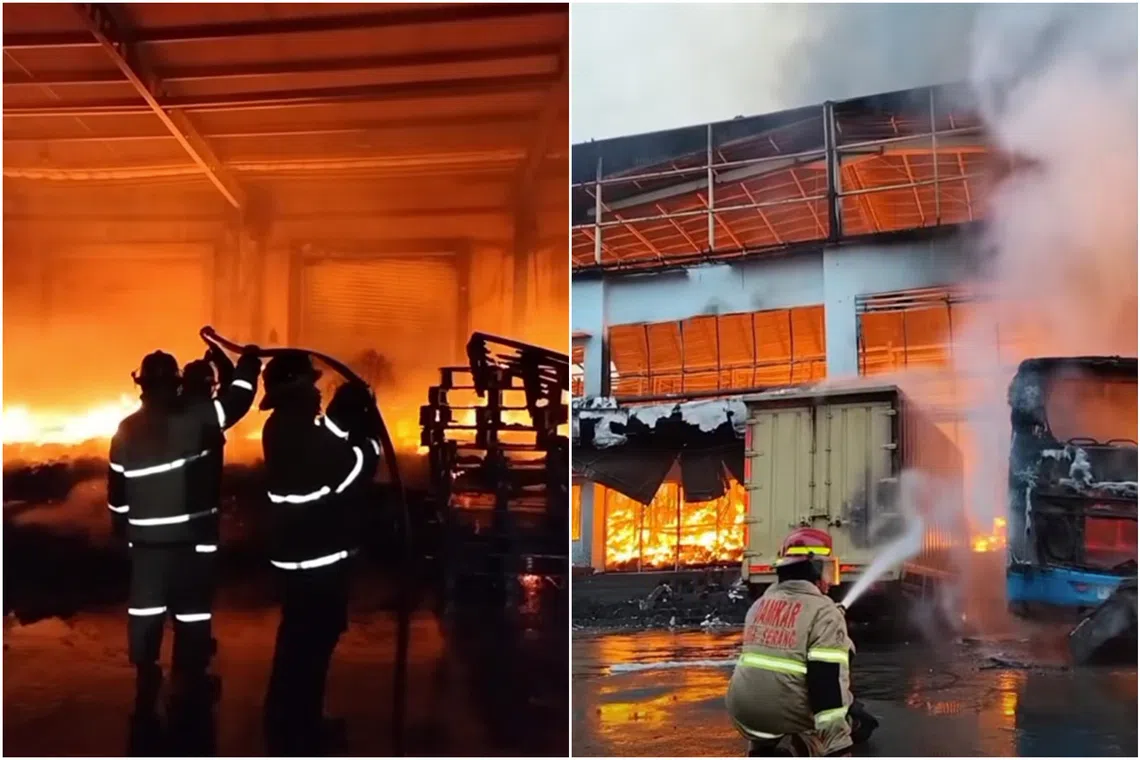
At least 24 people have died and around 30 others remain missing after a devastating fire engulfed a confectionery factory in Indonesia’s Banten province, triggering a major search and rescue operation. Emergency responders are continuing to search through the burned-out building, facing unstable structures, collapsed sections and the possibility of renewed flames as they attempt to locate those still unaccounted for.
The fire broke out on Saturday at the PT Fonusa Agung Mulia confectionery factory in Cikande, approximately 50 kilometres west of Jakarta. The incident has raised serious concerns about industrial workplace safety, emergency preparedness and the protection of thousands of employees working in Indonesia’s manufacturing sector.

Authorities confirmed that 24 people had died in the disaster, while approximately 30 others were still missing. According to Banten province Governor Andra Soni, an estimated 60 people were inside the factory when the fire started. The difference between the estimated number of people present and those confirmed dead or missing has heightened concerns about the possibility of additional casualties.
Said Iqbal, a presidential adviser on labour issues, confirmed the death toll while speaking to reporters. He said the authorities were examining whether workplace safety procedures had been properly implemented and indicated that the factory’s chief executive would be summoned as part of the investigation.
Preliminary findings suggest that an electrical short circuit involving an air-conditioning unit may have triggered the blaze. However, investigators have not established an official cause, and further examination will be necessary to determine exactly how the fire started and why it spread so rapidly through the facility.
The factory is owned by United Family Food, a major Indonesian consumer goods manufacturer. The company produces several popular products, including Milkita confectionery and Lemonilo instant noodles. According to information provided by the company, its operations serve a substantial section of the domestic consumer market and it employs approximately 5,000 people.
The scale of the destruction has made rescue operations particularly challenging. Although firefighters brought most of the blaze under control on Sunday, emergency crews continued intensive cooling operations on Monday before attempting to enter all sections of the damaged building. Officials warned that certain production materials inside the factory could cause flames to reignite if the site was not properly cooled.
Tubagus Mahfud, operations chief of the Serang fire department, said rescue teams were systematically searching areas where the fire had already been contained. He explained that parts of the building had collapsed, creating dangerous conditions for firefighters and other emergency personnel.
Poor lighting inside the damaged facility has added another layer of difficulty. Rescue workers have been required to proceed carefully through the wreckage to avoid further structural collapses and other hazards. Authorities are prioritising the safety of emergency personnel while attempting to reach sections of the factory where missing workers may be trapped.
The condition of the recovered victims has also created significant difficulties for identification teams. According to Wahyu Hidayati Dwi Palupi, head of the Indonesian National Police’s victim identification division, the condition of the remains has made visual identification impossible.
Authorities have therefore asked relatives of missing workers to provide DNA samples and other relevant information that could help establish the identities of the victims. Body bags containing the recovered remains have been transferred to a hospital, where forensic specialists are carrying out identification procedures.
For families waiting outside the damaged factory, the uncertainty has become an additional source of emotional distress. Relatives have gathered near the site, hoping to receive information about loved ones who were working inside when the fire erupted. With dozens of people still missing, many families remain uncertain whether their relatives have survived.
The identification process is expected to require careful forensic examination, particularly because authorities cannot rely on conventional visual recognition. DNA testing and comparisons with information supplied by family members will be essential to ensure that the victims are correctly identified and their remains can be returned to their relatives.
Meanwhile, questions are emerging about the factory’s fire prevention arrangements and whether existing emergency measures were sufficient to protect employees during the incident.
The company’s chief executive, Steven Wijaya, said the factory regularly conducted emergency response and evacuation exercises in cooperation with local firefighters. He maintained that the facility had adequate evacuation routes and fire protection systems that complied with applicable safety standards.
Wijaya also stated that the safety systems were functioning when the fire broke out. His comments are likely to become an important part of the investigation as authorities seek to establish whether the emergency arrangements worked as intended and whether employees were able to evacuate safely.
The statements from company management contrast with the scale of the disaster, which has left dozens of families searching for missing relatives and raised questions about the effectiveness of industrial safety procedures. Investigators will need to examine the factory’s electrical infrastructure, fire detection equipment, evacuation arrangements, production materials and emergency response records before drawing conclusions.
Said Iqbal has indicated that workplace safety compliance will be assessed as part of the government’s response. The planned meeting with the company’s chief executive could provide authorities with further information about the factory’s operations, safety management and emergency preparedness.
The disaster has also renewed concerns about industrial fires in Indonesia, where several deadly incidents in recent years have highlighted the risks associated with manufacturing facilities and other industrial workplaces.
In December 2025, a fire believed to have been triggered by a drone battery explosion swept through a seven-storey building in Jakarta, killing at least 22 people, according to police. The incident raised questions about fire prevention and the risks associated with electrical equipment and combustible materials in densely occupied buildings.
Another major industrial tragedy occurred in 2023, when an explosion at a nickel-processing plant in eastern Indonesia killed at least 13 people. The incident highlighted the dangers faced by workers in industrial facilities, particularly in sectors involving heavy machinery, chemicals and potentially hazardous production processes.
Although the circumstances surrounding these incidents differ, their consequences have strengthened calls for more effective workplace inspections, stronger fire protection systems and improved emergency response arrangements.
Indonesia’s manufacturing sector plays an important role in the country’s economy, providing employment to millions of people and supporting the production of goods for domestic and international markets. However, the latest factory fire demonstrates how industrial accidents can have devastating consequences for workers and their families when emergencies occur.
Experts and labour advocates have repeatedly emphasised the importance of regular safety assessments, functioning fire alarms, accessible evacuation routes, employee training and effective coordination with local emergency services. Factories handling combustible materials also require appropriate storage arrangements and specialised fire suppression systems to reduce the risk of rapidly spreading fires.
For the families affected by the Cikande disaster, the immediate priority remains finding those who are missing and identifying the victims who have already been recovered. Rescue teams must also ensure that the damaged building is safe enough to enter before completing searches of all affected areas.

As investigations continue, authorities will face growing pressure to establish the cause of the fire, determine whether safety regulations were properly followed and identify any failures that may have contributed to the loss of life.
The tragedy has left Indonesia mourning at least 24 confirmed deaths, while dozens of families continue to wait anxiously for news. Beyond the immediate rescue operation, the incident is likely to intensify the national debate over industrial safety, corporate responsibility and the protection of workers in one of Southeast Asia’s major manufacturing economies.
Related News:
 China Fireworks Factory Blast Kills 21 in Hunan
 China mine blast death toll rises to 90
 Israeli Strike in Southern Lebanon Kills Seven
 Five Years of Taliban Rule Leave Afghanistan in Crisis
 Nepal Flood Survivors Face Unimaginable Loss
 Nepal Tunnel Rescue Offers Hope Amid Flood Devastation
 Councils spend £125m on illegal children’s care
 Yemen War Displaces 125,000 as Fighting Intensifies
 Australia Post Worker Jailed Over Stolen Bank Cards
 Gaza Strike Kills Child and Paramedic
 Ukraine and Russia Escalate Long-Range Drone War
 Nepal PM calls deadly flood a global climate warning
 Dale Vince Plans New London-Wide News Operation
 Israel-bound Plane Lands in Saudi Arabia After Cockpit Fight
 Pilot Recalls Fight to Save Flydubai Passengers
 Latin America women fear rollback of rights
 Israel Promotes Film Challenging Controversial Gaza Documentary
 India’s Youth Movement Alleges Mass Detentions Before Protest
 UK Pharmacy Body Drops Teva After Ethical Concerns
 Gaza War Deepens India’s Strategic Ties With Israel
 Turkey Rules Out Troops in Saudi Arabia’s Houthi Conflict
 Trader Wins Unfair Dismissal Case After Overseas Work
 UAE Says Co-Pilot Planned Suicide Attack on Israel
 Premier League Faces a Crisis of Trust After City Verdict
 Delhi Braces for Youth Protests Over Voter Roll Dispute
 PTI Announces Swabi Rally Ahead of Long March Plans
 Millions Face Tougher Medicaid Rules From January
 Gadi Eisenkot: Israel’s Anti-Netanyahu Challenger
 French Police Face Scrutiny Over Injured Teenagers
 Milan Luxury Stores Shut as Italy Plans Troop Deployment
 Zelenskyy Accuses US of Delaying Ukraine Missile Supplies
 Zelenskyy Says US Failed to Warn Kyiv of Russian Strikes
 China’s AI Ambitions Hit $2.4 Trillion Market Setback
 US Bans BYD Vehicles at Japan Military Base
 Serbia’s Student Victory Sparks a ‘Smell of Freedom’
 Trump’s Midterm Campaign Faces Racism and Political Backlash
 Hello Kitty Maker Ends Japanese Drama Partnership
 Bedouin Women Drive Historic Arab Election Gains
 Alan Jones Trial Paused for Melbourne Cup Viewing
 Australia Reviews UK Visa Rules Amid Worker Influx
 Seven Arrested After Bonfire Night Violence in Scotland
 Paraguay President Impeached and Arrested After Banking Crisis
 Kraków Shooting Suspect Dies After Killing Six
 Ukraine Captures First Indonesian Fighter in Russian Army
 Gaza Floods Leave Thousands Homeless as Tents Await Entry
 Teenager Found Alive After Six Days Lost in Australian Bush
 Iran Death Row Boxer Wins Prestigious Human Rights Award
 Megaspeed Mystery Deepens After Nvidia CEO Resigns
 Eisenkot Accuses Netanyahu of Racist Anti-Arab Campaign
 Zelenskyy Warns Starshield Curbs Weaken Ukraine Defences
 Trump, Xi and Putin Face Fears of a New Yalta
 Canada May Turn to Chinese Automakers if US Talks Fail
 European Pesticides Linked to 1,605 Brazil Poisoning Reports
 Russian Strikes Leave Kyiv in Darkness, Pressure Mounts on Mayor
 Bangladesh Violence Escalates Ahead of Hasina’s Return
 Iraq University Protests Over Ban on Male Professors
 Gaza Faces a Toxic Environmental Crisis for Generations
 M&S Demands Urgent Action on Rising Violent Retail Crime
 Ben Roberts-Smith Denies War Crime Allegations in First Statement
 Barrister Criticises Trial After Suicide Case Verdict
 Maldives Cave Diving Tragedy Raises Safety Alarm
 New Footage Revives Peter Falconio Mystery
 Man Arrested in Mississippi Woman’s Death
 UK Retailers Accused of Breaking Refund Laws
 US Sanctions Open New Battle for Cuba Assets
 Democrat Says ICE Restricted Detention Camp Oversight
 Trump gives Xi red-carpet welcome as trade truce extends
 London Facial Recognition Trial Ends With False Alert
 UK University Strikes Spread as Financial Pressure Grows
 Badenoch Raises Prospect of 2027 UK Election
 South Korea Probes Fuel Shipments to Russia
 UK Water Firms Earn Millions From Industrial Wastewater
 Trump’s Russian Diesel Deal Sparks Ukraine Fury
 Australian Advocates Seek Subsidised Drugs for PMOS
 Elizabeth Struhs Inquest Examines Child Safety Failures
 India’s Voter Roll Crisis Sparks Nationwide Protests
 Pakistan School Roof Collapse Kills 27 Students
 UK Bill Faces Warning Over Fayed Trafficking Victims
 Xi Jinping Tightens China’s Anti-Corruption Campaign
 Drone Warfare Fuels a Deadly Civilian Crisis in Sudan